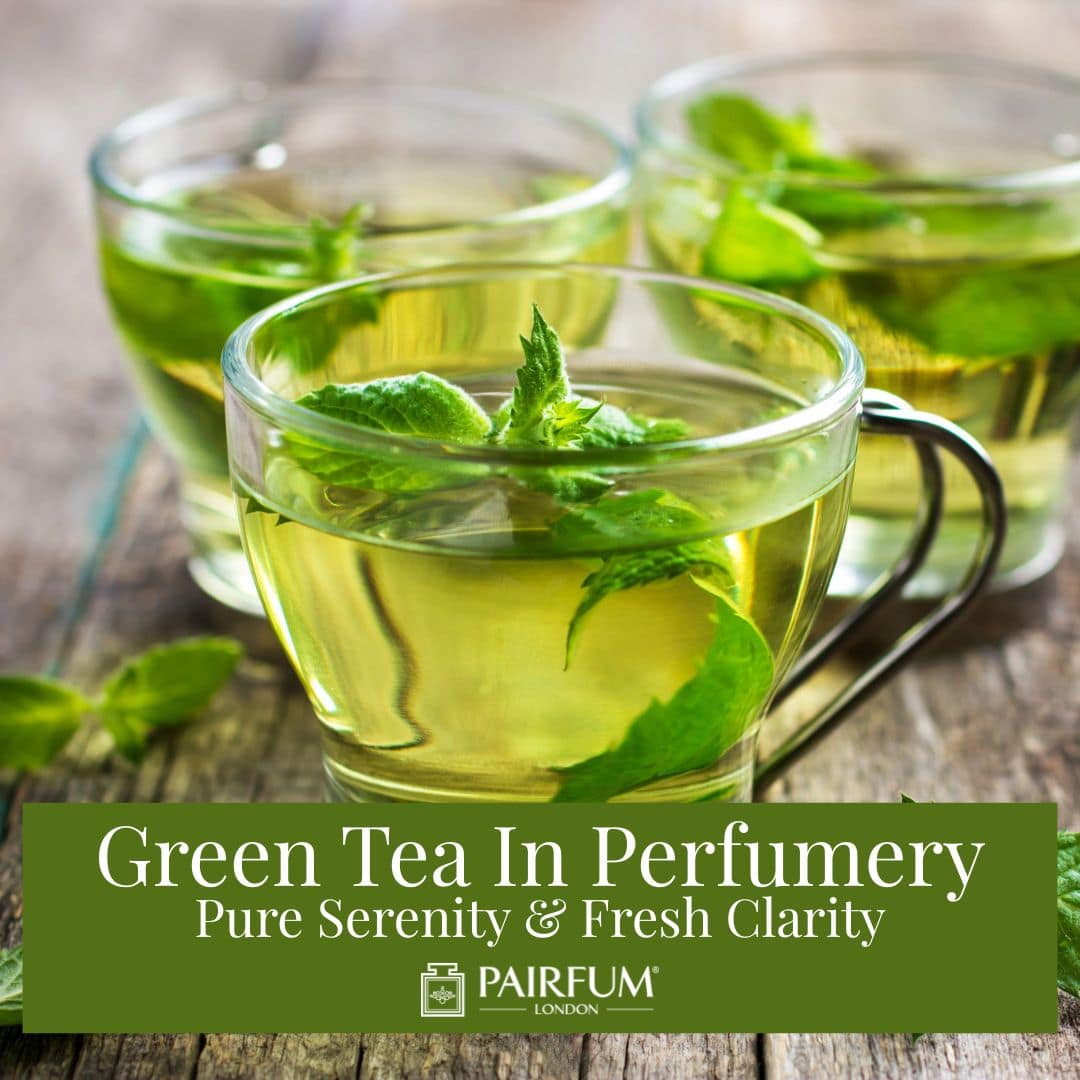
Green tea in perfumery offers a crisp, clean, and subtly bitter or herbaceous aroma, providing a soothing, uplifting, and gender neutral scent that is often paired with citrus or florals for a revitalising feel. It evokes a sense of calm yet modern sophistication through the use of natural extracts, synthetic accords, or ingredients like mate absolute to create an airy, clean, or even delicately smoky profile in modern fragrances.
Green tea is not loud. It does not need to be. In fragrance, it is the quiet moment between notes, offering calm, clean freshness without taking over the whole room. At the end of December, when everything feels slower, and the air carries that stillness, it fits perfectly. It is like opening a window first thing in the morning, cool, fresh, and clear.
Over time, ithas become a favourite for perfumers looking to add lightness and gentle clarity without tipping into sharp citrus or bold herbs. It leans toward subtle freshness, like soft leaves washed in rain or warm water steeped with quiet warmth. Here, we will look at where it began, how it is used, and why it feels right, especially during the calm shift of winter.
A Peaceful Note: The History of Green Tea in Fragrance
Before it appeared in perfume, green tea had been part of everyday life for centuries. In many cultures, it has long been tied to health, stillness, and mindfulness. Its natural smell, mild and warm with a clean edge, made it appealing beyond the teacup.
By the 1990s, there was a strong tilt toward wellness and clean living. That shift brought green tea into fragrance more formally. Early on, it was seen as unisex and modern, not heavy or classic like many florals. Perfumes that used it felt clear and light, almost like a spa in a bottle. It was not floral or fruity; it was simple, fresh, and balanced. That idea of lightness gave green tea a place that has remained steady since.

The Botanical Heart: From Plant to Perfume
To truly understand why green tea smells the way it does, we must look at the Camellia sinensis plant. This is the source of all true tea, whether it ends up as a delicate green tea leaf or a robust black tea. The difference in the final flavour and aroma comes down to how the leaf is handled after it is picked.
For green tea, the tea leaves are quickly heated to prevent oxidation. This preservation of the natural state is why the scent remains so vibrant and “green.” In contrast, black tea undergoes full oxidation, turning the leaf dark and the scent malty or smoky. Even oolong tea sits somewhere in the middle, offering a different aromatic profile.
When a perfumer wants to capture the essence of the tea plant, they are looking for the soul of the green tea leaves. This involves understanding the chemical makeup, such as the polyphenol content and the presence of any specific catechin. These elements do not just provide a health benefit when swallowed, they also contribute to the complex, tannic, and slightly sweet scent profile that we recognise in high-quality fragrance.
What Green Tea Really Smells Like
Describing the aroma of green tea is not always easy. It is not grassy or bitter like raw herbs. Instead, the perfume note gives off a clean, crisp edge, touched with soft leaves and a hint of steamed warmth. It is slightly herbal but not medicinal. More leafy than powdery, but with a calm finish.
You might think of:
- Freshly cut tea leaves just before brewing
- A foggy garden before sunrise
- Warm water in a wooden bowl filled with leaves
In many perfumes, green tea tends to sit in the heart or middle notes. It makes the bouquet feel clear without cooling it too much. It brings uniform balance, helping other parts of a fragrance feel more open or lifted. It provides a sense of mental health and clarity, acting as a sensory reset for the wearer.
The Science of the Scent: Extract and Compounds
When we talk about green tea in a bottle, we are often talking about green tea extract. This is a concentrated form of the plant’s aromatic and chemical properties. Within this green tea extract, we find a high concentration of a specific antioxidant called a catechin.
Scientists and perfumers both pay close attention to green tea catechins, specifically one known as EGCG. While the National Institute of Health might study these for their impact on physical well-being, perfumers value how these green tea catechins interact with other scent molecules. The way green tea catechins behave helps to stabilise the “greenness” of the scent, ensuring it does not turn sour on the skin.
Green Tea is typically steamed or pan-fried and has a fresh, vegetal and clean aromatic profile.
Black Tea is usually processed by full oxidation and possesses a bold, malty and earthy quality.
Matcha is processed into a stone-ground powder that creates a creamy, grassy and intense taste
Oolong Tea is partially oxidised and has an aromatic profile that is floral, buttery and complex.
Extracting the Essence: How Green Tea Is Made for Perfume
To bring green tea into perfume, perfumers typically start with steam distillation. This process uses water vapour to pull natural oils from tea leaves. But it is a tricky balance. If left too long or treated too strongly, the profile turns bitter or grassy, losing the soft edge that makes it desirable.
To keep things gentle, newer methods have become more common. These include:
- Green tea absolute, a more purified form of extract that carries less edge and more smoothness.
- Infused oils, where the leaves soak in a base oil to slowly draw out the aroma.
- Green tea extract supplement techniques, which sometimes use CO2 extraction to keep the scent as close to the living plant as possible.
Each choice gives perfumers a gentle, workable aroma that stays fresh, soft, and wearable. These forms are well-suited for layering or blending without taking attention away from other ingredients.
The Role of Caffeine in Fragrance
It might surprise you to learn that caffeine plays a role in how we perceive tea scents. While you do not “smell” caffeine in the traditional sense, the caffeine content of a plant often correlates with other sharp, invigorating aromatic compounds. In the world of wellness, caffeine intake is usually about energy. In perfume, the idea of caffeine translates to a “wake-up call” for the nose.
The caffeine in a tea bag or loose-leaf tea is part of the plant’s natural defence system. When we use green tea extract in a fragrance, we are capturing that zesty, alert quality. Even if the caffeine content is physically minute in a spray of perfume, the psychological association remains strong. People associate the scent of green tea with the same clarity they feel after their morning tea consumption.
Why Wellness and Scent Go Hand in Hand
The global consumption of tea is second only to water. This high level of tea consumption means that almost everyone on the planet has a positive emotional connection to the smell. We often hear about the health benefits of drinking it, such as how green tea consumption can support heart health or help those managing diabetes.
While a perfume cannot cure diabetes, the scent of green tea can trigger a “health response” in the brain. This is why green tea is so popular in “clean” fragrances. Because we know that green tea consumption is good for us, our brains interpret the scent as being “safe,” “clean,” and “pure.” The health benefits of the plant become part of the story of the perfume.
Interestingly, research into green tea health benefits has shown that the mere aroma can lower cortisol levels. Whether you are drinking a cup of loose-leaf green tea or spraying a green tea-based scent, the effect on your mental health is often one of immediate relaxation.
Deep Dive: From Matcha to Earl Grey
The world of tea is vast. A perfumer might choose Japanese green tea for a more “sea-like” or “umami” quality, or Chinese green tea for something more floral and delicate.
- Matcha: This is a very specific type of Japanese tea. It is made from shade-grown leaves that are ground into a fine powder. In perfume, matcha or matcha green tea notes add a creamy, almost milky thickness to the “green” profile.
- Earl Grey Tea: This is technically a black tea scented with bergamot. It is a staple of British tea consumption and is often used in perfumery to bridge the gap between citrus and tea notes.
- Chinese Tea: Often more smoky or herbal, Chinese tea varieties provide a grounded, earthy base that works well in more masculine or unisex fragrances.
Regardless of the variety, whether it is loose tea or a simple tea bag style scent, the goal is always to capture that moment of peace.
The Ritual: From Ceremony to Spray
The Japanese tea ceremony is a masterclass in mindfulness. It is a slow, deliberate process that respects the tea plant and the hot water used to brew it. Perfumery often tries to mimic this ritual. The act of applying a fragrance is, in itself, a small ceremony.
When you brew loose-leaf tea, you wait for the boiling water to reach the right temperature so you do not burn the leaves. Similarly, a good green tea perfume is designed to “brew” on your skin, releasing its notes slowly over hours. This slow release of the antioxidant-rich scent profile ensures the fragrance stays balanced.
Pairing Green Tea with Other Perfume Notes
Green tea rarely stands alone in fragrance. It is a strong team player, smoothing out sharp points and giving room to bolder notes. Depending on what it is paired with, green tea can feel fresh, warm, or softly floral.
Some popular pairings include:
- Bergamot – gives a bright, citrus edge, making the perfume feel even cleaner.
- Jasmine – softens the bouquet and brings a graceful floral heart.
- White musk – builds a calm, cosy finish without any weight.
What makes such an ingredient so useful is that it is season-neutral. In warmer months, it cools and refreshes, much like a glass of iced tea. In colder times, it adds softness without heaviness. That is why it fits so well in winter’s quiet, letting space and clarity come through without feeling cold or distant.
Health, Science, and the Modern Perfume Wearer
We live in an age where we are very conscious of what we put in and on our bodies. This is why the health benefits of green tea are such a large part of its appeal. We see green tea supplements in every health shop from the UK to New Zealand. We read about how a polyphenol can protect our cells and how green tea consumption might help lower the risk of diabetes.
The National Institute of Nutrition often highlights how tea consumption can be a better alternative to sugary drinks for those worried about diabetes or heart health. When this health-conscious consumer looks for a fragrance, they naturally gravitate toward green teas. It feels like an extension of their lifestyle.
Even the caffeine factor is considered. Some people limit their caffeine intake to avoid jitters, but they still love the “energy” of the plant. A perfume offers the perfect solution: you get the aromatic “hit” of caffeine without it affecting your blood sugar or diabetes management.

Understanding the Global Appeal of Tea
Why has tea become such a global phenomenon? From the high-tech labs in New Zealand testing green tea supplements to the ancient tea houses of Kyoto, the consumption of this plant is a universal language.
The caffeine content provides the energy we need, while the antioxidant properties, specifically the polyphenol and catechin levels, provide the protection our bodies crave. In many ways, green tea is the perfect plant. It is medicinal yet delicious, stimulating yet calming.
In the world of fragrance, this duality is prized. A scent that can be both “fresh” and “warm” is a rare thing. Most fresh scents are cold (like mint or ozone), and most warm scents are heavy (like vanilla or amber). Green tea sits right in the middle, offering a unique “lukewarm” freshness that mimics the feel of a cup of tea held in cold hands.
Standout Perfumes Where Green Tea Shines
In several iconic and niche fragrances, green tea holds a central role, even if it is not the most obvious part. It adds stillness and a certain polish you often will not notice until it is gone. These scents rely on the quality of the leaf extract to provide that signature “crunchy” green opening.
These perfumes tend to feel:
- Clean but never sharp
- Calming but not sleepy
- Comfortable without being too cosy
Think of them as fragrances you reach for when you want to feel fresh without drawing too much attention, perfect for ending the year and welcoming the stillness that follows. December often brings gatherings, celebration, or simply quieter days at home. Green tea wears well through all of it, providing a subtle backdrop to holiday festivities.
Iconic Green Tea Fragrances
- Elizabeth Arden: Green Tea A refreshing and clean classic that blends the scent of tea leaves with zesty citrus.
- Bvlgari: Eau Parfumée au Thé Vert A pioneering and sophisticated fragrance that offers a crisp and airy tea profile.
- Maison Margiela: Matcha Meditation A creamy and modern scent that highlights the grassy intensity of stone ground Japanese tea.
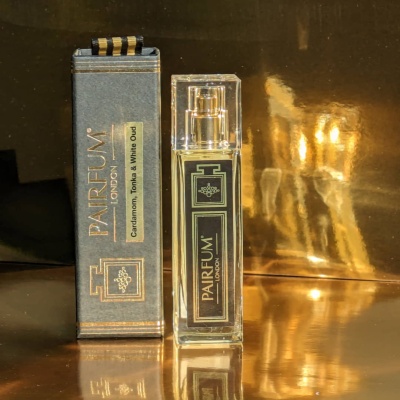
Green Leaves & Tea Inspired Perfume by Pairfum London
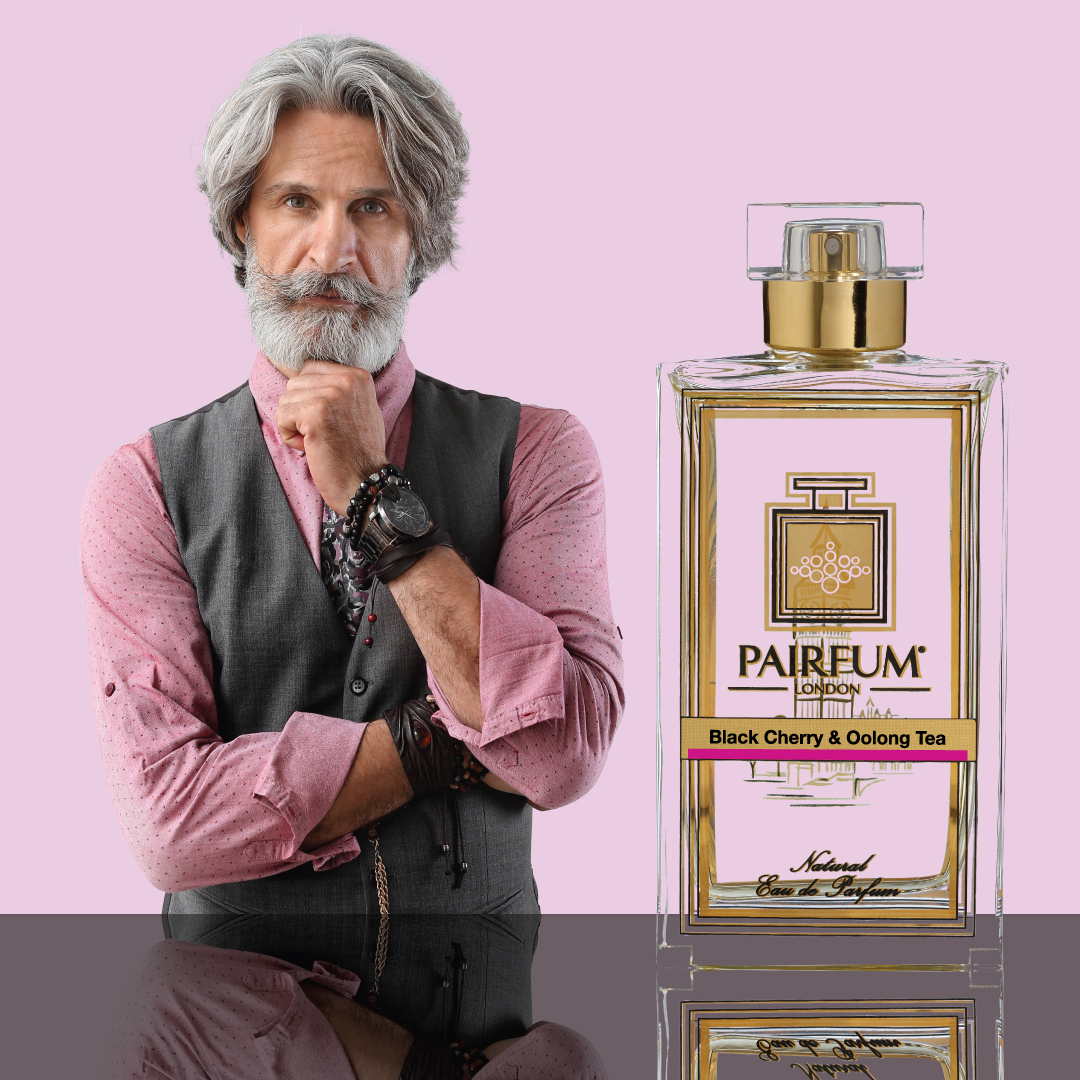
Black Cherry & Oolong Tea – Eau de Parfum by Pairfum London
This fragrance opens with the sparkling interplay of the aromas of Black Cherry, Bergamot, Almond and Red Berries. The heart us an elegant fusion of Bulgarian & Turkish Roses, Liquorice and Oolong Tea. The base rests on Aniseed, Tonka, Patchouli and Iris.
Bergamot, Basil & Patchouli – Eau de Parfum by Pairfum London
This aromatic and woody accord opens with Bergamot, Lime, Green Leaves and spicy Basil. The heart is fresh with Lily, Freesia, Violet Leaf, Rose and Geranium. The note rests on a rich woody base of Patchouli, Vetiver, Sandalwood, Cedar and Amber.

Calm in Every Drop: Why Green Tea Still Matters in Perfume
Green tea has stood the test of time in perfumery because of its quiet nature. It keeps things light and breathable, but not plain. It feels elegant without disrupting the other notes. The caffeine gives it a bit of life, while the antioxidant associations give it a sense of purity.
That is part of its appeal. When the pace slows in late December and early January, a perfume with green tea makes a soft start feel real. It cuts through any leftover warmth of holiday perfumes and helps reset the tone.
The ritual of tea consumption, whether it involves a tea bag, loose leaf tea, or a formal Japanese tea ceremony, is always about taking a moment for oneself. Fragrance is the same. It is a quiet choice we make for our own pleasure and mental health.
Calm, clear, and easy to wear, green tea does not demand attention. It simply lets you breathe. Whether you are looking for the zesty hit of caffeine or the soothing embrace of a polyphenol-rich extract, there is a tea scent for everyone. There is strength in quiet notes, and green tea demonstrates that with every drop. It is a reminder that in a world of loud noises, sometimes the most powerful thing you can be is still.