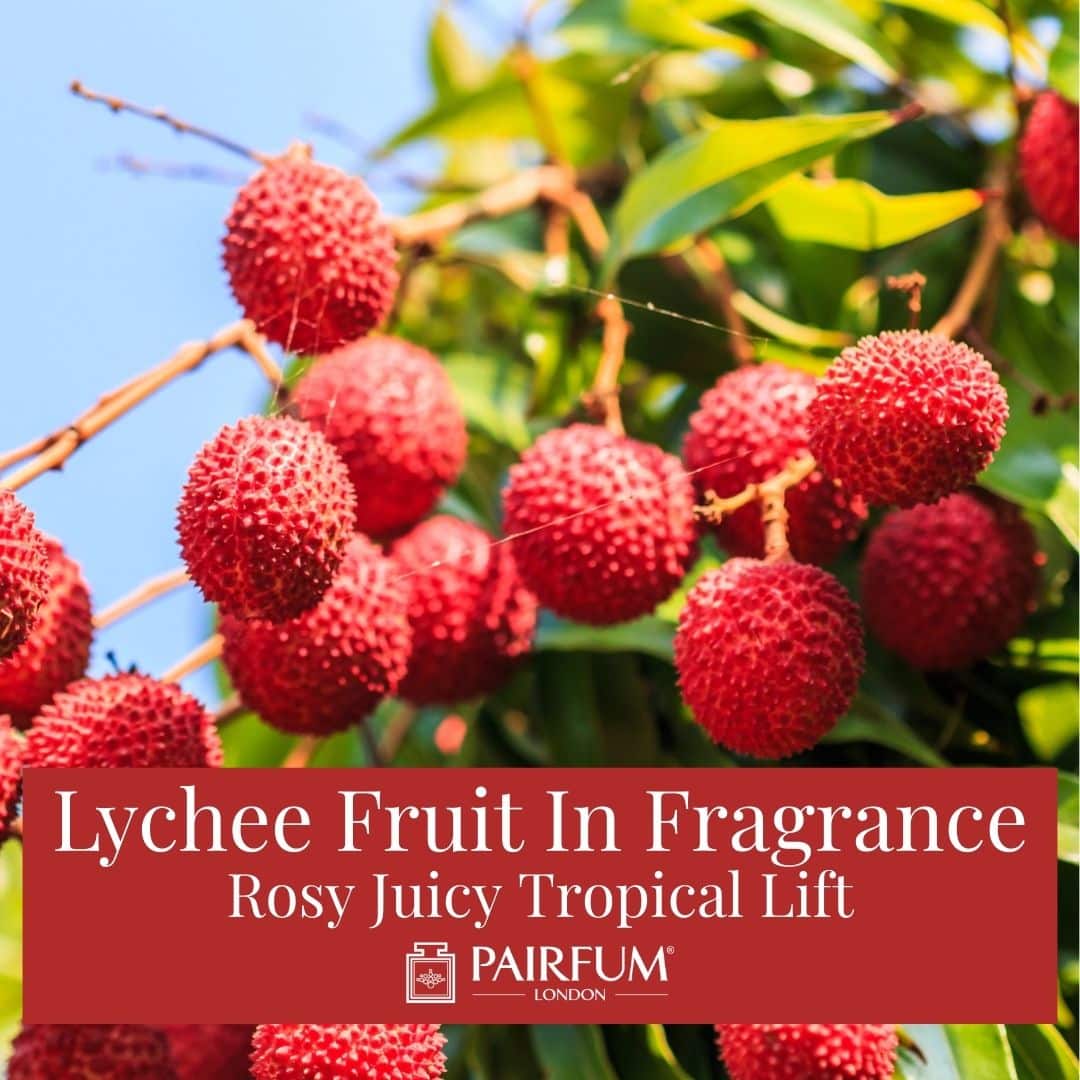
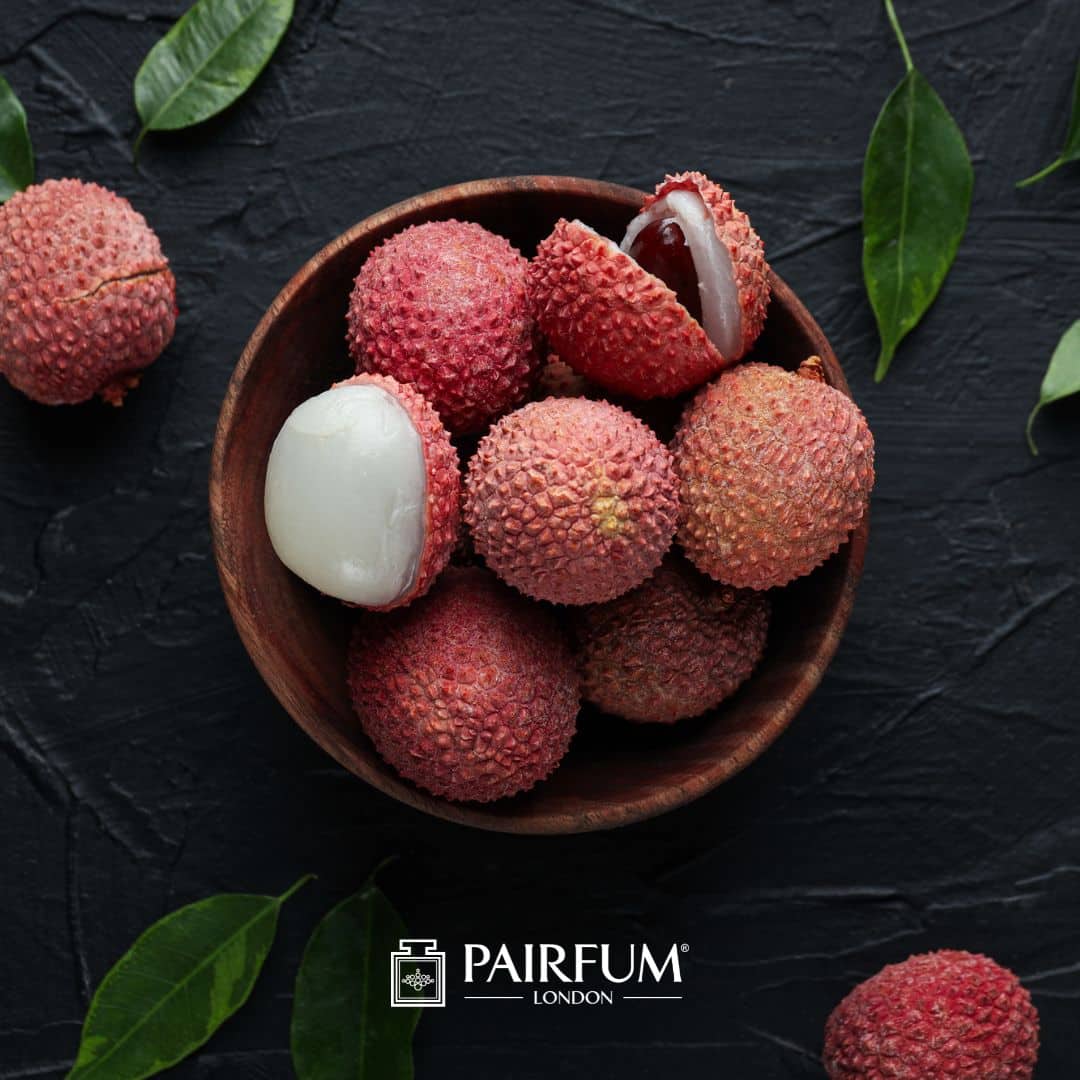
Lychee (Litchi chinensis) is a small, tropical fruit native to Southern China, featuring a rough, reddish-pink, and easy-to-peel skin. The translucent white, juicy flesh inside offers a sweet, aromatic, and slightly tart flavour profile. As a rich source of vitamin C and phenolic compounds, this fresh fruit is commonly enjoyed during the summer months or used as a base for an exotic fruit dessert and various botanical cocktails.
There is something bright and joyful about lychee in fragrance, especially as winter leans into early spring. That soft, fruity aroma adds just the right amount of energy without feeling too heavy or sweet. It is rosy, almost floral at times, yet still unmistakably a tropical fruit.
We often turn to this fruit when we want a perfume to feel playful and light-hearted. It brings gentleness to blends that need a boost without taking over the whole composition. As the days start getting longer and a bit warmer, lychee fits the mood. It lifts the fragrance and brings to mind freshness, movement, and a soft kind of brightness that works well in both niche perfume and home fragrance.
A Fruit with Fragrant Roots: The History and Origin of Lychees
The lychee originates in Southern China, specifically within the provinces of Fujian and Guangdong, where it has been cultivated for over two thousand years. Known botanically as Litchi chinensis, this Chinese tree produces edible fruits that were once so prized they were delivered by imperial messenger to the emperors of the Tang Dynasty. While it began in East Asia, lychee trees are now found in many warm climates, including South East Asia, South Africa, and even parts of the United States like Florida and Hawaii.
The lychee tree itself is a handsome evergreen, a member of the soapberry family or Sapindaceae. In these regions, lychees are more than just a tropical fruit; they are a cultural staple. Whether found in the herb section of a local market or alongside new fresh asian vegetables, the lychee fruit is a symbol of romance and luck.
Historically, the dried lychee was often referred to as a lychee nut, though this is a bit of a misnomer. While the outer skin becomes brown and brittle when dried, the fruit inside remains sweet and raisin-like. In its fresh fruit form, the litchi is unmatched for its perfume. It is a drupe, much like a plum or a peach, featuring a rough, strawberry-red outer husk that protects the delicate treasure within.

Bright and Juicy: The Character and Aroma Profile
The aroma of a lychee is hard to miss. It is both juicy and light, with a natural sparkle that falls somewhere between rosewater and a fruit salad. It has a round, ripe lychee quality that brings to mind soft common fruits, but with none of the sticky sweetness. Instead, there is a cooling effect behind it that freshens up whatever it touches.
Inside the fruit, you will find a single, dark lychee seed. While this lychee seed is not for consumption, the translucent white flesh around it, known as an aril, is packed with vitamin C and phenolic compounds. These elements contribute to the health benefits often associated with the fruit, such as supporting the skin and general immunity.
When we describe the flavour and scent, we often talk about the sugar content. However, a fresh lychee has a sophisticated profile. It is not just about the sugar; it is about the balance of floral and tart notes. This makes it a smart fit for spring perfumes that need a balance. Scientific analysis shows that the litchi shares the same key molecule as the rose, known as cis-rose oxide, which explains why the two smell so harmonious when paired together.
From Fruit to Fragrance: How Lychee is Used and Extracted
A fresh lychee fruit is delicious, but it is quite hard to work with directly in perfumery. Getting oil or essence from it in pure form is not easy because the fruit has very little oil to extract. Most often, perfumers use carefully created natural accords or blended aroma molecules that mimic the juicy, dewy shimmer of a real litchi.
There are two common types used in fragrance formulations:
- Natural accords made by blending materials that together smell like fresh lychee.
- Aroma molecules created in the lab to match the rosy, fresh-fruit tone of the litchi.
This does not mean it smells artificial. In good hands, those blends end up feeling very close to nature and quite soft on the skin. The goal is to capture the brightness and sweet charm of the lychee while keeping everything gentle and wearable. In some cases, a lychee syrup accord is used to add a gourmand touch, similar to how one might find canned lychee used in a dessert. A fresh lychee fruit contains high levels of water, and capturing that aqueous, “wet” sensation is the hallmark of a high-quality lychee note in niche perfumery.
Culinary Inspiration: From Savoury Dishes to the Lychee Martini
The influence of lychees extends deep into Asian cuisine. You will often find the fruit used in savoury dishes to balance heat, or served as a simple, chilled dessert. The versatility of the litchi is one reason it transitioned so well into the lifestyle space. In Southeast Asia, it is a seasonal highlight that signals the arrival of warmer months.
In modern mixology, the lychee martini has become a classic, showcasing how lychee and a touch of syrup can create a sophisticated, botanical drink. This “cocktail” vibe often carries over into perfumery, where lychee is used to create a “fizzy” or “sparkling” sensation. Even though it is sweet, the fruit is often noted for having a moderate impact on blood sugar compared to heavily processed sweets, making it a “guilt-free” inspiration for both chefs and perfumers. Because it is so perishable, the fresh lychee is a fleeting luxury, which only adds to its allure in the world of high-end fragrance.
Perfume Pairings and Fragrance Families
Lychee blends beautifully with a handful of other notes, especially ones that lean soft, powdery, or fresh. We often notice it working best in fruity-floral perfumes or lighter springtime blends. Some of the most common pairings include:
- Rose or peony, which matches the floral brightness of the lychee.
- Musk, which helps ground the fruit in a smooth base.
- Green tea or citrus, which balances the sweetness of the lychee.
What we like about lychee is that it softens a fragrance and makes it feel more youthful. It does not demand all the attention. Instead, it lets other notes speak clearly while still leaving a gentle, rosy-fruit trail behind. Whether the tree grew in Southeast Asia or was harvested in South Africa, the litchi essence remains a symbol of elegance. It provides a bridge between the edible and the ethereal, a trait shared by few other common fruits.
Iconic Perfumes and the Future of Lychee
Though lychee may not always be listed front and centre, it is the quiet star in many memorable blends. It helps add brightness and cheer to perfumes that want to avoid being overly sweet or dry. Because the lychee has a seed that is large and smooth, it reminds us of the stone fruits, yet its scent is far more delicate.
In fine fragrance, we often find lychees used in:
- Modern rose perfumes, where lychee brings freshness.
- Spring or summer fragrances that need a tropical fruit top.
- Niche perfumes that want to feel unique and clean.
The reason lychee keeps coming back in perfume trends is simple: it stays refreshing without fading too fast. It is bright enough to stand out at first, but delicate enough to blend into the full story. Perfumers continue to explore the nuances of the litchi, finding new ways to highlight its watery, translucent character without relying on heavy syrup notes.

Lychee Top Notes in Pairfum London Home Fragrance
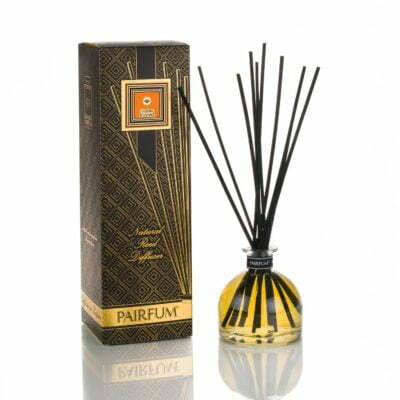
White Sandalwood – Large Bell Shape Reed Diffuser by Pairfum London
A Creamy Sandalwood accord with a hint of Chypre. It includes top notes of Neroli and Lychee, a floral heart of White Jasmine, Violet and Cistus Labdanum, and a base of sun-bleached Cedar, Patchouli, Musk and Tonka Bean.
The Feel-Good Lift of Lychee
The lychee has earned its place in perfumery not by being dramatic or bold, but by being quietly lovely. Its blend of fruit and floral fits exactly with the kind of perfumes we want to wear when the air still feels cool but warmer, brighter days are on the way.
It adds that special lift, a small bit of sunshine tucked into a bottle. Light, rosy, and juicy, the lychee is the kind of fragrance note that helps everything feel a little fresher. From the lychee fruit hanging on a tree in a distant land to the spray of a fine mist on your wrist, this exotic fruit continues to captivate our senses. It brings a soft joy to perfume, like opening a window to let the season in. Whether you are enjoying a fresh lychee fruit at a spring feast or wearing its essence in a bespoke blend, the litchi is a timeless reminder of nature’s beauty.