Home / Articles / Page 15
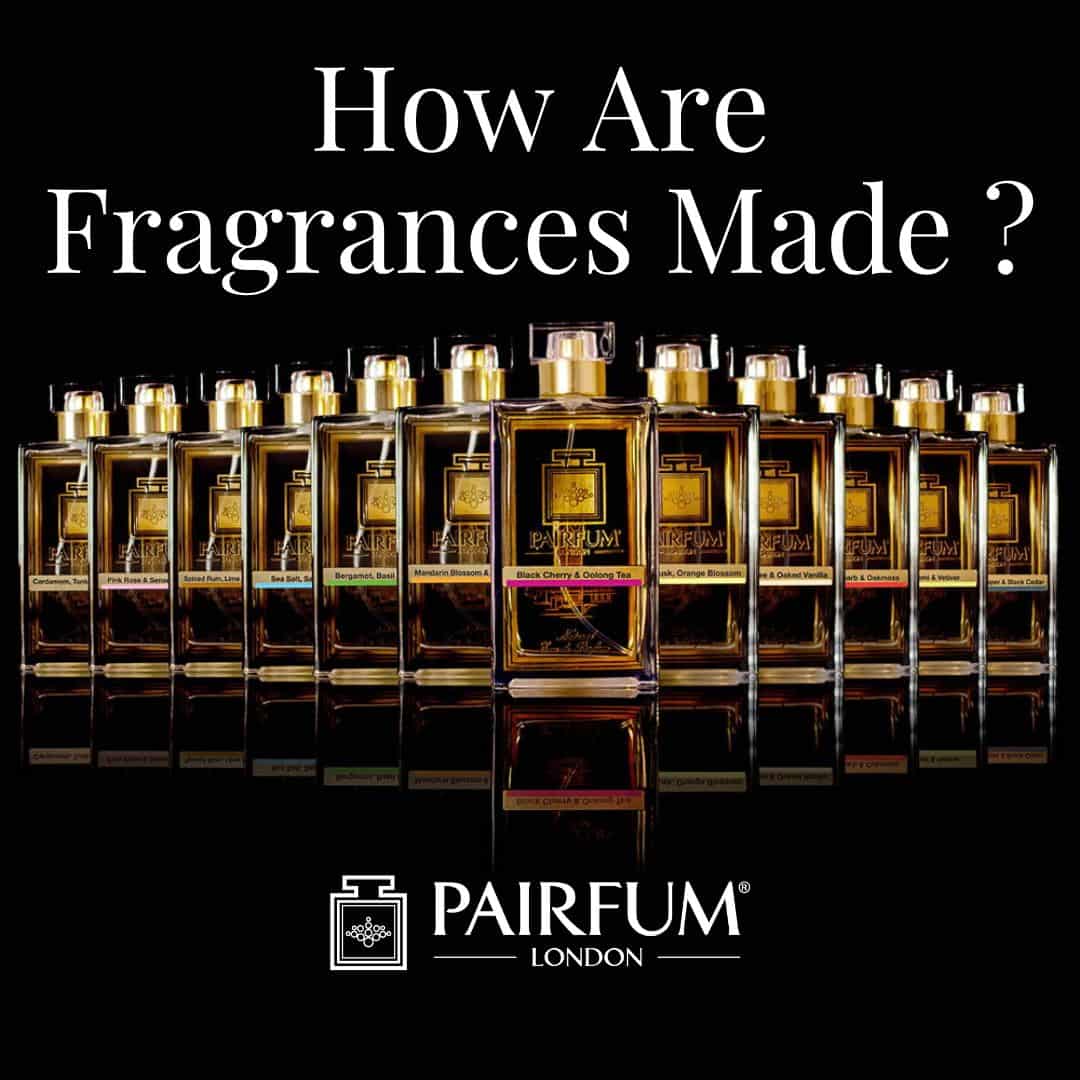
How Fragrances Are Made

How Are Fragrances Made? The Art and Craft of Perfumery

Many of our customers ask us: How are fragrances made? Across the ages, perfumery has captivated the hearts and minds of many, sparking a fascination with the alchemy involved in crafting these olfactory delights. We unveil the enchanting process that lies behind this mesmerizing art form.

As we embark on this bewitching journey through the multifaceted layers of fragrance creation, prepare to unravel the secrets and complexities that define the remarkable world of perfumery.

A Brief History of Perfumery

Perfumery has a rich history dating back thousands of years, evolving from ancient rituals to modern artistry. The evolution of perfume manufacture has seen a transformation from simple natural ingredients to complex blends of essential oils and synthetic chemicals.

These changes have expanded the possibilities within the fragrance industry, allowing for the creation of unique and captivating scents that capture the imagination through smell.

Fragrance Manufacturing How Are Fragrances Made?

Fragrance Components: The Building Blocks of How Fragrances Are Made

At the core of every captivating perfume lies a symphony of individual elements, each meticulously chosen to harmonize within the final formulation. These building blocks include:

How Are Fragrances Made With Natural Ingredients ?

Some of the most exalted and cherished fragrances employ the use of natural ingredients. A natural ingredient can be derived from various sources like flowers and flower petals, fruits, spices, woods, and plant material. Extraction methods like steam distillation and solvent extraction help obtain the purest essences. While often more expensive and labor-intensive to obtain, the raw material of natural ingredients imparts a depth and richness to perfume that is unparalleled in its complexity and authenticity. The use of a natural scent is a hallmark of fine fragrance and essential to fragrance creation.

How Are Fragrances Made With Synthetic Ingredients ?

The use of synthetic chemicals in creating a fragrance ingredient has revolutionized the perfume industry by providing a more extensive palette to work with and enabling cost-effective production. Additionally, synthetics play a vital role in substituting any perfume ingredient challenged by ethical or ecological concerns, such as animal-derived musk. Talented noses expertly combine synthetic and natural components to achieve intricate works of olfactory art and create a synthetic perfume.

How are Pairfum Fragrances Made

The Perfumer’s Palate: Mastering the Art of Blending

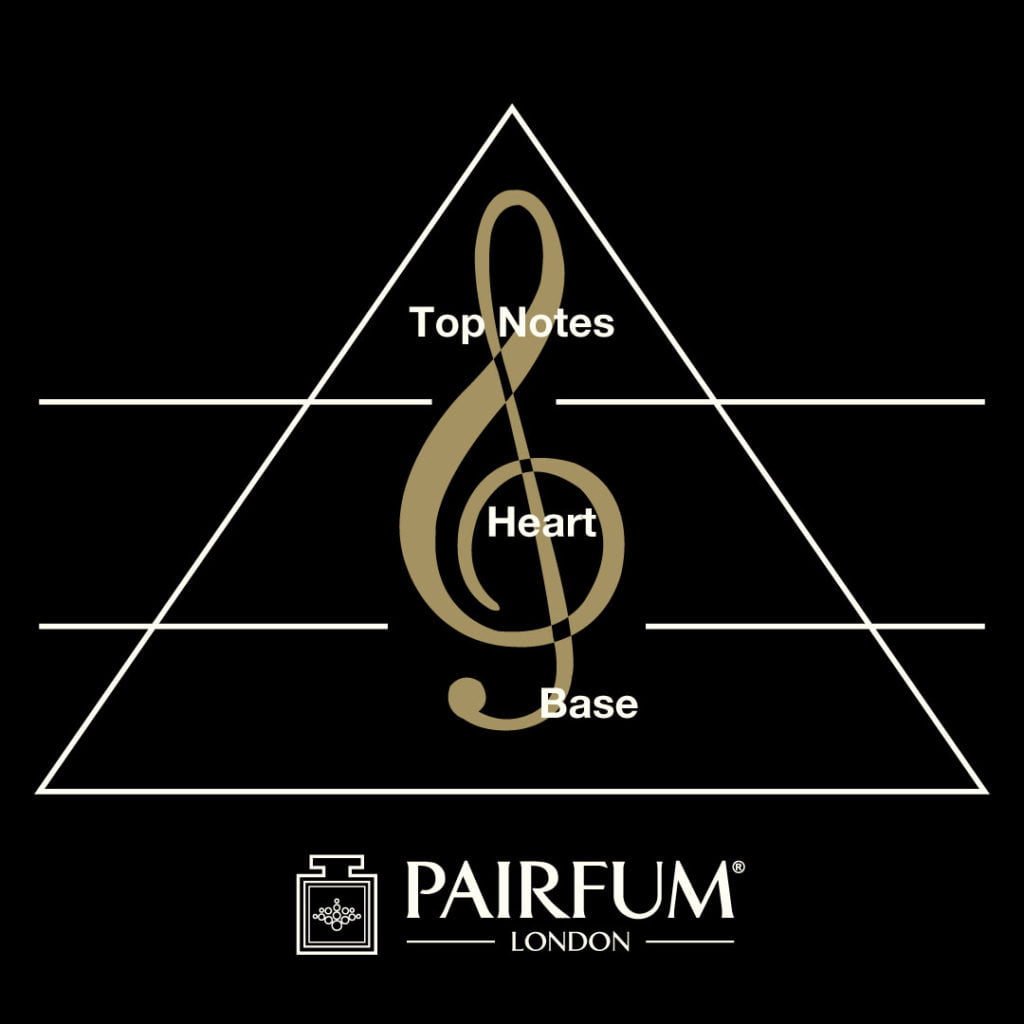
Once ingredients are selected, perfumers embark on the intricate process of blending, utilizing their trained noses and extensive knowledge. The perfumer creates a captivating scent by carefully balancing different fragrance notes, each characterized by its distinct evaporation rates when exposed to air. This breakdown comprises:

Top Notes:

These are the first impressions of a perfume, the initial burst of aroma that lasts up to 30 minutes after spraying. As they evaporate the fastest, top notes are typically light, fresh, and invigorating, composed of citrus and green elements.

Middle or Heart Notes:

These notes form the crux of a perfume, becoming more pronounced after the top notes dissipate. They last for several hours and are the central narrative of the fragrance. Floral, fruity, and gourmand elements typically dominate this layer.

Base Notes:

The foundation of a perfume, base notes create a lasting impression and provide much of the fragrance’s depth, anchoring top and middle notes, allowing them to shine. These notes linger for several hours or, in some cases, days and primarily comprise earthy, woody, and amber elements.

The Science Behind Fragrance Blends

Creating a captivating perfume involves more than just mixing one fragrance oil with another; it requires an understanding of the complex interplay between different aromatic compounds. An aromatic compound, with its unique properties and evaporation rates, are meticulously balanced to achieve the desired scent profile.

Perfume brands invest significant time and resources in perfecting their blends to ensure each fragrance becomes a customer’s favorite perfume. By leveraging the properties of each perfume oil, perfumers can create signature scents that define their brand and resonate with consumers worldwide.

The Importance of Perfumer’s Alcohol

Perfumer’s alcohol is a key component in the perfume manufacturing process, serving as a solvent to blend essential and fragrance oils seamlessly. Its role is crucial in ensuring the perfume’s consistency, stability and longevity, making it an indispensable ingredient in the production of fine fragrances.

By allowing aromatic compounds to dissolve, perfumer’s alcohol facilitates the even distribution of scent, thus enhancing the overall fragrance profile.

The Aging Process: Enhancing and Refining the Fragrance

Once painstakingly blended, the fragrance is left to age or mascerate. Maceration can be as short as a week but also as long as year, It depends entirely on the fragrance and its ingredients.

This crucial stage allows the individual components to meld harmoniously, creating well-rounded and matured scent profiles. This maturation process adds an additional layer of complexity and ensures that the fragrance is consistently stable across different environments, such as variations in temperature and humidity.

How Are Fragrances Made with Modern Techniques and Innovations ?

The perfume manufacturing process has been transformed by modern techniques and innovations. Advanced methods like solvent extraction and steam distillation have enhanced the quality and purity of aromatic compounds.

Additionally, the introduction of synthetic chemicals has expanded the creative possibilities, allowing perfumers to craft scents that were previously unimaginable. These innovations have propelled the fragrance industry forward, ensuring that each perfume creation is a masterpiece in its own right.

Sustainability and Ethics in Perfumery

In today’s world, sustainability and ethics are at the forefront of the fragrance industry. Perfume manufacturers are increasingly focused on sourcing raw materials responsibly and adhering to ethical standards set by the International Fragrance Association. This commitment to sustainability ensures that the captivating scents we love are crafted with respect for the environment and the communities involved in the production process.

How Are Fragrances Made with Quality Control: Ensuring Consistency and Excellence

Prior to releasing a fragrance, it must undergo rigorous quality control assessments to guarantee excellence and consistency. Testing includes evaluating the aroma in a controlled environment, conducting stability and compatibility testing, and assessing it for potential allergens. These ensuring steps maintain that the final perfume remains steadfast to the original artistic vision, presenting an immaculate culmination of the perfumer’s artistry from conception to completion.

The Bottle: A Gateway to the Fragrance Experience

A perfume’s presentation is not only an aesthetic consideration but a functional one as well. A well-designed perfume bottle protects the fragrance from light, heat, and moisture – factors that can degrade the perfume over time. The captivating exterior serves as a gateway to the experience that awaits within, piquing curiosity, and encapsulating the essence of the fragrance in an exquisite form. Designers and perfumers collaborate to create iconic bottles that convey the spirit and vision of the scent inside.
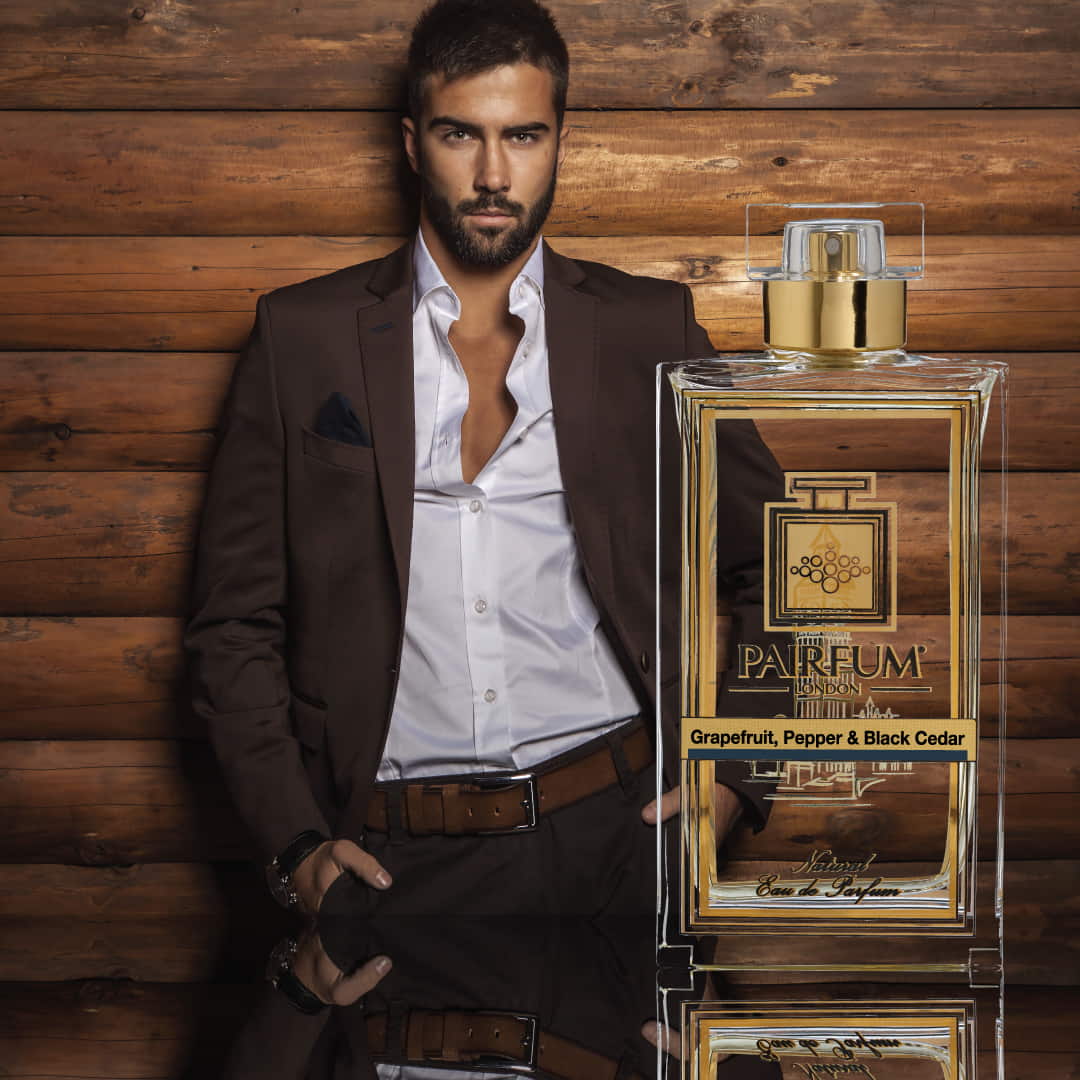
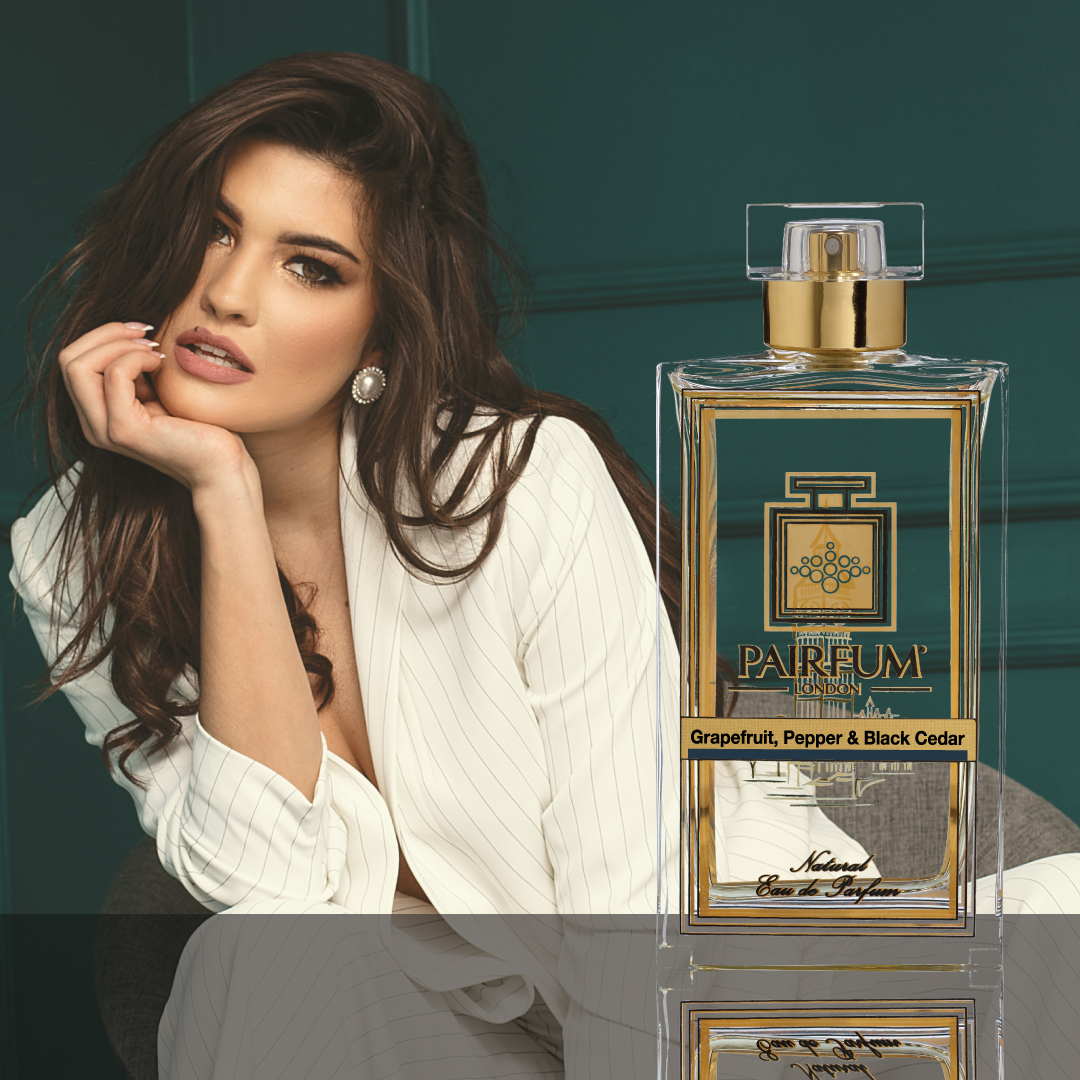
Eau De Parfum Person Reflection Grapefruit Pepper Black Cedar Man Wood 1 1

The Role of Carrier Oils in Perfumery

Carrier oils play a crucial role in the perfume production process. These oils serve as the base for fragrance oils, ensuring that the scent is distributed evenly and lasts longer on the skin. The choice of carrier oil can significantly impact the overall fragrance profile, enhancing the natural ingredient and creating a harmonious blend. Carrier oils are also integral to the formulation of perfume oils, which are increasingly popular for their lasting impact and richness.

The Rise of Solid Perfumes, Perfume Pens & Rollers and DIY Perfumery

In recent years, there has been a growing interest in solid perfumes, perfume pens, roller ball perfumes and DIY perfume making.

A solid perfume offers a convenient and eco-friendly alternative to traditional liquid fragrances. Similarly, perfume pens and roller ball perfumes are a convenient new form of perfume application. DIY kits allow enthusiasts to explore the art of fragrance creation at home for themselves. This trend reflects the evolving preferences of consumers seeking unique and personalized scents.

Embracing Modern Fragrance Oils

Fragrance oils have become a staple in modern perfumery, offering versatility and depth to a wide range of products. These oils are often used in crafting an Eau de parfum and other formulations, providing a long-lasting and potent aroma.

A modern perfume brand now leverages the unique properties of fragrance oils to create memorable and distinctive scents. The inclusion of aromatic compounds in fragrance oils allows for a complex layering of notes, enhancing the overall olfactory experience.

Discover Your Favourite Perfume with Pairfum London

Having unveiled the captivating process of how fragrances are made, we invite you to delve deeper into this bewitching world by discovering the exquisite range of perfumes crafted by Huib Maat at Pairfum London. Today, our boutique perfumery house is revered for its refined taste and innate sensitivity to the ‘zeitgeist’ in fragrance.

Through these artfully created and tailored fragrances, you can experience the captivating journey behind the scenes of the perfume-making process, appreciating the art, craft, and passion that defines each exquisite aroma. Let your senses explore the endless possibilities that await and immerse yourself in the extraordinary world of fragrance, where enchanting stories unfold and vivid memories come to life. Transform your olfactory experience to new heights and unleash your inner nose by exploring the true essence of Pairfum London’s perfume mastery. Find your favourite perfume within this exquisite collection, and celebrate the timeless allure of fine fragrances.

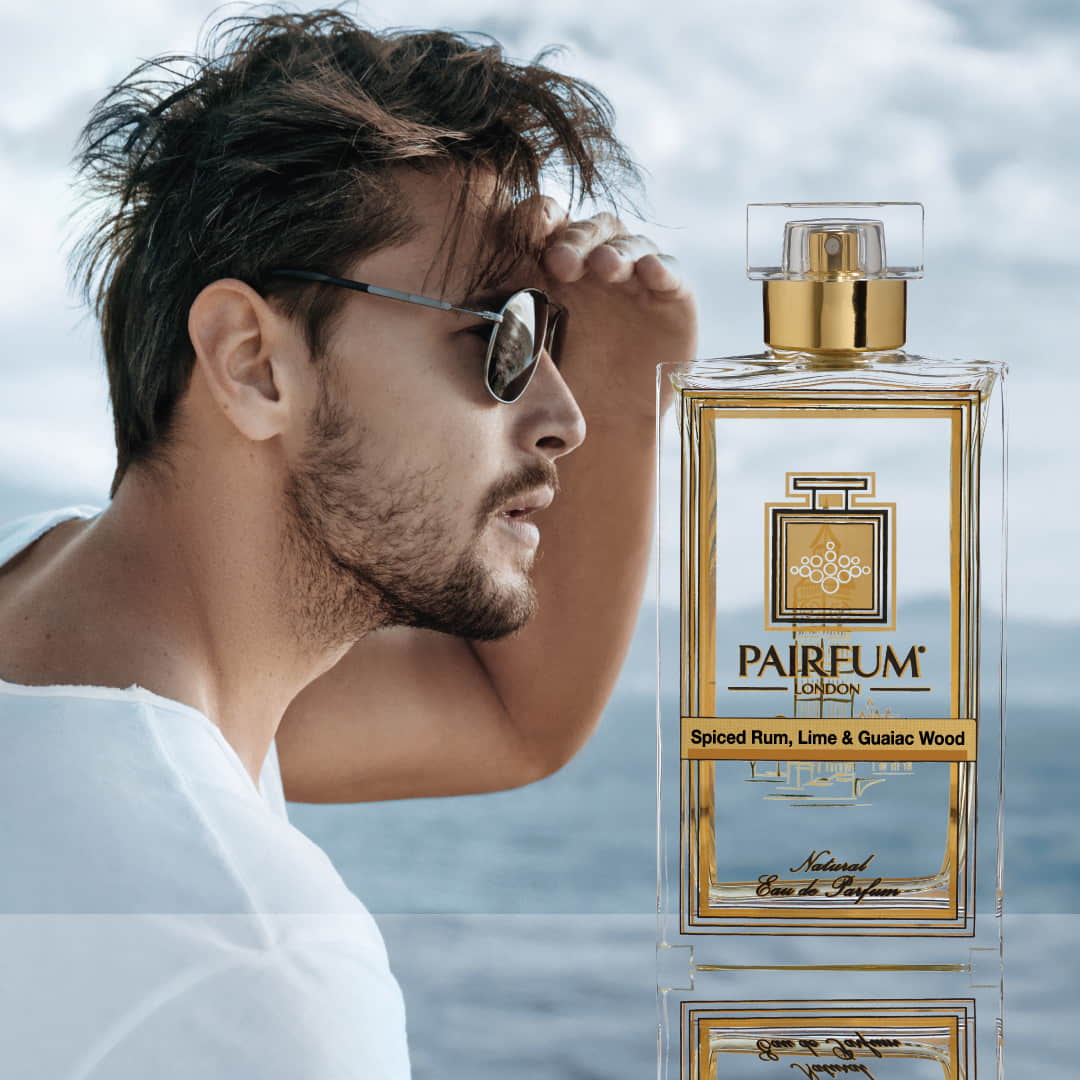
Might we recommend our Spiced Rum, Lime & Guaiac Wood – Eau de Parfum

  • This Connoisseur’s accord opens with the intense aroma of Rum, nuances of Lime & Lemon and a radiant combination of Nutmeg & Pepper. 
  • The heart is deep and rich with Tuberose, Iris and Vintage Leather. A fond of Guaiac Wood, Cedar, Golden Amber, Vanilla Pod and Musk complete this luxuriously fluid fragrance.
How Eau De Parfum Is Made
Fake Perfume

How to Spot Fake Perfume? Develop a Nose for Authenticity

For connoisseurs of exquisite perfumes, fake perfume is a covert risk in the hunt for unique and captivating fragrances. With significant sums invested in indulging our olfactory senses, it is of paramount importance to guard against deception and to ensure the authenticity of original perfume, our prized fragrant treasure.

Detecting fake perfumes is an intricate art, mastering it requires a keen understanding of the nuances that separate genuine, high-quality creations from their lacklustre imitations.

Allow the expert guidance of Pairfum London, the esteemed boutique perfumery house, to equip you with the necessary discernment and aptitude to navigate this elusive realm and preserve the integrity of your fragrance collection. Embark on a journey of discovery with us as we unmask the secrets to identifying a counterfeit perfume and safeguarding your olfactory experiences against the heralds of deceit.

Why Authentic Perfumes Matter

Understanding the importance of buying authentic perfumes extends beyond just having the real product in your hands. Counterfeit perfumes often contain harmful chemicals, which can cause adverse skin reactions or other health issues. Moreover, purchasing fake perfumes inadvertently supports illegal activities and harms the fragrance industry, making it essential to choose wisely.

Authenticity in fragrances is not just a mark of luxury; it’s a guarantee of safety and quality.

Common Tricks Used by Counterfeiters

Counterfeiters have become increasingly sophisticated in replicating genuine perfumes, making it difficult for even the most seasoned consumer to differentiate between a real perfume and a fake one. From nearly identical packaging to the use of a high-quality bottle design, these brilliant counterfeits can easily deceive. Understanding these tricks is crucial for avoiding fakes and ensuring your perfume collection remains authentic.

How To Spot Fake Perfume

Examining the Package: The First Line of Defence

One of the most unmistakable indicators of a fake perfume is a discrepancy in the packaging. Counterfeiters may imitate authentic perfume by trying to copy real packaging, but a discerning eye can quickly spot the disparities. Here are a few tell-tale signs to watch out for:

  • Quality of materials: Genuine perfume packaging uses high-quality materials, including a high-quality bottle, exuding an undeniable air of luxury. Comparatively, fake perfume packaging may exhibit inconsistencies in material quality, such as flimsy boxes or cheap plastic wrap.
  • Print and design accuracy: Examine the perfume box closely for inconsistencies in font, colours, and design elements. Authentic perfume packaging displays consistent branding, immaculate typography, and accurate reproductions of logos and artwork.
  • Sealing and wrapping: The best perfume will typically have a flawless, tight cellophane wrapping around the box. Counterfeit products may display loose or shoddily sealed wrapping, which is a significant red flag, particularly for a typically expensive perfume.

The Devil is in the Details: Scrutinising the Perfume Bottle

Beyond the outer packaging, the perfume bottle itself can betray signs of a fake perfume. Monitor these aspects closely when assessing the authenticity of a fragrance:

  • Overall craftsmanship: Genuine perfume bottles are designed with expert precision and utmost attention to detail. Counterfeit bottles, however, may exhibit uneven seams, sloppy craftsmanship, or an irregularly positioned cap.
  • Glass quality: Authentic perfume bottles consist of high-quality glass that casts a radiant glow and feels heavy in your hand. A fake perfume bottle may be fashioned from cheap glass or plastic, which manifests as a foggy, dull appearance and a lighter weight—typical of fake perfume bottles.
  • Labelling and engraving: Examine the labels and engravings on the perfume bottle, ensuring they align with the original brand’s specifications. Perfume authenticity will often bring with it key information such as serial numbers, batch codes, or brand logos either printed or engraved on the bottle, whereas counterfeit products may appear hastily printed, smudged, or imprecise.
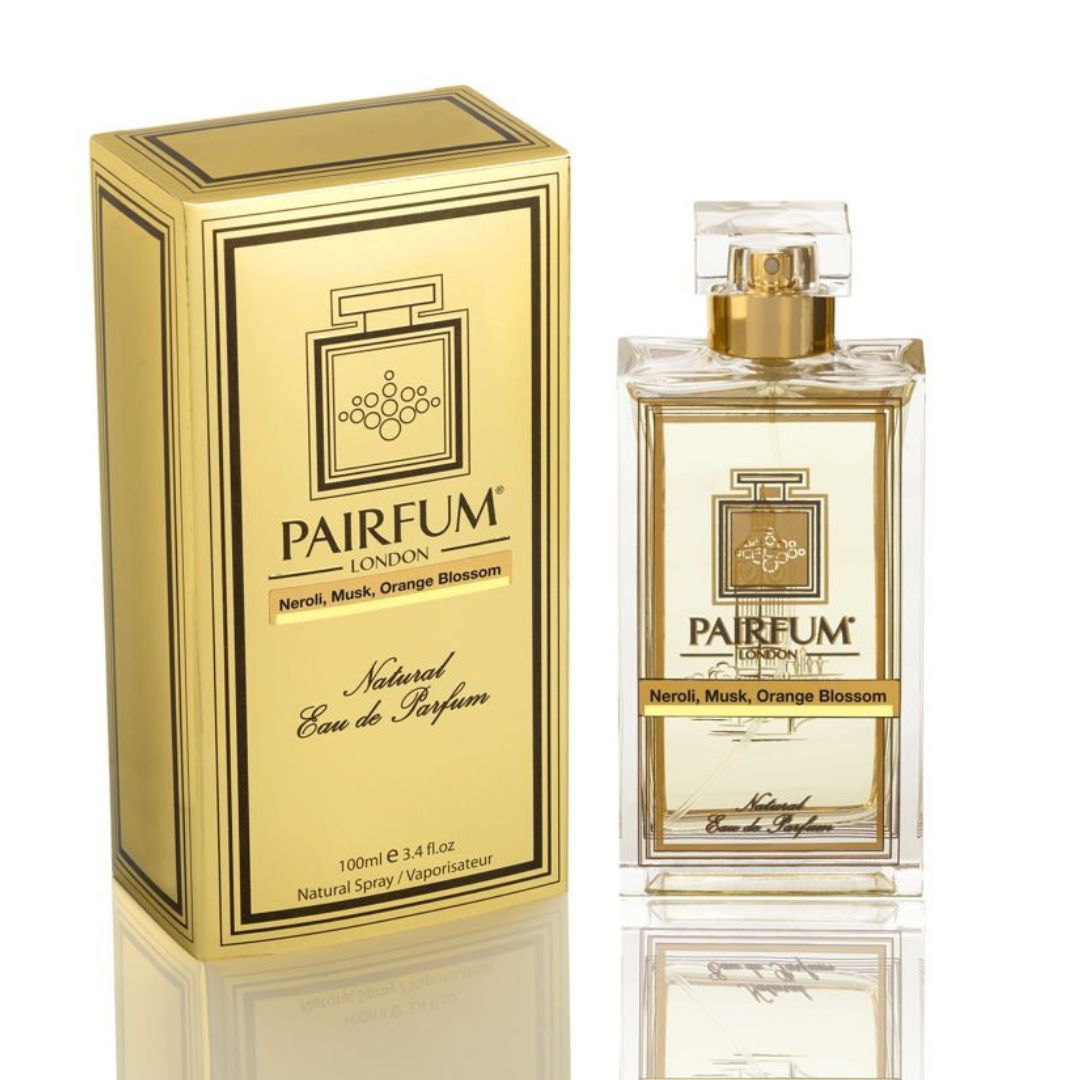
Authentic Neroli, Musk & Orange Blossom

Trusting Your Nose: Assessing the Perfume’s Fragrance

While exterior cues offer initial insights into a perfume’s authenticity, the all-important aroma—the heart of a true authentic fragrance masterpiece—is the supreme determining factor. Pay heed to these critical olfactory aspects when evaluating a perfume’s genuineness:

  • Complex fragrance profile: Authentic perfumes boast carefully composed, multi-layered fragrance profiles, meaning they contain a harmonious symphony of fragrant notes that evolve as the perfume dries down. Conversely, a fake fragrance generally lacks complexity and might emit an overwhelmingly strong or incongruous initial odour.
  • Longevity and sillage: Genuine perfumes are formulated with high-quality ingredients, ensuring their longevity on the skin and consistent sillage (the trail of fragrance left in the air as you move). Fake perfumes tend to dissipate hastily or undergo substantial alterations in scent profile, deviating from the original fragrance’s evolution over time.
  • Skin reaction: Applying fake perfumes to your skin can provoke adverse allergic reactions due to the presence of harmful chemicals during the perfume manufacturing process. Genuine perfumes are meticulously crafted with skin-safe components, curating a pleasant and irritation-free aromatic experience.

Spotting Fake Perfume Online

With the rise of online shopping, it has become easier for counterfeiters to sell fake perfumes through dubious platforms. To protect yourself, always buy from trusted retailers and avoid flea market stalls or suspiciously discounted products. Look out for signs like fake packaging, inconsistent branding, or prices that seem too good to be true when purchasing perfumes online. For Christmas shoppers, this vigilance is especially crucial, as the holiday season is rife with counterfeit goods targeting unsuspecting buyers.

Protecting Your Investment: Safeguarding against Fake Perfume Purchases

Avoiding counterfeit fragrances requires conscious effort and vigilance, especially when purchasing fragrances online. Here are some essential tips to ensure the authenticity of your perfume investment:

  • Reputable retailers: Always prioritise purchasing your perfumes from a trusted retailer, established department stores, large fragrance shops, or directly from the perfumer’s official website. Recognised retailers offer a safer shopping experience and are more likely to stock the real thing.
  • Avoid dubious platforms: Steer clear of unknown or unverified online platforms, flea markets, or street vendors, as they pose a considerable risk of exposure to counterfeit products.
  • Compare prices: While a luxury fragrance may seem enticing at a significantly reduced price, it is important to remember that if a deal seems too good to be true, it probably is. Genuine perfumes typically have a consistent price range across reputable retailers, and significant deviations may signal a fake product.
  • Validate batch codes: Authentic perfumes carry a batch code—a unique sequence of numbers and letters that correspond to the perfume’s manufacturing information. Verifying this batch code with the perfume company or through online databases like CheckFresh or CheckCosmetic can help validate a fragrance’s genuineness.
  • Test before you buy: Whenever possible, request a sample or tester from the retailer before purchasing the full-sized product. This allows you to carefully test for allergic reactions and to evaluate the fragrance on your skin, ensuring it aligns with your expectations and offering the opportunity to examine the perfume’s characteristics closely.

Impact of Fake Perfume on the Industry

The proliferation of counterfeit perfumes is not just a consumer issue but one that affects the entire fragrance industry. Designer perfume brands invest heavily in creating unique and high-quality scents. Counterfeit products undermine these efforts, leading to financial losses and damaging the reputation of legitimate businesses. By choosing to purchase only authentic fragrances, consumers help support the industry and maintain the high standards that designer fragrance brands uphold. This issue extends beyond perfumes to include counterfeit cosmetics, which also pose significant risks to consumers.

The Most Counterfeited Fragrances in the World

Within this report by Market Realist, you will notice that these fragrances are international best sellers often found around the world from Hong Kong to the UK in popular recognised retailers like the Perfume Shop. It is popularity of these fragrances that appeal for any person who fancies themselves as a fake perfume seller.

  • Chanel No. 5 
  • Creed Aventus
  • Dior Sauvage 
  • Paco Rabanne 1 Million
  • Armani Acqua di Gio

What to Do if You’ve Bought a Fake Perfume

If you suspect that you’ve bought a fake perfume, act quickly. Contact the seller to report the counterfeit goods and request a refund. If the purchase was made online, report the fake goods to the platform to help prevent others from falling victim to the same scam.

You may also want to alert the perfume brand directly to help them combat the spread of counterfeit products. It’s crucial to avoid fake perfume sellers who may continue to exploit other unsuspecting shoppers.

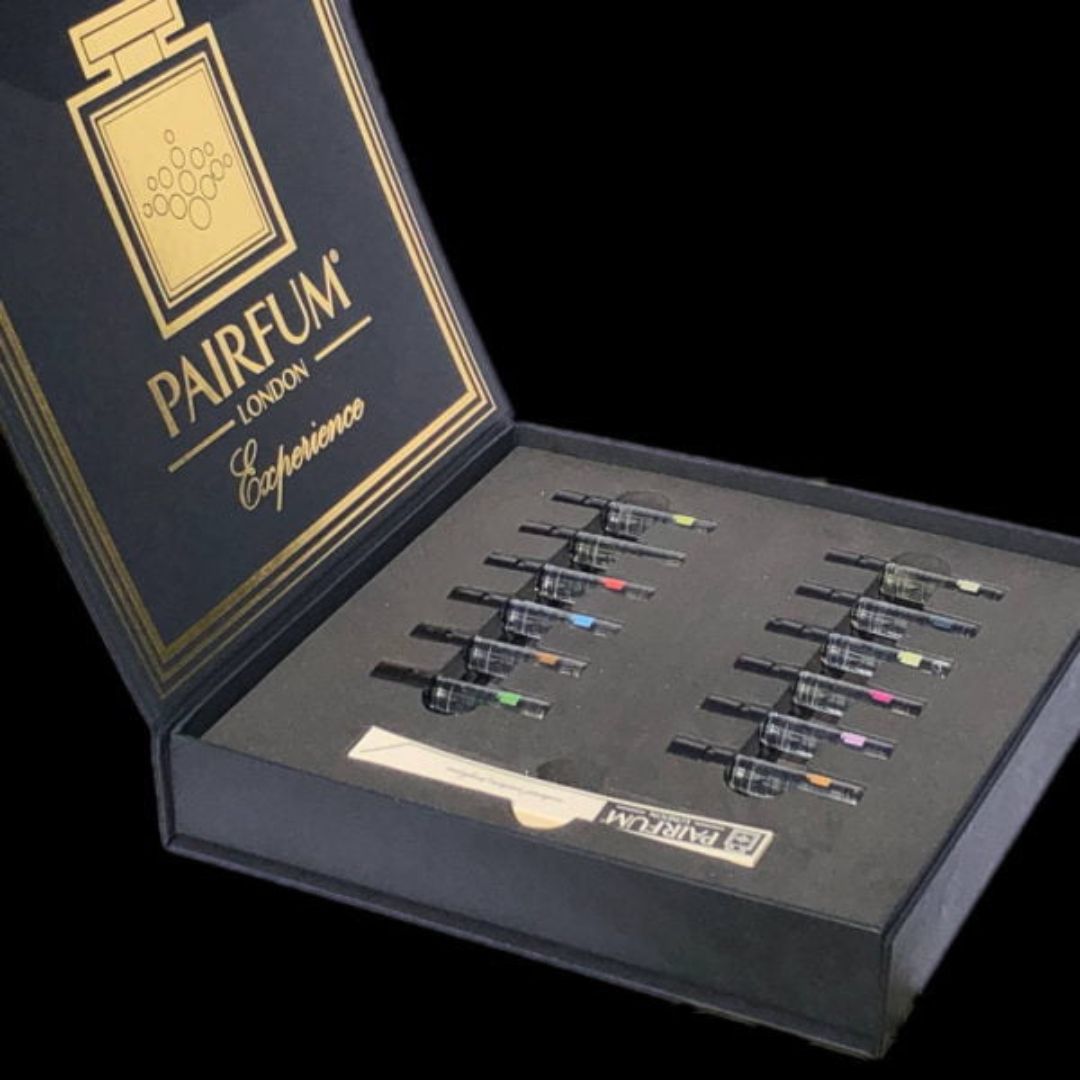
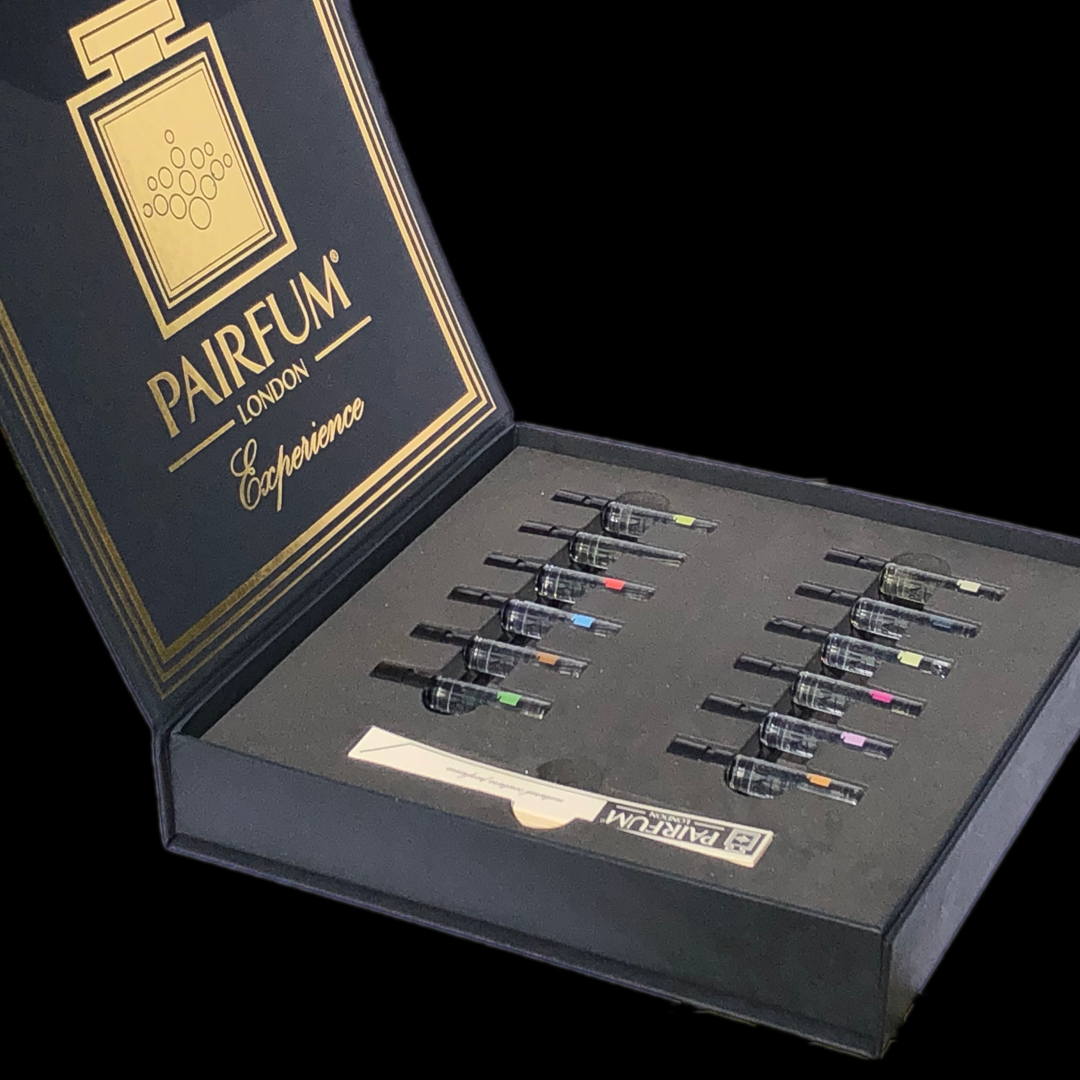
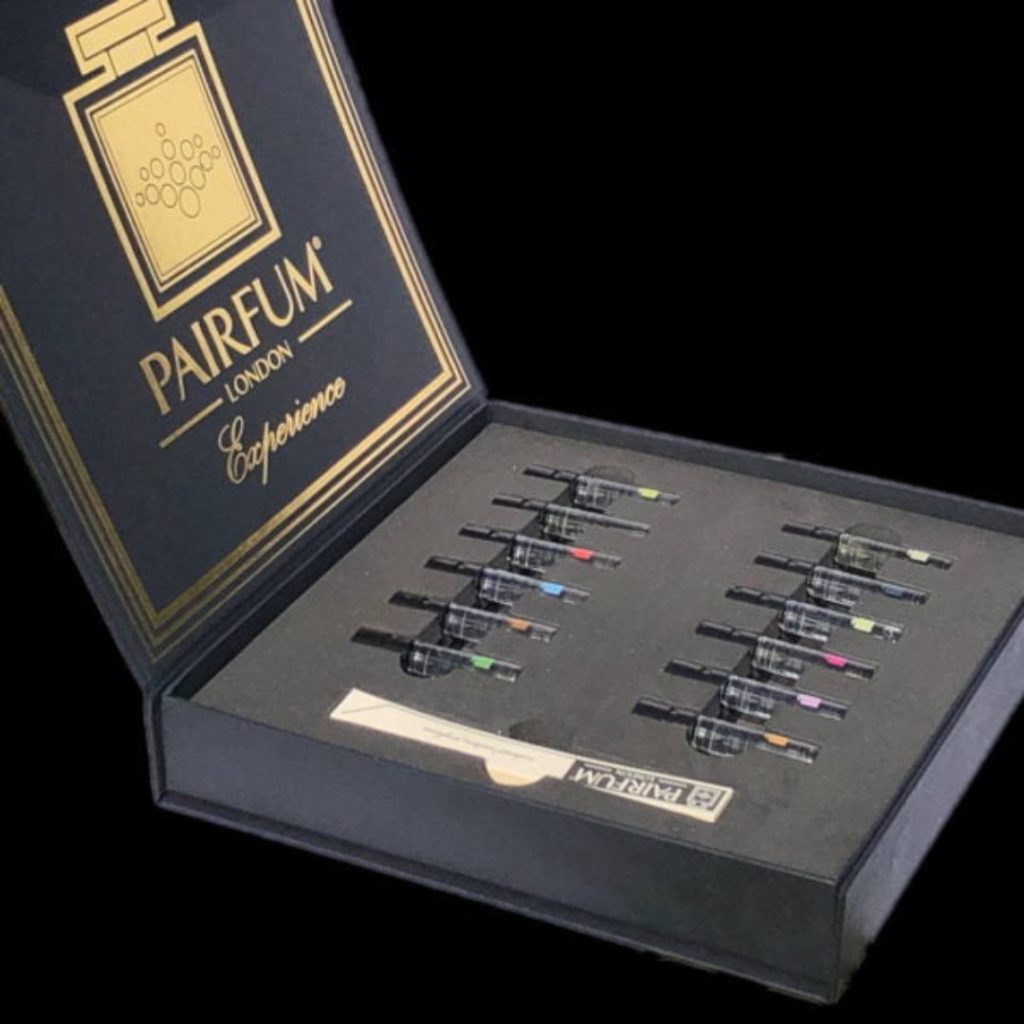
Perfume Experience Box 1080 1080

Embrace Authenticity with Pairfum London’s Exquisite Fragrances

In the pursuit of olfactory exquisiteness, embracing authenticity is paramount. With the knowledge and tools to distinguish genuine perfumes from their counterfeit counterparts, you can confidently indulge your senses in the dynamic world of fragrances. Trust the refined and discerning expertise of Pairfum London, the boutique perfumery house renowned for its acutely developed sensitivity for the taste and ‘zeitgeist’ in fragrance.

Avoid imitation perfumes and explore our enticing collection of natural luxury fragrances, crafted with meticulous attention to detail and housed within impeccable packaging befitting of our luxurious charm. Experience unparalleled olfactive profiles and supreme quality as you unveil the essence of authenticity in each enchanting perfume. Elevate your olfactory journey beyond the risks of deceit and savour the world of unadulterated fragrance delights, only at Pairfum London.

If you are looking to adopt a new fragrance aroma but are unsure where you should start, we would recommend the Ideal Perfume Experience to discover your new favourite perfume without the risk of purchasing a dupe or an imitation perfume. Whether you are in Hong Kong or elsewhere, Pairfum London provides you with the latest news in luxury fragrances, helping Christmas shoppers and enthusiasts alike find their perfect scent among popular brands, without ever having to worry about replicas.

Woody Fragrance Family

The Woody Fragrance Family: A World Of Warm, Exotic & Resinous Aromas

Immerse yourself in the opulent tapestry of the woody fragrance family & ingredients, a captivating realm where earthy depths and enigmatic sensuality converge to create an aura of mystery and sophistication. As versatile foundations or compelling focal points, woody notes possess the unique ability to heighten the complexity and allure of scent compositions, anchoring ephemeral aromas in an intricate dance of olfactory delight.

We are Pairfum London, an esteemed boutique perfumery house renowned for our acutely developed sensitivity for the taste and ‘zeitgeist’ in fragrance.
We invite you on a captivating journey into the world of woody fragrances. Unravel the nuances and enchanting facets of this evocative scent family and explore the rich tapestry of earthy, sophisticated essences that populate this beguiling olfactory domain. Allow your senses to revel in the exquisite symphony of woody scentscapes, embracing the enigmatic allure and inimitable richness they evoke.

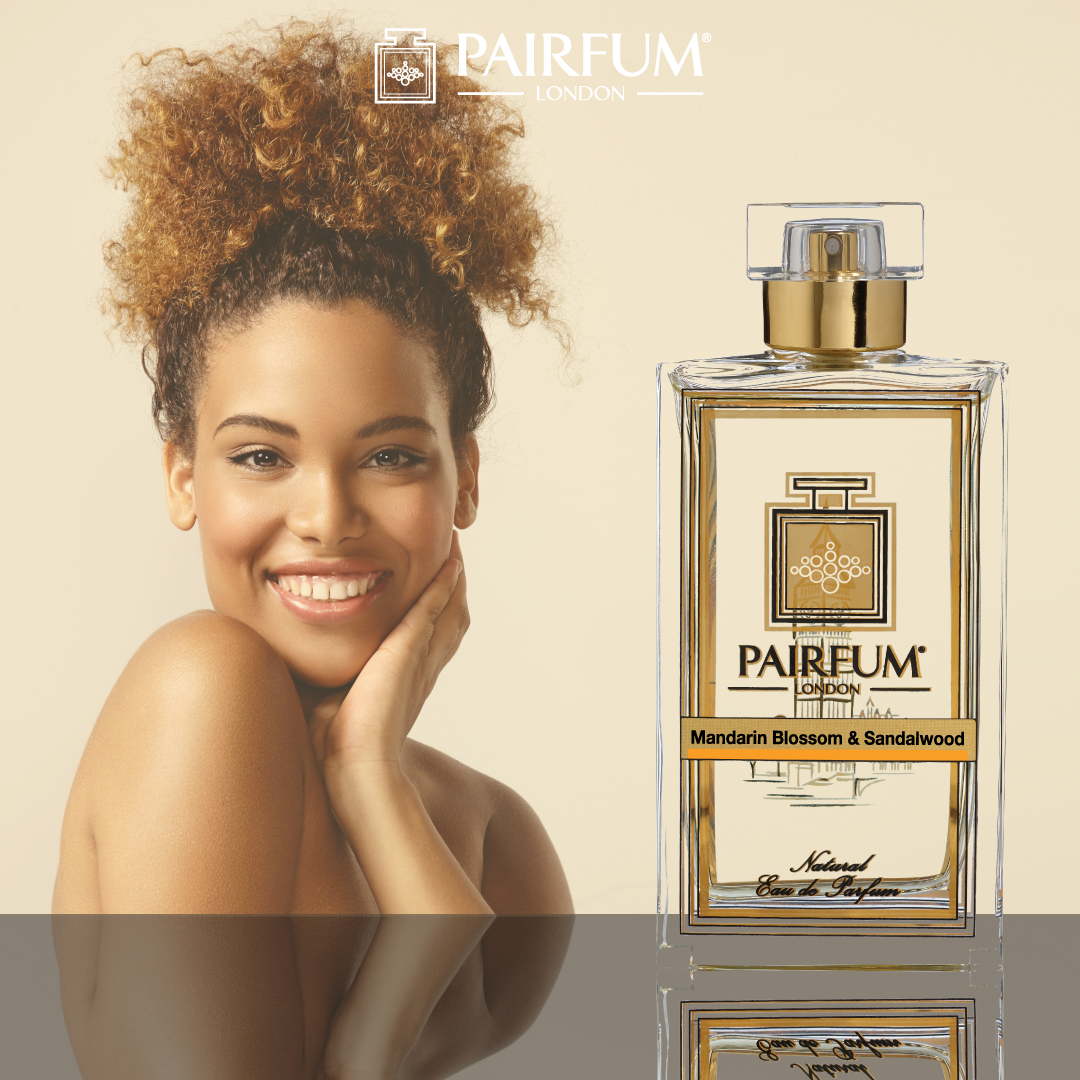
Pairfum Person Reflection Mandarin Blossom Sandalwood Perfume Woody Fragrance Eau De Parfum

Delving into the Depths: An Ode to the Woody Fragrance Family

Indulging in the rich tapestry of aroma families, we often find ourselves captivated by the sensual allure of woody fragrances. These mesmerising compositions weave a narrative spanning from earthy depths to the boundless skies above, enchanting with their soothing embrace and evoking a profound connection to nature.

A symphony of forest-fresh melodies, the woody fragrance family invites us to embark on an olfactory journey of serenity and warmth, uncovering its exquisite mysteries along the way. Delve with us into the enchanting world of woody perfume as we unravel the history, quintessential characteristics, and diverse inspirations that define this exquisite aromatic family.

Cultural Significance of Woody Scents

Throughout history, the allure of woody scents has been deeply intertwined with cultural and spiritual practices. From the sacred incense burned in ancient temples to the use of sandalwood in Ayurvedic rituals, woody fragrances have long been revered for their grounding and meditative qualities.

In many cultures, the woody scent of cedar, pine, and oakmoss has been associated with purity and connection to the divine, creating a profound link between scent and spirituality. Today, this connection continues to influence modern perfumery, where woody notes are often chosen to evoke a sense of tradition, stability, and timeless elegance.

Branching Out: The History and Evolution of Woody Fragrances

The allure of woody and fresh fragrances traces back to the roots of perfumery itself, weaving a storied connection to ancient cultures fascinated with the naturally comforting and spiritually uplifting effects of tree-derived resins, barks, and roots. For centuries, these complex essences have been coveted for their transcendent perfume as well as their application in religious, medicinal, and meditative ceremonies.

From the prestigious agarwood (oud wood) utilised in traditional Arabic perfumery to the sacred sandalwood revered in Indian culture, the evolution of woody fragrances has seen an expansion in the aroma palette, with modern creations marrying classic profiles with innovative twists. Today, perfumers continue to push the boundaries by blending woody notes with other fragrance families, resulting in compositions that are both familiar and ground-breaking.

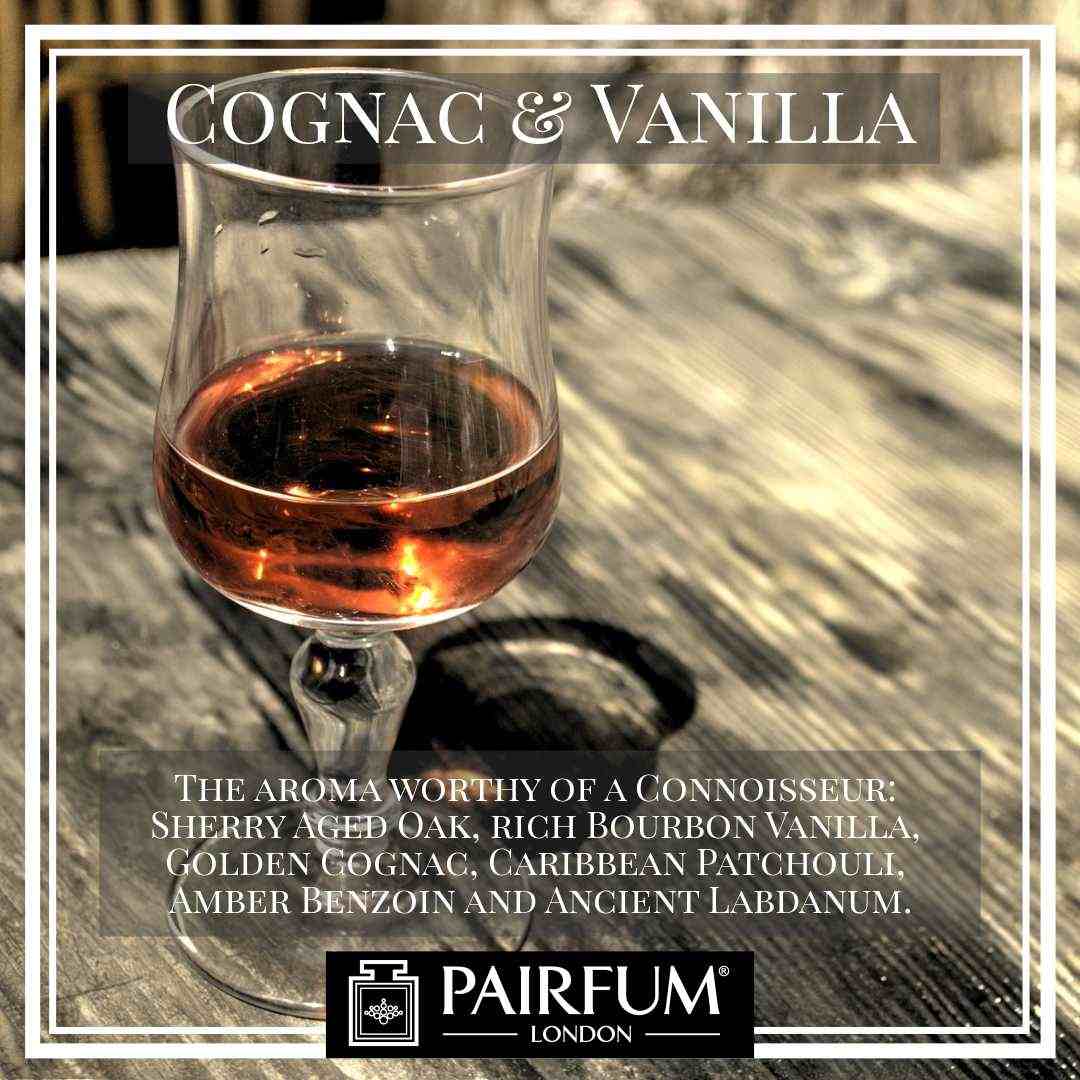
Pairfum London Cognac Vanilla Oak Coconut Woody Perfume

A Forest At Heart: The Typical Woody Fragrance Notes

Woody perfume notes encompass a diverse range of unique ingredients with different olfactive profiles: aromatic woods, dry roots and sophisticated leaves. Here is an overview of the typical woody fragrance ingredients:

Sandalwood: Valued for its sweet, sensual, and creamy aura, sandalwood has been a cornerstone of Ayurveda and traditional perfumery for millennia. The refined woody note of sandalwood offers a smooth, opulent, and velvety undertone to the heart of any composition.

Patchouli: A unique and multifaceted aromatic, patchouli serves as the core of several celebrated woody fragrances. Its distinctly rich, earthy, and slightly wet aroma invites thoughts of lush forests and soft rain, creating a strong and distinctive woody base note for any perfume composition.

Cedarwood: Renowned for its soothing properties and pleasantly fresh aroma, cedar evokes the sensations of a forest walk with its earthy, dry, and slightly resinous undertones. The calming essence of cedarwood imparts a sense of serenity and warmth to any perfume. The robust and earthy character of cedarwood and vetiver makes woody fragrances a quintessential masculine scent, exuding confidence and a connection to nature.

Vetiver: Rich and earthy, this complex aromatic grass offers a robust, smoky, and distinctively grounding profile that lends a unique charm to many fragrances. Vetiver oil is extracted from the root and often serves as the cornerstone of the woody fragrance family, its sensual embrace intensifying the depth and resonance of other woody notes.

Oud Wood: A lustrous and valuable resin derived from the agarwood tree, oud wood boasts a rich, deep, and intoxicatingly sensual character. Revered for centuries in the East and treasured by Western perfumers, oud perfume has gained a mesmerising global appeal thanks to its balsamic, woody, and smoky essence.

Guaiac Wood: Has a distinctive olfactive profile characterised by a smoky, woody aroma with subtle balsamic undertones. It often features a slightly sweet, leathery nuance and a hint of spice, giving it a warm and complex scent. This note is commonly used to impart depth and richness in fragrances, particularly in woody or oriental compositions.

Oak has a fragrance profile marked by a robust, earthy woodiness, often accompanied by dry, slightly bitter undertones. It can also exhibit a faintly smoky or mossy character, adding a sense of depth and grounding to fragrances. Oak notes are frequently used in chypre and woody perfumes to evoke strength and natural warmth.

Eau De Parfum Person Reflection Grapefruit Pepper Black Cedar Fresh Woody Fragrance Family

The Role of the Fragrance Genealogy in Understanding Woody Scents

The fragrance genealogy and the fragrance wheel, are tools often used by perfumers to provide a visual representation of how different fragrance families relate to one another. For example, within the fragrance wheel, the woody family occupies a unique position, bridging the gap between earthy and spicy notes.

Understanding the place of woody scents within the world of fragrances can help perfume enthusiasts better appreciate the nuances and complexity of these aromas, as well as how they interact with other families like floral, citrus and oriental fragrances. The woody fusion of deep woods and cool, watery notes, evoking the serenity of a forest by the sea. The earthy warmth of cedar meets the crisp, ozonic breeze, ideal for those who enjoy a fragrance that is both invigorating and soothing.

Subcategories within the Woody Fragrance Family

The following subcategories allow perfumers to craft fragrances that can range from fresh and invigorating to rich and sensual, providing endless possibilities for creativity:

Woody Green: The fusion of grounding woody notes with crisp, verdant green elements evokes the essence of a tranquil forest at dawn, where the earthy richness of woods meets the fresh vitality of nature. This combination offers a harmonious balance between the deep, resonant tones of cedarwood or vetiver and the lively, dewy scents of freshly cut grass or moist leaves, making it ideal for those who appreciate a scent that is both invigorating and grounding.

Woody Spice: The rich, earthy depth of woods melds seamlessly with the warmth and intensity of aromatic spices, creating a captivatingly robust and spicy fragrance. Imagine the smoky allure of sandalwood or patchouli intertwined with the piquant kick of pepper, nutmeg, or clove. This category is perfect for those who desire a scent that is both comforting and bold, evoking a sense of timeless sophistication and exotic allure.
Woody Florals: A sophisticated blend where the timeless elegance of floral notes intertwines with the grounded warmth of woody accords, creating a fragrance that is both delicate and enduring. Imagine the softness of jasmine or rose wrapped in the embrace of sandalwood or amber, offering a balanced composition that is both enchanting and refined. This category suits those who seek a scent that embodies both strength and grace, perfect for any occasion where subtlety and sophistication are key.

Woody Aqueous: A refreshing yet grounding fragrance where the deep, resonant notes of woods are uplifted by the cool, watery freshness of aqueous elements. This combination evokes the serene ambiance of a forest by the sea, where the crisp, ozonic breeze meets the earthy warmth of cedar or oak. Ideal for those who appreciate a scent that is both invigorating and soothing, this category captures the essence of a tranquil escape into nature’s embrace.

  • Kenzo Homme – Kenzo – 1991

Woody Citrus: The refreshing zest of citrus effortlessly marries with the grounded warmth of woody notes to form a refined and opulent blend that exudes timeless sophistication and modern allure. Vetiver and sandalwood often accompany citrus elements in these compositions, creating a rich and layered scent profile.

  • Acqua Di Selva – Victor – 1947
  • Vétiver – Carven – 1957
  • Bulgari pour Homme – Bulgari – 1995
  • Ginger, Elemi & Vetiver – Pairfum London – 2020

Woody Fruity: The interplay between robust woody notes and juicy, succulent fruits creates a dynamic and captivating fragrance experience. This combination melds the grounding essence of cedar, sandalwood, or patchouli with the sweet, vibrant notes of apple, peach, or mango, resulting in a scent that is both earthy and refreshing. Ideal for those who appreciate a natural, yet invigorating scent profile that is both sophisticated and lively.

  • Boss Bottled – Hugo Boss – 1998

Woody Aromatic: The fusion of rich, woody bases with aromatic herbs produces a fragrance that is both invigorating and grounding. Notes of cedar, vetiver, or sandalwood are elevated by the fresh, herbaceous tones of rosemary, thyme, or lavender, creating a composition that exudes both strength and serenity. This fragrance family is perfect for those who seek a scent that is refreshing yet deeply rooted in nature’s essence.

Woody Woody: A powerful and deeply resonant fragrance family that doubles down on the rich, earthy tones of wood. Cedar, sandalwood, and patchouli dominate this category, creating a scent that is intensely grounded and warm, evoking the tranquillity and mystery of dense, ancient forests. This fragrance is ideal for those who appreciate a scent that is robust, enduring, and richly textured.

  • Gucci Rush For Men – Gucci – 2000

Woody Ambery: A sophisticated blend that combines the warmth of woody notes with the smooth, soft nuances of amber. This fragrance family delivers a luxurious and enveloping scent, where the richness of sandalwood or cedar meets the velvety, resinous quality of amber, creating a comforting and elegant aroma. Perfect for those who prefer a scent that is both understated and deeply alluring, offering a sense of refined warmth.

  • Joop! Homme – Joop! – 1989

Woody Oriental: The marriage of exotic oriental notes with deep, woody bases creates a fragrance that is both mysterious and opulent. This category layers the rich, balsamic tones of amber, vanilla, and spices, over a foundation of woods like sandalwood or patchouli. The result is a scent that is both sensual and vibrant, perfect for those who are drawn to a fragrance that is bold, complex, and irresistibly exotic.

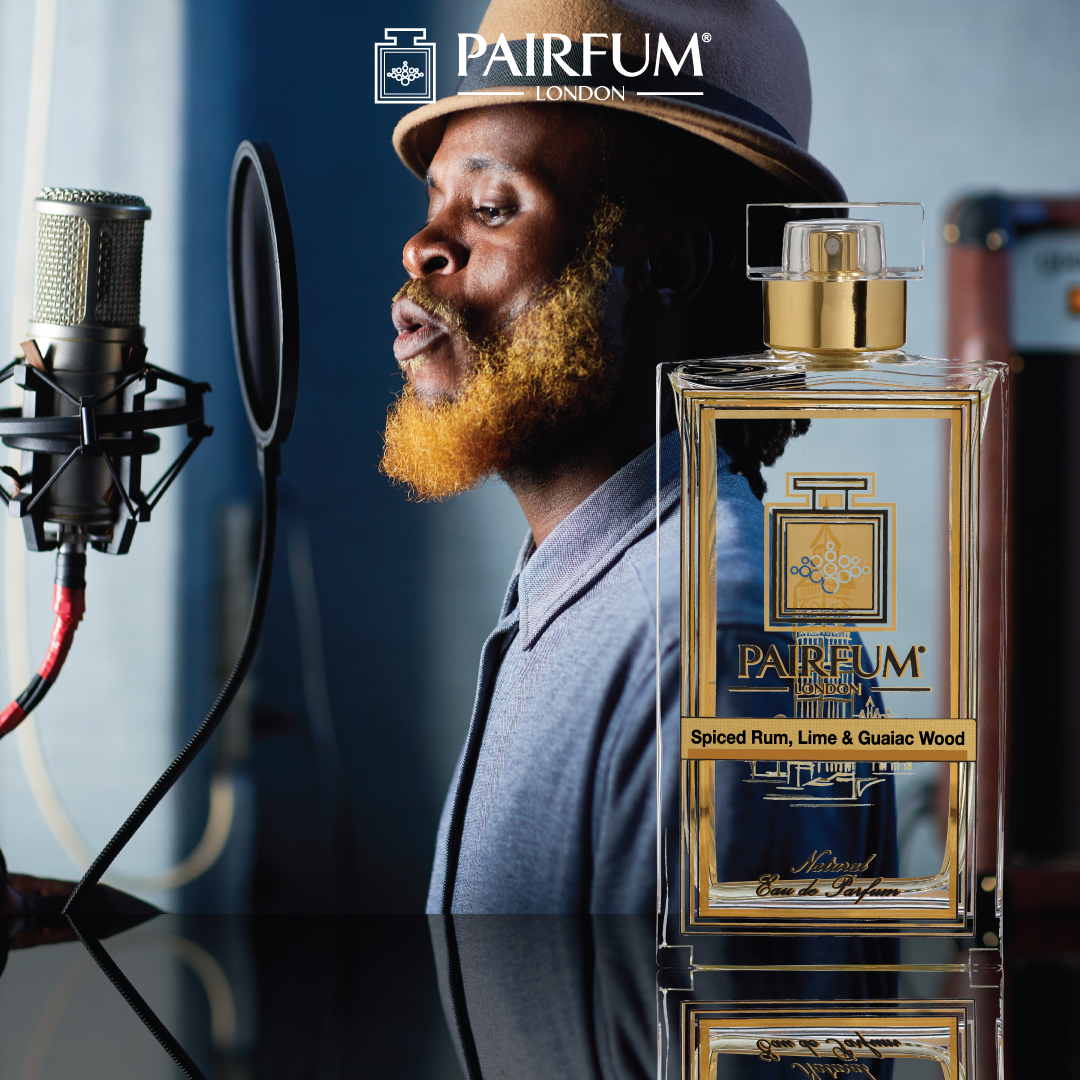
Pairfum Person Reflection Spiced Rum Lime Guaiac Wood Family Eau De Parfum Man

Modern Interpretations and Innovations in Woody Perfumes

In the ever-evolving world of perfumery, woody fragrances have seen a resurgence in popularity, with modern interpretations that push the boundaries of traditional scent profiles.

Today’s perfumers blend classic woody notes with unexpected ingredients like citrus, soft floral notes, and even oriental spices to create compositions that are both innovative and deeply rooted in tradition. This fusion of the old and new results in woody perfumes that are versatile, contemporary and uniquely captivating.

Complementary Accords: Synergistic Aromatic Pairings

The woody fragrance family’s intrinsic versatility opens doors for creative pairings and inspiring exploration. Fusing woody notes with complementary chords, a new generation of master perfumers has forged ingenious accords that seamlessly blend the warmth of wood with the refreshing appeal of other aroma families. Here, we spotlight some of the most alluring combinations:

Citrus and Wood: Enveloped by the invigorating zest of fruits featured in citrus perfume like bergamot, lemon, and neroli, woody notes blossom into radiant compositions that awaken the senses and rejuvenate the spirit.

Floral and Wood: A romantic and alluring floral scent or floral note like jasmine, rose, or ylang-ylang – typical of floral fragrance or floral perfume – can intertwine gracefully with the warm embrace of woody notes, crafting an irresistible symphony of opulence and charm.

Oriental and Wood: The sensual mystery of ingredients from the oriental fragrance family oriental ingredients like amber, spices, and resins merges with the grounding aura of woody notes, resulting in a mesmerising interplay of intrigue and allure.

Fougère and Wood: Lavender’s refreshing herbaceous touch pairs beautifully with woodsy notes, crafting a delightful marriage of freshness and warmth that transcends seasonal boundaries.

Vanilla and Wood: The creamy and sensual aroma of vanilla beautifully complements the earthy notes in woody fragrances, creating a harmonious blend that is both inviting and luxurious.

Tonka Bean and Wood: Woody fragrances often feature the warm, sweet undertones of tonka bean, which adds a rich, comforting depth to the scent, enhancing its complexity and appeal.

Wood and Leather: The olfactive profile of woody fragrance ingredients combines seamlessly with leather, creating an accord that balances the warmth and depth of woods with the rich, smoky, and slightly animalic nuances of leather, resulting in a sophisticated and enduring scent

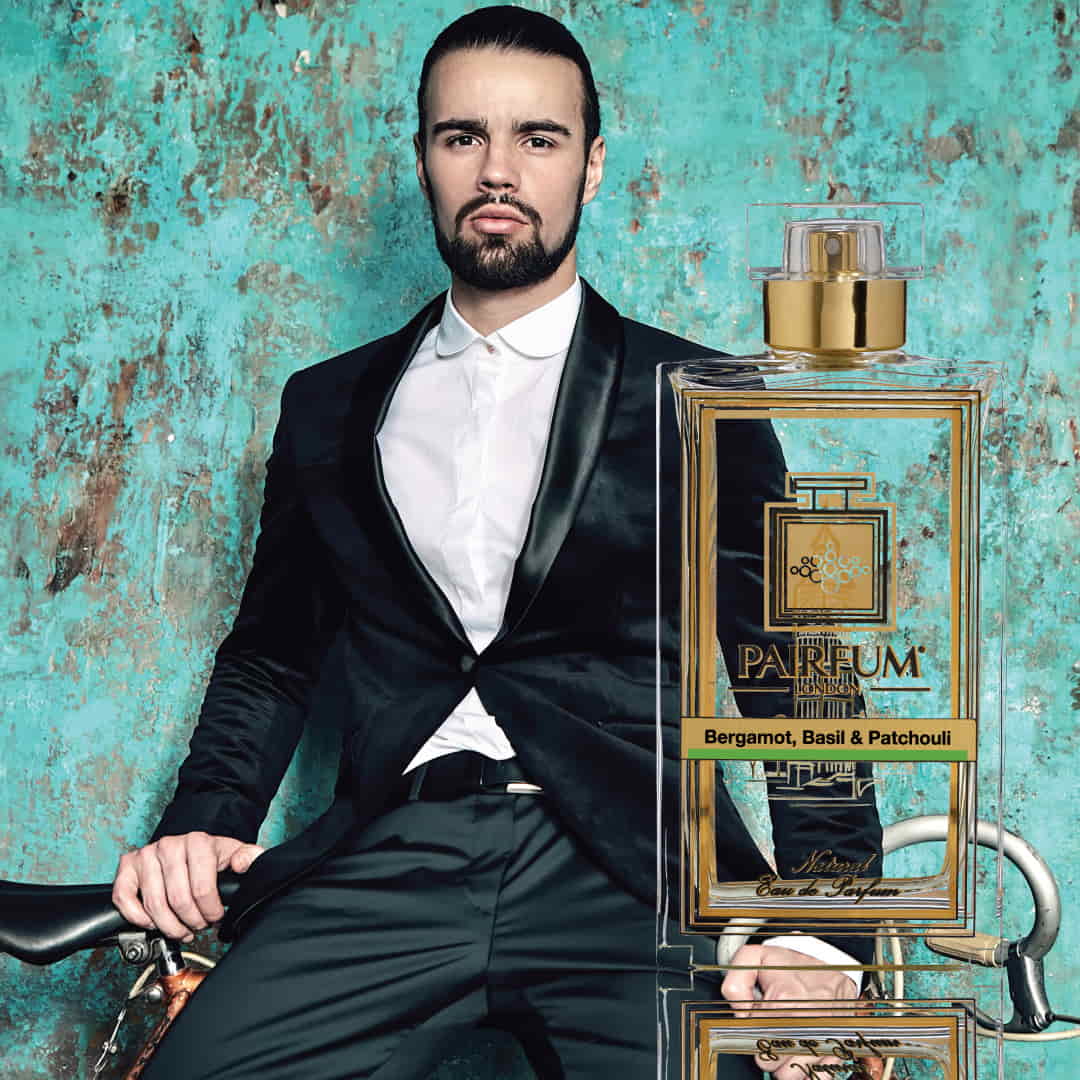
Eau De Parfum Person Reflection Bergamot Basil Patchouli Man Woody Perfume Family

How to Wear Woody Fragrances: Tips and Tricks

Woody fragrances are incredibly versatile, making them suitable for various occasions and seasons.

During cooler months, opt for deeper, richer scents featuring notes like vetiver, cedar, and oud wood, which provide warmth and sophistication. In warmer weather, lighter, fresher woods combined with citrus or floral scents can offer a refreshing and invigorating experience.

Whether you’re dressing up for a formal event or seeking a comforting everyday scent, there’s a woody fragrance that perfectly suits your needs.

Woody Perfume Ingredients: Fragrance Oil Extraction & Production

The production and extraction methods for woody fragrance oils and ingredients vary widely, depending on whether the ingredient is natural or synthetic.

Natural woody fragrance oils, such as sandalwood, cedarwood, and vetiver, are typically obtained through processes like steam distillation, solvent extraction or fermentation:

  • Steam distillation involves passing steam through the wood to extract its essential oils.
  • Solvent extraction uses chemicals like hexane to dissolve the wood’s aromatic compounds, which are subsequently separated from the solvent.
  • For more delicate woods, such as guaiac wood, CO2 extraction is sometimes employed, using supercritical carbon dioxide to capture the beauty of the scent with only minimal alteration.
  • Fermentation is a modern natural method, that is used both to produce and enhance fragrance ingredients.

On the synthetic side, chemists create wood-like fragrance oils through the synthesis of aromatic molecules, examples are Iso E Super or Ambroxan. These mimic or enhance the natural wood aromas. Synthetic materials can be designed to replicate the complexity of natural woods or to create entirely new olfactory profiles, offering perfumers greater versatility and consistency in their creations.

The choice between natural and synthetic methods often depends on sustainability, availability, performance, cost and the desired scent profile.

Eau De Parfum Person Reflection Cardamom Tonka White Oud Wood Perfume Hair

Environmental Impact and Sustainability in Woody Perfumery

As the demand for woody fragrances grows, so does the importance of sustainable sourcing and production practices.

Many of the materials used in woody perfumes, such as sandalwood and oud, are derived from trees that require careful management to avoid overharvesting. The perfume industry is increasingly focusing on sustainable practices, including the use of ethically sourced ingredients and supporting reforestation efforts.

By choosing sustainably produced woody perfumes, you can enjoy these luxurious scents while also contributing to the preservation of our natural environment.

Discovering Your Woody Fragrance Masterpiece

With a world of captivating fragrances awaiting you, take the time to sample and appreciate the abundant variety encompassed within the woody fragrance family. Seek out Pairfum London’s luxurious woody fragrance compositions, allowing yourself to savour the luxury of forest-fresh essences and indulge in the serene embrace of nature’s symphony.

As you embark on this enchanting olfactory journey, allow the fascinating, enchanting universe of woody fragrances to envelop your senses, unearthing your eternal connection to the earth’s bounty and embracing the serenity of nature.

Home Fragrances Featuring Woody Notes

The appeal of woody notes extends beyond personal fragrance into the realm of home fragrance. Scented candles, diffusers, and room sprays often feature woody elements like cedar, sandalwood, and patchouli to create a calming, grounding atmosphere. These scents not only enhance the ambiance of your living space but also evoke a sense of connection to nature, making them a popular choice for creating a serene and inviting home environment.
We are extremely proud of our home fragrance collection and certainly recommend our woody reed diffusers. Here is an example:

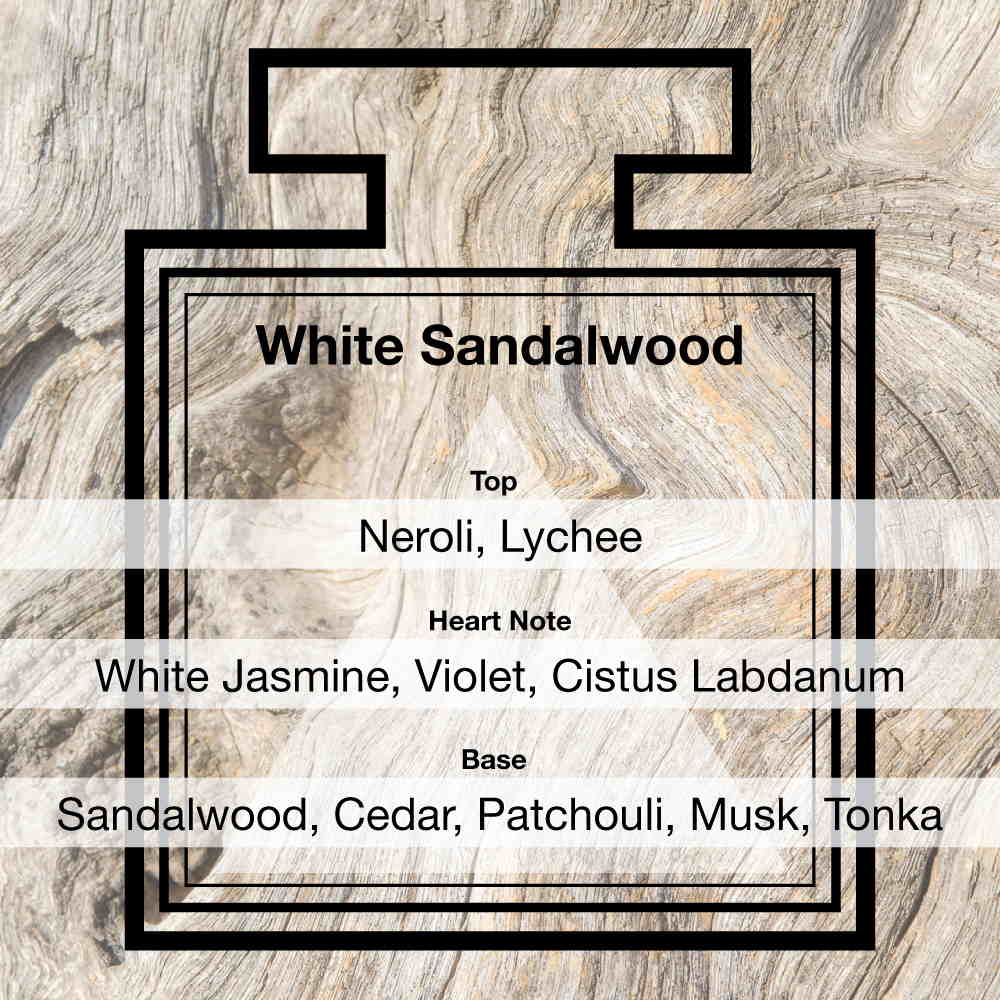
White Sandalwood Large ‘Bell’ Reed Diffuser:

  • A creamy sandalwood accord with a hint of Chypre. It includes top notes of Neroli and Lychee, a floral heart of White Jasmine, Violet and Cistus Labdanum, and a fond of sun-bleached Cedar, Patchouli, Musk and Tonka Bean.
White Sandalwood Reed Diffuser Woody Fragrance Family

Embracing Nature’s Symphony: Unveil Your Signature Woody Fragrance

Now that we’ve delved into the enchanting world of woody fragrances, it’s time to explore the unique compositions that resonate with your olfactory preferences. Each woody fragrance offers a captivating narrative that beckons you into nature’s embrace, where your senses are enveloped in harmonious melodies of earth, wood, and sky.

For those who appreciate both feminine and masculine fragrances, woody perfumes offer a perfect balance of strength and sophistication, making them a popular choice among men & women who seek a distinctive and timeless signature scent. We think you might like:

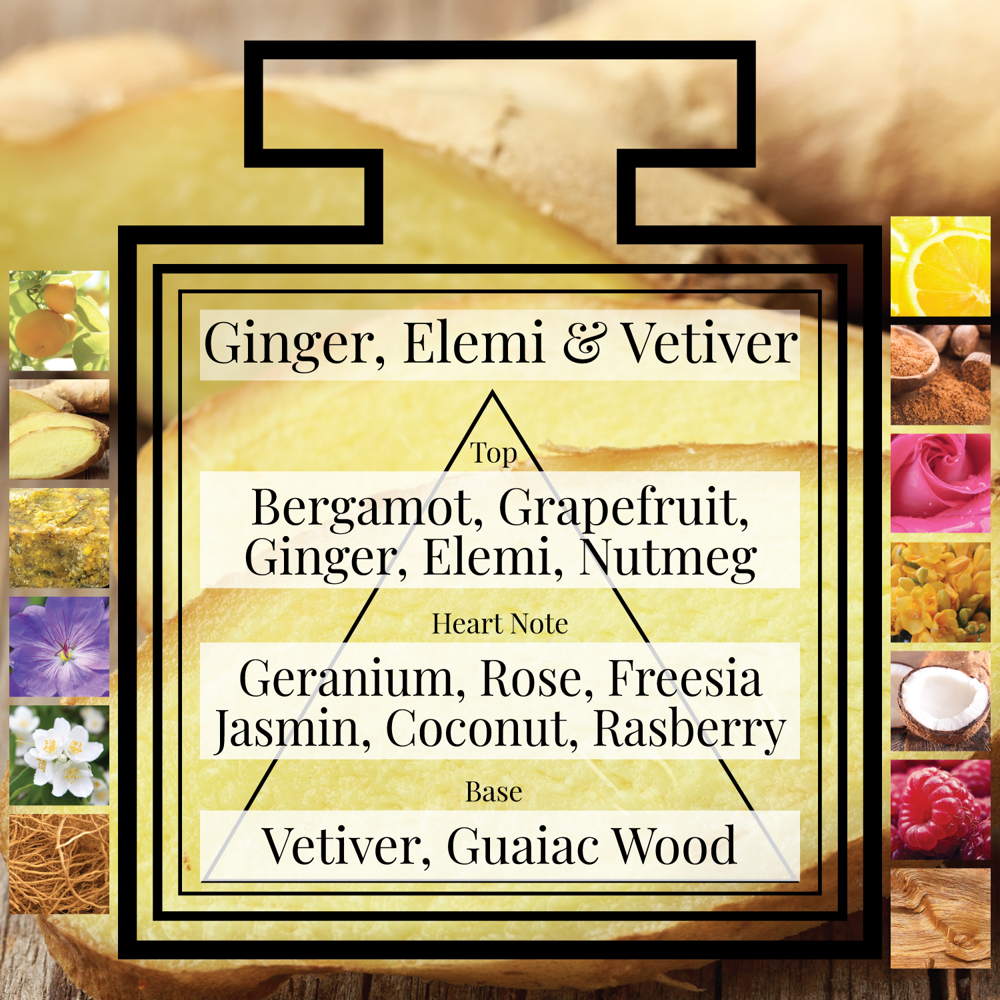
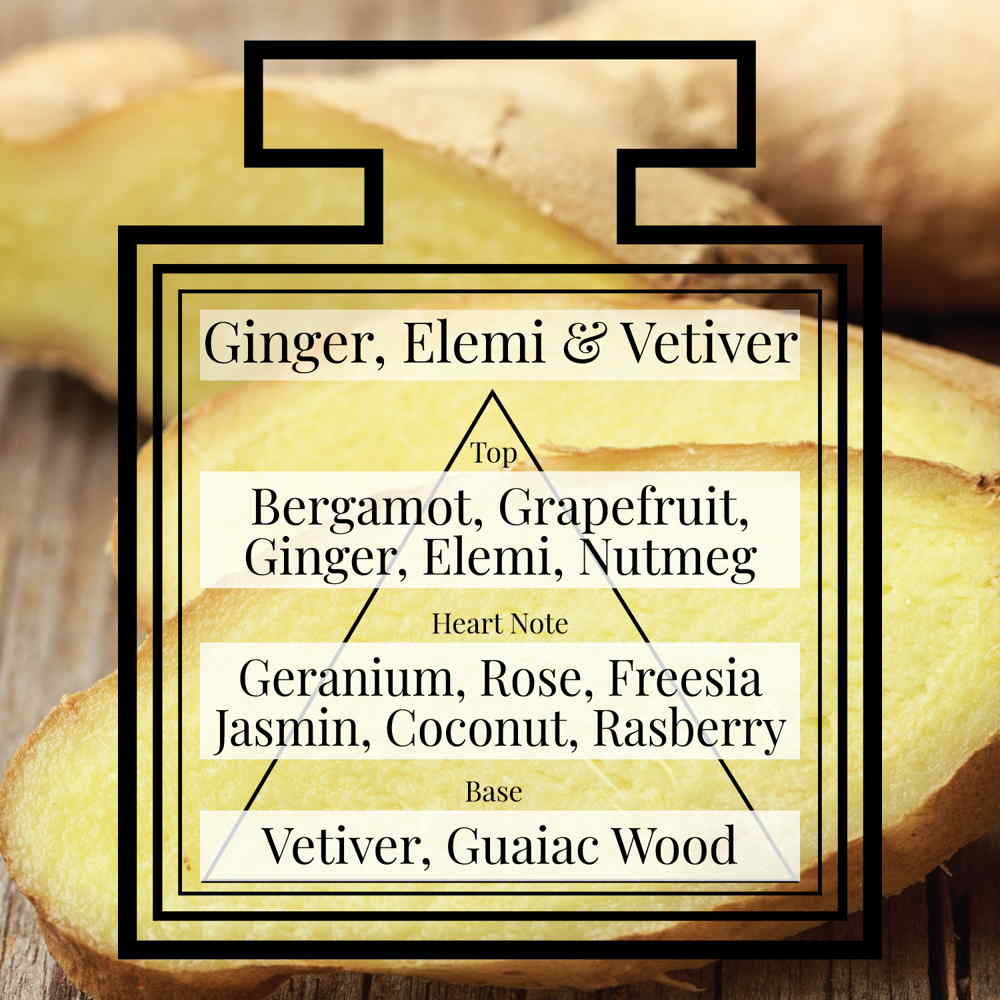
Ginger, Elemi & Vetiver – Eau de Parfum:

  • A surprising fusion of spices and freshness, it opens with notes of Bergamot, Grapefruit and hint of Lavender, combined with Ginger, Elemi, Nutmeg & Cinnamon. The heart is Geranium, Rose, Freesia, Gardenia, Jasmin and Orange Blossom, with fruity hints of Coconut and Rasberry. A base of Vetiver, Guaiacwood, Cedar, Amber, Cashmere Musks, Vanilla & Moss supports this note.

At Pairfum London, our meticulously crafted, boutique perfume and gift set are tailored to elevate your fragrance experience, creating a personalised symphony for your soul. Sample and savour our diverse collection, allowing our woody fragrance masterpieces to transport you to a serene state of tranquillity and harmony.

Discover your signature fragrance today – a timeless expression of your connection to the earth and its beautiful offerings. Immerse yourself in the luxurious world of Pairfum London, and ignite your senses with our collection.

Pairfum Woody Fragrance Ginger Elemi Vetiver Triangle Ingredients
Cedar Woody Scent Family
Citrus Perfume Ingredients

Citrus Perfume: The Invigorating Symphony of Zesty and Revitalizing Fragrances

Refresh and invigorate your senses as we dive into the vibrant world of the citrus perfume, the embodiment of a zesty, energetic burst that exhilarates and uplifts in equal measure. Complementing an array of fragrance compositions, citrus notes infuse an air of revitalisation, awakening the senses and imparting a radiant vivacity to even the most understated of scent sensations.

At Pairfum London, we are an artisanal boutique perfumery house enthralled by the unique allure of these sparkling bouquets..

Join us as we reveal the beauty behind the citrus perfume and the effervescent charm that distinguishes it from all other olfactory families. We explore the paradisiacal essence of citrus, a scintillating expression of vitality and zest that promises to elevate your fragrance experience to new and enchanting heights.

An Iconic Citrus Perfume

The Allure of Citrus Perfume: A Historical Perspective

Citrus perfumes have consistently captivated the world for centuries with their invigorating and uplifting aroma. Citrus fruits, like lemons, oranges, and bergamot, were primarily used for medicinal and cosmetic purposes in ancient Mediterranean civilizations. However, it was not until the 18th century that these vivacious aromas truly took centre stage in the perfumery world, thanks to the development of eau de cologne, a light, refreshing blend of citrus oils, whose popularity quickly spread throughout Europe. The love and demand for a citrus fragrance continued to grow, and our contemporary penchant for their revitalising qualities reflects the timeless appeal of these olfactory delights.

Defining Citrus Notes: An Olfactory Snapshot

Citrus notes are derived from the peel of various citrus fruits, which possess distinctive aromatic properties. These notes are characterized by their refreshing, zesty, and uplifting quality, making them ideal as a quintessential revitalising fragrance. Some common citrus notes include:

  1. Bergamot: Extracted from the rind of the bergamot orange, this note, originally from Italy, imparts a fruity, slightly bitter, and elegant aroma.
  2. Lemon: A familiar and invigorating note, lemon oil boasts a clean, fresh, and tangy fragrance reminiscent of a summer day. Sicilian lemon, in particular, offers an intense burst of freshness that is both energizing and revitalizing.
  3. Orange: Ranging from the sweet oil of the orange to the more intense bitter orange, these notes provide a succulent, juicy, and uplifting aroma. The delicate orange blossom, with its fresh scent, adds a layer of sophistication to the citrus family.
  4. Grapefruit: With its slightly bitter, invigorating scent, grapefruit adds a vibrant and zesty edge to any fragrance composition. Whether pink grapefruit or the classic variety, its sharpness lends a lively quality to eau de parfum creations.
  5. Mandarin: This sweet, juicy, and delicate citrus note adds a touch of playful charm to a perfume, imparting a sense of youthful exuberance. The inclusion of mandarin brings a fruity vibrancy, making it a popular choice in summer fragrances.
  6. Lime: The refreshing and energizing aroma of lime serves to evoke feelings of tropical relaxation and sunshine-filled escapes. Lime basil combinations have become a staple in modern designer fragrances, adding a sophisticated twist to the classic citrus scent.

Citrus Perfume Families: The Art of Aromatic Combining

Creating a well-rounded and captivating citrus perfume requires a delicate balance of harmonizing complementary notes, often paired with other aroma families, to create intriguing and complex compositions. The nuances of citrus merge seamlessly with a myriad of fragrance families. Discover how below with some truly iconic examples:

Citrus Citrus: Pure and unadulterated, this family highlights the fresh, zesty brightness of citrus fruits in their most radiant form. Bergamot, orange, lemon, lime, and grapefruit come together to create a crisp, energetic scent that is both invigorating and uplifting. Perfect for those who enjoy the sharp clarity and refreshing simplicity that only citrus can offer, this family embodies a classic and timeless vibrancy.

  • 4711 Original – 4711 – 1792
  • Dior Homme Cologne – Christian Dior – 2013

Citrus Floral: Combining zesty citrus and lush floral notes creates a delightful blend of exhilarating energy and elegant sophistication. This pairing is perfect for those who enjoy a contemporary twist on classic florals, often featuring orange blossom or neroli to enhance the floral bouquet.

  • Tabac Original – Mäurer & Wirtz – 1955
  • Chance Eau Fraîche – Chanel – 2007

Citrus Fruity: Invigorating citrus notes in combination with aromatic fruit essences form a vibrant and mouth-watering composition, perfect for capturing the essence of effervescent youthfulness. Mandarin, tangerine, and other citrus scents bring a fresh, fruity vibrancy that is irresistible.

  • Calyx – Clinique – 1967

Citrus Woody: The refreshing zest of citrus effortlessly marries with the grounded warmth of woody notes to form a refined and opulent blend that exudes timeless sophistication and modern allure. Vetiver and sandalwood often accompany citrus elements in these compositions, creating a rich and layered scent profile.

Citrus Green: The amalgamation of zesty citrus and crisp, verdant green elements evokes a sense of nature-infused rejuvenation, conjuring images of fresh meadows and revitalising spring mornings. This category is ideal for those who love to appreciate a fresh scent that is both invigorating and grounding.

Citrus Aqueous: The fusion of zesty citrus with watery, marine, and ozonic elements creates a refreshing and invigorating scent reminiscent of ocean breezes and crisp, cool waters. This combination captures the essence of a tranquil escape, making it an ideal choice for those who seek a light and breezy fragrance that embodies the serenity of the sea.

  • Acqua di Giò – Giorgio Armani – 1996
  • Polo Blue – Ralph Lauren – 2002

Citrus Spicy: The vibrant zest of citrus harmonizes with piquant, savoury, or pungent spices such as pepper, nutmeg, clove, and cardamom, resulting in a bold and dynamic fragrance. This blend adds an intriguing twist to the traditional citrus notes, perfect for those who enjoy a scent with a bit of heat and complexity, exuding both warmth and vitality.
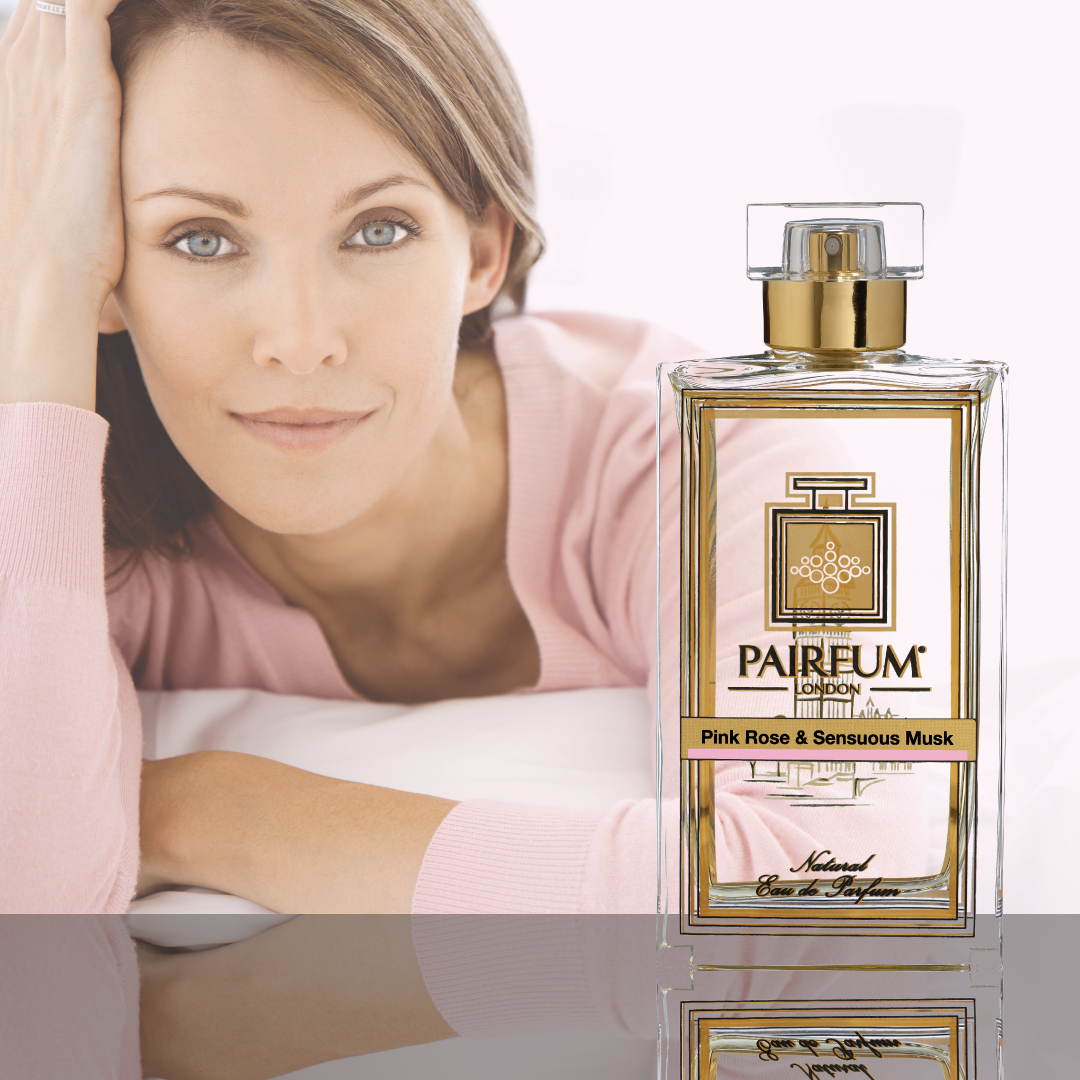
Citrus Aromatic: Fresh, invigorating citrus notes paired with aromatic herbs like rosemary, lavender, thyme, and artemisia create a lively and uplifting fragrance. This combination offers a crisp and clean scent, perfect for those who appreciate a fragrance that is both refreshing and invigorating, with a subtle nod to herbal sophistication.
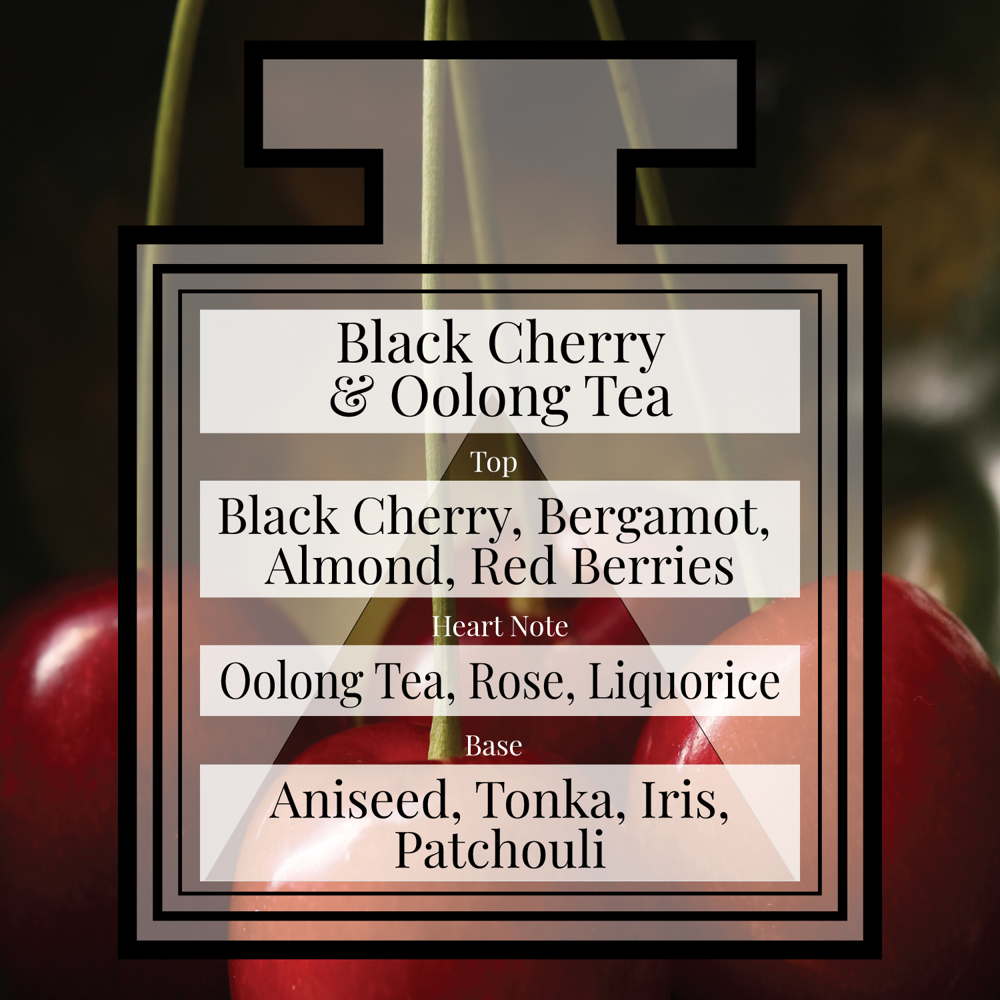
Citrus Chypre: The bright and tangy top notes of citrus work beautifully in the chypre accord with its rich, earthy base of oakmoss, patchouli or other woods. This classic combination delivers a sophisticated and timeless fragrance that balances freshness with depth, ideal for those who appreciate a scent that is both enduring and elegant.

Citrus Musky: The refreshing vibrancy of citrus intertwines with the warm, sensual undertones of musk, creating a fragrance that is both alluring and enduring. This blend offers a unique contrast, where the bright zest of citrus is softened and deepened by the musky base, perfect for those who seek a scent that is both fresh and seductive.

  • Cologne – Thierry Mugler – 2001
Lime Is A Citrus Perfume Ingredient

The Cultural Significance and Modern Appeal of Citrus Scents

Citrus perfumes have transcended their humble beginnings to become a global phenomenon, cherished for their universal appeal and versatility. In modern times, the popularity of citrus fragrances has only grown, with contemporary perfumers crafting exquisite blends that resonate with the tastes of today’s discerning fragrance lovers. From classic eau de cologne to avant-garde combinations featuring oud perfume and pink pepper, citrus notes continue to inspire creativity and innovation in the world of scent.

Appreciating the Art of Layering: The Power of Citrus

A captivating signature scent is often born from the process of layering, where individual essences are skilfully combined to create a uniquely personalized aromatic elixir. The zesty and uplifting nature of citrus notes allows them to nestle effortlessly amongst other fragrance elements, imparting a radiant freshness that invigorates and enlivens the scent.

Experimenting with citrus notes as the foundation or enhancement of a personalized perfume offers endless possibilities to amplify a fragrance’s olfactory story. When layering, however, always remember that balance is key; be mindful of contrasting or overpowering citrus notes so as not to dominate the intended harmony of the fragrance.
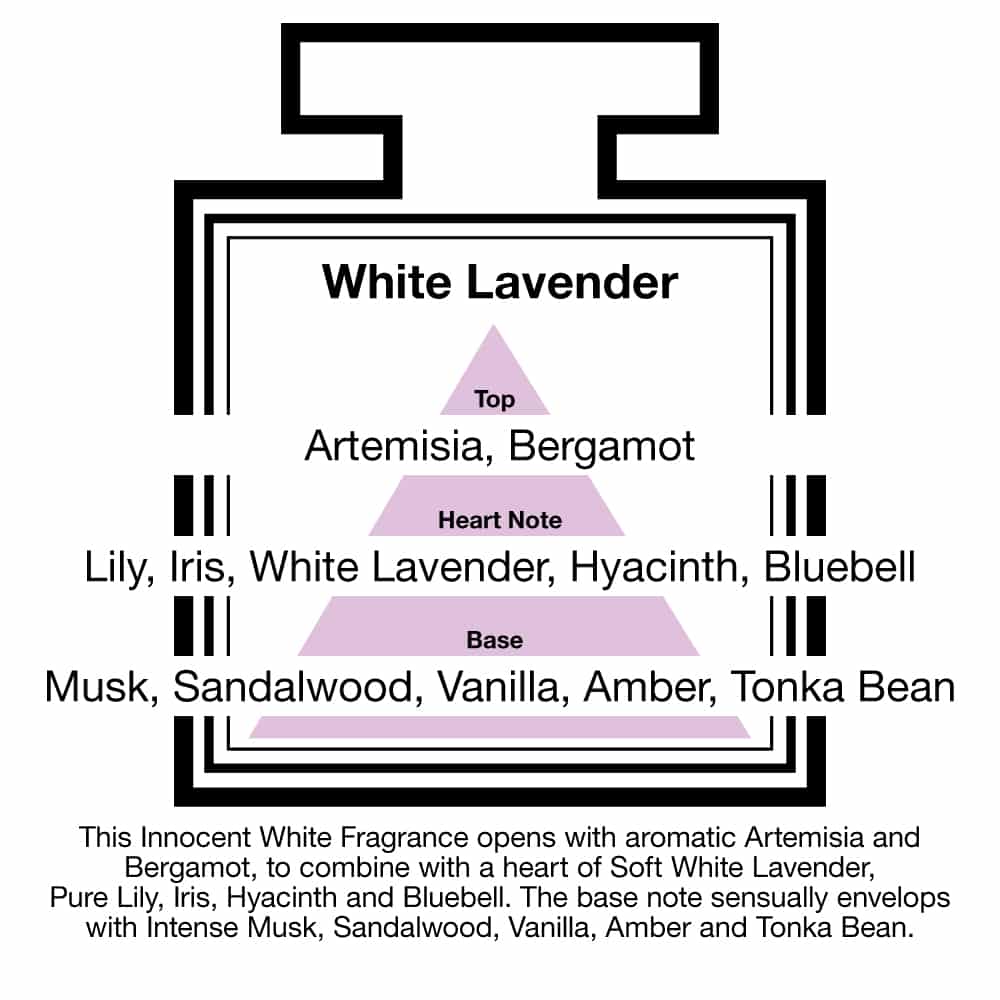
Choosing the Perfect Citrus Fragrance: Aligning with Your Personality

With a seemingly infinite array of citrus combinations to explore, how does one select the perfect citrus perfume to complement their unique aura? Consider the following criteria when selecting a scent that reflects your individuality:

  1. Emotional response: Citrus perfumes should evoke feelings of joy, energy, and revitalisation when experienced. Trust your instincts, and select a fragrance that resonates with you emotionally.
  2. Personality alignment: Consider your personality traits as guiding principles in your search for the ideal citrus aroma. Are you carefree and spirited or poised and sophisticated? Choose a fragrance that aligns with and accentuates your character. For those with a love for refined luxury, Eau de Parfum featuring citrus and vanilla may offer the perfect balance of elegance and vitality.
  3. Seasonal preference: While citrus perfumes are often associated with sunnier months, their versatility allows them to shine throughout the year. Experiment with different citrus combinations to find a perfume suited to your seasonal preferences. For example, a fresh scent with hints of lemon and jasmine may evoke the feeling of a perfect summer day, while a more robust blend featuring grapefruit and vetiver could be ideal for winter.
Pairfum Person Reflection Grapefruit Pepper Black Cedar Eau De Parfum

The Versatility of Citrus Fragrances: Enhancing Skin, Hair, and Clothes

Citrus perfumes are celebrated for their fresh and invigorating aromas, making them a versatile choice for more than just your pulse points. The zesty and uplifting nature of citrus notes can enhance not only your skin but also your hair and clothes, creating a harmonious scent that lingers throughout the day.

Citrus Perfume on Skin

When applied to the skin, citrus perfumes offer an immediate burst of freshness. The natural warmth of your skin helps to amplify the top notes of citrus fruits like lemon, orange, and grapefruit, creating an energizing and revitalizing effect. To make the most of your citrus fragrance on the skin, consider these tips:

  • Apply to Moisturized Skin: Perfume adheres better to well-moisturized skin, which helps to prolong the longevity of the scent. After showering, apply a layer of unscented lotion before spritzing your citrus perfume, allowing the fragrance to meld beautifully with your skin.
  • Focus on Pulse Points: The warmth generated by pulse points, such as the wrists, neck, and behind the ears, enhances the diffusion of citrus notes, making the scent more noticeable and enduring.
  • Layering: For a more complex and enduring scent, consider layering your citrus perfume with other fragrances. For example, a base of vanilla or lavender can add depth, while a touch of jasmine can introduce a subtle floral note.
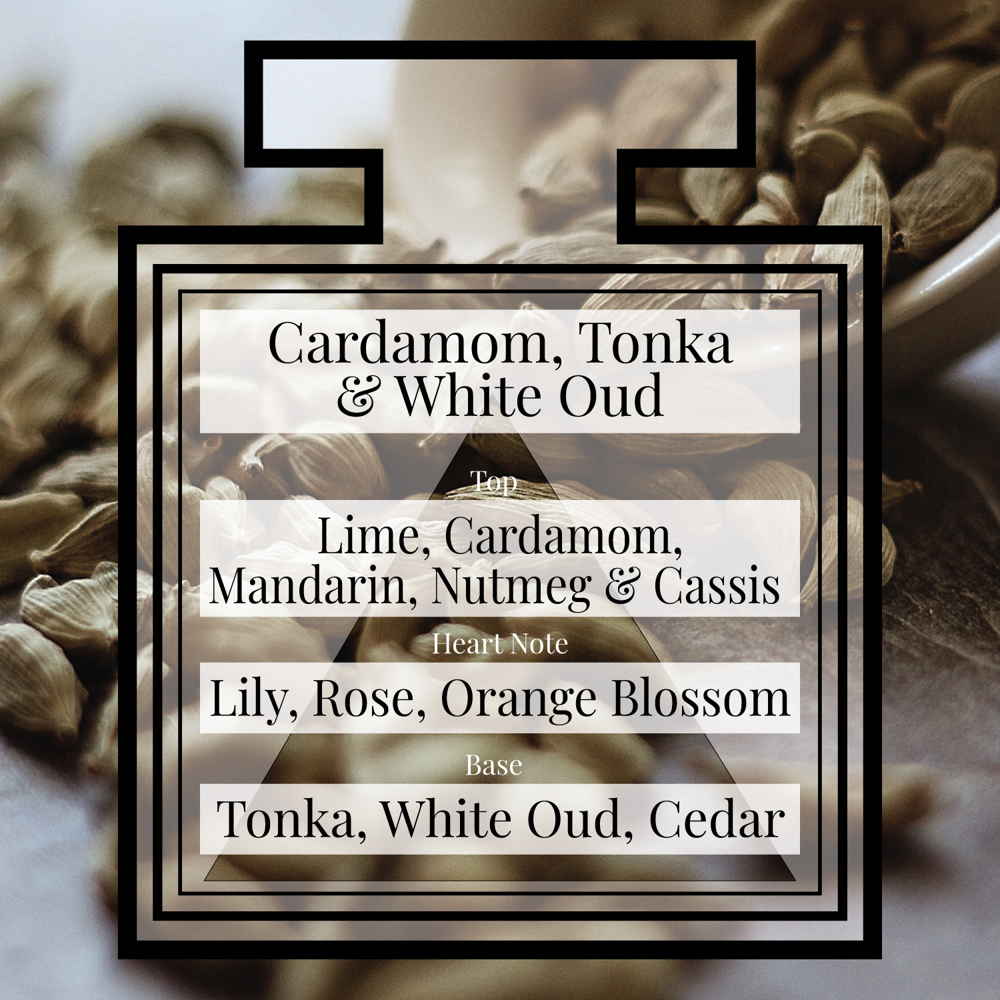
Citrus Perfume in Hair

Applying citrus perfume to your hair is a delightful way to carry the fresh, zesty aroma with you throughout the day. Hair holds scent well, especially when it is clean and slightly damp. Here’s how to apply citrus perfume to your hair:
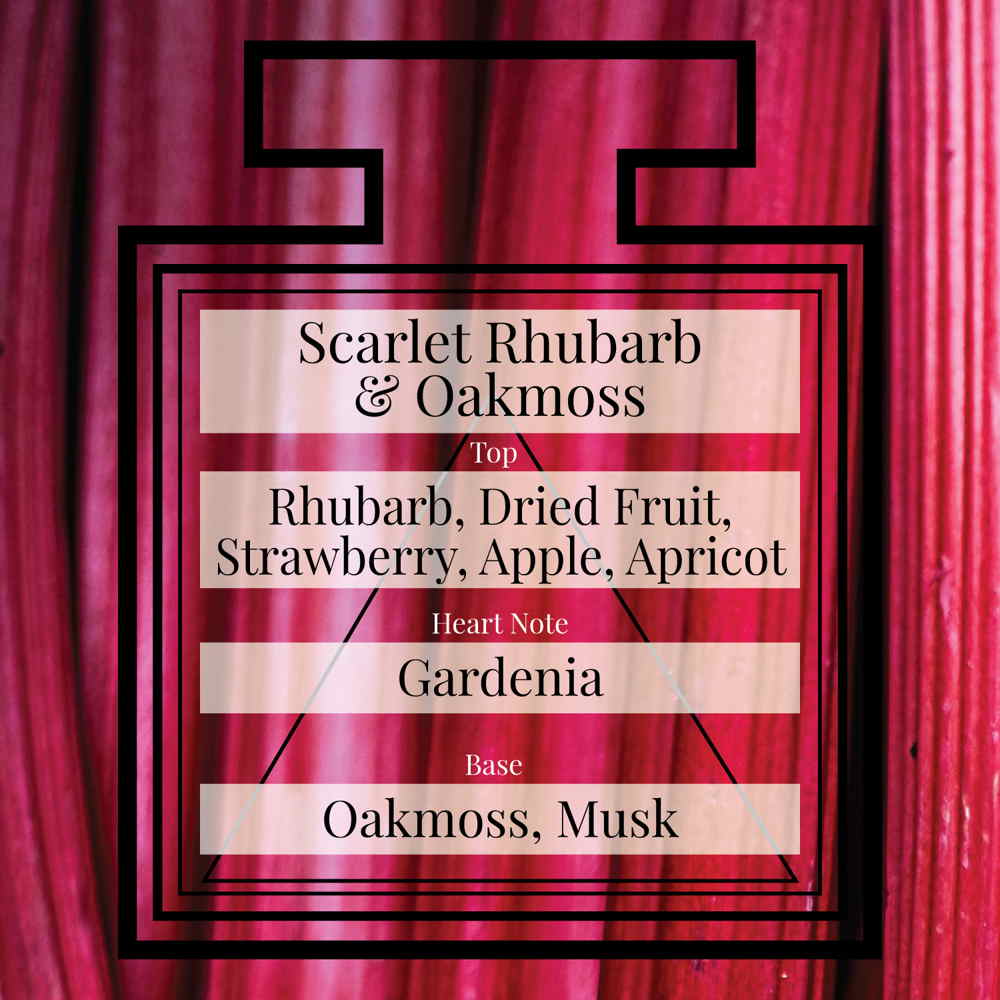
  • Mist from a Distance: To avoid drying out your hair with the alcohol in perfumes, spray a light mist of your citrus fragrance from a distance of about 20-30 cm (8-12 inches). This ensures an even distribution without overwhelming the hair.
  • Use a Hair Mist: If you’re concerned about the alcohol content in traditional perfumes, consider using a hair mist specifically designed for this purpose. Hair mists often contain nourishing ingredients that leave your hair smelling divine while adding a touch of shine.
  • Comb Through: After applying the fragrance, gently comb through your hair to distribute the scent evenly. This will create a subtle, lingering aroma that will refresh you with every movement.

Citrus Perfume on Clothes

Wearing citrus perfume on your clothes is a great way to ensure that the fresh, vibrant scent stays with you all day long. However, applying perfume to fabric requires some care to avoid staining or damaging delicate materials. Here’s how to do it right:

  • Spritz from a Distance: Similar to applying perfume to hair, hold the bottle at a distance of about 20-30 cm from your clothes. This helps to prevent any potential staining or discoloration, especially with lighter fabrics.
  • Choose Fabrics Wisely: While citrus perfume can be applied to most fabrics, it’s best to avoid spraying directly onto delicate materials such as silk or lace. Instead, opt for sturdier fabrics like cotton or wool, which can hold the scent without risk.
  • Refresh Throughout the Day: Citrus perfumes are known for their light and airy composition, which can sometimes fade faster than heavier fragrances. To maintain the scent, consider carrying a small bottle of your citrus eau de parfum or eau de toilette spray for a quick refresh during the day.

By applying citrus perfume to your skin, hair, and clothes, you create a multi-dimensional scent experience that envelopes you in a cloud of fresh, zesty fragrance. Whether it’s the invigorating burst of lemon on your skin, the playful hint of orange with jasmine notes in your hair, or the enduring freshness of grapefruit on your clothes, citrus perfumes offer a versatile and delightful way to elevate your fragrance routine.

Sustainability and Sourcing: The Ethics of Citrus Perfume

As the world becomes more conscious of sustainability, the sourcing of ingredients for citrus perfumes has come under greater scrutiny. At Pairfum, we are committed to ethical practices, ensuring that every last citrus fruit used in our fragrances are sustainably sourced and harvested with care.

This commitment not only guarantees the highest quality of essential oils but also supports the communities involved in the cultivation process. The result is a collection of citrus fragrances that are as responsible as they are exquisite.

Citrus Fragrances by Pairfum London

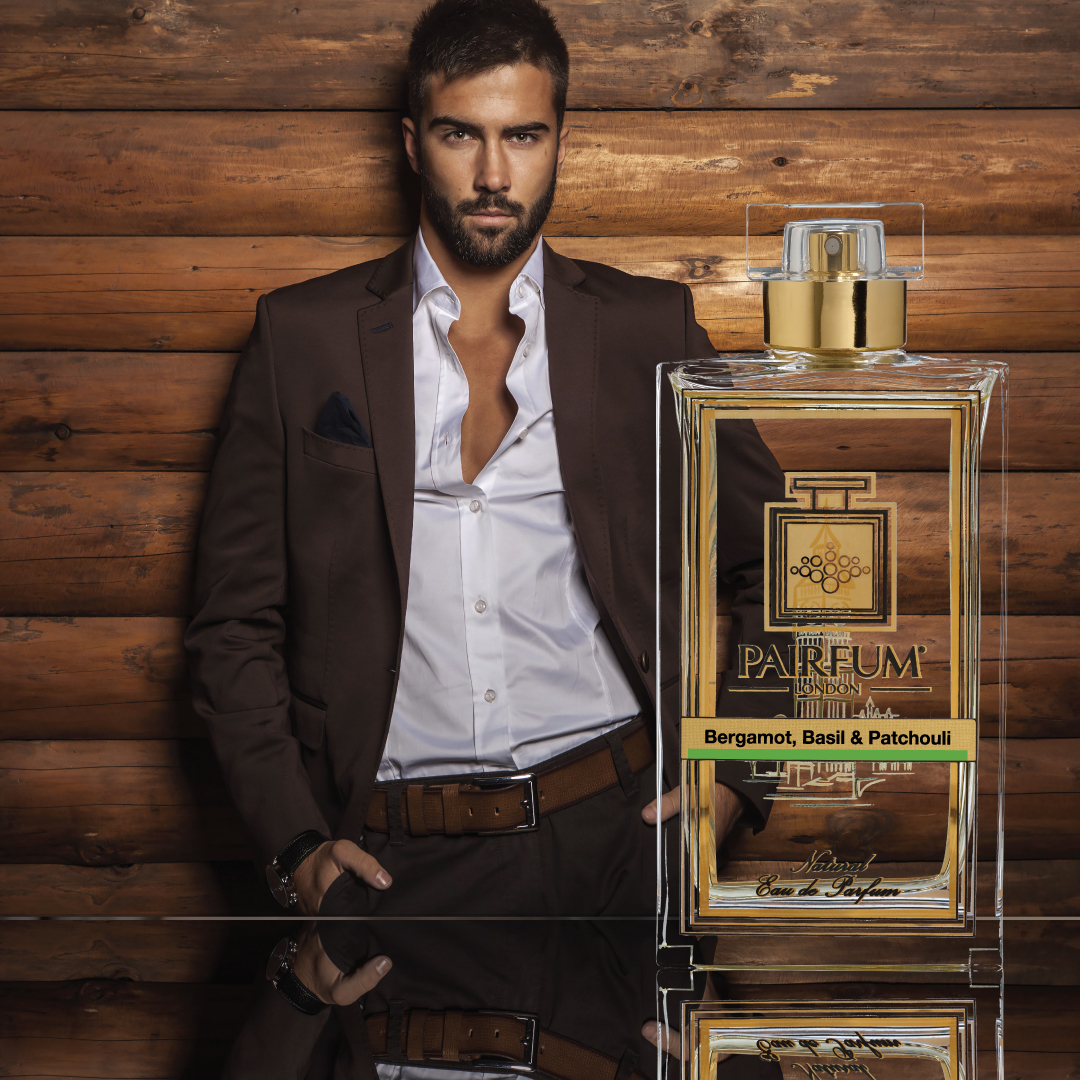
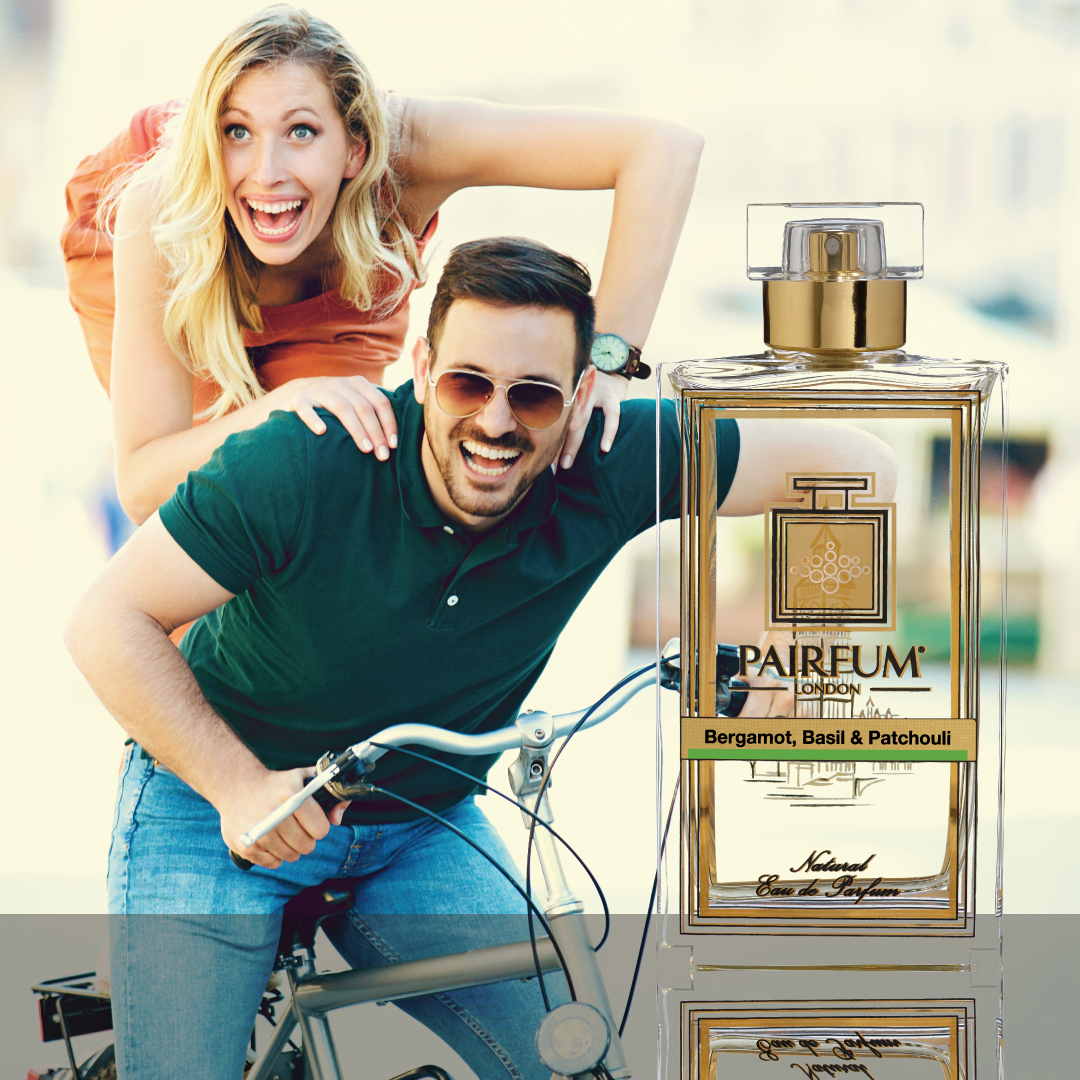
Bergamot, Basil & Patchouli – Eau de Parfum

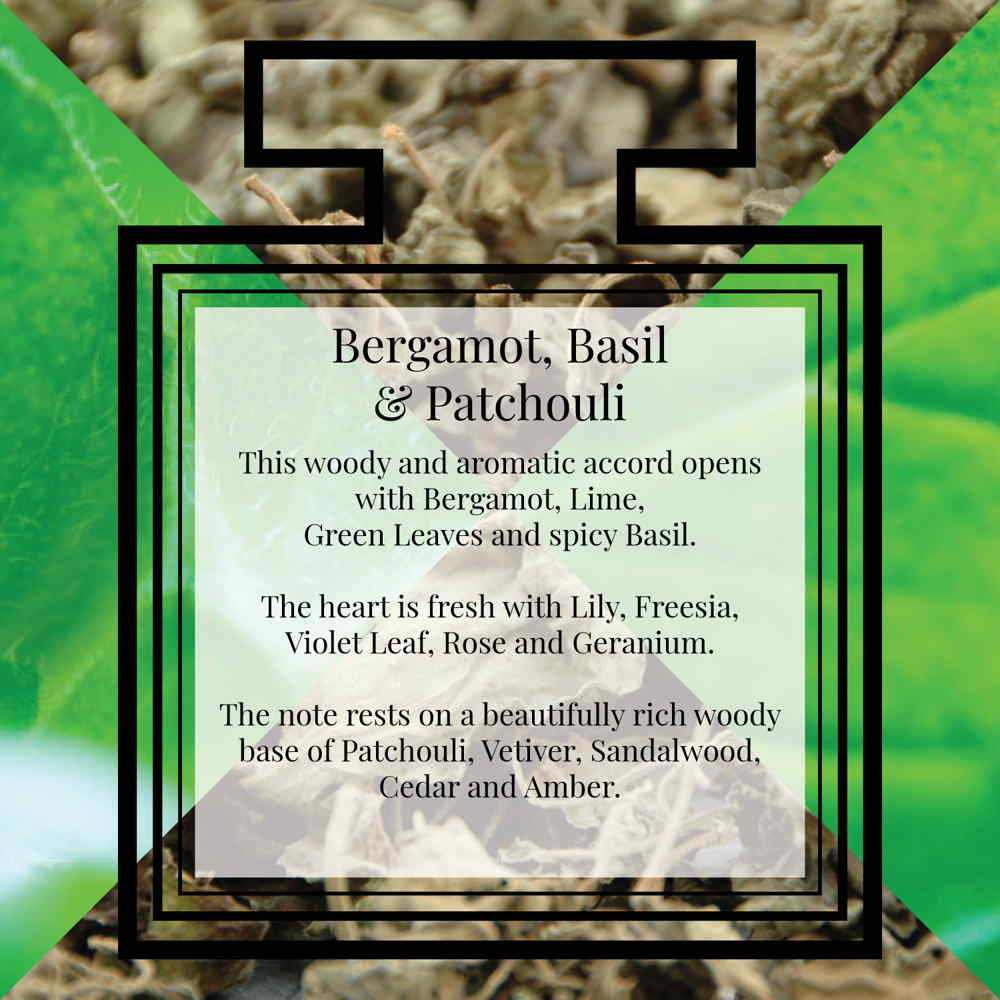
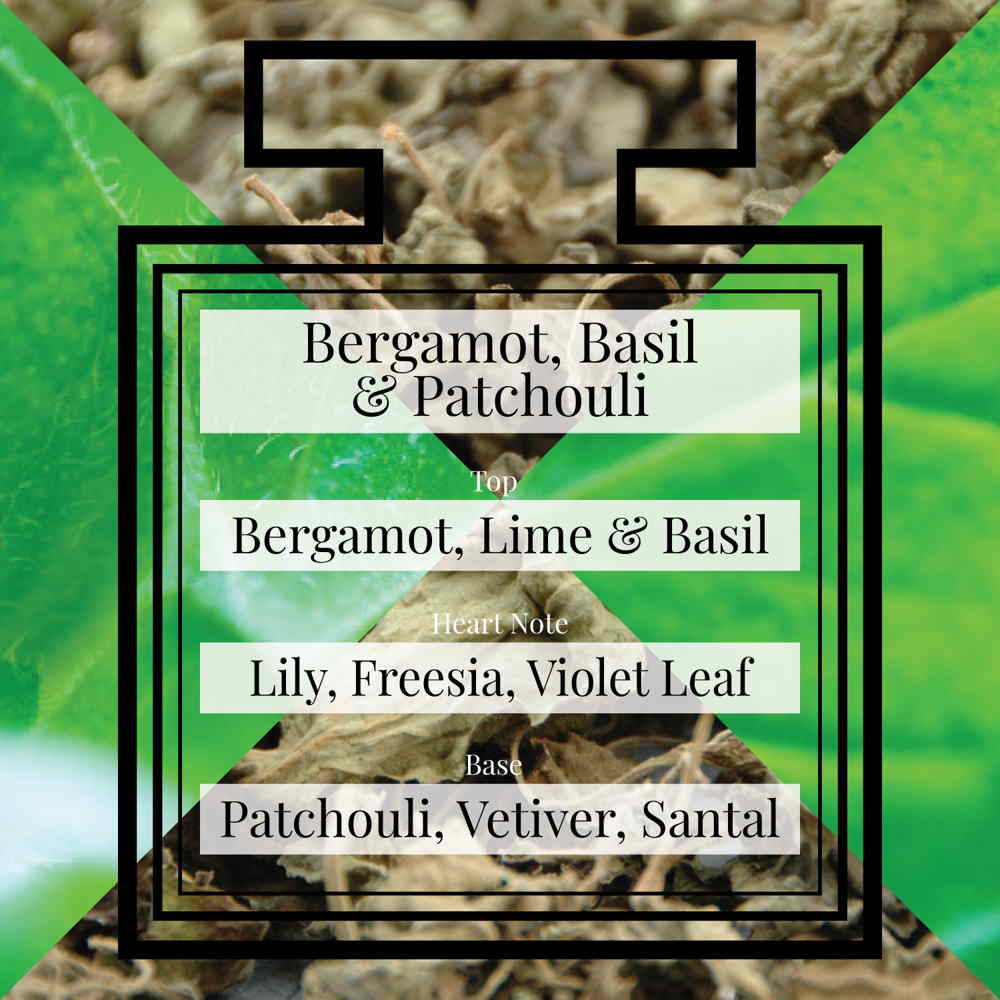
This woody and aromatic accord opens with Bergamot, Lime, Green Leaves and spicy Basil. The heart is fresh with Lily, Freesia, Violet Leaf, Rose and Geranium. The note rests on a beautifully rich woody base of Patchouli, Vetiver, Sandalwood, Cedar and Amber.

Olfactory sense, man and woman on a bicycle with Pairfum's bergamot, basil and patchouli perfume.

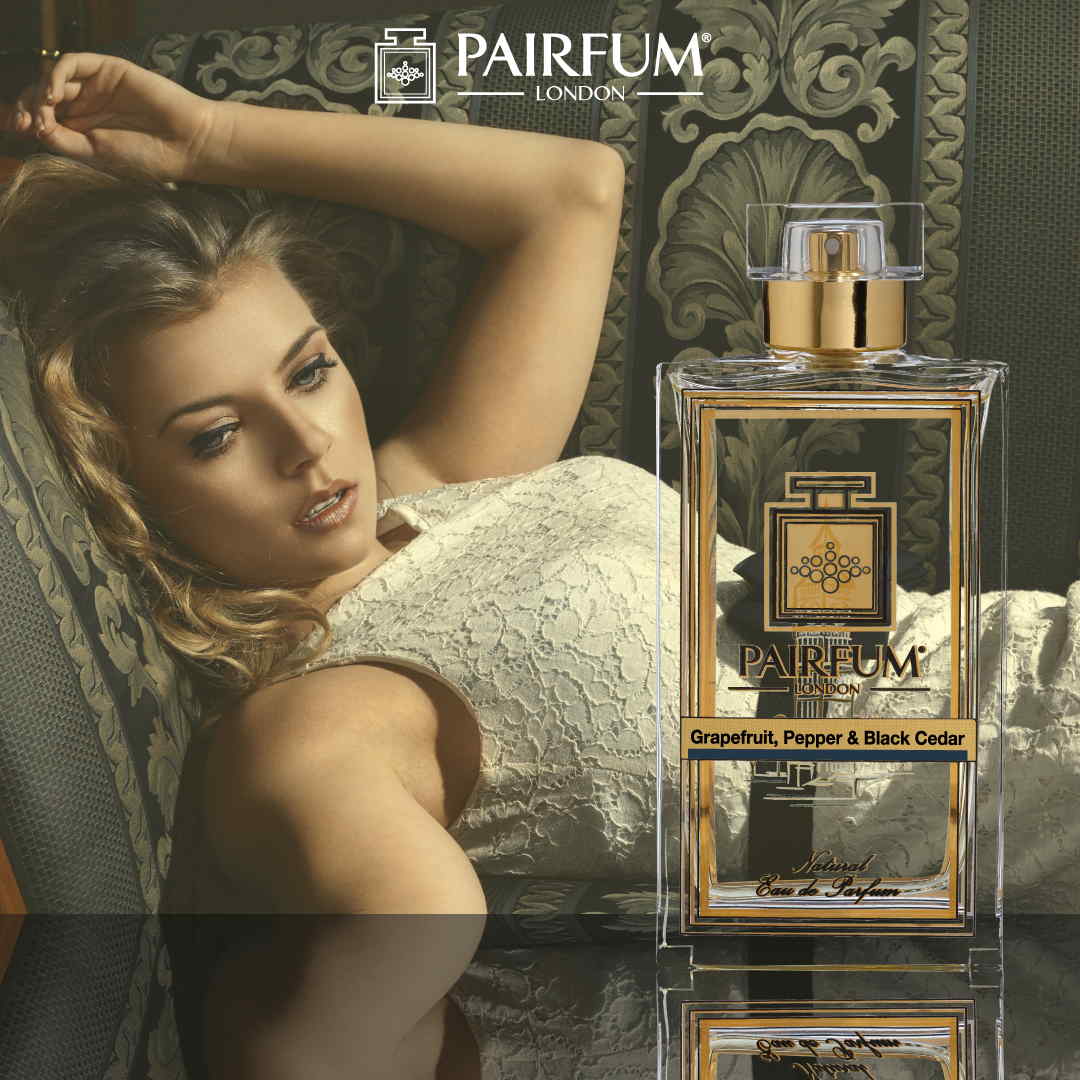
Grapefruit, Pepper & Black Cedar – Eau de Parfum

A rich, woody and spicy fragrance where the zest of Grapefruit & Bergamot infuse the opening with freshness. The sensual heart of Masculine Leather is enhanced by the rich spicy elements of Black Pepper and Nutmeg. The base is intensely woody with Black Cedar, Patchouli, Tonka Bean and Moss

Eau De Parfum Person Reflection Grapefruit Pepper Black Cedar Man Wood 1 1

Neroli, Musk, Orange Blossom – Eau de Parfum

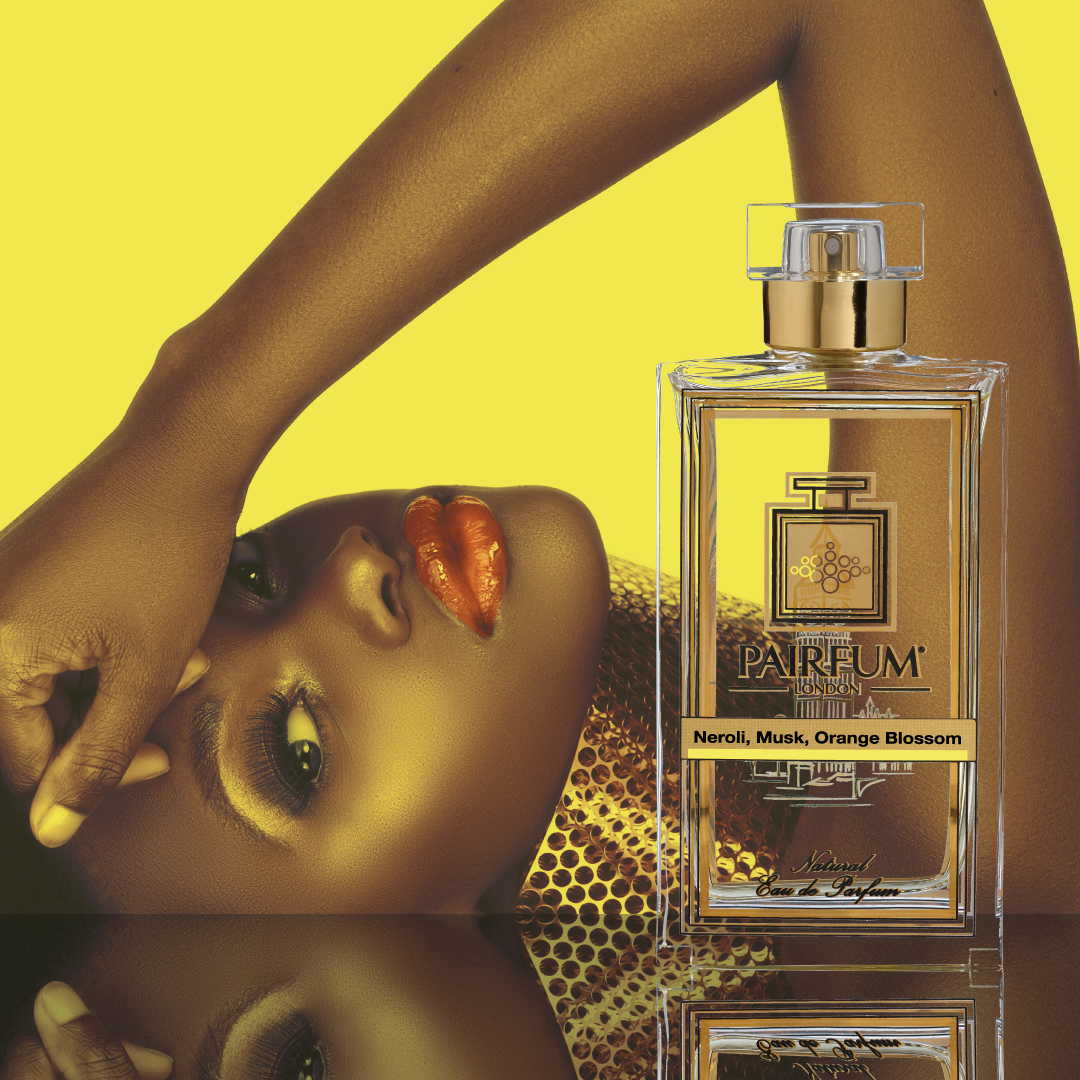
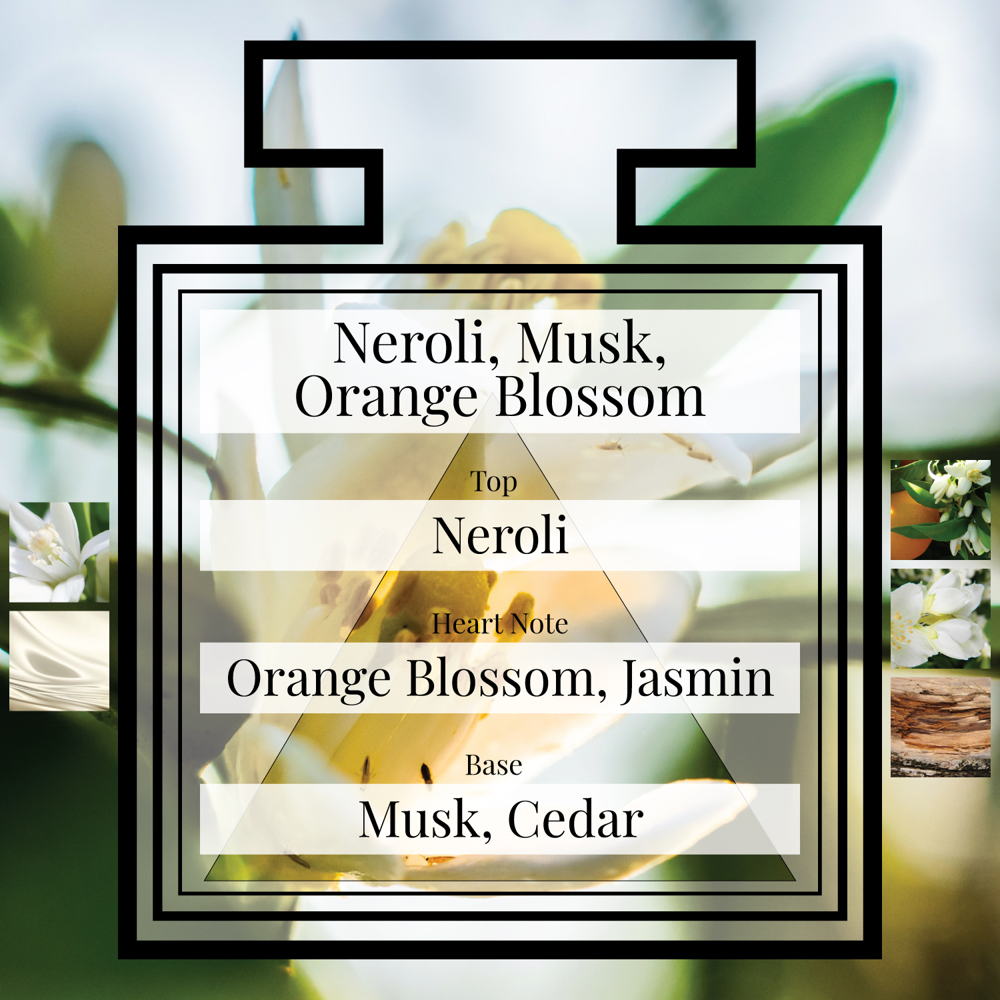
This beautifully fresh, floral fragrance opens with the natural top note of Neroli. What follows is an alluringly pure & white floral heart of Orange Blossom and Madagascan Jasmine. The sensual base of Radiant Musk and Cedarwood, add depth and warmth to this fragrance.

A Citrus Eau de Parfum Fragrance - Neroli Musk Orange Blossom

Embrace the Radiance of Citrus Perfume with Pairfum London

In reflecting upon the world of citrus perfume, its exhilarating appeal, and irresistible zest, we invite you to explore the diverse range of fragrances expertly crafted by the distinguished boutique perfumery house Pairfum London. Our offering of a curated selection of exquisite compositions alongside exceptional sensitivity to the taste and ‘zeitgeist’ in fragrance, Pairfum London opens the gateway to the effervescent splendour of these invigorating aromas.

Revel in the energising and uplifting qualities of radiant citrus perfumes, enhancing your olfactory experience and allowing your spirit to soar.

Discover the boundless possibilities of layering and personalisation as you delve into the sparkling symphony of Pairfum London’s harmonious scentscapes. Embolden your fragrance wardrobe and embrace the power of citrus to rejuvenate your senses, bringing a refreshed vibrancy to love every moment.

How To Choose Perfume By Season

How to Choose Perfume by Season: A Comprehensive Guide

A luxurious fragrance has the unique ability to transport our senses, stirring memories and emotions that resonate with the essence of each season. Allow us to guide you on how to choose perfume by season.

This article serves as your expert guide on how to choose a perfume by season, curating an enchanting fragrance wardrobe that celebrates the distinctive qualities of each time of year with a seasonal scent whilst maintaining harmony with your individual preferences and lifestyle. With the unparalleled expertise of Pairfum London, the exquisite boutique perfumery house revered for its keen understanding of the taste and ‘zeitgeist’ in fragrance, we delve into the subtle nuances and complexities that influence our scent choices throughout the year.

Unveil the art of seasonal perfume selection and embrace the joys of immersing yourself in a captivating and diverse olfactory journey, guided by Pairfum London’s impeccable sensitivity to the changing moods of the year.

Pairfum Eau De Parfum Person Reflection Sea Salt Sage Amber Woman Sea choosing a perfume for the holiday season

Why You Should Change Your Perfume with the Season

Changing your perfume with the season is essential because fragrances interact differently with varying temperatures and environmental conditions. In warmer weather, the skin tends to be more hydrated, causing scents to evaporate faster and potentially becoming overpowering.

Conversely, in colder weather, fragrances may not project as well, making them feel more subdued. Additionally, our lifestyles change with the seasons—lighter clothes in summer and heavier layers in winter—affecting how scents linger on the skin.

Furthermore, our preferences for certain notes, such as fresh citrus in summer or warm spices in winter, align with the seasonal mood, making a seasonal shift in fragrance not just practical but also emotionally resonant.

How to Choose Perfume by Season: Understanding Fragrance Notes

Before diving into seasonal selections for the right perfume for you, it’s essential to understand the basic structure of perfumes – fragrance notes. These are categorized into top, middle, and base notes.

Top notes are the initial scents you perceive immediately after applying the perfume, while middle notes emerge as the top notes fade, forming the heart of the fragrance. Base notes are the final, lingering scent that provides depth and lasting power.

Understanding these layers will help you choose the right fragrance for different seasons, as each layer interacts differently with the environment (temperature, humidity, wind) and your skin over time.

Do Fragrances Smell Different in Different Seasons?

Yes, fragrances do smell different in different seasons due to variations in temperature, humidity, and how skin chemistry changes with the weather.

  • High temperatures can intensify a fragrance’s projection and make certain notes, particularly top notes, more prominent. In contrast, cooler weather can dull the intensity, often bringing out the base notes and giving the scent a richer, more lingering quality.
  • Humidity also plays a role, as high humidity can amplify sweet and floral notes, while dry air can make a fragrance seem sharper and more brittle.
  • Skin type and condition, which also change seasonally—such as becoming drier in winter—affect how a fragrance is absorbed and diffused, further altering the scent’s character.
  • Wind affects perfume perception! The extra air flow from a sea breeze will stimulate the evaporation of perfume and you will find that you fragrance won’t last as long. Equally, it will bring the base notes more to the fore.
  • Environmental influences have an enormous impact on the perception of a perfume. Imagine this, you stand on top of a snow covered mountain in the middle of winter. No imagine you stand on sunny & warm beach, with your feet in sand and water lapping around ankles. The scent of each environment will mingle with your own perfume, significantly altering the perception of your perfume.
Pairfum Fragrance Neroli Musk Orange Blossom Triangle Ingredients Summer Perfume

How To Choose Perfume By Season

Spring Perfumes: Revel in the Spirit of Rejuvenation and Growth

With the arrival of spring comes the promise of rebirth and renewal, reflected in our preferences for lighter, more uplifting spring fragrances. To embrace the aura of this verdant season, we suggest seeking out perfumes that encapsulate these key qualities:

  1. Floral and Green: Springtime evokes images of idyllic gardens brimming with blooming flowers. Opt for floral perfumes featuring notes such as freesia, orange blossom, or peony. These delicate scents harmonise beautifully with green accords, creating an invigorating blend reminiscent of dew-kissed meadows and budding foliage.
  2. Zesty and Invigorating: Incorporate fresh, energetic aromas teeming with vitality. Citrus fragrances with lemon, mandarin, and yuzu heighten the senses while invigorating notes like mint and basil imbue our perfumes with an irresistible appeal.
  3. Fruity and Playful: Embrace the jovial atmosphere of longer days with perfumes that feature sweet, fruity notes of apple, cherry blossom, or black currant. This captures the delightful spirit of the season and makes for the perfect scent for springtime adventures.

Summer Perfume: Radiate Sunshine and Joy with Your Perfume Choices

A summer perfume should emulate the balmy days and sun-splashed adventures call for fragrances that champion breezy, effervescent qualities. To curate a seasonal collection of the best summer fragrances, we recommend focusing on these attributes:

  1. Fresh and Aquatic: Transport yourself with a summer scent to sun-soaked shores with marine-inspired fragrances that evoke the freshness of sun-kissed waves and cool coastal breezes. Aromatic notes of sea salt, driftwood, and algae perfectly convey the carefree, rejuvenating atmosphere of seaside escapes, making them ideal summer scents.
  2. Citrus and Aromatic: The warm embrace of summer lends itself to perfumes bursting with uplifting citrus notes and aromatic accords. Choose a summer perfume that amplifies the season’s freshness and energetic essence with aromas such as bergamot, verbena, and neroli. These different scents evoke a bright, light-hearted aura that perfectly complements summer’s free-spirited nature.
  3. Tropical and Exotic: Embody the allure of far-flung, sun-drenched destinations with perfumes that incorporate vibrant tropical notes. Ingredients like frangipani, passion fruit, and tuberose transport us to lush, fragrant gardens, creating a truly captivating and evocative summer day fragrance experience.
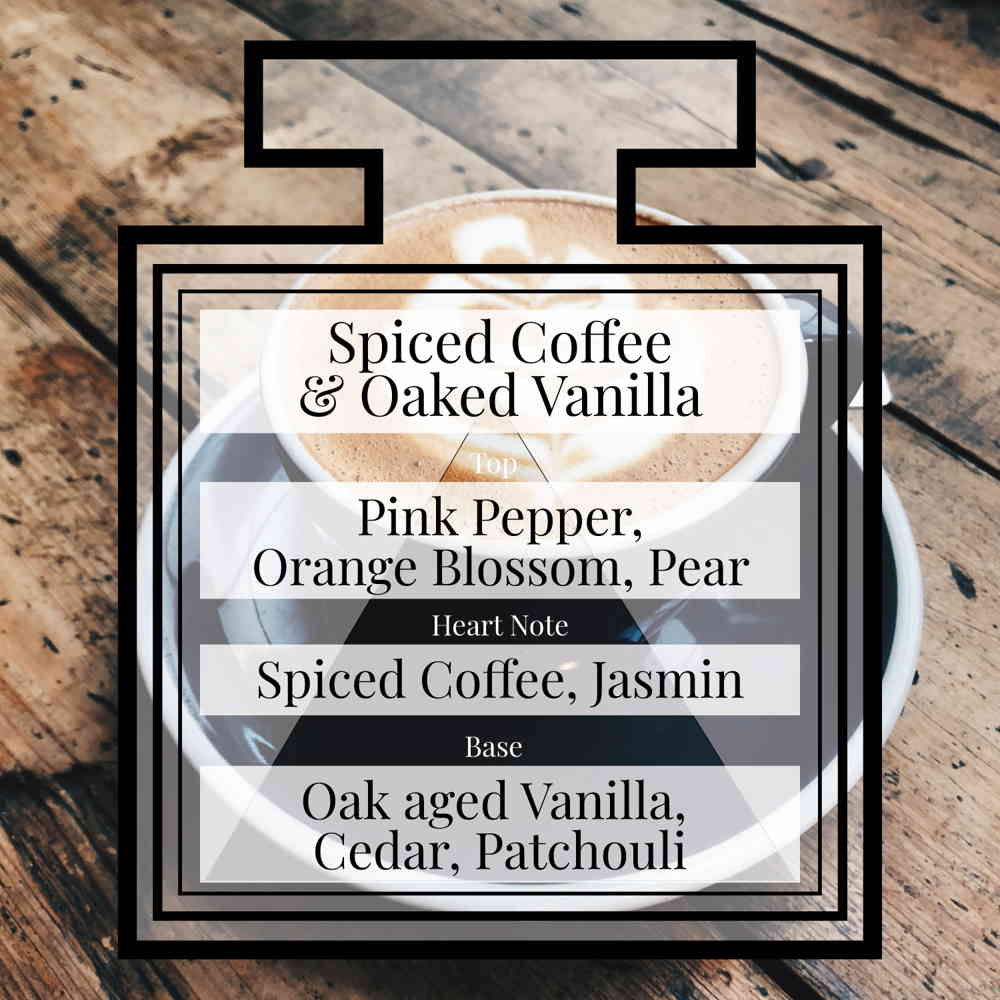
Pairfum Person Reflection Spiced Coffee Oaked Vanilla Eau De Parfum Woman Choose a perfume by season Autumn Gourmand

Autumn Perfumes: Embrace the Warmth and Depth of the Season

As the calendar turns to autumn and nature’s fiery hues envelop the landscape, our fragrance preferences naturally shift. To curate a collection of perfumes befitting the season’s distinctive charm, we suggest focusing on these elements:

  1. Earthy and Woody: Autumn’s cosy embrace beckons us to explore deeper, more complex aromas that emanate warmth and grounded sophistication. Woody scents featuring notes such as cedar, oak moss, and guaiac wood resonate beautifully with the season’s introspective ambience.
  2. Spicy and Gourmand: The rich tapestry of autumn’s flavours and scents is best represented by perfumes with warm, spicy accords. Cinnamon, cardamom, and ginger evoke the toasty comfort of roaring fires and steaming mugs of cider, while gourmand infusions of chocolate, almond, and toasted nuts envelop us in luxurious decadence.
  3. Fruity and Amber: Celebrate autumn’s abundant harvest with fragrances that artfully blend ripe fruits and opulent amber notes. Scents that incorporate plum, quince, and fig create an intoxicating feast for the senses, while amber accords add depth and warmth to the overall composition, perfect for an autumn fragrance.

Winter Perfume: Cocoon Yourself in Luxury and Comfort

In the depths of winter, our perfume choices must counterbalance the chill and darkness that envelops our landscape. We recommend curating a collection of the best winter fragrances that embody the following sumptuous, comforting attributes:

  1. Rich and Voluptuous: Wintertime calls for extravagant, luxurious fragrances to contrast the icy embrace outside. Opulent notes of tonka bean, oud, and musk impart irresistible depth and sensuality to your winter perfumes.
  2. Spicy and Oriental: Emulate the mesmerising dazzle of festive lights and the warmth of intimate gatherings with fragrances that incorporate spiced notes and oriental flair. Winter fragrances containing cinnamon, clove, and star anise evoke a sense of joy and celebration, while exotic infusions like saffron, patchouli, and agarwood transport us to faraway lands.
  3. Floral and Powdery: Although winter is often associated with austere, minimalist scents, we can still delight in the blooming beauty of floral and powdery notes. By selecting fragrances that meld velvet textures and ethereal florals, you will have a comforting winter perfume that envelops us in a veil of softness and warmth during the winter months.
How To Choose Perfume Ingredients By Season

The Ideal Fragrance Concentration for Each Season?

The ideal fragrance concentration varies with the seasons due to the impact of weather, clothing, and lifestyle changes on scent projection and longevity.

In summer, when temperatures and humidity are high, lighter concentrations like Eau de Toilette, Eau de Cologne, Eau Fraiche or Splash Cologne are preferable. These concentrations are less likely to become overwhelming in the heat and pair well with the lighter, breathable fabrics worn during this season.

In contrast, during colder months, a higher concentration such as an Eau de Parfum or even a Parfum, Extrait or Absolut is ideal. These more concentrated fragrances can better withstand the layering of heavy winter clothes and the drier skin that often accompanies cold weather, ensuring the scent remains perceptible and comforting.

Layering Perfumes: Create Your Unique Scent

Layering different fragrances is an art that allows you to create a perfect perfume that is uniquely yours. This technique is especially useful in adapting your fragrance to the changing seasons. By combining a fresh scent with a spicy scent, or a woody scent with a floral fragrance, you can craft a signature scent that evolves beautifully with the season. Experiment with different combinations, perhaps starting with a light floral perfume in spring and adding a vanilla or amber base in autumn to create a richer, more complex fragrance as the weather cools.

The Importance of Longevity and Silage: Making Your Perfume Last

Longevity and silage are crucial factors to consider when choosing the right fragrance for different seasons. In warmer months, summer perfumes with a fresh scent and high silage are ideal as they project well and are less likely to be overpowering in the heat. Conversely, in colder weather, winter perfumes should have a strong base with ingredients like vanilla or oud to ensure they linger on the skin throughout the day. Pairfum London’s range of eau de parfum offers excellent longevity, ensuring your seasonal fragrance stays with you from morning to night.

Pairfum Lifestyle Natural Perfume Livingroom Large Reed Diffuser Choosing a perfume by season home fragrance

Home Fragrance: Complement Your Personal Scent with Seasonal Scents at Home

Your fragrance experience isn’t limited to personal perfumes; it can also extend to your living space.

Using home fragrances like candles or diffusers that match the season can create a harmonious environment that enhances your overall sensory experience. For instance, a fresh scent with citrus or herbal notes can invigorate your home in summer, while a vanilla-based candle can add warmth and comfort during the winter months.

Pairing your personal seasonal fragrance with complementary home fragrances can create an immersive, cohesive scent environment that reflects the essence of the time of year. Whether you’re welcoming the bright and airy vibes of spring or the rich, cozy warmth of winter, your home can mirror the same mood your perfume evokes.

Discover the Best Sellers: Tried and Tested Perfumes for Every Season

While choosing the right fragrance is often a personal journey, sometimes turning to best sellers can provide a reliable starting point. These popular perfumes have been tried and loved by many, making them a safe choice when curating your perfume palette for different seasons. Pairfum London’s collection includes several best sellers that are perfect for each time of the year, offering a mix of classic scents that have stood the test of time and innovative fragrances that capture the spirit of the present day.

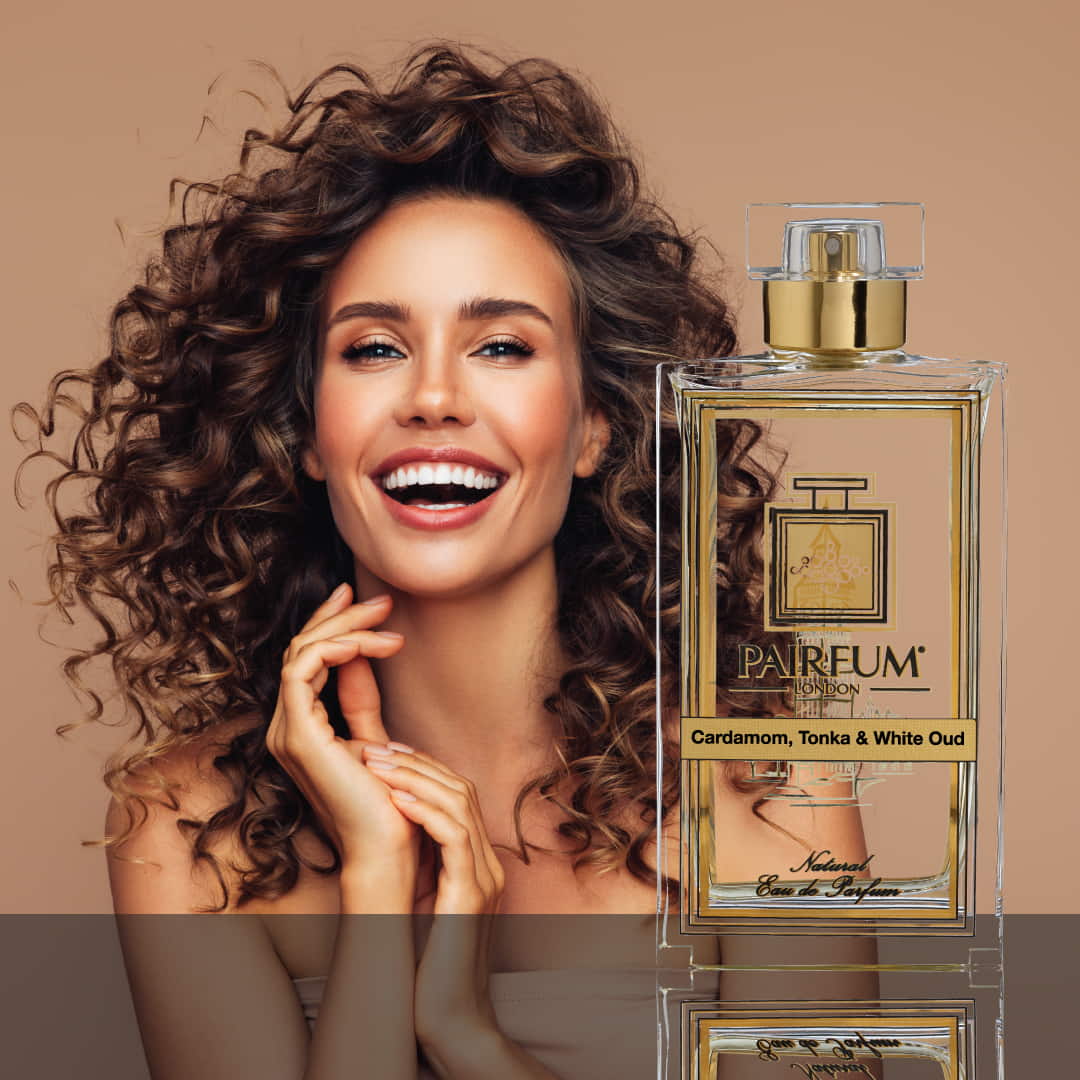
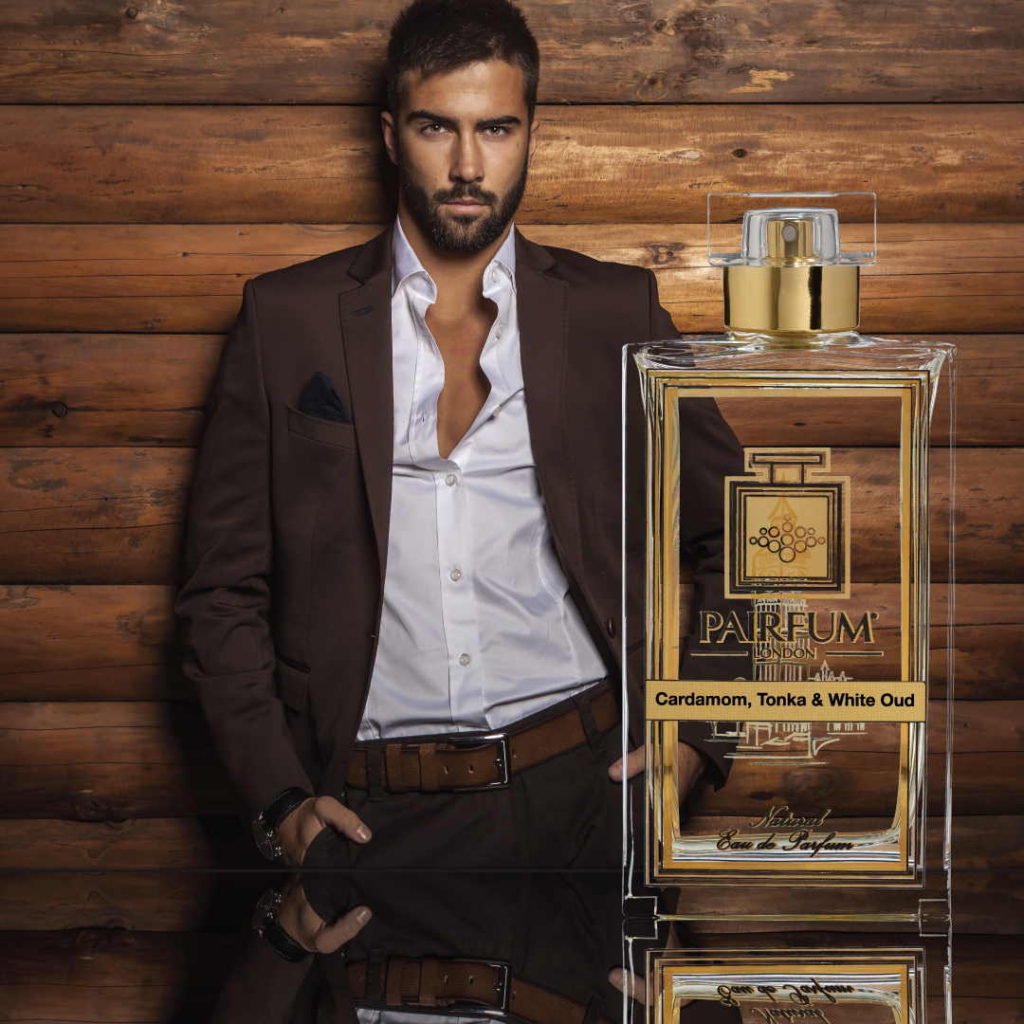
Eau de Parfum Cardamon, Tonka & White Oud by Pairfum London

  • This rich, passionate fragrance opens with Lime & Mandarin, Cardamom, Nutmeg, Clove and fruity hints of Cassis. At the heart of this accord are spicy White Lily, Rose and Orange Blossom. A sensual base of Tonka, White Oud, Cedar, Santal and Amber rounds off this creation.

Eau de Parfum Sea Salt, Sage & Amber by Pairfum London

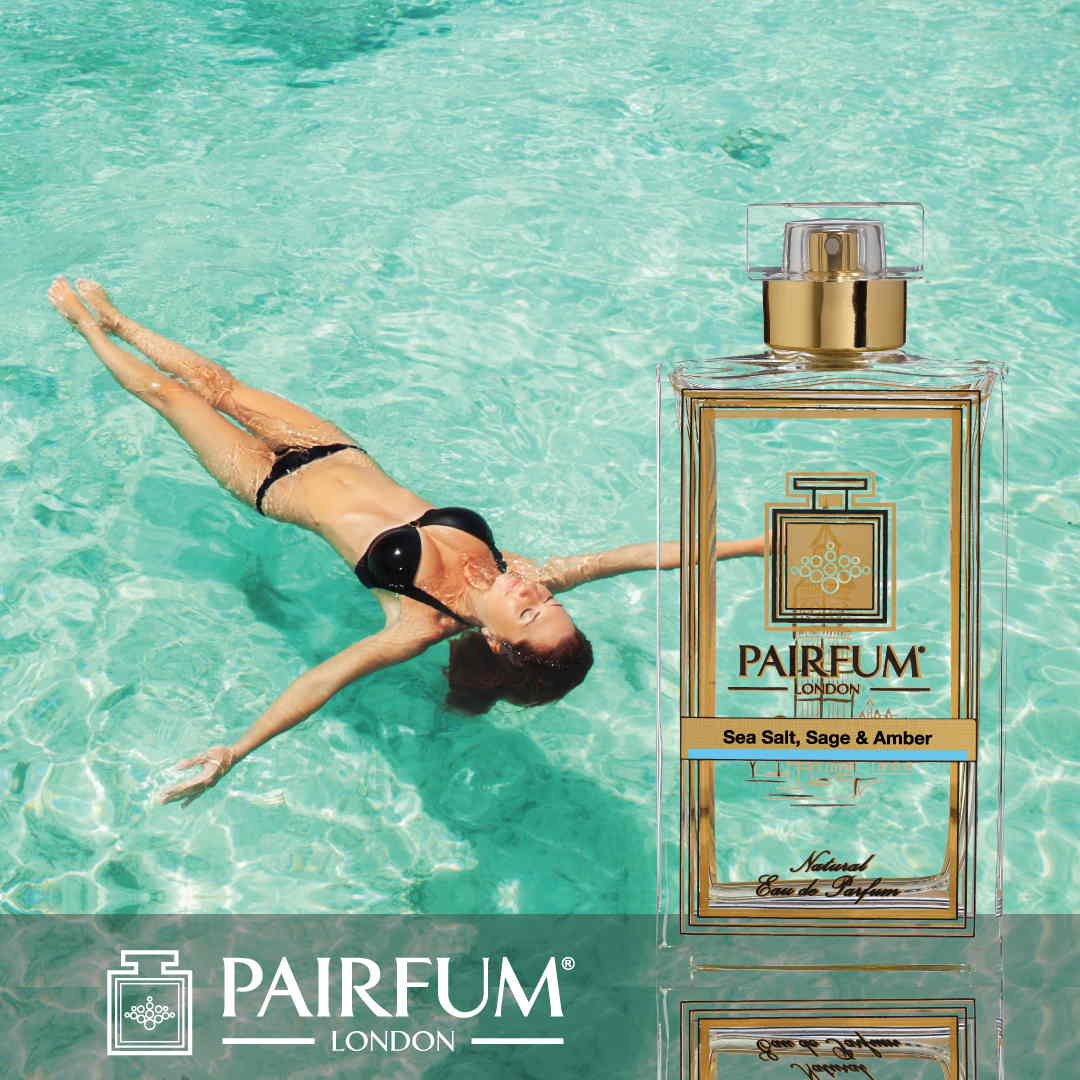
  • A wonderfully fresh, sophisticated fragrance where Sage & Grapefruit are enriched by hints of fresh Bergamot and Tangerine top notes. The invigorating heart is enlivened with nuances of Seaweed, a fresh Sea breeze, Sea Salt and Kelp, all of which becomes smooth with a soft base of Musk, Amber and Cedarwood.
How To Choose A Perfume For The Summer Season

How to Choose Perfume by Season and Access Your Ideal Fragrance Collection

When it comes to purchasing your seasonal perfumes, having direct access to an extensive range of high-quality options is crucial. Whether you’re looking for the latest in seasonal trends or classic fragrances, purchasing your perfume direct from Pairfum London ensures you receive expertly crafted scents delivered straight to your door. This convenience allows you to update your fragrance palette effortlessly as the seasons change, ensuring you always have the perfect scent ready for any occasion.

Eco-Friendly and Natural Options: Sustainable Choices for Every Season

Pairfum London is committed to sustainability and offers Eau de Parfum options that feature eco-friendly and natural ingredients. As more consumers become aware of their environmental impact, choosing a perfume that aligns with these values becomes increasingly important. Look for seasonal perfumes that not only delight the senses but also support a more sustainable world.

Eau De Parfum Person Reflection Spiced Rum Lime Guaiac Wood Man Fur How to choose a Winter perfume Season

How to Choose a Perfume by Season: Final Thoughts

Choosing the right fragrance for each season is both an art and a science, combining personal preference with an understanding of how different fragrances interact with the changing weather and environment. From the fresh and floral notes of spring to the rich and spicy aromas of winter, each season offers a unique opportunity to express yourself through scent.

Pairfum London, with its deep expertise in crafting exquisite eau de parfum, provides the perfect guide to navigating this journey. Whether you’re drawn to the best sellers or prefer to explore niche fragrances, there’s a perfect perfume waiting for you for every time of year. By understanding fragrance notes, considering longevity, and even experimenting with layering, you can build a perfume palette that evolves with the seasons, ensuring you always have a fragrance that resonates with the world around you.

Perfume Gift Sets for Every Season: The Perfect Present

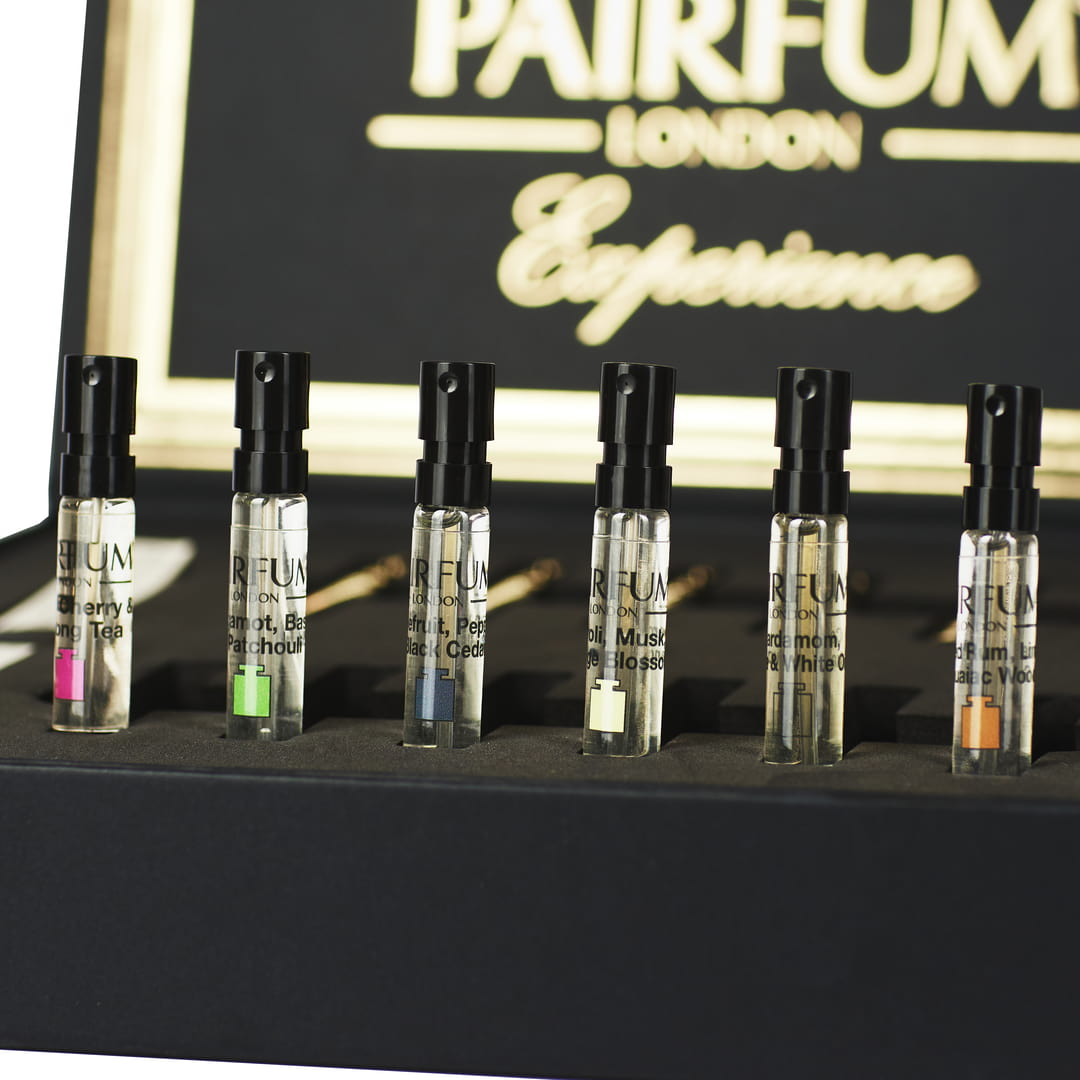
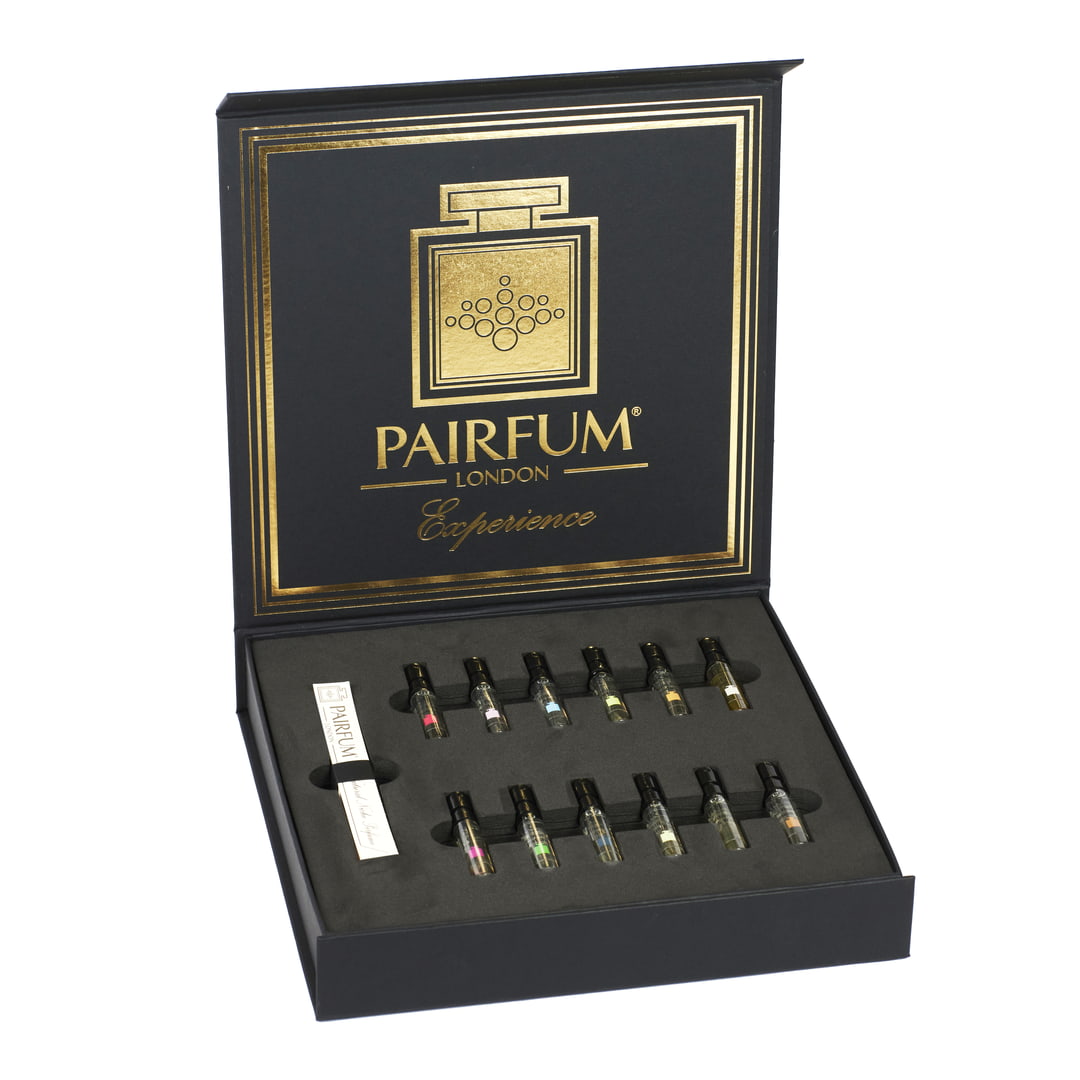
Selecting a gift set that reflects the recipient’s favourite season or fragrance family is a thoughtful way to show appreciation. For spring, consider a set that includes a lighter scent like a floral fragrance, while for winter, a collection featuring a heavier scent with spicy notes and woody notes would be more fitting. Pairfum London offers the Perfume Experience Box, a Fragrance Library that caters to every season, creating the perfect perfume present for any occasion.

How to Choose Perfume by Season Wardrobe of Fragrance Library Experience Box
Heart Notes In Perfume 1

Heart Notes in Perfume: The Soulful Core of a Fragrance

In this article about the “Heart Notes in Perfume“, we venture into the captivating world of heart notes, unravelling the mysteries of their olfactory significance and their indispensable role in crafting evocative, lasting perfumes:

  • introduction to perfume notes and the heart note in particular
  • what is a fragrance pyramid?
  • typical heart notes
  • common heart note accords

The intricate dance of perfume notes is a harmonious symphony that tells the story of a fragrance, an enchanting narrative that goes beyond the mere sensations of olfaction. At the very core of this scented tale lies the vital essence that defines and shapes the soul of a fragrance, the heart note.

Introduction to Perfume Notes

To truly appreciate the beauty of heart notes, one must first understand the broader spectrum of perfume notes.

Perfume notes are the individual scents that make up a fragrance, categorized into top, heart, and base notes. These different notes combine to create the initial scent, evolving into the final fragrance as they interact with the wearer’s skin. Each fragrance note plays a crucial role in this evolution, shaping the overall experience of the perfume.

Here are other words how these fragrance notes are sometimes described:

  • Top Note: opening note, head note, note de tête (french)
  • Heart Note: fragrance coeur (french for heart), middle note
  • Base Note: fond note, final note,
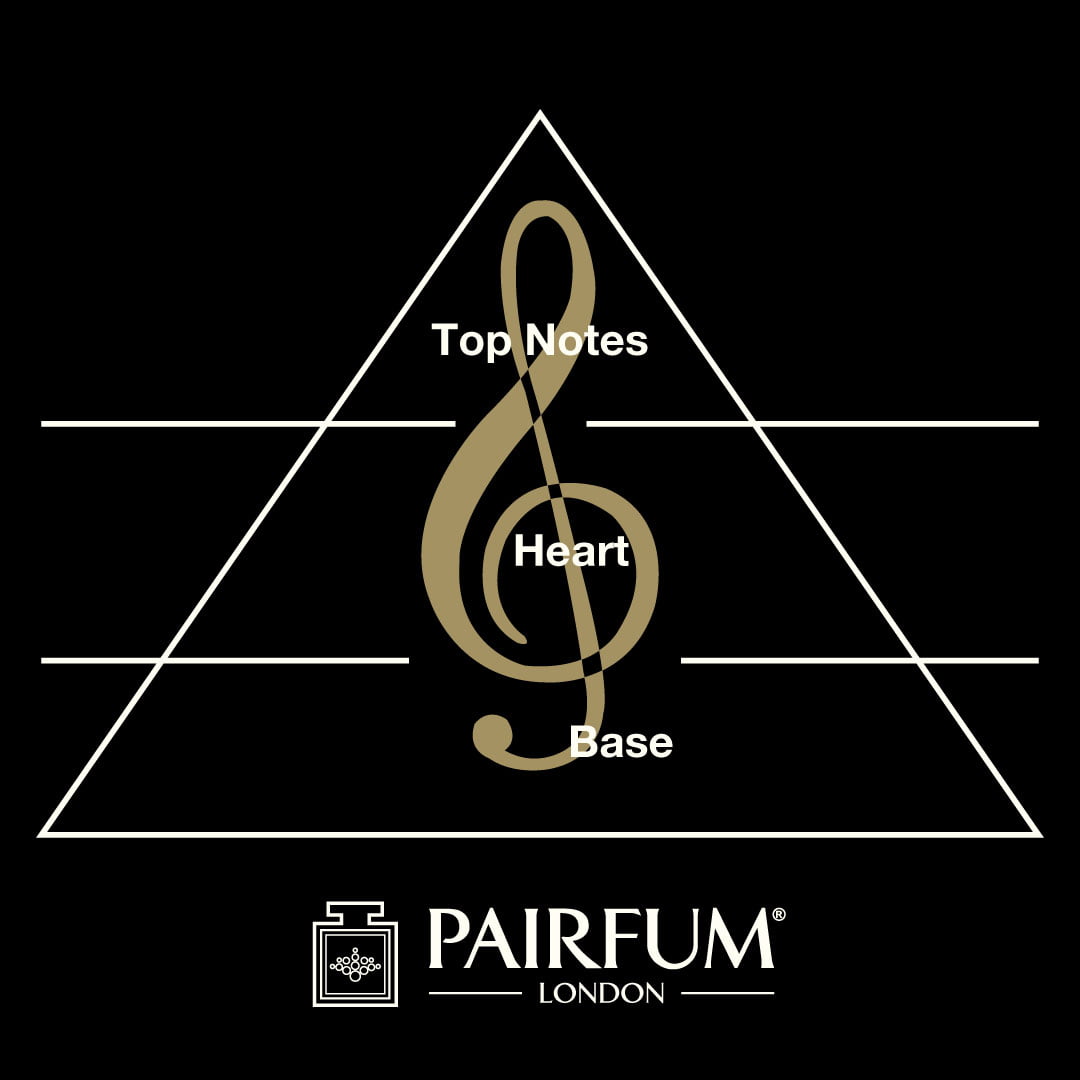
Pairfum Natural Niche Perfume Home Fragrance Olfactory Triangle Pyramid Top Hearts Notes Base

The Fragrance Pyramid: Understanding the Role of Heart Notes in Perfume

The journey of heart notes in perfume begins with an understanding of the structure of scent, an intricate pyramid of olfactory layers that unveils the narrative of a fragrance through the sequential interplay of top, middle and base notes. These three notes are used to describe the volatility of the ingredients or notes, their speed of evaporation. The higher the volatility, the more immediate the perception of the note. The reverse, ingredients with a slow evaporation, form the base notes. To avoid any confusion, all three notes evaporate at the same time. However, the emphasis changes over time.

Top notes are the dominant ingredients that we perceive when we have just sprayed the perfume. Typically, they captivate us with their freshness or character. As these head notes dissipate, heart notes emerge, infusing the fragrance with personality. The base notes come to the fore when the majority of the heart note has dissipated., anchoring the scent with a lasting impression of depth, richness and longevity.

As the second layer in this olfactory pyramid, heart notes serve as the central hear or the anchor of the perfume, ensuring a smooth transition between the initial impression and the final lingering base notes. These heart notes, also referred to as middle notes, provide the foundation upon which the other layers of a fragrance are supported and anchored.

The heart notes in a perfume provide this stability and harmony, acting as a central connecting element that weaves together the distinct olfactory impressions of top and base notes, creating a memorable olfactory symphony.

The Evolution of Fragrance Notes

The top notes lasts for around 5-20 minutes and then the heart or middle notes begin to introduce themselves. Common top notes are citrus, fruits and aquatic.

The heart notes last for between 20 minutes – 3 hours. The heart notes constitute about 40-80% of the fragrance.

As the heart notes fade, the base notes start to reveal themselves. How long the base or bottom notes last depends on the fragrance concentration (Parfum, Eau de Parfum, Eau de Toilette, …) and ingredients used in the fragrance. Some concentrations and base notes, e.g. oud, are known to last upto 24 hrs on skin. In fabrics or clothing, fragrances can last days. Common base notes are vanilla, patchouli, musk, ambergris and oakmoss.

A well-crafted fragrance relies heavily on balance and cohesion between the various components and ingredients that constitute its olfactory identity.

Pairfum Fragrance Triangle Black Orchid Pear Freesia Vanilla Musk Heart Notes in Fragrance

Typical Heart Note Ingredients:

The enchanting world of heart notes in perfume is home to a diverse array of fragrance rawmaterials or oils, each ingredient bringing its unique charm and allure to the fragrance composition. Some iconic heart note ingredients include:

Flowers

  • Rose: As a common floral note, the ‘queen of flowers’ often takes centre stage in heart notes, with its elegant, romantic aroma forming the foundation for many perfume compositions. It brings a luxurious, timeless quality to the fragrance, infusing it with classic sophistication.
  • Jasmine: Its opulent, intoxicating scent has made jasmine a beloved fixture in the realm of heart notes. Its multifaceted appeal lends the composition an intoxicating atmosphere, adding sensuality to the overall fragrance experience.
  • Geranium: Geranium’s crisp, green, and slightly spicy scent serves as a versatile connecting point between other fragrance components. Its ability to imbue compositions with vibrancy and depth renders geranium an essential player in the heart note ensemble.
  • Ylang-Ylang: This distinctly tropical flower is known for its rich, narcotic scent, which can impart sensual, exotic dimensions to the middle notes of a fragrance. The alluring essence of ylang-ylang adds a luxurious decadence to perfume compositions.

Spicy Notes:

  • Cinnamon: Warm, sweet, and spicy, cinnamon adds a comforting and sometimes exotic touch to the heart of a fragrance.
  • Nutmeg: Nutmeg has a warm, slightly sweet, and woody scent that complements both floral and oriental fragrances.
  • Clove: This spicy note adds warmth and a slightly sweet, aromatic scent, often used in oriental and woody compositions.

Fruity Notes:

  • Peach: Peach provides a sweet, juicy, and slightly creamy scent that adds a fresh and playful dimension to a perfume.
  • Pear: Offering a crisp, sweet, and fresh aroma, pear is often used to add lightness and a touch of sweetness.
  • Plum: Plum has a rich, sweet, and slightly tart aroma, often used in oriental and fruity-floral fragrances.

Green Notes:

  • Violet Leaf: Violet leaf has a fresh, green, and slightly metallic scent that adds a crisp, natural quality to the heart notes.
  • Galbanum: This green note is resinous, earthy, and slightly bitter, often used to add depth and complexity to floral and chypre perfumes.

Herbal Notes:

  • Lavender: A cornerstone of aromatic and fougère fragrances, lavender’s herbaceous, soothing aroma notes offer balance and freshness to perfume composition, adding character and depth to the heart note layer.
  • Rosemary: Rosemary offers a fresh, aromatic, and slightly camphorous scent, adding an invigorating and herbal quality to perfumes.
  • Thyme: With a fresh, green, and slightly spicy aroma, thyme is often used in masculine and unisex fragrances.

Woody Notes:

  • Cedarwood: Cedarwood provides a warm, dry, and slightly sweet woody scent, often used to add structure and longevity to the heart of a fragrance.
  • Sandalwood: Known for its creamy, soft, and slightly sweet woody aroma, sandalwood is a popular heart note in oriental and woody fragrances.
Pairfum Fragrance Triangle Olfactive Pyramid White Sandalwood Jasmine Labdanum Neroli Heart Note Top Middle Base

Evoking Emotions: The Psychological Impact of Heart Notes

While the experience of fragrance is deeply personal, heart notes in perfume play a crucial role in eliciting emotional responses that resonate with wearers. As the soulful core of a fragrance, heart notes can create an olfactory atmosphere that evokes unique sensory experiences, such as the comforting warmth of spices, the fresh, invigorating sensation of green notes, or the sensual allure of heady florals.

Studies have shown that fragrance can significantly impact mood, stress levels, and cognitive function. By carefully selecting heart note ingredients that tap into these psychological and emotive responses, perfumers can craft fragrances that provide not only a captivating scent but also a profound, personal connection to the wearer.

Natural and Synthetic Ingredients: The Role of Oils in Heart Notes

In the world of perfumery, both natural and synthetic ingredients play crucial roles in developing heart notes. An essential oil (or perfume oil) can be derived from either flowers, spices, and herbs, provide authenticity and depth, while synthetic compounds offer consistency and innovation in creating new and unique scents. The careful blending of fragrance oils allows perfumers to create complex fragrances that capture the essence of natural aromas and push the boundaries of olfactory artistry.

Perfume oil is a concentrated, long-lasting component that enhance the richness of middle notes, ensuring they remain vibrant throughout the fragrance’s wear. The inclusion of both essential oils and synthetic elements in a fragrance allows for greater versatility and complexity, making each scent an individual masterpiece.

Scent Longevity: How Heart Notes Impact a Fragrance’s Lifespan

Heart notes in perfume play a pivotal role in determining the longevity of a fragrance’s scent on the skin. These middle notes, typically comprising complex, more tenacious ingredients, provide a foundation upon which the initial top notes and the eventual base notes can securely rest. As a transition between these olfactory layers, heart notes can have a profound impact on the overall wear time and perceived duration of the scent.

By ensuring a smooth olfactory progression from the ephemeral top notes to the lingering base notes, heart notes exert considerable influence over the fragrance’s evolution on the skin, ultimately shaping its olfactory profile and lasting essence.

Eau De Parfum Person Reflection Pink Rose Sensuous Musk Woman Heart Note

Typical Heart Note Accords

In perfumery, heart note accords or combinations play a crucial role in shaping the character and overall experience of a fragrance. These accords are carefully crafted blends of individual notes that work together to create a harmonious and complex scent profile.

Here are some of the most common heart note accords or combinations found in perfumes:

1. Floral Bouquet Accord

  • Combination: Rose, Jasmine, Ylang-Ylang, and Lily of the Valley.
  • Description: This is one of the most classic and widely used accords in perfumery. The blend of various floral notes creates a rich, multi-faceted floral heart that is both elegant and timeless. Each flower contributes its unique qualities—rose adds depth and sweetness, jasmine offers opulence and sensuality, ylang-ylang provides a creamy, exotic touch, and lily of the valley imparts a fresh, green nuance.

Rose and Jasmine Accord:

  • This classic floral combination is both rich and opulent, creating a lush bouquet that is both elegant and timeless. It is widely used in feminine fragrances.
  • Example: Dior J’adore – This perfume features a prominent rose and jasmine heart, contributing to its luxurious and sensual floral character.

Violet and Iris Accord:

  • Violet provides a soft, powdery sweetness, while iris adds a buttery, slightly woody undertone, creating a sophisticated and refined floral bouquet.
  • Example: Guerlain Insolence – The heart of this fragrance is dominated by violet and iris, giving it a powdery, floral elegance.

Tuberose and Ylang-Ylang Accord:

  • Tuberose brings an intense, creamy floral scent, while ylang-ylang adds a rich, slightly fruity floral aspect, resulting in a voluptuous and exotic accord.
  • Example: Frédéric Malle Carnal Flower – This fragrance is known for its lush tuberose heart, supported by the exotic ylang-ylang.

2. Spicy Floral Accord

  • Combination: Rose, Carnation, and Clove.
  • Description: This accord blends the sweetness of florals with the warmth of spices. The rose offers a sweet and rich floral aspect, while carnation adds a peppery, slightly clove-like aroma. Clove enhances the spiciness, creating a warm, inviting, and slightly exotic heart note combination. This accord is often found in oriental and chypre fragrances.

Rose and Clove Accord:

  • The warmth and spiciness of clove balance the sweetness of rose, creating an intriguing and dynamic floral-spicy combination.
  • Example: Serge Lutens La Fille de Berlin – This perfume showcases a spicy rose heart, where clove enhances the rose’s depth and complexity.

Carnation and Nutmeg Accord:

  • Carnation offers a spicy, peppery floral note, while nutmeg adds warmth and a slightly sweet, woody spice, making for a classic spicy floral combination.
  • Example: Caron Bellodgia – This fragrance is celebrated for its carnation and nutmeg heart, which gives it a warm, spicy floral character.
Pairfum Fragrance Ginger Elemi Vetiver Triangle Ingredients Olfactive Pyramid

3. Fruity Floral Accord

  • Combination: Peach, Jasmine, and Rose.
  • Description: Combining juicy, sweet fruits with delicate florals creates a fresh, vibrant, and playful accord. The peach note adds a sweet, succulent quality that complements the rich, opulent jasmine and the sweet, romantic rose. This accord is often used in modern feminine perfumes to create a youthful and approachable scent.

Peach and Rose Accord:

  • The juicy sweetness of peach complements the rich, velvety aroma of rose, creating a fresh yet romantic heart note accord.
  • Example: Lancôme Trésor – The heart of this perfume features peach and rose, giving it a sweet and floral sophistication.

Plum and Jasmine Accord:

  • Plum adds a deep, sweet, and slightly tart fruitiness, while jasmine contributes an opulent floral quality, resulting in a rich and sensual accord.
  • Example: Yves Saint Laurent Opium – This iconic fragrance features a heart of plum and jasmine, creating an oriental and alluring character.
Pairfum Fragrance Black Cherry Oolong Tea Triangle

4. Green Floral Accord

  • Combination: Violet Leaf, Galbanum, and Lily of the Valley.
  • Description: This accord blends fresh, green, and slightly bitter notes with delicate florals. Violet leaf brings a crisp, leafy quality, galbanum adds a resinous and earthy depth, and lily of the valley contributes a fresh, delicate floral note. This combination is often used in chypre and green fragrances, evoking the scent of a lush garden.

Violet Leaf and Rose Accord:

  • Violet leaf adds a crisp, green freshness to the softness of rose, resulting in a fresh yet elegant floral combination.
  • Example: Balenciaga Paris – The heart of this fragrance is a blend of violet leaf and rose, giving it a modern and slightly green floral profile.

Galbanum and Jasmine Accord:

  • Galbanum provides a bitter, resinous green note that pairs with the heady, sweet aroma of jasmine, creating a complex and earthy floral accord.
  • Example: Chanel No. 19 – This perfume features a heart of galbanum and jasmine, offering a unique, green floral character that is both bold and elegant.

5. Woody Floral Accord

  • Combination: Cedarwood, Rose, and Jasmine.
  • Description: This accord combines the softness of florals with the warmth and depth of woody notes. Cedarwood provides a dry, slightly sweet woody base that complements the richness of rose and the sensuality of jasmine. The result is a balanced and sophisticated heart that is both floral and grounded, often used in both feminine and unisex fragrances.

Sandalwood and Rose Accord:

  • Sandalwood’s creamy, soft woodiness blends beautifully with the rich, sweet aroma of rose, creating a warm, comforting, and romantic accord.
  • Example: Chanel Bois des Iles – This fragrance combines sandalwood and rose in its heart, resulting in a luxurious and timeless woody floral perfume.

Cedarwood and Jasmine Accord:

  • The dry, slightly sharp woody note of cedarwood contrasts with the sweet, heady floral scent of jasmine, creating a balanced and sophisticated accord.
  • Example: Guerlain Samsara – The heart of this fragrance is characterized by jasmine and cedarwood, giving it an exotic and serene woody floral profile.
Pairfum Fragrance Neroli Musk Orange Blossom Triangle Ingredients

6. Herbal Floral Accord

  • Combination: Lavender, Rosemary, and Rose.
  • Description: This accord blends aromatic herbs with classic florals. Lavender brings a fresh, calming, and slightly sweet herbal scent, rosemary adds a green, camphorous edge, and rose offers a soft, romantic floral touch. This combination creates a soothing and refreshing heart note that is often found in aromatic and fougère fragrances.

Lavender and Rose Accord:

  • Lavender offers a fresh, aromatic, and slightly camphorous scent, while rose provides a rich and sweet floral note. Together, they create a soothing and balanced herbal floral accord.
  • Example: Chanel Boy – This fragrance features a heart of lavender and rose, blending the herbal and floral elements to create a sophisticated unisex scent.

Thyme and Jasmine Accord:

  • The green, slightly spicy aroma of thyme contrasts with the sweet and opulent scent of jasmine, resulting in a fresh, aromatic, and floral combination.
  • Example: Jo Malone Jasmine Sambac & Marigold – The heart of this perfume combines jasmine with an herbal touch, enhancing its natural and earthy qualities.
Fragrance Description White Lavender Artemisia Lily Musk Vanilla Top Base Heart Note in Perfume

7. Oriental Floral Accord

  • Combination: Jasmine, Ylang-Ylang, and Cinnamon.
  • Description: This accord blends exotic florals with warm, spicy notes. Jasmine provides an opulent and sensual floral core, ylang-ylang adds a creamy, exotic sweetness, and cinnamon introduces a warm, spicy undertone. This combination is often used in oriental fragrances, creating a rich, luxurious, and slightly mysterious heart.

Amber and Orange Blossom Accord:

  • The warmth and sweetness of amber blend with the fresh, slightly citrusy floral note of orange blossom, creating an intoxicating and exotic accord.
  • Example: Jean Paul Gaultier Classique – This fragrance features a heart of amber and orange blossom, contributing to its rich and sensual oriental floral character.

Patchouli and Rose Accord:

  • Patchouli’s earthy, woody aroma pairs with the sweetness of rose, creating a deep, mysterious, and often dark floral accord.
  • Example: Tom Ford Noir de Noir – This perfume has a heart of patchouli and rose, giving it a luxurious, dark, and velvety oriental floral feel.
Pairfum Fragrance Cardamom Tonka White Oud Triangle Perfume Heart Note

8. Chypre Floral Accord

  • Combination: Rose, Oakmoss, and Patchouli.
  • Description: This accord combines classic florals with earthy, woody notes. Rose adds a sweet and rich floral aspect, oakmoss provides an earthy, mossy depth, and patchouli contributes a warm, woody, and slightly spicy character. This combination is the hallmark of chypre fragrances, known for their sophisticated, elegant, and slightly austere scent profile.

Oakmoss and Rose Accord:

  • The earthy, slightly damp scent of oakmoss blends with the richness of rose, creating a classic chypre floral accord that is both sophisticated and timeless.
  • Example: Guerlain Mitsouko – This iconic perfume features a heart of rose and oakmoss, offering a refined and complex chypre floral character.

Patchouli and Jasmine Accord:

  • Patchouli’s earthy, woody scent pairs beautifully with the sweet, heady aroma of jasmine, resulting in a deep, mysterious, and elegant chypre floral accord.
  • Example: Dior Miss Dior (original 1947 version) – The heart of this fragrance is known for its blend of jasmine and patchouli, creating a bold and sophisticated chypre floral experience.
Pairfum Fragrance Scarlet Rhubarb Oakmoss Fragrance Triangle Top Heart Base Note

9. Gourmand Floral Accord

  • Combination: Jasmine, Orange Blossom, and Vanilla.
  • Description: This accord combines sweet florals with gourmand notes, creating a rich, edible quality. Jasmine offers an opulent floral base, orange blossom adds a bright, citrusy sweetness, and vanilla provides a creamy, comforting warmth. This combination is often used in modern feminine fragrances, appealing to those who enjoy sweet and indulgent scents.

Vanilla and Orange Blossom Accord:

  • The sweetness of vanilla pairs with the fresh, slightly citrusy scent of orange blossom, creating a rich and indulgent gourmand floral accord that is both comforting and sensual.
  • Example: Lancôme La Vie Est Belle – The heart of this fragrance is characterized by a blend of vanilla and orange blossom, contributing to its warm and sweet gourmand floral profile.

Almond and Tuberose Accord:

  • The creamy, nutty aroma of almond enhances the rich, heady scent of tuberose, resulting in a lush and decadent gourmand floral accord.
  • Example: Christian Dior Hypnotic Poison – This fragrance is known for its sensual heart featuring almond and tuberose, creating an intoxicating gourmand floral experience.
Pairfum Fragrance Spiced Coffee Oaked Vanilla Triangle

10. Powdery Floral Accord

  • Combination: Iris, Violet, and Rose.
  • Description: This accord blends soft, powdery notes with delicate florals. Iris and violet both contribute a powdery, slightly sweet, and earthy aroma, while rose adds a soft, romantic floral touch. This combination is often used in classic and vintage-inspired fragrances, evoking a sense of elegance and sophistication.

Iris and Violet Accord:

  • Iris brings a buttery, slightly woody and powdery note, while violet adds a soft, sweet, and powdery floral scent, creating a classic powdery floral accord.
  • Example: Chanel No. 5 – The heart of this timeless fragrance features iris and violet, contributing to its iconic powdery floral character.

Heliotrope and Rose Accord:

  • Heliotrope offers a sweet, almond-like, and powdery scent, which when combined with rose, creates a soft, romantic, and slightly nostalgic powdery floral accord.
  • Example: Guerlain L’Heure Bleue – This perfume is renowned for its powdery floral heart, blending heliotrope and rose to evoke a sense of timeless elegance.

These heart note accords are meticulously crafted to create a balanced and pleasing perfume that evolves over time, leaving a lasting impression on the wearer and those around them. Each combination offers a unique olfactory experience, contributing to the perfume’s overall narrative and emotional impact.

Fragrance Description Pink Powder Violet Rose Iris Orris Powdery Floral Accord Top Heart Middle Note

Consumer Preferences: The Influence of Heart Notes on Popular Fragrance Profiles

Heart notes significantly impact consumer preferences, as they form the central theme of a fragrance that lingers throughout its wear. Perfume enthusiasts often seek fragrances with floral, woody, or spicy heart notes, each offering a different olfactory experience. Floral notes like jasmine and rose are favoured for their timeless elegance and romantic appeal, while woody fragrances, characterized by woody notes such as sandalwood and cedar, offer a warm, sophisticated aura.

The diversity of heart note compositions allows consumers to select fragrances that resonate with their personal style and emotional connection. Whether choosing a signature scent or exploring different scents through gift sets, the influence of heart notes is pivotal in shaping the final fragrance that becomes a beloved part of their daily ritual.

Pairfum Collection Niche Perfume Experience Fragrance Library Square Gift Box Open Display Gift Heart Notes

Heartfelt Creations: The Masterful Art of Crafting Soulful Fragrances

In the world of perfume, heart notes form the soulful core, weaving a tapestry of emotive and evocative olfactory experiences that resonate with wearers.

The inspiring dance of heart note fragrance ingredients, carefully balanced and skillfully blended, helps define the identity and longevity of a fragrance, creating an indelible olfactory memory that lingers, like a timeless melody echoing through the air. At Pairfum London, we celebrate and honour the profound impact of heart notes in perfume, elevating the essence of scent into an art form that stirs the deepest emotions.

Fragrance families, including floral, oriental, woody, and fresh categories, each offer unique heart note compositions that cater to diverse preferences and occasions. Understanding these fragrance families helps consumers navigate the vast world of perfumes and select scents that best reflect their personality and mood.

A Note from the Heart in Gift Sets

Perfume gift sets often feature a selection of fragrances that highlight the beauty and diversity of heart notes and the perfect gift is the Pairfum London Perfume Experience Box.

This curated collection allow the wearer to explore the emotional and olfactory impact of different heart note accords, from floral notes to woody fragrances, offering a journey through the rich tapestry of scent.

Gift sets can also include items like candles, reed diffusers or room sprays that incorporate these delightful notes, extending the fragrance experience into everyday living spaces.

Pairfum London Perfume Experience Box Bottle Upright Olfactive Pyramid Heart Middle Base Note

Conclusion: The ‘Heart Note & Soul’ of a Fragrance

Are you ready to embark on a sensorial journey and awaken your senses with the soulful core of artisan fragrances?

Explore Pairfum London’s elegant collection of captivating natural perfumes, each meticulously created to incorporate heart notes that sing in perfect harmony with their olfactory counterparts.

Let our exquisite perfumes touch your heart and take you on a journey of self-discovery through the power of scent. Visit our website now to learn more about our collection and experience the magic of Pairfum London.

Heart Notes In Perfume Are The Core Of A Fragrance Top Base Middle
Behind The Elixir

The Elixir Perfume: Demystifying the Fragrance Elixir in Perfumery

Introduction:

In this article we will introduce & present the Elixir Perfume:

  • What is an Elixir? How does it differ?
  • History of Perfume Elixir
  • Iconic Elixir Perfumes?
  • Fragrance Elixir versus other Fragrance Concentrations?
  • What is a Fragrance Pyramid?

What is an Elixir Perfume ?

An elixir perfume is a concentrated form of fragrance, offering a richer and more intense scent profile compared to traditional perfumes. They typically contain a higher percentage of aromatic compounds, making them more potent and long-lasting. Elixirs are designed to provide an immersive sensory experience, often used for special occasions due to their luxurious and enveloping nature. This type of perfume allows wearers to enjoy the intricate layers of the fragrance, revealing different notes over time as the scent develops on the skin.

What’s the Difference Between an Elixir and Perfume? 

The primary difference between an elixir perfume and a standard perfume lies in the concentration of aromatic compounds. Elixir perfumes have a much higher concentration, typically ranging between 20-40%, whereas traditional perfumes (Eau de Parfum) have a concentration of around 15-20%. This higher concentration in elixirs results in a more intense and longer-lasting fragrance. Additionally, elixir perfumes often feature more complex compositions, with carefully balanced top, heart, and base notes that evolve over time, providing a richer olfactory journey.

The Elixir of Life: The Best Elixir Perfumes

Fragrance notes form the essence of perfumery, steeped in centuries of tradition, mystery, and olfactory mastery. A masterfully blended scent can captivate the heart and senses, transcending the limits of mere fragrance to become an expression of art itself. This mesmerising alchemy’s foundation lies in the enigmatic world of fragrance notes, the invisible building blocks that form the basis of every scent composition. Elixir perfumes, often referred to as the “elixir of life,” encapsulate the best of these traditions, offering intense, long-lasting fragrances that exude luxury and sophistication.

At Pairfum London, a boutique perfumery house with a keen sensitivity for taste and ‘zeitgeist’ in fragrance, our passion for olfactory excellence drives our exploration. We, therefore, invite you to join us on an enthralling journey, as we delve into the intricate nature of fragrance notes, their elusive classifications, and the delicate balance required to create harmonious scent symphonies that permeate the essence of the human spirit.

Natural Niche Eau De Parfum Range 1 1

Discover the Enchanting Fragrance of Elixir Perfume

Elixir perfumes offer an enchanting fragrance experience, designed to captivate and mesmerise. These perfumes are crafted with the highest quality ingredients, often using rare and exotic materials to achieve a unique scent profile.

The process of creating an elixir perfume involves meticulous blending and ageing, allowing the fragrance to develop its full potential. When you wear an elixir perfume, you embark on a sensory journey that reveals the intricate layers of the scent, from the initial burst of top notes to the lingering warmth of the base notes, each stage more captivating than the last.

A Brief History and Cultural Significance

Perfumery is not only an art but also a reflection of cultural heritage. From ancient Egypt to modern times, the evolution of fragrance mirrors societal changes and technological advancements. This history provides a foundation for understanding how fragrances have transformed over the centuries.

Fragrances have played vital roles in rituals, celebrations, and daily life across cultures. They have been used to signify status, evoke memories, and even provide spiritual nourishment. Understanding this cultural significance helps us appreciate the transformative power of an elixir.

The Fragrance Pyramid: Unveiling the Key Layers of the Elixir of Perfume

At the heart of any masterfully crafted scent lies an intricate structure that pays homage to the multifaceted nature of the olfactory experience. This structural scaffold, known as the fragrance pyramid, is composed of three key layers commonly referred to as top, heart, and base notes. Each layer plays a distinct role in the development of a fragrance and contributes to the harmonious balance of the overall elixir.

Top Notes: The Opening Act

As previously discussed, the top notes are the initial aromatic delights that greet the wearer upon application. These bright, refreshing scents are characteristically light and volatile, evaporating quickly and setting the stage for the fragrance story to unfold. This initial burst of fragrance is akin to the programming of a sensory experience, where the first impression is crucial to capture attention and interest.

Heart Notes: The Core Essence

The heart notes, also known as middle notes, are the central component of the fragrance pyramid and the soul of the elixir. Emerging after the initial burst of top notes, heart notes are typically richer, more complex, and less volatile. They contribute significantly to the lasting impression of the fragrance and can comprise elegant floral accents, smooth spices, or tempting gourmand nuances. These notes are the protein in the perfume’s structure, providing substance and depth that linger throughout the experience.

Base Notes: The Anchoring Force

The base notes comprise the foundation upon which the entire fragrance rests. These notes are characterized by their heavier molecular weight and lasting power, often lingering long after the top and heart notes have faded. They provide a sense of depth, warmth, and richness to the elixir, with ingredients such as woody notes, amber, and musk forming the backbone of many fragrances. In this way, they are the essential oils that ensure the elixir’s longevity and impact.

Elixir Fragrance Notes

The Art of Blending the Elixir: Balancing the Elements of Fragrance Notes

The creation of a well-balanced perfume is a delicate act that necessitates a profound understanding and appreciation of the intrinsic nature of individual fragrance notes. The art of combining the various elements of an elixir to achieve a harmonious scent relies on both instinct and expertise, honed through years of training and experience.

Overall Scent Profile

When developing a new perfume, perfumers must first envision the overall scent profile they wish to achieve. This includes identifying the key elements that will shape the composition, such as the selection of ingredients, the desired olfactory impression, and the balance of intensity and longevity for the fragrance. The process is a course in precision, where each element must perform its role perfectly to achieve the desired outcome.

Ingredient Quality

The quality of the individual components that make up a fragrance is paramount to the success of the elixir. Perfumers must meticulously source and select high-quality ingredients that possess the desired aromatic properties and are void of impurities or contaminants. In essence, these ingredients are the vitamins that nourish the fragrance, ensuring it is both vibrant and enduring. The use of essential oils not only contributes to the olfactory profile but also enhances the scent’s ability to soothe and adapt to sensitive skin.

Experimentation and Iteration

Blending a new elixir is an iterative process often involving countless experiments to test variant proportions and combinations of ingredients. Perfumers must continually refine their creations, adjusting the balance of top, heart, and base notes until they achieve the desired harmony and coherence within the overall composition. This experimentation is akin to research, where hypotheses are tested, and insights are gained through trial and error.

Defining & Comparing Perfume Concentrations: Parfum, Absolut, Extrait, Eau de Parfum, Attar, Pomade, and Other Perfume Concentrations

Perfume comes in various concentrations, each offering a different intensity and longevity. Understanding these can help you choose the right fragrance for your needs.

· Parfum (Perfume): The highest concentration, containing 20-30% aromatic compounds. It is long-lasting, often persisting for 24 hours or more, and is usually more expensive due to its potency.

· Absolut (Absolute): A highly concentrated form of fragrance obtained through solvent extraction, producing a pure and rich essence. Absolutes are often used in the most luxurious perfumes due to their intense aroma.

· Extrait (Extract): Similar to parfum, extrait de parfum has a high concentration of aromatic compounds (20-40%). It is richer and more intense, providing a deep and long-lasting scent.

· Eau de Parfum (EDP): Contains 15-20% aromatic compounds, making it slightly lighter than parfum but still providing a robust and lasting scent. It is a popular choice for everyday wear.

· Attar: A traditional perfume made from natural botanical sources, typically through steam distillation. Attars are highly concentrated and often used in Middle Eastern and Indian perfumery.

· Pomade: An extraction of fragrant compounds using fats, through a process called enfleurage. The pomade is later washed with alcohol to separate the essential oils. This method is ideal for delicate flowers.

· Eau de Toilette (EDT): Contains 5-15% aromatic compounds, offering a lighter and more refreshing scent than EDP. It is suitable for daytime wear and warmer climates.

· Eau de Cologne (EDC): A very popular concentration, with 2-4% aromatic compounds. It provides a subtle fragrance that lasts for a few hours, ideal for a quick refresh.

· Cologne & Aftershave: These create the post-shave fragrance experience with a very light fragrance (1 – 3 % of fragrance oil) to be applied after shaving. The main function of Cologne and After Shave is to soothe the skin and freshen up for the day. It is the final touch of men’s routine in the morning.

· Eau Fraiche: A very light concentration, with 1-3 % fragrance concentration. It typically offers a quick and fresh fragrance experience for hot climates. When using an Eau Fraiche, there is no expectation that it will last a long time.

By understanding these concentrations, you can better appreciate the artistry involved in perfumery and select the fragrance that best suits your style and needs.

Pairfum Eau De Parfum Intense 30ml Travel Spray Spiced Rum Lime Guaiac Wood Bottle Box Gold 1 1

The Evolution of Perfume: Elixir Fragrance Note Trends and Innovations

The world of perfumery is ever-evolving, with creativity and innovation shaping the landscape of fragrant elixirs. From the exploration of unconventional ingredients to ground-breaking extraction techniques that reveal the hidden nuances of natural elements, perfumers continually strive to push the boundaries and redefine the experience of scent.

Emerging Trends

Constant shifts in cultural and societal preferences heavily influence the trends in fragrance composition. Recent years have witnessed a resurgence of interest in rich, opulent elixirs that exude a sense of luxury, alongside more intimate, skin-like scents that adapt to the wearer’s unique chemistry. These trends demonstrate the transformation of fragrance from a simple product to a complex sensory journey.

Innovative Technologies

Advancements in extraction and synthesis technologies have enabled perfumers to unlock new realms of possibility within the olfactory universe. These technological breakthroughs facilitate the creation of intricate elixirs with unparalleled depth and complexity, imbuing the world of perfumery with an ever-expanding palette of intoxicating scents. Such innovations are the antioxidants in the industry, protecting it from stagnation and promoting growth.

Sustainability and Ethics

The growing emphasis on environmental sustainability and ethical sourcing has had a significant impact on the world of perfume. Evolving consumer demands for elixirs crafted from responsibly sourced materials and environmentally friendly practices have prompted the industry to adopt more conscientious approaches to the development and production of fragrances. This shift represents a profound change in how perfumers access resources, prioritizing ingredients that soothe not only the senses but also the planet.

The Role of Technology in Scent Evolution

Technology plays a vital role in the evolution of fragrance, enabling perfumers to access new techniques that enhance both the creation and experience of scents. Innovative methods for extracting essential oil, such as using water as a solvent, have paved the way for more sustainable and effective perfume production. These methods support the discovery of new fragrance combinations, providing perfumers with the resources to explore different ways of achieving desired olfactory results.

Rose Note Elixir

Cultivating a Personal Connection: The Significance of Elixir Selection

The choice of an elixir extends beyond mere scent preferences, delving into the realm of personal identity and self-expression. Fragrances can be a powerful mode of communication, revealing intricate facets of our personalities, emotions, and memories to those around us. Selecting the perfect elixir for each individual is, therefore, an intensely personal endeavour, shaped by myriad factors such as individual chemistry, cultural influences, and emotional resonance.

Understanding Personal Chemistry

Every person’s skin interacts differently with fragrance, influenced by factors such as body temperature and natural oils. This interaction is similar to how programming languages can perform differently across various platforms. Thus, choosing a scent is a journey of learning and transformation, where one must pause and consider how a fragrance works in harmony with one’s unique chemistry.

The Emotional Impact of Scent in Elixir Perfume

Fragrances have the power to evoke strong emotional responses, serving as a source of comfort or a catalyst for change. They can support us in times of need, soothe our senses, and provide hydration for the soul, akin to how vitamins nurture the body. An elixir’s impact on emotions and memories underscores its role as more than just a product; it becomes an integral part of our personal narrative.

Pairfum Natural Niche Perfume Home Fragrance Olfactory Triangle Fragrance Elixir

Unveiling the Essence of Fragrance Alchemy: The Art of the Elixir

In the fascinating world of perfumery, the mastery of fragrance notes and their harmonious integration forms the very essence of the enchanting elixir. Every fragrance note, whether top, heart, or base, plays a crucial role in shaping the overall composition and the memorable experience that ensues. Behind each captivating scent lies a story of passion, artistry, and innovation, all intricately woven together to create an olfactory tapestry that transcends the realm of the ordinary. At Pairfum London, our devotion to the art of fragrance and our acute sensitivity for taste and ‘zeitgeist’ embody our commitment to creating distinctive, high-quality elixirs that embrace the enigmatic beauty of the olfactory world.

The Elixir Perfume as a Work of Art

Creating a fragrance is much like crafting a piece of art, where each note is a brushstroke in a complex and evolving canvas. The meticulous balance required in this process mirrors the precision found in scientific research, where each element is carefully considered and perfected. This artistic endeavour showcases the beauty and complexity of the elixir, inviting us to explore its mysteries and appreciate its elegance. The technique and performance involved in crafting these masterpieces demonstrate the dedication and skill of perfumers who strive to achieve olfactory perfection.

Embracing the Multifaceted Nature of Fragrances

Understanding the complexities of perfume involves recognizing that each fragrance is more than just a scent—it’s an intricate composition of diverse elements, much like a finely tuned instrument. The performance of a fragrance is akin to a symphony, where each note plays a critical role in the overall harmony. This delicate balance is achieved through meticulous craftsmanship and an understanding of the chemical reactions between ingredients.

The Role of Essential Oils and Skin Compatibility: Elixir of Hydration

Essential oils are pivotal in shaping the character of an elixir perfume and ensuring its compatibility with sensitive skin. These natural ingredients are often chosen for their soothing properties and ability to enhance the scent’s longevity. Essential oils, such as those rich in vitamin E, provide not only fragrance but also skin benefits, offering a layer of protection and hydration.

Techniques for Personalizing Your Scent

Choosing the right fragrance involves understanding both the scent itself and how it interacts with your skin’s chemistry. Various techniques can help in selecting a scent that is truly personal. For instance, applying fragrance to pulse points or layering with products that contain vitamin C can amplify the scent’s impact and performance. These methods ensure the fragrance evolves throughout the day, revealing different aspects of its character over time.

Fragrance as a Reflection of Identity

Each person’s choice of scent is a unique expression of their personality and emotions. Fragrances have the power to transform how we feel and how we are perceived by others. They act as a thing of beauty and identity, encapsulating personal stories and memories. As such, choosing an elixir is not just about preference but about creating a signature that reflects your essence.

The Future of Perfumery: Innovation and Sustainability

As the industry continues to evolve, the future of perfumery lies in innovative techniques and sustainable practices. With ongoing research into new ingredients and extraction methods, perfumers can create more environmentally friendly products that do not compromise on quality or performance. These advancements not only broaden the scope of what is possible in fragrance creation but also ensure that the art of perfumery can thrive in harmony with nature.

Eau De Parfum Person Reflection Cardamom Tonka White Oud Hat Elixir Perfume

Top 6 Most Popular Elixir Fragrances

The top 6 most popular elixir fragrances are celebrated for their exceptional quality and enduring appeal. These include:

1. Chanel No. 5 Elixir – A timeless classic, known for its rich floral bouquet and luxurious composition.

2. Dior J’Adore L’Or – An opulent fragrance with notes of jasmine, rose, and amber, offering an elegant and sensual experience.

3. Tom Ford Black Orchid Elixir – A bold and sophisticated scent, blending dark florals with rich spices and woods.

4. Creed Aventus Elixir – A powerful and dynamic fragrance, combining fruity and woody notes with a hint of vanilla.

5. Guerlain Shalimar Elixir – A sensual and exotic perfume, featuring notes of bergamot, iris, and vanilla, perfect for evening wear.

6. Pairfum London ‘Cardamom, Tonka & White Oud’ – A rich, passionate fragrance with a woody, spicy blend. It features fresh citrus and minty top notes, a floral heart, and a sensual base of oud, tonka, sandalwood and amber.

Eau De Parfum Person Reflection Cardamom Tonka White Oud Man Elixir Perfume

A Journey Through Fragrance and Elixir Perfume

Ready to embark on your personal fragrance journey and discover the enchanting world of perfumery? Explore Pairfum London’s exquisite collection of artisan elixirs and unveil the alluring secrets that lie at the very heart of the scent experience. Let our team of experts be your guide in revealing the captivating alchemy of fragrance notes and their harmonious dance within the world of perfumery. Visit our website now to learn more about our collection and start your journey to discovering your perfect scent.

Experience Pairfum London’s Artisanal Elixir Perfumes

Allow us to be a part of your scent journey, as you learn to appreciate the subtleties and transformations that each elixir perfume offers through our signature Perfume Experience Box.

Immerse yourself in the luxurious world of Pairfum London and experience the artistry of our carefully crafted Natural Fragrances. Each Fragrance Elixir is a testament to our dedication to quality, innovation, and the pursuit of olfactory excellence. Visit our website to explore our collection and discover how our fragrances can complement your unique identity and lifestyle.

Perfume Experience Box 1080 1080
Extract Perfume Unveiled

Extract Perfume: The Pure Essence of a Fragrance Unveiled

Embarking on the exploration of extract perfume unveils a realm of extraordinary sensory experience that transcends the boundaries of typical fragrances. It is the art of capturing the purest and most potent essence of a scent, unadulterated by dilution or dispersion, in a composition that showcases the true heart of its olfactory beauty.

At Pairfum London, a boutique perfumery house with an innate sensitivity for taste and ‘zeitgeist’ in fragrance, we revel in the world of perfume extracts and in this article, we invite you to join us in uncovering its charm. Plunge headfirst into the intricacies and enigmatic nuances that exemplify this magnificent form of perfumery, from the captivating distillation process to the beguiling aromas that are the hallmark of extract perfume.

Ignite your senses and prepare for an olfactory journey like no other, delving into the extraordinary realm of perfume extract – a world that represents the pinnacle of luxury and sophistication in fragrance.

The Essence of Extract Perfume: Defining Qualities

Before embarking on an exploration into the world of perfume extract, it is essential to grasp the nature of what sets this form of fragrance apart. Comprising the purest and most concentrated essence of a scent, often referred to as ‘absolute’, extract perfume is artisanal and luxurious.

Significantly stronger than eau de parfum or eau de toilette, this potent composition offers unparalleled olfactory intensity and lasting power. As a result, perfume extract is often regarded as the most precious and coveted form of fragrance expression, enveloping the wearer, both men and women, in an aura of sophistication and allure.

Eau De Pairfum Neroli Musk Orange Blossom Bottle Extract Perfume

A Brief History of Extract Perfume

The art of crafting perfume extract can be traced back to ancient times when civilisations, such as the Egyptians and the Persians, practised the use of aromatic ingredients in their rituals, cosmetics, and medicinal preparations. Over time, this sophisticated craft evolved to include new and diverse aromatic materials to create sublime, transportive fragrances.

The golden age of perfumery witnessed the emergence of Grasse, France, as the leading destination for luxurious perfume creations. During this era, the art of extract perfume creation reached new heights of mastery, with perfumers continually innovating new techniques to perfectly capture the essence of a scent.

The Science of Fragrance Extraction

The creation of perfume extract is a delicate and time-intensive process, crafted through a series of intricate steps that capture the pure essence and intensity of the scent. A variety of extraction methods, each with its unique characteristics, are employed:

Steam Distillation

Steam distillation is one of the oldest and most prevalent methods for extracting essential oils. This technique involves passing steam through plant materials, causing their volatile compounds to vaporize. The resulting steam and oils are then condensed and separated to yield the essential oil. This method is particularly effective for heat-stable materials and ensures that the aromatic compounds are preserved without degradation.

Expression

Expression, also known as cold pressing, is primarily used for citrus oils and some fruit. This method involves mechanically pressing or squeezing the peels of citrus fruits to release their oils. Unlike other methods, expression does not involve heat, which helps maintain the integrity and freshness of the oil. This technique is simple yet effective for extracting high-quality citrus essential oils.

Solvent Extraction

Solvent extraction is employed when heat-sensitive materials are involved. Aromatic compounds are dissolved using organic solvents such as ethanol or ethyl alcohol. After the solvent is evaporated, a concentrated aromatic substance known as ‘concrete’ is left behind. Further processing with alcohol can produce an ‘absolute’. This method is essential for extracting delicate flowers like jasmine and rose, ensuring their complete aromatic profile is preserved.

Super-Critical CO2 Extraction

Super-critical CO2 extraction utilizes carbon dioxide in its supercritical state—where it behaves like both a liquid and a gas—to penetrate plant materials and dissolve essential fragrant compounds. This method is favoured for producing pure, high-quality extracts without the use of harmful solvents. It is environmentally friendly, as CO2 is non-toxic and can be recycled, making it a popular choice in the fragrance and flavour industries.

Enfleurage

Enfleurage is a labour intensive and traditional method ideal for extracting oils from a delicate flower. Fresh petals are placed on a layer of fat, which absorbs their essential oils over time. The saturated fat, known as ‘pomade’, is then washed with alcohol to separate the oil. Although time-consuming, enfleurage captures the true essence of flowers like jasmine and tuberose, producing luxurious and authentic fragrances.

Maceration

Maceration involves soaking plant materials in a solvent, typically oil or alcohol, at room temperature or slightly elevated temperatures. Over time, the solvent absorbs the plant’s aromatic compounds. This method is straightforward and effective, though it can be time-consuming and may yield less concentrated extracts compared to other techniques. It is highly valued in artisanal perfumery for producing rich and complex scents.

Extract Perfume Manufacturing

The Future Of Perfume Extraction

Modern Extraction Methods

Modern extraction methods have revolutionised the perfume industry, allowing for more precise and efficient extraction of aromatic compounds. Techniques such as molecular distillation and ultrasound extraction are now being explored. Molecular distillation operates under vacuum conditions, allowing for the distillation of essential oils at lower temperatures, preserving their delicate aromas. Ultrasound extraction uses ultrasonic waves to disrupt plant cells and release their contents, offering a faster and more energy-efficient alternative. These advancements continue to push the boundaries of fragrance extraction, ensuring that perfumers have access to the highest quality ingredients.

The Importance of Purity in Perfume Extracts

Purity is paramount in the creation of perfume extracts. High-purity extracts ensure that the fragrance remains true to its natural source, providing an authentic olfactory experience. Impurities can alter the scent profile, leading to undesirable notes. Advanced extraction techniques strive to maintain the purity of the essential oils by minimizing exposure to heat and solvents that could degrade the aromatic compounds. This dedication to purity not only enhances the fragrance quality but also aligns with the growing consumer demand for natural and unadulterated products.

Sustainability in Perfume Extraction

As the perfume industry evolves, sustainability has become a critical focus. Sustainable extraction methods, such as super-critical CO2 extraction, are gaining popularity due to their minimal environmental impact. Additionally, sourcing raw materials responsibly is essential to preserving biodiversity and supporting local communities. Companies are increasingly adopting practices that ensure the longevity of aromatic plants and the ecosystems they inhabit. This commitment to sustainability not only benefits the environment but also enhances the ethical appeal of perfume products.

Pairfum Fragrance Ginger Elemi Vetiver Triangle

Discovering the Art of Blending Extract Perfume

The olfactory artistry of creating perfume extract goes beyond merely selecting and extracting essential oils; it involves the refined skill of blending these extracts into an exquisitely harmonious composition. Perfumers must consider the delicate balance of top, middle, and base notes, the interplay of aromatic accords, and the interweaving of contrasting elements to create a captivating fragrance that is greater than the sum of its parts.

1. Top Notes

The initial impressions of a fragrance and top notes are typically volatile and light, evaporating quickly after application. These aromatic elements set the stage for a fragrance’s opening act, drawing intrigue and awakening the senses.

2. Heart Notes

Also known as middle notes, heart notes play a substantial role in the composition of a fragrance, forming the body and central character of the scent. Heart notes persist longer than top notes, evolving as they harmonise with the surrounding elements and ultimately defining the tone of the fragrance.

3. Base Notes

Resonating long after the top and heart notes have faded, base notes create an enduring fragrance foundation. Characterised by their deep, rich aromas, these elements provide a sense of warmth and depth to the composition, complementing and grounding the other notes in the blend. Ingredients such as bark add an earthy quality that enhances the richness and complexity of the final product.

For more information about the olfactory pyramid, click here.

The Role of Natural Ingredients in Extract Perfume

The perfume industry has seen a significant shift towards the use of natural ingredients, with consumers increasingly favouring perfumes that highlight the essence of the plant material. Extract perfumes are celebrated for their use of high-quality raw material, such as exquisite essential oils. Essential oil is derived from flowers like lavender, jasmine, and rose. These natural elements ensure that each perfume reflects the true character of its ingredients, providing a more authentic and captivating aroma and olfactory experience.

Pink Rose & Sensuous Musk Extraction Perfume Extract

The Ethical and Sustainable Future of Perfume Extraction

The perfume industry is moving towards more sustainable and ethical practices in the extraction process. Traditional methods, such as enfleurage, and modern techniques, like solvent extraction using a chemical solvent, are being refined to minimise environmental impact while maximising the yield and quality of the final product.

Carrier oil is increasingly used in combination with these methods to optimise the extraction of essential oils and ensure that the process remains sustainable. At Pairfum London, we are committed to sourcing our materials responsibly, ensuring that our luxurious fragrances and any extraction method used in their production do not compromise the planet’s health.

Emotional Connections and Personal Preferences

Perfume is not just about scent; it’s a journey that evokes emotions and memories. The extract perfumes crafted by Pairfum London are designed to resonate deeply with the wearer, allowing personal preferences to guide the choice of fragrance. Whether it is the fresh allure of a citrus blend or the deep warmth of woody accords, our perfumes cater to diverse tastes and personalities, offering an olfactory experience tailored to every individual.

Luxurious Layers of Fragrance Extracts: The Ultimate Sensory Experience

A perfume extract embodies the pinnacle of olfactory artistry and expertise, exploring the fragrant depths of sensory sophistication with unparalleled finesse. As you delve into the world of extract perfume, you unlock the secrets of an opulent fragrance realm where every scent becomes a journey into the exquisite realms of taste and ‘zeitgeist’.

At Pairfum London, we celebrate the enchanting allure of extract perfume, combining our passion and skill to create unparalleled, luxurious compositions that truly captivate the senses.

We invite you to immerse yourself in our sophisticated collection of extract perfumes and experience their enchanting, otherworldly quality for yourself. A fantastic place to start is our signature Perfume Experience Box, but for those who enjoy a floral fragrance, might we suggest:

Allow the pure, potent essence of fragrance to unveil the hidden depths of olfactory beauty, and let Pairfum London’s dedication and savoir-faire guide you on a mesmerising journey into the heart of perfume extract.

Pairfum Fragrance Sea Salt Sage Amber Triangle Ingredients Extract Perfume
Pairfum London Top Notes of Perfume

Top Notes In Perfume: The Exquisite First Impression of a Fragrance

In the intricate world of perfumery, the first impression of a fragrance and plays a critical role in capturing the heart and senses of the wearer. Top notes in perfume are the initial aromatic delights that beckon and entice, unveiling the curtain behind which the fragrance story unfolds.

At Pairfum London, a boutique perfumery house with a refined sensitivity for taste and ‘zeitgeist’ in fragrance, we celebrate the allure of top notes in our article.

Join us on a fascinating journey as we discern the essence of top notes and the essential part they play in the harmonious blend of fragrances. From their evanescent nature to the myriad of captivating aromas that encompass the perfumer’s palette, immerse yourself in an enthralling exploration of top notes and discover the delicate balance and artistry required to weave the ultimate fragrance story – a tale that begins with the enchanting and ephemeral whisper of the top note.

An Introduction To Top Notes In Perfume

The role of Top Notes in Perfume: An Olfactory Prelude

Top notes in perfume play a critical role in the olfactory pyramid (or the fragrance pyramid)by setting the stage for the entire fragrance experience. Often described as the ‘opening’ or ‘head note’, they are the initial essence that greets the wearer upon application. These fleeting yet captivating aromas act as an opening act, leading the way for the middle and base notes to unfold and revealing the depth and complexity that lie beneath the surface.

Top notes typically have higher volatility and evaporate more rapidly than the other notes in a composition, which is why they are perceived first and disappear relatively quickly. The initial scent of a perfume can create a strong initial impression, enticing the wearer to explore further into the olfactory pyramid of the fragrance.

Pairfum Fragrance Sea Salt Sage Amber Triangle Ingredients Heart Middle Top Notes in Perfume

Signature Aromas: Popular Top Notes In Perfume

Perfumers utilise a vast array of fragrance raw materials and ingredients to craft alluring top notes that captivate the senses and leave a lasting impression. Some popular top notes in perfume include:

Citrus Notes

Bright, tangy, and refreshing citrus notes are often found at the forefront of many fragrances. Lemon, orange, bergamot, grapefruit, and lime provide an invigorating zestiness that instantaneously lifts the spirits and energises the senses. The appeal of citrus notes lies in their versatility, as they can seamlessly complement various fragrance genres, from fresh fragrances to aromatic woody aromas. A citrus scent is often a popular choice for those seeking an invigorating and lively perfume.

Examples are Bergamot, Lemon, Lime, Mandarin, Orange & Bitter Orange, Grapefruit, Petitgrain, Neroli, Yuzu and Kaffir Lime.

Green Notes

Green perfume notes can evoke the enthralling freshness of nature, conjuring images of verdant forests, leafy foliage, and lush gardens. Ingredients such as galbanum, violet leaf, and basil contribute a crisp, herbaceous quality to the top notes, setting a refreshing and rejuvenating tone for the fragrance journey.

Here are Green Top Notes: Galbanum, Green tea, Basil, Mint, Ivy, Violet leaf, Petitgrain, Tarragon, Tomato leaf, Fig leaf, Grass, Clary Sage, Mate, Artemisia, Bamboo.

Fruity Notes

Fruity top notes bring a playful, enticing charm to a fragrance, adding a sense of whimsy and delight to the olfactory experience. From tart berries and sweet stone fruits to juicy apples and tropical delights, fruity notes can be wonderfully diverse and sophisticated, imbuing the perfume with an uplifting, vivacious character.

Examples include Apple, Peach, Pear, Berries (Strawberry, Raspberry, Blackberry, Blueberry), Mango, Coconut, Melon, Apricot, Grapes, Passion Fruit, Lychee, Pomegranate

Aromatic Notes

Top notes with an aromatic character, such as lavender, rosemary, and thyme, inject an air of intrigue and complexity into a fragrance. These essences can evoke an olfactory landscape reminiscent of Mediterranean herb gardens, imbued with a gentle warmth that simultaneously comforts and stimulates the senses.

Some examples: Lavender, Rosemary, Thyme, Basil, Sage, Mint, Eucalyptus, Marjoram, Anise, Bay leaf, Tarragon, Clary sage, Fennel, Oregano, Juniper.

Aquatic Notes

Aquatic notes offer a refreshing and crisp aroma, reminiscent of the sea breeze and water. These notes are perfect for adding a light, airy quality to the fragrance, making them ideal for fresh fragrances.

Examples include: Watermelon, Cucumber, Seaweed, Sea breeze accord, Lotus, Water lily, Marine notes, Ozonic notes, Salty notes, Calone.

Floral Notes

Floral top notes are the initial burst of fragrance that greets you upon the first spritz of a floral perfume. These a floral note is typically light, fresh, and highly volatile, meaning they are among the first to be noticed but also the quickest to evaporate. Despite their fleeting presence, floral top notes play a crucial role in setting the tone for the fragrance journey.

Examples: Lily of the valley, Neroli, Jasmine, Rose, Orange blossom, Ylang-ylang, Freesia, Peony, Hyacinth, Gardenia, Tuberose, Lotus, Honeysuckle, Cherry blossom, Carnation.

Spicy Top Notes

Spicy top notes in perfumery add warmth, zest, and an invigorating kick to fragrance compositions. These notes are characterized by their vibrant, peppery, and often piquant aromas, creating an immediate sensory impact.

They are frequently used in both masculine and unisex fragrances to impart a lively, exotic, and dynamic quality, setting an intriguing tone right from the opening of the scent. Spicy top notes blend well with citrus, woody, and floral elements, enhancing the overall complexity and depth of a fragrance.

Examples: Cardamom, Pink pepper, Ginger, Saffron.

Aldehydic Top Notes

Aldehydic top notes in perfumery are known for their bright, sparkling, and effervescent qualities. These synthetic notes were popularised by iconic fragrances like Chanel No. 5, where they impart a clean, soapy, and sometimes slightly metallic or waxy aroma.

Aldehydes create a sense of effervescence and luminosity, often described as “champagne-like” or reminiscent of fresh linen. They add a unique, sophisticated character to perfumes, enhancing the diffusion and longevity of the fragrance.

Aldehydic top notes work well with floral, citrus, and woody accords, providing an uplifting and radiant opening that sets the stage for the scent’s development.

Pairfum Fragrance Ginger Elemi Vetiver Triangle Ingredients Heart Middle Top Notes in Perfume

The Balancing Act: Composing Harmonious Top Notes in Perfume

Creating a harmonious perfume requires the careful balance of its constituent notes, with the top notes playing an essential role in setting the stage for the rest of the composition. Skilled perfumers devote considerable attention to crafting top notes that gracefully transition into the fragrance story as the aroma develops on the wearer’s skin.

The delicate balancing act of composing top notes entails several considerations:

Complementarity: To ensure a seamless progression throughout the life of a fragrance, perfumers carefully select top notes that naturally complement the heart and base notes of the composition. For example, a citrus top note may gracefully blend with a floral heart, while aromatic green top notes can provide an intriguing prelude to a woody or spicy base note. This ensures that the different fragrance notes harmonize well together.

Proportion: The proportion of top notes in a perfume will impact the overall aroma and development of the fragrance. Excessive top notes can risk overpowering the more delicate nuances of the heart and base notes, whereas too few top notes may result in a fragrance that lacks the initial spark needed to capture the wearer’s interest.

Longevity: Despite their fleeting nature, top notes that linger just long enough to create an impactful opening impression are valuable assets in perfumery. Perfumers must, therefore, strike the right balance between aromatic intensity and evaporation rate when selecting ingredients for the top notes.

Distinctiveness: With countless fragrances competing for attention in the perfume market, crafting memorable and distinctive top notes is essential in ensuring a fragrance’s success. An alluring and unforgettable top note can leave a striking impression, enticing the wearer to further explore the depth and subtlety of the overall aroma.

The Power of the First Impression: Psychological Effects of Top Notes in Perfume:

The human olfactory system, responsible for our sense of smell, is intricately linked to memory and emotion. A captivating top note can actively elicit emotional responses and create lasting memories, creating a strong bond between the wearer and the fragrance.

Top notes carry the power to evoke nostalgic feelings, induce a sense of relaxation, or spark a passionate attraction, all through the fascinating chemistry underpinning the fragrant molecules that interact with our olfactory receptors. The initial impression created by these opening notes is crucial in determining whether the fragrance will become a signature scent for the wearer.

Exquisite Introduction To Perfume Heart Middle Top Notes in Fragrance

Understanding Fragrance Notes: A Deeper Dive into the Olfactory Pyramid

Top notes are just the beginning of a fragrance’s journey. The perfume pyramid or olfactory pyramid is a fundamental concept in perfumery that helps when creating harmonious and beautiful fragrance compositions. It includes the top, heart (middle), and base notes. Each of these layers contributes to the overall scent experience, with the middle note often known as the ‘heart’ of the fragrance.

Middle Note: The Heart of the Fragrance

The middle note or heart note forms the core of the perfume. They appear once the top notes evaporate, providing a smooth transition to the base notes. Middle notes are essential for adding depth and character to the fragrance.

They often include floral notes, spices, and fruity elements that blend seamlessly with both the top and base notes, ensuring the perfume’s complexity and richness. Floral perfumes often rely heavily on a well-crafted middle note to deliver their full aromatic experience.

Base Notes: The Foundation of a Perfume

Base notes form the foundation of a great fragrance, providing depth, richness, and longevity to the scent. These notes are typically composed of heavier, more enduring ingredients that emerge slowly and linger on the skin long after the top and heart notes have dissipated.

Common base notes include woods (such as sandalwood, cedarwood), resins (like amber, benzoin), musk, vanilla, and earthy elements like patchouli and vetiver. They anchor the fragrance, adding complexity and balance, and are crucial for the scent’s lasting power and overall character. The interplay of these base notes with the other layers of the perfume creates a harmonious and memorable olfactory experience.

The Importance of Fragrance Notes in Perfumery

Fragrance notes are the building blocks of any perfume. Understanding the interplay between top, middle, and base notes is crucial for creating a balanced and appealing scent. These notes work together to provide a full olfactory experience that unfolds over time, revealing the intricacies of the fragrance. From the first spritz to the lingering base note, each stage of the fragrance notes contributes to the perfume’s overall character and longevity. The final fragrance that one experiences is a result of this meticulous blending of different notes.

Pairfum Natural Niche Perfume Home Fragrance Olfactory Triangle Heart Middle Top Notes in Perfume

Fragrance Families

Fragrance families are classifications that group perfumes based on their dominant olfactory characteristics, such as floral, oriental, woody, or fresh. These families provide a framework for understanding and categorising scents by their overall impression, rather than individual ingredients or the structure of the fragrance.

This differs from fragrance top, heart, and base notes, which refer to the different stages of evaporation and perception within a single perfume composition. While top, heart, and base notes describe the progression of a scent over time, fragrance families focus on the overarching style and thematic qualities.

Fragrance raw materials are the specific ingredients used to create the notes and ultimately shape the fragrance’s profile, whereas fragrance families offer a broader context that helps consumers and perfumers navigate the vast array of scents in the market.

Examples of Fragrance Families:

  • Oriental: Oriental fragrances often contain rich, spicy, and resinous notes, creating a warm and exotic aroma. Woody notes, such as cedarwood and sandalwood, provide a grounding base that adds sophistication and longevity to the scent. These elements are essential in crafting a unique scent that stands out and lingers.
  • Woody: These fragrances offer a sense of earthiness and depth, making them a popular choice for those seeking a signature scent with character. Additionally, combining floral fragrances with oriental and woody notes can create a balanced and multi-dimensional fragrance that appeals to a wide range of preferences.
  • Floral: Characterised by the scent of fresh flowers. This family can be further divided into subcategories like single floral (soliflore), floriental and bouquet.
  • Aromatic: The aromatic fragrance family is characterised by the presence of herbaceous, spicy, and fragrant plants. These scents often include notes of lavender, rosemary, thyme, sage, and basil, creating a fresh, green, and slightly spicy profile. Aromatic fragrances are commonly used in men’s perfumes due to their clean, invigorating, and natural scent. Aromatic scents evoke a sense of nature and freshness, making them popular for casual and daytime wear.
  • Fougere: Characterised by a blend of lavender, oakmoss, and coumarin, often with additional notes of woods and herbs. Fougere scents are typically fresh, herbal, and slightly woody, often used in men’s fragrances. Aquatic fragrances are part of this family.
  • Chypre: Built around a harmony of citrus, mossy, and woody notes. Typically includes bergamot, oakmoss, patchouli, and labdanum. Chypre fragrances are sophisticated, earthy, and slightly dry.
  • Gourmand: Evoking edible or dessert-like qualities. Common notes include vanilla, caramel, chocolate, and coffee. These scents are sweet, warm, and often rich.
  • Green: Fresh, crisp, and invigorating scents reminiscent of grass and leaves. These fragrances are often sharp and lively.
  • Fruity: Sweet and juicy scents of fruits other than citrus. These fragrances are playful, vibrant, and often sweet.
  • Citrus: Bright, tangy, and refreshing scents derived from citrus fruits. These fragrances are lively, fresh, and often used in colognes and summer scents.

Essential Oils In Perfumery: Crafting The Perfect Scent

Essential oils play a pivotal role in the art of perfume making. These natural extracts from plants provide a rich and complex array of scents that form the building blocks of many fragrances. Perfumers blend essential oils to create distinctive top notes that captivate the senses. The use of high-quality perfume oil ensures that each fragrance not only smells exquisite but also maintains a harmonious balance with the heart and base notes. Natural perfume ingredients, often derived from essential oils, add a unique and pure quality to the fragrance.

Pairfum Eau De Parfum Intense 30ml Travel Spray 3 Bottle Tray Inside Gold 1 1

Conclusions on Top Notes in Perfume

Embracing the enchanting prelude of Fragrance In the intricate world of perfumery, top notes play a decisive role in crafting a fragrance that captivates the senses and imbues a memorable experience. As the harmonious prelude that sets the stage for a symphony of exquisite aromas, these evanescent yet mesmerising aromas form the opening act of a luxuriously orchestrated olfactory performance.

At Pairfum London, our passion for the art of fragrance and our keen sensitivity for taste and ‘zeitgeist’ embody our commitment to creating innovative compositions that expertly balance the delicate complexities of top notes with the alluring depths of the heart and base notes.

We invite you to discover Pairfum London’s range of niche fragrances meticulously blended to perfection and embark on a sensory adventure that honours the enchanting power of top notes in perfume. Allow us to be your guide on this olfactory journey, and immerse yourself in the essence of true fragrance craftsmanship. Check out our collection of Eau de Parfum and purchase one today!

Woman enjoying green smell e1721992320708

Exploring the Enigmatic: What Is the ‘Green Smell’ in Perfumery?

The green smell in perfumery is a scent that has fascinated and intrigued the fragrance world for generations, with its beguilingly elusive and enchanting essence that conjures the essence of nature’s hidden treasures.

Green notes impart a crisp, sharp quality and enhance the naturality perfumes. Whether incorporated into a floral, chypre, aromatic, woody or fruity fragrance, their distinctive freshness serves as a magical element that brings a sense of ‘outdoor life’ to a fragrance.

As a boutique perfumery house with a sensitivity for the taste and ‘zeitgeist’ in fragrance, Pairfum invites you on a journey to discover the enigmatic green smell of perfumery as we reveal its intricate nature in this article.

Here, we delve into the origins of this intriguing aroma, its various nuances, and its impact on the art and craft of perfumery. Immerse yourself in this mystical olfactory world, where green perfumes capture the spirit of nature and its intricate allure, captivating the senses and transporting us to a realm of sensory enchantment.

Pairfum Fragrance Bergamot Basil Patchouli Description

Origins of the Green Smell in Perfumery

While the term may evoke an air of mystery, the green smell has a rich heritage deeply rooted in the history of perfumery. The enigmatic green aroma references a specific genre of scents inspired by leaves, stems, foliage and the raw, fresh green essence of fresh grass.

During the 1960s and 1970s, perfumers began to explore its unique and exciting olfactory charms, with classic fragrances such as Estée Lauder’s Alliage, Givenchy’s III, Vent Vert by Balmain and Chanel’s Nº19 leading the charge. As the practice of olfactory artistry evolved, so too did the green smell, finding its way into various fragrance compositions and capturing the hearts of perfume enthusiasts seeking solace in nature’s embrace.

PAIRFUM green smell bamboo forest room fragrance natural perfume

Understanding the Green Smell: Nuances and Variations

As with all things in nature, the green fragrance in perfumery encompasses a vast array of scents that can be classified along several fascinating spectrums:

Fresh, Leafy Greens

Think of the scents that waft through a lush forest or an earthy garden after a rainfall. These fragrances often contain a refreshing note that is redolent of crushed green leaves and vegetation, capturing the essence of verdant life. This fresh and invigorating smell is reminiscent of freshly cut grass, bringing to mind summer fragrances that evoke the liveliness of greenery and the natural world.

Bitter Greens and Resinous Exudations

Some green scents offer a bitterness that is evocative of the sap-filled resin that exudes from a broken tree branch or a freshly cut stem. Galbanum is one such plant commonly used in perfumery for its distinctive and potent green note. The resin obtained from galbanum (Ferula galbaniflua) is highly aromatic and conveys an intensely green, bitter, earthy scent.

Grassy Greens and Coumarin

In this category of green scents, the aroma of newly mown grass serves as inspiration. The olfactory compound coumarin, found in sweet grass and plants such as tonka bean, ignites a sweet, hay-like fragrance that evokes days spent basking in the sun. The scent of fresh cut grass is both invigorating and nostalgic, embodying the essence of summer.

Herbal Greens and Warm Spices

Aromatic herbs such as lavender, rosemary, basil, sage and thyme can lend green warmth and fragrant, spicy character to a perfume. These herbal green notes can evoke the sensation of walking through herb gardens on a sunny day, adding a layer of depth and complexity to a host of fragrances. These aromatics combine combines beautifully with citrussy or aquatic notes for an light, refreshing and outdoor feeling. Other ingredients that wonderfully complement these aromatic are mosses, woods and resins.

Fougere Fragrance Fern Leaves

Selected Ingredients that Contribute to the Green Smell in Perfumery

When seeking the source of the green aroma in perfumery, certain botanical ingredients stand out for their distinctive green-tinged aroma:

Galbanum

As mentioned earlier, galbanum is an indispensable ingredient in many green fragrances. This plant, native to Iran, releases a potent and earthy aroma with underlying green and bitter nuances. Perfumers often use galbanum to construct green chypres and intriguing scent combinations.

Green Tea

Green tea extends a soft, calming aura to perfumes, contributing a delicate freshness that is both subtle and sophisticated. Its unmistakable scent is characterised by hints of green leaves and a slight earthiness, enhancing the composition with a serene, natural touch.

Ivy

Ivy provides a crisp, vegetal green scent that lends a distinctive charm to green perfumery. Adding ivy to a fragrance can evoke a sense of wistful nostalgia, as it conjures images of ancient castles and overgrown gardens.

Oakmoss

Oakmoss, found in the lichen family, imparts a woody, earthy aroma to a fragrance, adding an element of depth that is unmistakably connected to the forest floor. Utilised in chypre fragrances for its resinous, green qualities, oakmoss brings a certain intensity and richness to the mix.

Violet Leaf

Violet leaf introduces a green leaf aroma that is both fresh and slightly metallic. This ingredient adds a dewy, crisp quality to perfumes, reminiscent of green leaf volatiles that one might encounter in nature.

Fig

The green fig note is fruity and fresh, with a hint of earthiness that evokes the lushness of fig trees. This note adds a sweet, succulent dimension to green fragrances. The green bean scent, with its unique and slightly sweet vegetal aroma, also enhances the complexity of these fragrances.

Matcha

In perfumery, matcha, a finely ground green tea powder, has a unique and distinctive scent profile. The aroma of matcha in a perfume can be described as follows:

  1. Green and Fresh: Matcha has a vibrant green aroma that is refreshing and invigorating, reminiscent of freshly cut grass or green leaves.
  2. Earthy and Vegetal: There is a notable earthy and vegetal quality to matcha, evoking the natural and grounding essence of tea leaves.
  3. Slightly Bitter: Matcha has a subtle bitterness, similar to the taste of green tea, which can add depth and complexity to a fragrance.
  4. Creamy and Smooth: Matcha often has a creamy and smooth undertone, providing a soft and comforting aspect to its scent.
  5. Mildly Sweet: There can be a gentle sweetness in matcha’s aroma, which balances its green and earthy characteristics.

Matcha brings a fresh, earthy, and slightly sweet quality to perfumes, creating a serene and sophisticated olfactory experience.

Basil

In perfumery, basil has a distinct and multifaceted aroma profile. Here are the key characteristics of basil’s scent:

  1. Herbaceous and Fresh: Basil has a green, herbaceous quality that is refreshing and invigorating, often reminiscent of freshly crushed leaves.
  2. Spicy and Warm: There is a subtle clove spiciness to basil, which can add warmth and complexity to a fragrance.
  3. Sweet and Slightly Anise-like: Basil can have a sweet undertone with a hint of anise or licorice, contributing to its unique and appealing scent.
  4. Citrusy and Bright: Some varieties of basil have a mild citrusy aspect, adding a bright and zesty note to perfumes.

Basil imparts a lively, aromatic, and slightly spicy character to fragrances, making it a popular ingredient in both fresh and complex compositions.

Mastic

Mastic, also known as lentisque or lentisk, is a resin obtained from the mastic tree (Pistacia lentiscus). In perfumery, mastic has a distinctive and multifaceted aroma. It is a natural green note that is not very common in fragrances.

Its scent profile can be described as follows:

  1. Green and Fresh: Mastic has a sharp, green, and slightly balsamic quality that imparts a fresh and invigorating character to perfumes.
  2. Pine and Resinous: It possesses a pine-like, resinous aroma that adds depth and complexity, often evoking a sense of the outdoors or forest.
  3. Earthy and Woody: Mastic has an earthy, woody undertone that can enhance the natural and grounding aspects of a fragrance.
  4. Slightly Citrus: There is also a subtle citrusy facet to mastic, which can contribute a hint of brightness and zest.

Overall, mastic lends a clean, aromatic, and slightly spicy dimension to perfumes, making it a versatile and valued ingredient in both men’s and women’s fragrances.

Garlic

In perfumery, garlic is generally not used as a primary note due to its strong and often unpleasant odour. However, if it were to be described in a fragrance context, its scent profile would include the following characteristics:

  1. Pungent and Sharp: Garlic has a very strong, intense aroma that is immediately recognizable and can be overwhelming.
  2. Spicy and Sulfurous: The smell of garlic is spicy and contains sulfurous compounds, which contribute to its distinctive and sometimes acrid scent.
  3. Earthy and Raw: There is an earthy quality to garlic, often associated with raw, freshly cut bulbs.
  4. Savoury and Warm: Garlic’s scent can also be described as warm and savoury, commonly linked with culinary uses.

Blackcurrent Bud

The young blackcurrant buds are primarily harvested in Burgundy (France) early in the year, and the absolute is obtained through solvent extraction. Its olfactive profile is both green and fruity, resembling boxwood.

Synthetic Green Smell

The are also a variety of synthetic green notes that add different facets to the green smell to perfumery:

  • Cis-3-Hexenol, Cis-3-Hexenyl Acetate, Triplal, Vivaldie, Cortex and Gabascone.
  • Fruity facette: Liffarome, Stemone.
  • Vegetal facette: Asparagus, Gardenia, Sytrallyl Acetate.
  • Cucumber facette: Nonadienal.
Essential Oil Diffuser Ingredient

Perfumers’ Artistry: Blending the Green Smell

The art of blending the green aroma in perfumery lies in combining various green scents to create a balanced aroma that evokes the sensation of strolling through nature. Perfumers often play with contrasts – mingling softer green notes with spicier, deeper essences – in order to capture depth and add dimension to their olfactory creations. Green notes are frequently paired with contrasting elements, such as sweet florals, citrus and warm woodsy notes, to design fragrances with harmonious complexity and allure.

Is the Green Smell a Top, Middle or Base Note?

Within the layers of a perfume, i.e. its olfactive pyramid, the green notes are typically a top or middle note. The exact position depends on the other ingredients it is combined with, i.e. whether it is a lighter or heavier fragrance.

For example, in a composition with ‘green tea’ and ‘citrus’, the green tea will be in the top note. On the other hand, if we combine ‘green tea’ with patchouli, sandalwood or oud, the ‘green tea’ note becomes a middle or heart note, as the overall fragrance has become heavier.

The Sensory Symphony of Green Fragrances

Ultimately, the green smell in perfumery is a testament to the ceaseless fascination and beauty of nature and the never-ending quest for sensory exploration in the art of perfumery. This enigmatic scent offers a world of olfactory intrigue and transports the wearer on a journey through the wonders of the natural realm, with each green-infused fragrance delicately weaving a sensory symphony to enrapture and enchant the senses.

A Green Cologne Journey with Pairfum: Embrace Nature’s Enchantment

The enigmatic green fragrance in perfumery continues to captivate the hearts and senses of fragrance connoisseurs across the globe. As we explore the delicate balance of botanical essences and aromatic complexities that define the elusive green aroma, it is evident that the world of perfumery remains ever-enthralled by the magical allure of nature’s symphony of scent. At Pairfum London, our passion for olfactory artistry, combined with a sensitivity for the taste and ‘zeitgeist’ of fragrance, sees us continue to embrace and innovate the art of green perfumery.

We invite you to discover our wonderfully green fragrance “Bergamot, Basil & Patchouli”:

This woody and aromatic accord opens with Bergamot, Lime, Green Leaves and spicy Basil. The heart is fresh with Lily, Freesia, Violet Leaf, Rose and Geranium. The note rests on a beautifully rich woody base of Patchouli, Vetiver, Sandalwood, Cedar and Amber.

Pairfum Fragrance Bergamot Basil Patchouli Triangle

Explore our exquisite range of Natural Eau de Parfum Intense in our online perfume boutique. Allow Pairfum London to be your guide on a sensory adventure, leading you through a verdant world of intrigue as you uncover the natural fragrances that uniquely resonate with you.

    Your Cart
    Your cart is empty