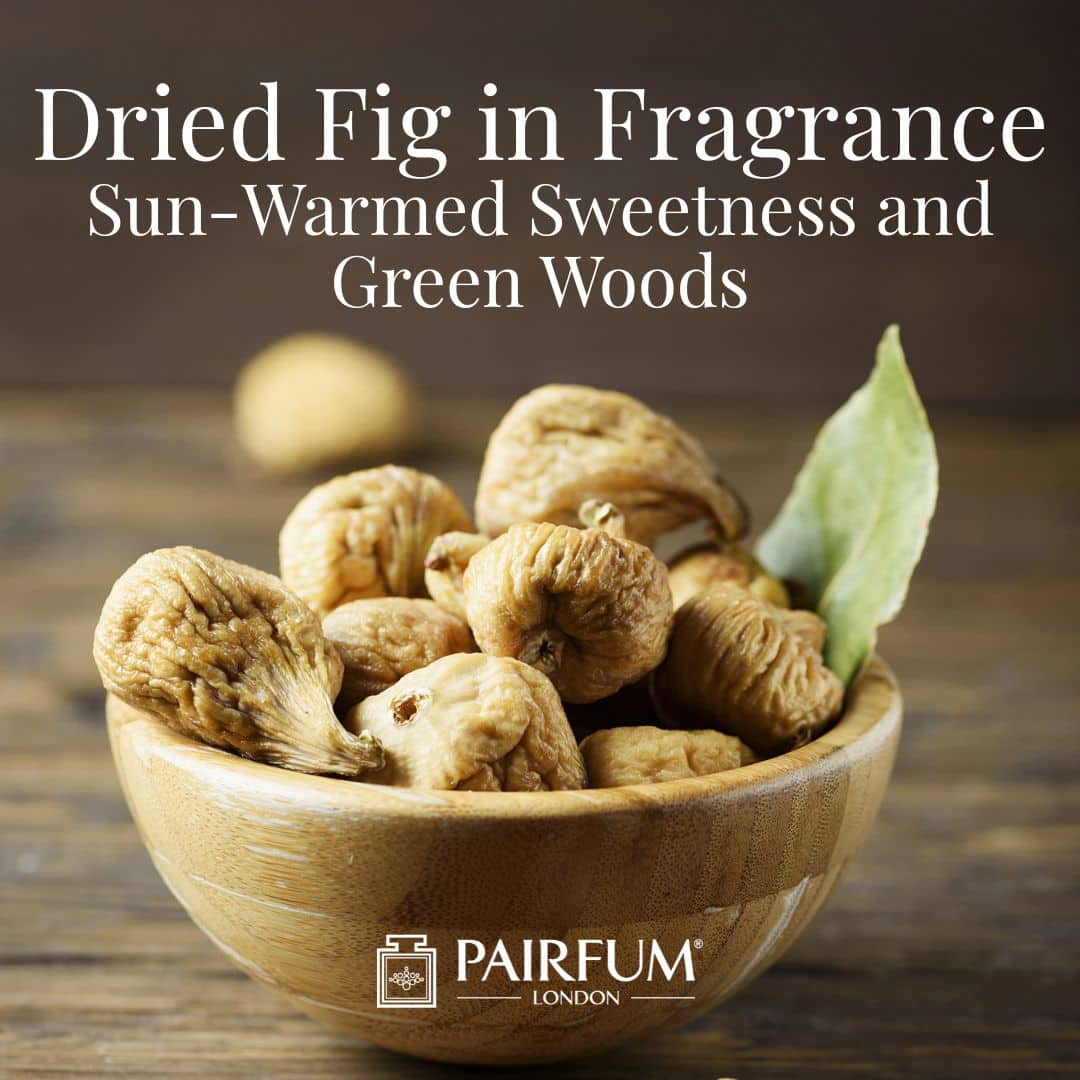
Dried fig in fragrance provides a complex, warm, sweet, and earthy aroma, blending honeyed fruitiness with the green, milky, and woody elements of the leaves and sap. This creates rich, comforting, or fresh Mediterranean vibes and is frequently used in gourmand and amber perfumes alongside notes of coconut, cedar, or musk. It is highly versatile, shifting from jammy sweetness to fresh greenness, making it a popular note for many perfume styles, from daytime fresh to deep evening scents.
There is something quietly comforting about the aroma of dried fig in fragrance. It is not a loud note, and it rarely tries to impress. Instead, dried fig settles in gently, with a warmth that feels familiar rather than attention-seeking. The sweetness is there, but it does not rush forward. It sits back, rounded and calm, with a natural sweetness that feels reassuring rather than decorative.
For many people, dried fig brings to mind the feeling of fruit that has been set aside for later, kept carefully and enjoyed slowly. That sense of patience makes dried fig especially appealing once the seasons begin to turn. As the light fades earlier in the day, fragrances with dried fig tend to feel more appropriate. They sit well alongside woods, resins, and subtle spice, creating a sense of ease. The fruit note is present, but it never shouts. It feels warm, settled, and gently familiar.
The History of Dried Fig in Fragrance
Figs have been part of human life for thousands of years, particularly across the Mediterranean, the Middle East, and Asia. Fresh figs and dried figs were both valued, not just as food, but as part of everyday culture. They appeared in cooking, medicine, and ritual, and their aroma and flavour carried meaning well beyond nourishment.
The fig tree itself has long been central to this history. The common fig tree is one of the earliest cultivated fruit trees, thriving in warm regions and producing generous harvests. Because fresh fruit spoils quickly, communities relied on drying as a way to preserve figs. Over time, dried figs became a dependable staple, valued for their longevity and flavour.
In early fragrance practices, dried fruit was often combined with resins, herbs, and flowers. Dried fig played a useful role, softening stronger ingredients and bringing a sense of warmth. This quality remains important today, where dried fig continues to act as a gentle anchor within a composition.

Types of Fig: Fresh vs Dried
Fig notes vary more than people often expect. Understanding the difference between fresh fig and dried fig helps explain how they are used.
Fresh Fig
A fresh fig note usually feels green and milky, sometimes even airy. It tends to suggest leaves, sap, and skin rather than sweetness. Many fresh fig interpretations lean towards fresh fruit, evoking freshly picked figs rather than ripeness.
Dry Fig
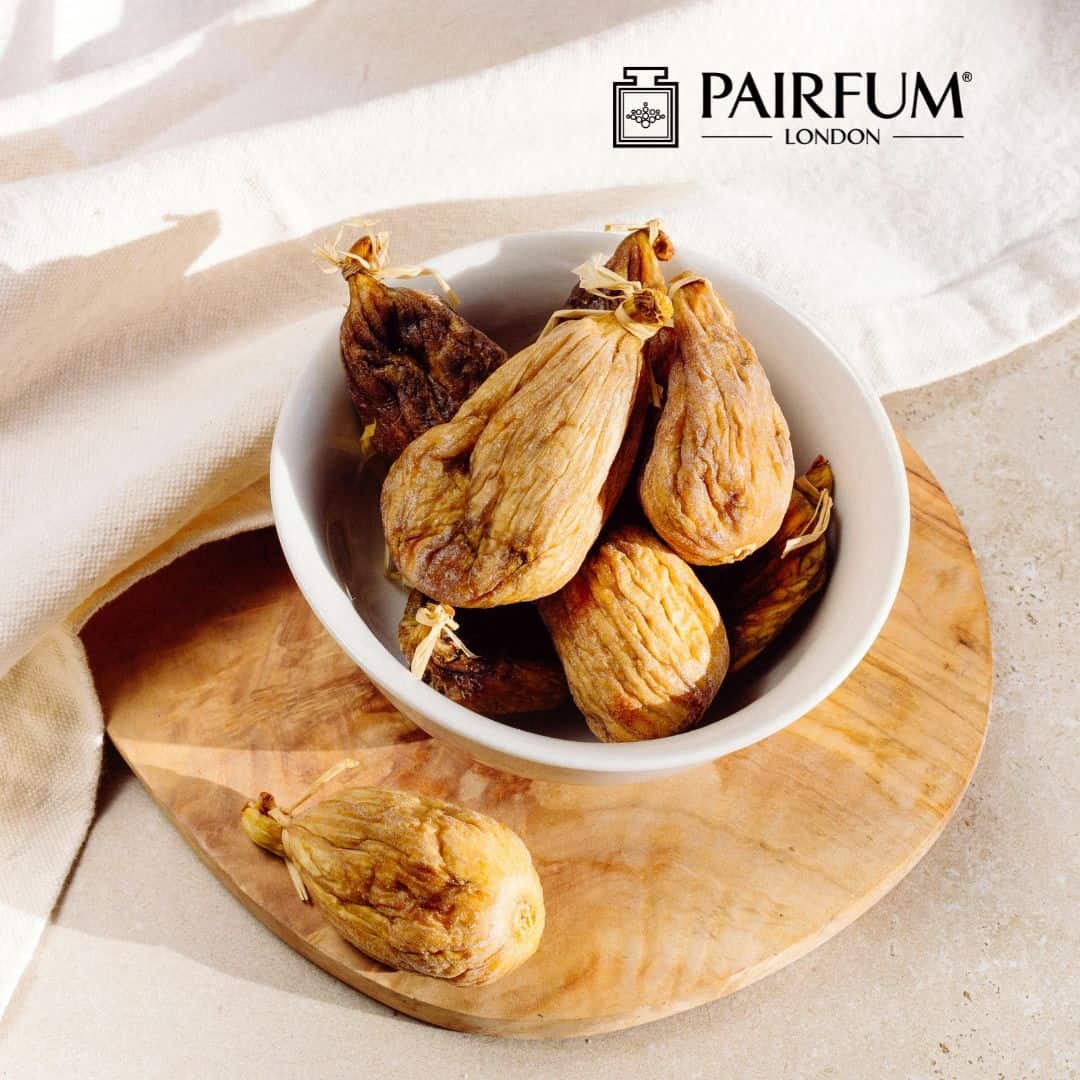
Dried fig moves in a different direction. As figs lose moisture, their sugars become more concentrated. The result is a deeper sweetness with subtle woody and earthy tones. Dry figs and dried figs often feel better suited to colder months, when brightness matters less than comfort.
From Fig Tree to Dried Fig
The journey from fig tree to dried fig is simple in principle, but careful in practice. After harvesting, figs are prepared for a drying process that reduces water content while protecting flavour.
Traditional methods rely on air and direct sunlight, allowing figs to dry slowly. Modern producers may use controlled environments instead. Each drying method affects the final texture and taste. Properly dried figs become pleasantly chewy, with concentrated flavour and no need for added sugar.
Some fig varieties are particularly valued for drying. Black Mission figs are known for their rich taste and dark colour, while Turkish figs are lighter and more delicate. Many consumers also prefer organic figs, as they highlight the fruit itself without unnecessary treatments.
Nutritional Profile of Dried Figs
Beyond their flavour, dried figs are appreciated for their nutritional qualities. They are a good source of fibre, including soluble fibre, which supports digestion.
They also contain useful minerals, such as calcium, contributing to bone health. While dried figs are energy-dense due to their natural sugars, this sweetness comes directly from the fruit.
Eaten sensibly, dried figs can be a healthy snack, offering a balance of fibre and sustained energy.

Texture, Sweetness, and Sensory Experience
Texture plays a quiet but important role in the appeal of dried fig. The chewy texture encourages slower eating and a more mindful experience. Sweetness develops gradually rather than all at once.
This gradual unfolding is similar to how dried fig behaves in fragrance. It tends to appear gently, revealing warmth and depth over time rather than demanding immediate attention.
Dried Fig in Everyday Eating
In everyday meals, dried figs are easy to use. At breakfast, they are often chopped into cereal or stirred into porridge. In home kitchens, dried fruit remains a familiar ingredient, used in both sweet and savoury cooking.
In baking, dried figs add moisture and richness to baked goods such as loaves and biscuits. Fig rolls remain a popular treat, while modern cooks experiment with new combinations. A simple recipe might involve chopping dried figs and mixing them with mixed nuts for a satisfying bite.
On a cheese board, dried figs are a classic choice. Their sweetness works well with cheese, particularly goat cheese and goats cheese, where the acidity balances the fruit. Some people also enjoy figs with dark chocolate, which deepens the flavour without overpowering it.
Figs are also used in fig jam, served with bread or alongside savoury dishes. In cooking, they may be added to sauces with bay leaves or combined with a gentle nut note for depth.
Storage, Handling, and Practical Advice
To keep them at their best, dried figs should be stored in an airtight container, away from heat and moisture. This helps maintain texture and flavour over time.
As with all foods, allergens should be considered, especially when figs are stored or prepared with nuts or dairy products.
How Dried Fig Is Used in Perfumery
In perfumery, dried fig is recreated rather than extracted. Perfumers build the impression using several materials that suggest fruit flesh, skin, and wood.
Sweet elements recall dried figs themselves, while woody notes hint at the fig tree. Some fragrances explore a spiced fig style, adding warmth without heaviness. This approach allows dried fig to feel familiar and emotionally resonant.
Fresh Fruit, Dried Fruit, and Seasonal Rhythm
The movement from fresh fruit to dried fruit reflects a seasonal rhythm that has existed for centuries. As harvest ends, preservation begins, and flavours deepen.
In fragrance, this rhythm appears in the shift towards warmer notes. Dried fig captures this transition, holding onto the memory of sunlight while settling into colder months.
Drief Fig & Home Fragrance With Pairfum London
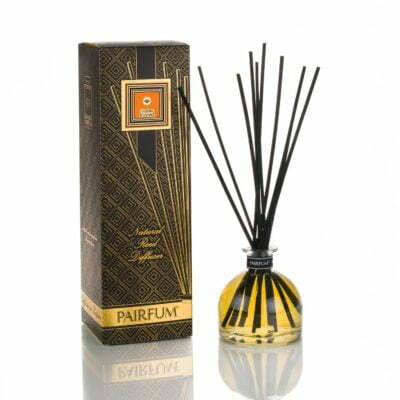
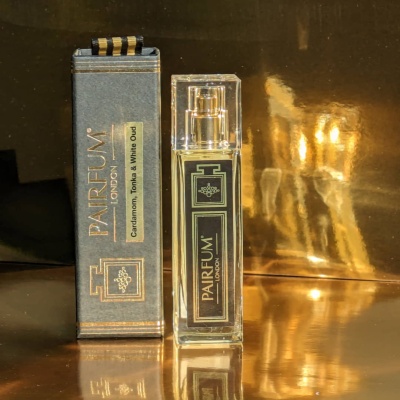
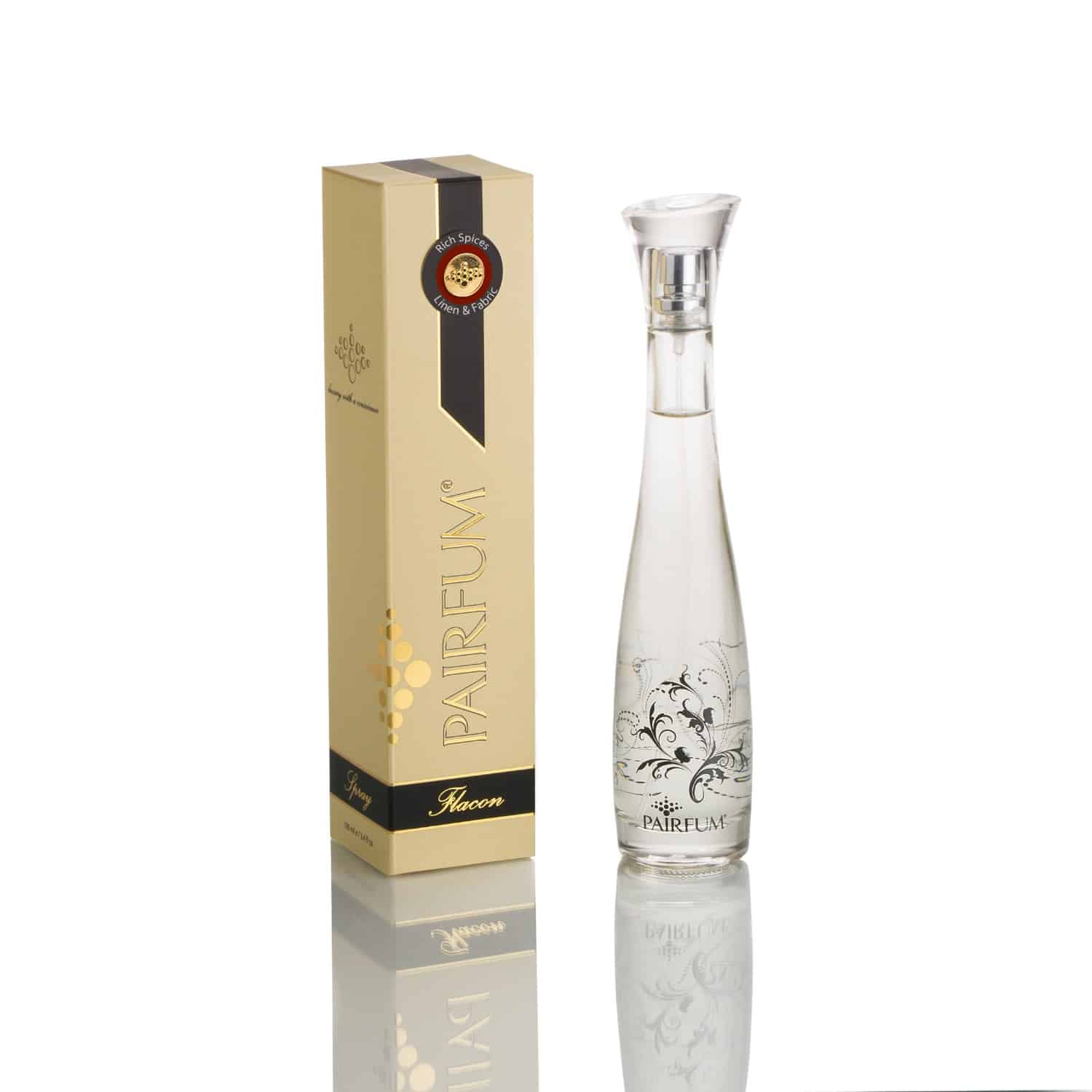
To bring the feeling of dried fig into the home, a thoughtfully made room spray offers a simple solution. A balanced flacon room spray can gently introduce fruit warmth and subtle woods, helping a space feel calm and welcoming without overwhelming it.
Rich Spices – Flacon Perfume Room Spray by Pairfum London
This aromatic and spicy composition opens with Pomegranate and Cranberry, moves into Chestnut, Nutmeg, Cinnamon and Clove, and settles on Vanilla Pods, dried figs, Dates and Persimmons.
Additional Information on Fig-Inspired Scents
For readers looking for additional information, fig-inspired scents often reward patience. The fig note tends to develop slowly.
Because dried fig sits between fruit and wood, sweetness and earth, it appeals to those who prefer fragrances that feel personal rather than dramatic.
The Enduring Comfort of Dried Fig
Dried fig continues to hold a distinctive place in both food and fragrance. It is fruity without sharpness and sweet without excess. There is a sense of time in it, of fruit carefully preserved and enjoyed slowly.
Whether eaten as dried figs in a dessert, paired with cheese, used as an ingredient in cooking, or translated into scent, the character remains consistent. Dried fig offers balance and quiet comfort, which explains its lasting appeal across cultures and seasons.