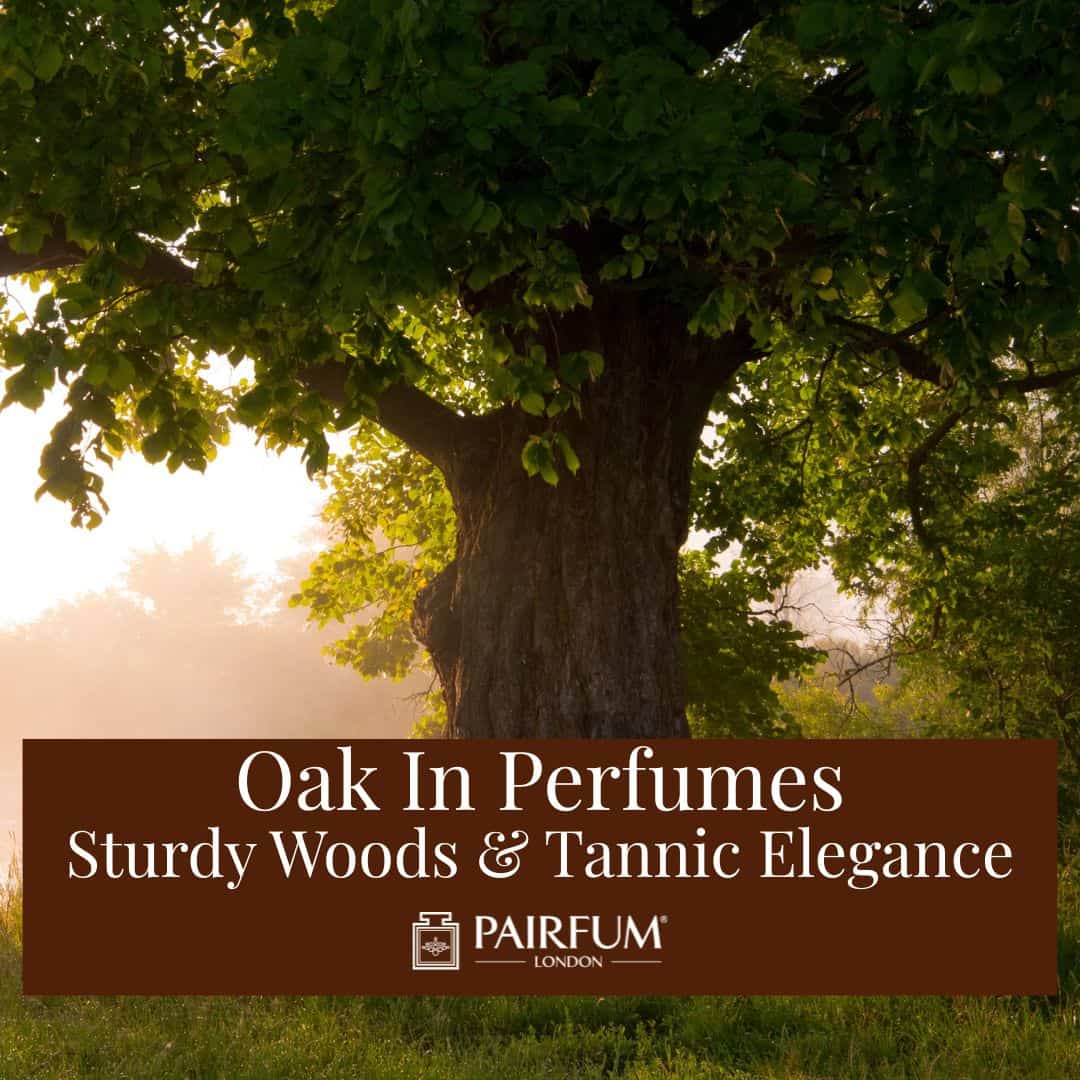
Oak trees are majestic, long-lived hardwood trees belonging to the genus Quercus, celebrated for their immense strength, durability, and vital role as a keystone species within various ecosystems. Comprising over 500 different deciduous and evergreen species found across the Northern Hemisphere, these trees remain iconic for their uniquely lobed leaves, deeply furrowed bark, and acorn fruit.”
Oak has held its ground in perfumery for centuries. Its aroma is familiar and comforting, yet never boring. In the quiet chill of January, oak feels especially welcome. It is that deep, woody note that settles in the background, offering strength without ever shouting.
There is a reason oak has stayed relevant for so long. Its raw, textured character sets it apart from other woods used in perfume. Calm, steady, and quietly elegant, oak helps build some of the most loved aromas in perfume. Let us look at why this tree has become such an important part of fragrance, how it is used, and what it brings to your favourite winter perfumes.
A Timeless Tree: The History of Oak in Perfumery
Oak has long been present in human life, long before it became part of perfume. In ancient Europe, oak trees symbolised strength and endurance. They appeared in sacred ceremonies and seasonal festivals, and their wood was prized for building and burning. The common oak is deeply woven into the cultural fabric of Great Britain, where the ancient oak was often seen as a guardian of the landscape.
In perfumery, oak took on new meaning. The earliest use was with oak moss, which comes from lichen that grows on oak bark. It became important in traditional French perfumery, used to add depth and a touch of mystery. Oak moss still plays a key role in classic styles like chypre and fougère.
Oak’s natural aroma is familiar yet complex. It can be smoky, earthy, leathery, or even a little sweet. It reminds us of forests and warmth and time spent outdoors. That simplicity, and the emotion it carries, keeps oak close to the heart of a fragrance.
The Natural Heritage of the Oak Tree
To understand the scent, one must understand the oak tree itself. Within the genus Quercus, which belongs to the beech family known as Fagaceae, there are hundreds of oak species spread across the northern hemisphere, from the United States and North America to Europe and Asia. In the UK, the two most famous types are the English oak, also known as Quercus robur or the pedunculate oak, and the sessile oak, known scientifically as Quercus petraea.
Few sights in the British Isles feel as permanent or as iconic as a towering English oak. This is the legendary native tree of our history books, most famously linked to the ancient glades of Sherwood Forest. Folklore tells us that Robin Hood sought sanctuary inside the hollowed-out heart of the Major Oak, a specific ancient oak that stands today as a living monument to survival. For centuries, the timber from such giants formed the very spine of the British Navy. It took thousands of individual trees to build the HMS Victory, a feat that forever marked oak wood as the premier timber for strength and endurance.
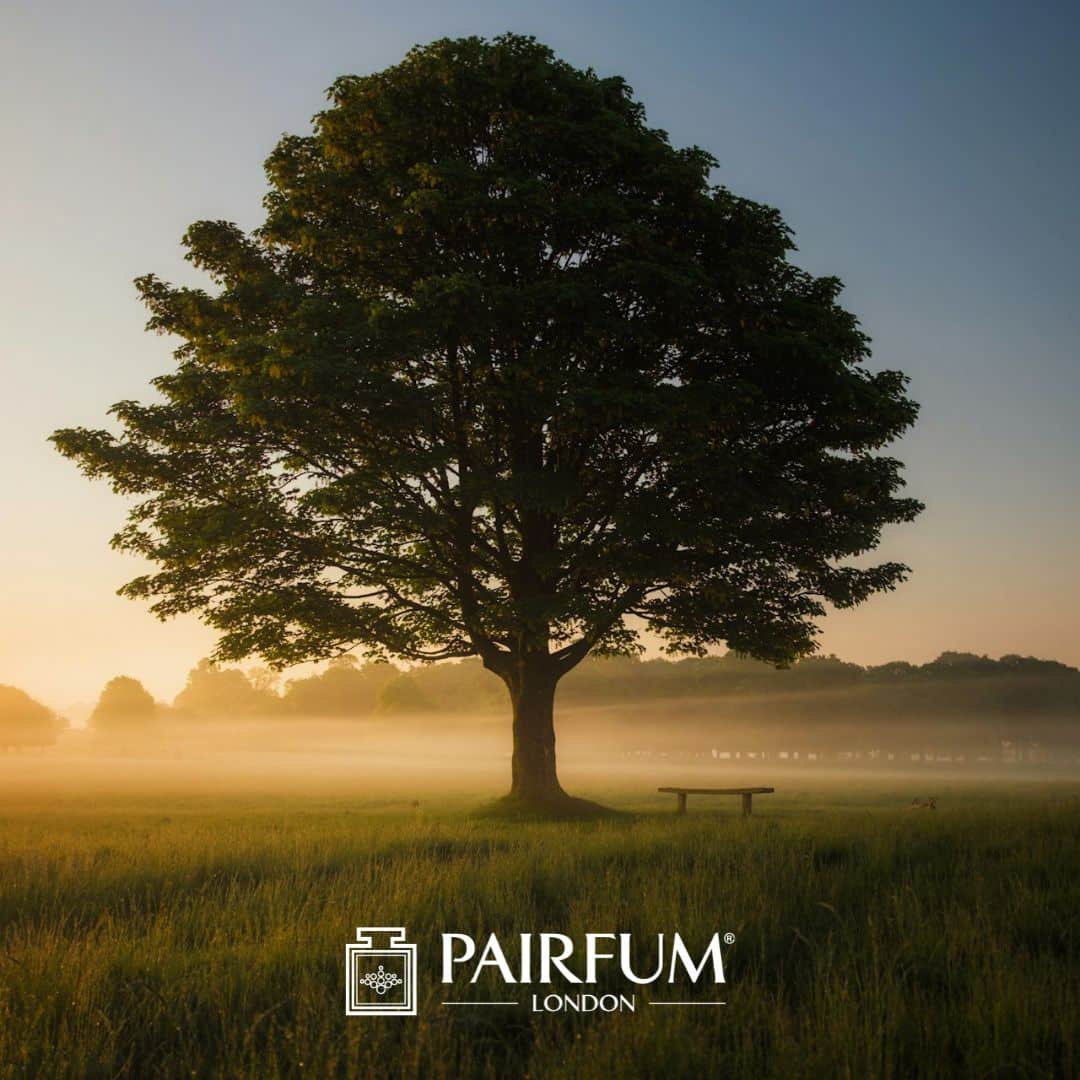
In the wild, every single tree functions as a biological powerhouse and a vital species for local biodiversity. When spring arrives, the tree drapes itself in male flowers known as catkins, which shed their pollen into the breeze. By autumn, the fruit of the tree, those familiar acorns, becomes a crucial food source for forest wildlife. Identifying an oak leaf is simple due to those classic, rounded lobes, yet while one leaf is small, the collective shadow of a canopy thick with oak leaves is immense. A lone mature specimen acts as a universe in itself, supporting over 2,300 different species of life, from nesting birds and small mammals to rare insects like the purple hairstreak butterfly.
Diversity Across the Species
While we often think of the pedunculate oak, there is an incredible variety across the globe. Some are grown as ornamental trees in gardens, while others are harvested for specific industries.
- White Oaks: Including the American white oak, these are prized for their timber and their ability to hold liquids, making them essential for barrels.
- Red Oak: Known for its faster growth and porous wood, red oak offers a different density and grain.
- Holm Oak: An evergreen species found in warmer climates, often used in coastal landscaping.
- Turkey Oak: Introduced to the UK in the 1700s, it grows quickly but has timber prone to cracking.
- Cork Oak: Essential for the wine industry, as its bark is harvested to make corks without harming the living tree.
- Sessile Oak: Often found in the north and west of Britain, the sessile oak differs from the common oak because its acorns do not sit on stalks.
- Bur Oak: A hardy species from North America known for its massive acorns with fringed cups.
Interestingly, not everything with the name is a true oak. For example, poison oak is not a member of the Quercus family at all, and the silky oak is actually a silver oak from Australia. Even within the true family, trees face challenges like acute oak decline, a serious condition affecting timber quality and tree health across Europe.
From Barrel to Bottle: How Oak Is Used and Extracted
Oak can appear in perfumes in a few different ways. Two of the most common are oak moss and oakwood extract, though they come from different parts of the tree.
Oak moss is a lichen that grows on oak bark. It has a green, slightly damp aroma with deep forest-like qualities. It is often used to ground a perfume and give softness at the base. Oakwood extract, on the other hand, comes from the wood itself. It has nutty, dry, and tannic qualities, especially if the wood has been aged with wine or spirits.
To bring these aromas to life, perfumers use special methods of extraction. Oakwood can be processed into an essential oil through steam distillation. Or, a more concentrated version known as an oak absolute can be made using solvents. Each method gives a slightly different outcome. The oil is lighter, with dry wood notes, while the absolute adds richer, smokier tones.
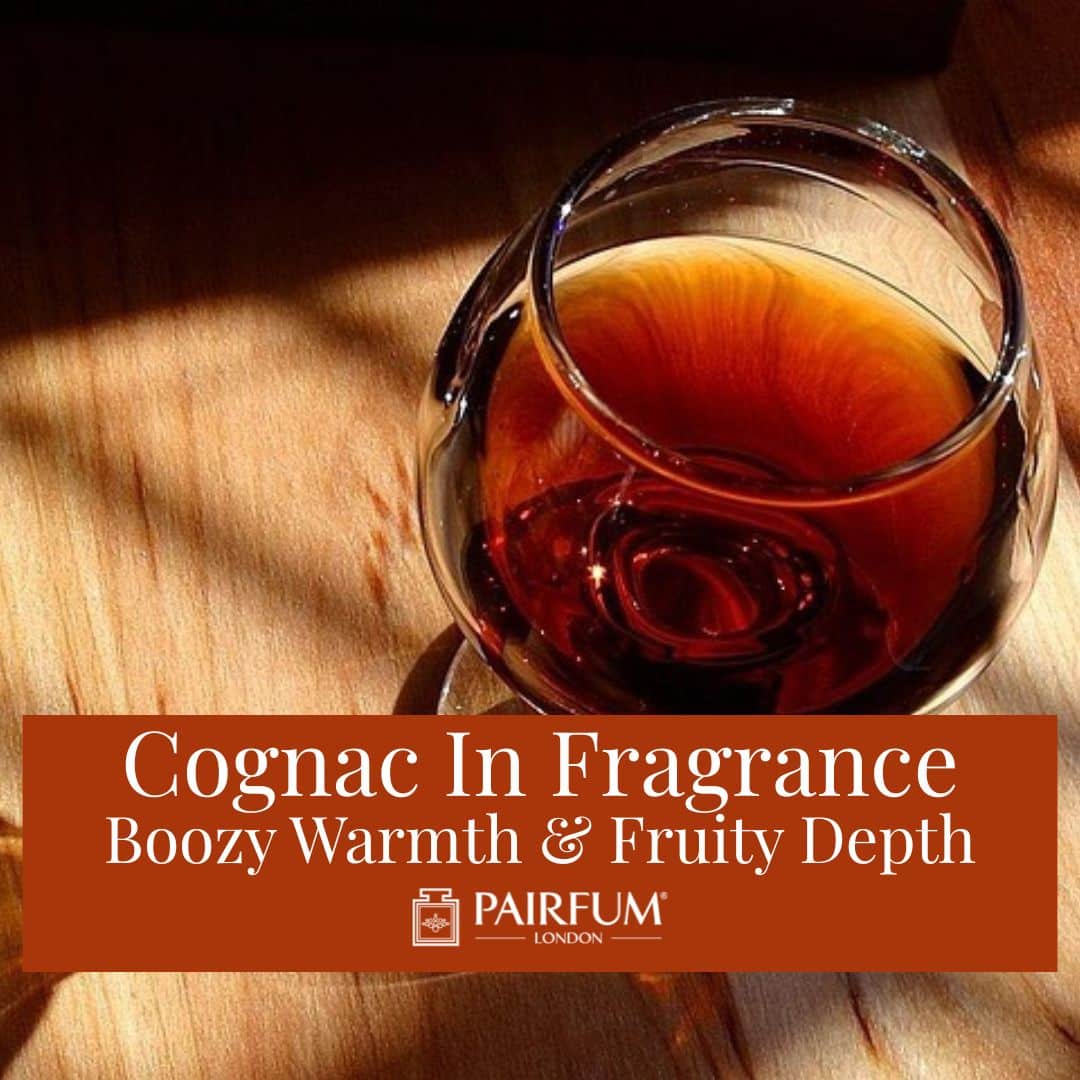
The use of oak barrels in wine and spirits inspired another phase of oak in fragrance. These barrels give the liquid inside a sweet, toasted complexity, and this exact character can be captured in perfumes too. A perfume touched with this kind of oak feels mature and warm with whispers of vanilla, smoke, and spice.
Style and Substance: The Types of Oak Found in Fragrance
Not all oak notes behave the same. The type of tree makes a difference, and so does the preparation.
- White oak is smooth, dry, and clean, sometimes with slight vanilla tones. It is the kind used most often in barrels for ageing wine or whisky.
- Evergreen oak or Mediterranean oak brings a darker, drier quality. Its aroma can feel a little more herbal or balsamic depending on how it is extracted.
- Other, less common types might offer nutty, creamy, or slightly green aromas.
Oak often plays well with other notes. It forms the backbone of chypre perfumes, mixing nicely with bergamot and patchouli. It supports fougère blends too, giving body to lavender, geranium, and coumarin. In woody-gourmand styles, oak adds depth below chestnut, hazelnut, or roasted vanilla notes.
The pairing possibilities are wide, but oak always pulls everything together in a quiet, grounding way. Whether it is the scent of oak groves in the rain or the dry scent of timber in a workshop, oak provides a sense of place.
Cultural Roots: Language and Legend
The word oak itself has deep roots. In Old English, it was known as āc, which evolved through Middle English into the word we use today. This linguistic journey reflects how long the English oak has been a part of daily life. For those with possible interests in history, the tree has provided more than just timber for doors and ships.
In many cultures, acorns were a symbol of potential, and oak groves were considered places of wisdom. The major oak in Sherwood Forest stands as a living testament to this history. When we wear a perfume containing oak, we are wearing a scent that has been part of the human story for millennia.
Perfumes That Capture the Spirit of Oak
Many perfumes give oak a starring role, either through moss, wood, or both. Some lean into its raw, forest mood, while others highlight its toasty, elegant feel.
- Earthy or green-focused perfumes might use loads of oak moss, paired with herbs or citrus, to create a cool, mossy base.
- Leathery woods or smoky blends may emphasise the tannic side of oakwood, bringing forward a more textured, mature character.
- In unisex perfumes, oak often acts as an anchoring note, offering comfort without leaning soft or strong. This balance makes oak especially popular in cool months like January.
The English oak (Quercus robur) provides a scent that is both rugged and refined. Whether traditional or modern, these oak-based perfumes never feel overdone. They stay steady, balanced, and quietly powerful.
Iconic Oak Perfumes
- English Oak & Hazelnut by Jo Malone London: A bright, enchanting scent that captures the atmosphere of a sun-dappled forest using roasted oakwood notes.
- Quercus by Penhaligon’s: Named after the Latin genus for the oak tree, this modern classic offers a fresh, elegant blend of citrus anchored by mossy depths.

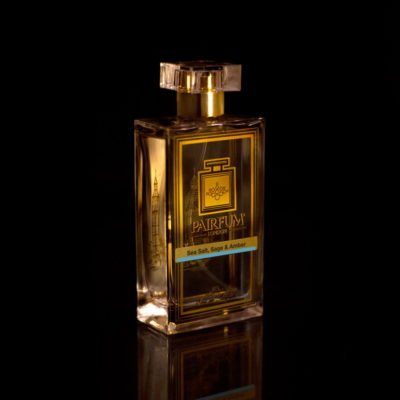
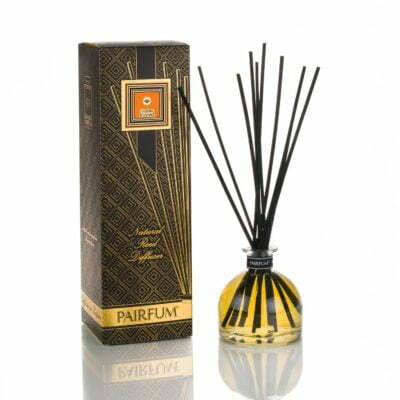
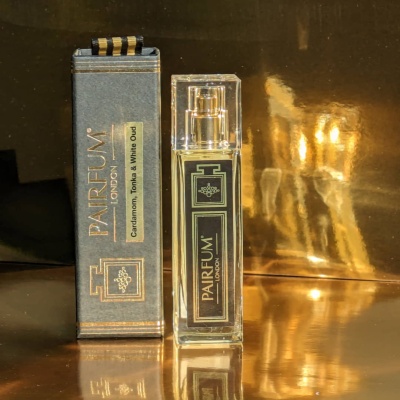
Oak Inspired Perfume & Home Fragrance by Pairfum London
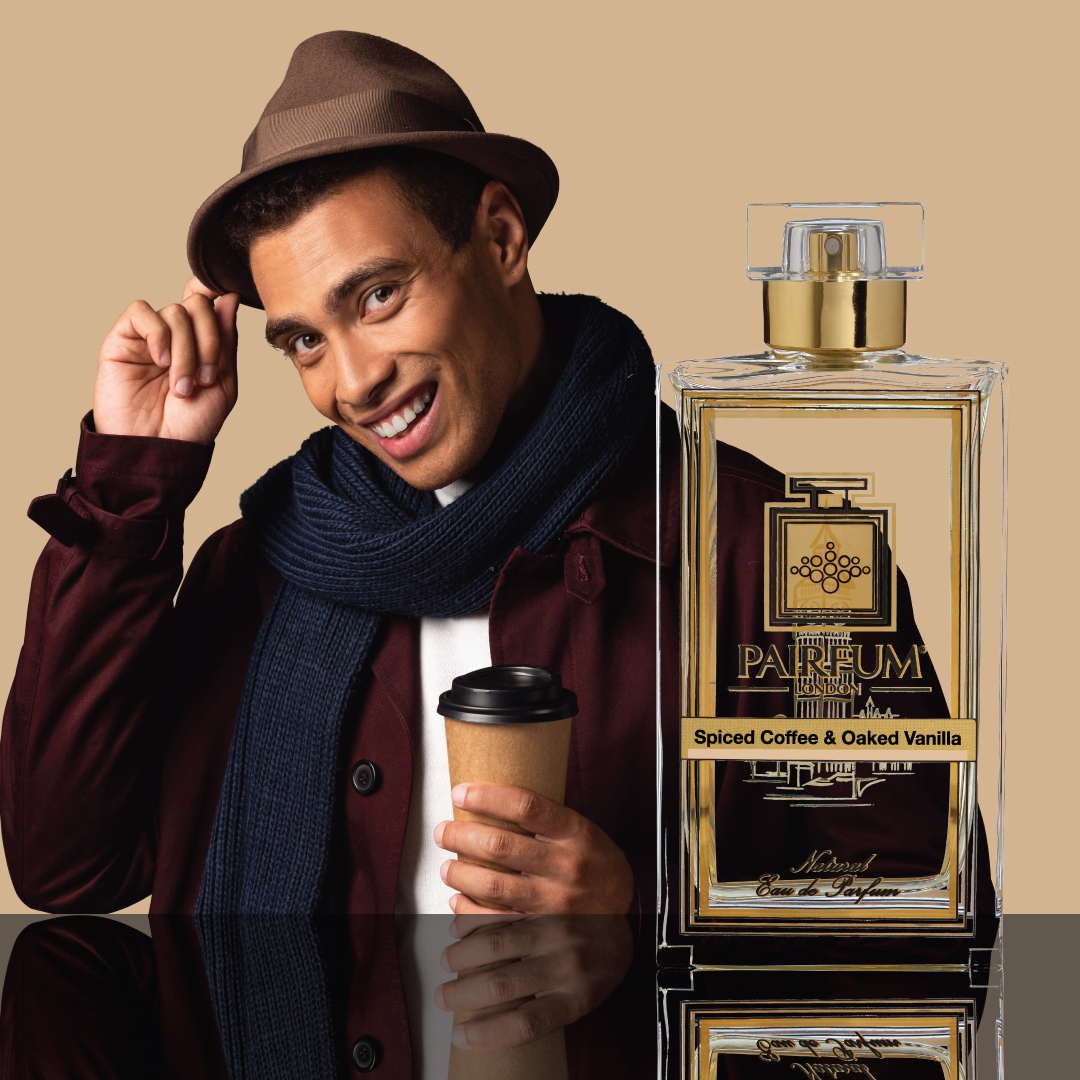
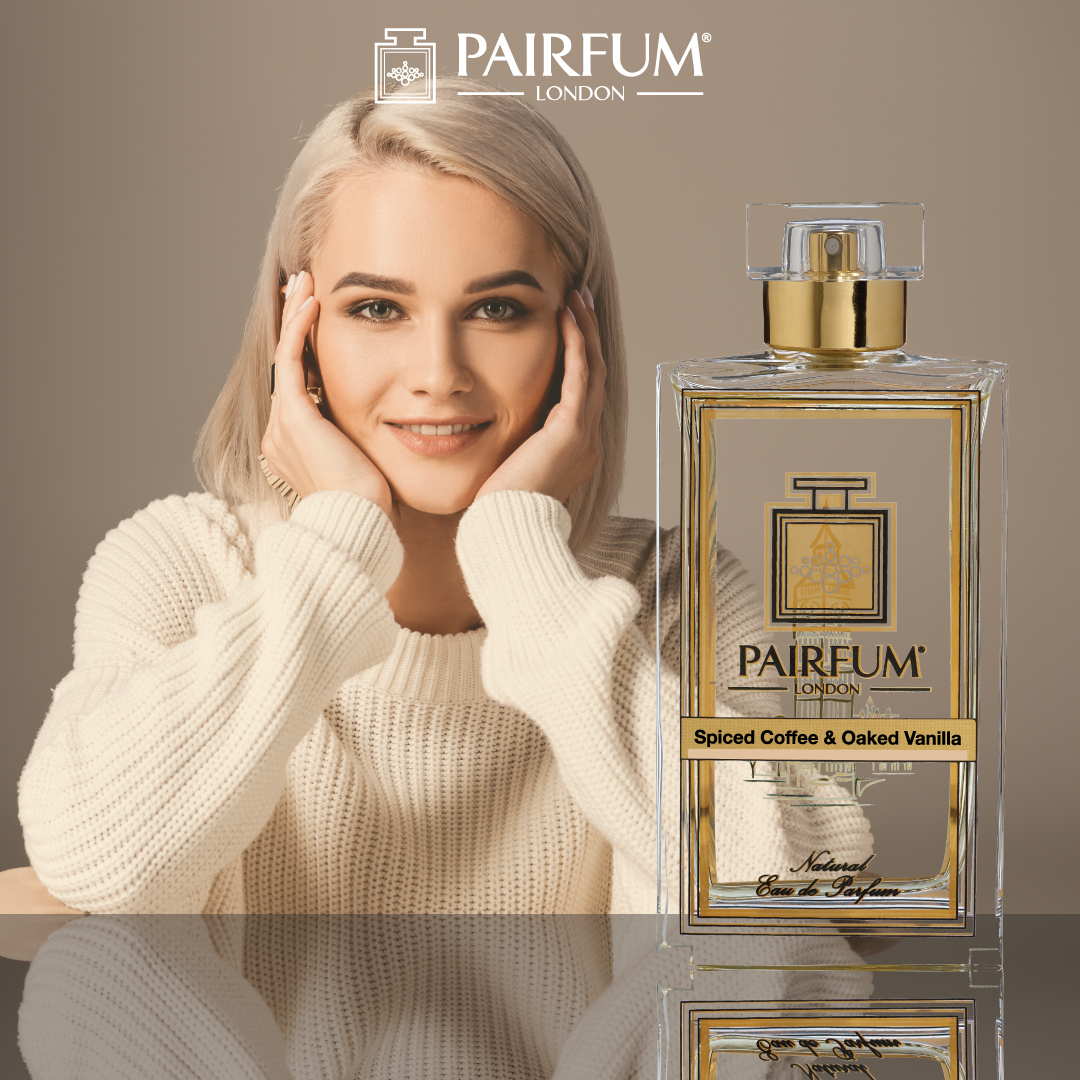
Spiced Coffee & Oaked Vanilla – Eau de Parfum by Pairfum London
This warm, oriental spicy fragrance begins with top notes of Orange Blossom, Pink Pepper and Crisp Pear. The heart is a modern blend of rich and dark Coffee with the elegance of Jasmin. The sophisticated base is built on Patchouli, Cedar and Vanilla aged in Oak.
Cognac & Vanilla – Flacon Perfume Room Spray by Pairfum London
A fragrance for the true connoisseur, this scent combines the tannic depth of Sherry Aged Oak and Caribbean Patchouli with the warmth of Golden Cognac. Anchored by Ancient Labdanum, Amber Benzoin, and rich Bourbon Vanilla, it evokes the spirit of a steady oak tree meeting the refined complexity of aged spirits.
Rooted, Rugged, and Refined: Oak in Your Fragrance
Oak gives perfume a foundation, carrying the weight of other notes so they can unfold. Much like the wood used in fine architecture, it provides a structural strength that keeps a composition steady. From the stately pedunculate oak to the resilient sessile oak, the natural variety within the species allows perfumers to play with different olfactive facets.
In floral or spicy blends, a touch of oak prevents a scent from becoming too fleeting. In winter perfumes, it ensures comfort never tips into heaviness. Its warmth lingers as a soft, sophisticated memory on the skin. We believe in crafting scents that allow this majestic note to shine, adding significant depth to your fragrance journey. Explore how oak effortlessly enhances your favourite compositions, where each perfume promises to envelop you in a comforting embrace, mirroring the steady presence of the oak itself.
The journey from the acorns on the forest floor to the timber in a perfumer’s laboratory is a long one. Whether it is the red oak, the white oak, or the classic English oak, this tree remains the undisputed soul of the forest.