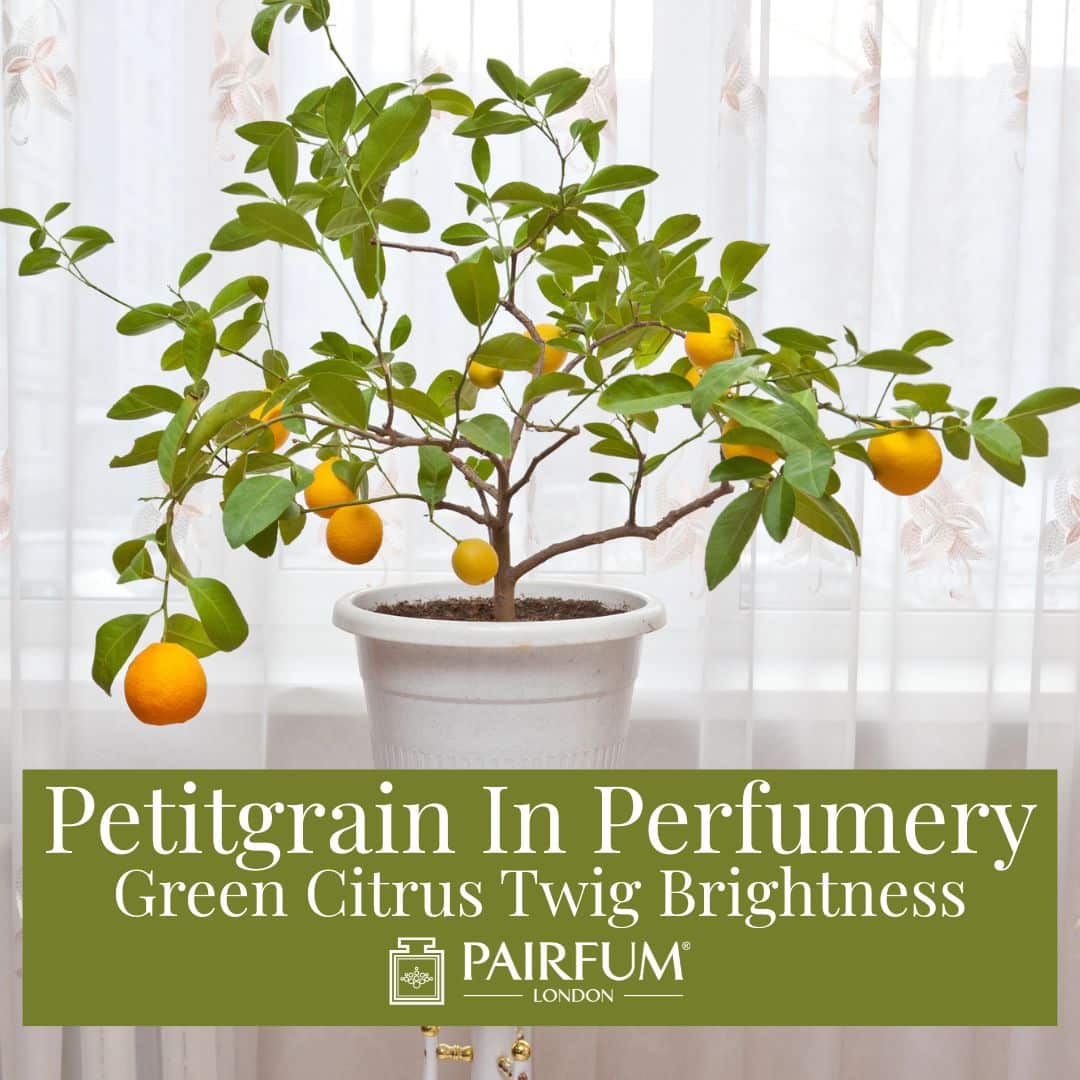
Petitgrain (French for “little grain”) is a refreshing, aromatic essential oil obtained by steam-distilling the leaves and twigs of the bitter orange tree. It offers a woody, citrusy, and slightly floral aroma used extensively in aromatherapy, perfumes, and natural skincare for its soothing, antibacterial, and anti-inflammatory properties. As a versatile middle note in fragrance blends, it is distinct from neroli (extracted from flowers) or bitter orange oil (from the peel). This oil promotes relaxation, aids sleep, and balances mood, blending well with other citrus or woody oils. Primary production for this essential oil is located in Paraguay.
Petitgrain brings a crisp, green brightness to perfume that feels both fresh and grounding. It does not shout for attention like a sweet floral or a juicy citrus. Instead, it leans into that leafy, citrus-twig aroma that lingers in the background and holds everything together.
Made from the leaves and twigs of the bitter orange tree, Petitgrain has been a part of natural and niche perfumery for many years. It is quiet, herbal, and just sharp enough to wake up the senses. In this article, we look at where Petitgrain comes from, how it smells, and the way it fits into some familiar and much-loved perfumes.
A Brief Look at What Makes Petitgrain Special
Petitgrain is not made from the fruit or flower of the orange tree. It comes from the green parts (mostly the leaves and small twigs) of the bitter orange tree. This is what gives it that dry, zesty edge. It delivers a balance that feels both clean and a little woody at the same time.
Its bouquet carries a soft, citrus tone with a green backbone, making it feel lighter than other orange ingredients. You will often find it resting in the heart of a blend, adding structure without making the whole perfume smell like a fruit bowl.
During winter and early spring, Petitgrain becomes even more welcome. Perfumes can start to feel too rich or too sugary during colder months, but this particular essential oil adds a crisp lift. It works well in compositions that need a breath of air without moving into floral or overly sweet territory. Because petitgrain contains high levels of linalyl acetate, it possesses a soothing quality that bridges the gap between sharp citrus and soft herbs.

The Origin and History Behind Petitgrain in Perfume
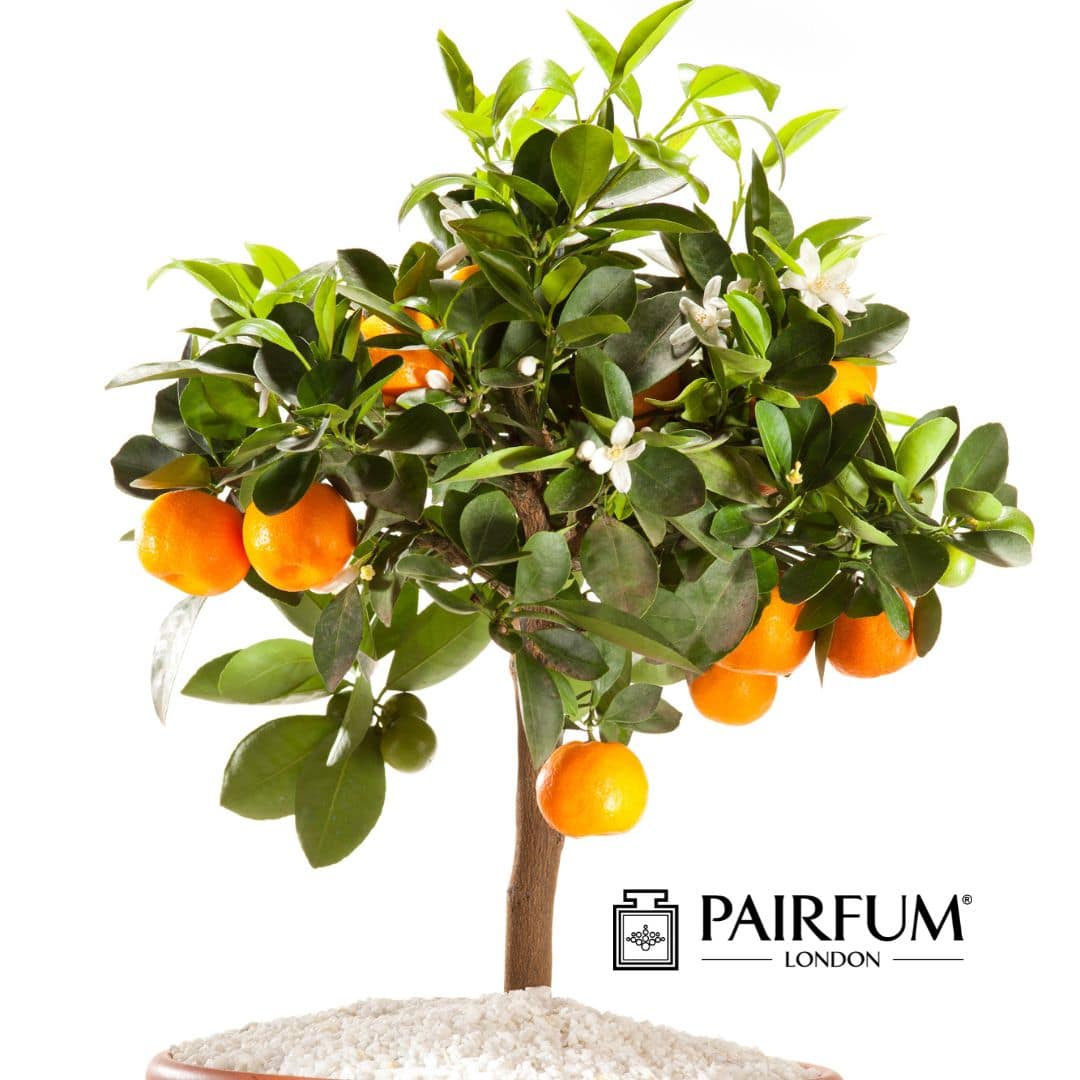
The bitter orange tree gives us more than one material for perfume. The flowers yield neroli, and the peel gives us orange oil. But it is the green parts (the slender twigs and the shiny leaves) that give us Petitgrain.
This has roots in traditional perfumery. In early colognes, Petitgrain was used for its uplifting and slightly herbal feel. It freshened up the formulas and gave balance to sharper ingredients like rosemary or lavender. In the past, the plant part used for extraction included the tiny, unripened green fruits, which were about the size of cherries. This is actually where the name comes from, as “petit grain” translates from French to “little grain.”
As perfume styles shifted, Petitgrain remained a quiet but steady companion. It did not define fragrances on its own, but it made everything flow better. It worked for both bright, masculine colognes and gentler, timeless blends. Whether used in stronger perfumes or softer water-based ones, it brought structure to the whole bouquet.
How Petitgrain is Extracted and Crafted
Petitgrain essential oil is made using steam distillation. Perfumers take the leaves and green twigs from the bitter orange tree and gently heat them to release the fragrant vapour. That vapour is cooled, and from it, the petitgrain oil is collected. Unlike orange peel or neroli blossoms, the leafy material offers a drier, greener aroma.
This makes it quite different from other orange-based oils. Orange oil itself is juicy and sweet, with a full-bodied citrus aroma. Neroli, from the flowers, is more floral and powdery. Petitgrain sets itself apart with its crisp, woody citrus character. It brings a natural sharpness that works beautifully when a perfume needs to feel clean without being cold.
When sourcing this pure essential oil, geography plays a major role in the scent profile. Petitgrain Paraguay is perhaps the most common variety, known for its slightly more robust and woody scent. However, Petitgrain Bigarade, often sourced from North Africa or southern Europe, is considered the finest quality for high-end perfumery because it is more refined and floral. While the bitter orange tree is native to Southeast Asia, it is now grown globally, from the Mediterranean to South America, and even in niche plantations in South Africa or New Zealand.

Skincare and Practical Applications
While we primarily celebrate its scent, petitgrain also has a place in skincare. It is particularly beneficial for those with oily skin or greasy hair, as it helps to balance sebum production and tone the complexion. Many people use it to target skin imperfections by adding a drop of organic essential oils to their daily routine.
The oil is known for its antibacterial and anti-inflammatory qualities, making it a useful natural remedy for blemish-prone skin. You might find it listed in the product details of a high-end body lotion or a facial cleanser. The petitgrain oil helps to tone the skin, leaving it feeling refreshed. If you are looking for specific usage instructions, most reputable suppliers provide technical documents to ensure the essential oil is used correctly. Whether you are buying a small 10 ml bottle for home use or looking for special offers on bulk fragrance oils, the versatility of this ingredient is unmatched.
Aromatherapy and the Science of the Scent
Beyond its role in a bottle of fragrance, the botanical name Citrus aurantium covers a variety of uses. In the world of aromatherapy, aromatherapy oils like petitgrain are prized for their ability to calm the mind. The aromatherapy benefits of this specific organic essential oil are often compared to lavender because they share similar chemical components.
For those interested in natural remedies, petitgrain essential oil is frequently used in synergy blends to support a sense of well-being. It is a staple in many essential oil blends designed to reduce stress and combat mental fatigue. When diluted in a carrier oil or mixed into base oils, it can be applied to the skin during a massage. Using it as a massage oil allows the herbal, woody scent to linger, providing a grounding experience.
Historically, the oil has been used in traditional practices across Haiti and China to soothe the nervous system. Because it acts as a mild sedative, it is often recommended for those struggling with shock, anger, or high-pressure situations. Its ability to promote a calm, cheerful atmosphere makes it a popular choice for home diffusion.
Why Petitgrain Works So Well for Fresh Winter and Early Spring Perfumes
By the time holidays are over, and January rolls in, rich fragrances can start to feel too heavy. That is where Petitgrain shines. It gives a fragrance a touch of green and a bright start without moving into anything overly floral or sweet.
Its bouquet works well with resinous or balsamic notes, making them feel easier to wear in cooler weather. If a perfume has something like myrrh, sandalwood, or incense, a touch of Petitgrain can bring just enough lift to make it wearable past festive evenings.
That clean edge also works for people who want perfumes that feel steady rather than fanciful. Not everyone enjoys gourmand or powdery notes, especially when they want something clear through winter. Petitgrain offers that structure and clarity in a way that is not too sharp or sterile. It interacts beautifully with the skin, evolving from a sharp green opening to a soft, woody hum.
Where and How Petitgrain Shows Up in Popular Fragrances
Many citrus-style perfumes would feel incomplete without Petitgrain. It is often not the leading note, but it plays a strong supporting role that perfumers count on. You will see it appear with other herbal ingredients like:
- Lavender essential oil (to add sharpness and freshness)
- Rosemary essential oil (for a cleaner and greener balance)
- Vetiver (to round out the woody side of the blend)
- Neroli essential oil (for a drier and less floral finish)
Together, these oils build aromas that feel classic and timeless. Petitgrain is especially favoured in niche perfumery. Its natural character gives a perfume a lived-in feel, while keeping the structure balanced and calm. It does not aim to be showy. Instead, it joins the perfume in creating a pleasant, lasting impression.
In many formulations, it is blended with patchouli essential oil, ylang ylang, or clary sage to create complex, earthy, and floral layers. Because it belongs to the Rutaceae plant family, it has a natural affinity for other citrus and wood notes.
Iconic Petitgrain Perfumes
- Acqua di Parma – Colonia Essenza A sophisticated Italian classic where petitgrain provides a woody, green backbone to bright citrus and white florals.
- Mugler – Mugler Cologne (Come Together) A legendary, minimalist scent that uses petitgrain to achieve a famous “steam” accord and soapy, out of the shower freshness.
- Miller Harris – Le Petit Grain A fragrant tribute to the bitter orange tree, highlighting the twiggy, herbal, and aromatic intensity of the leaves.

Petitgrain Top Notes in Pairfum London Home Fragrance
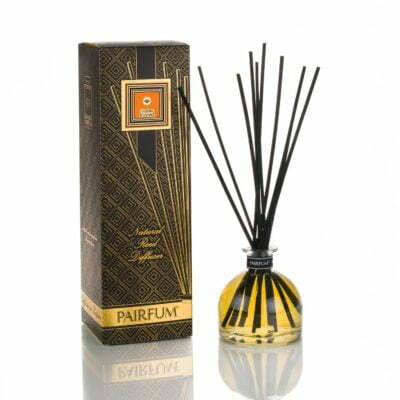
To bring the crisp, green energy of petitgrain into your living space, the Pairfum London Flacon Room Spray Perfume offers an elegant way to refresh your home. This natural “Eau de Toilette” for the home is expertly crafted with pure essential oils, ensuring that the zesty, botanical brightness of petitgrain is diffused into a fine, long-lasting mist. Unlike standard aerosols that quickly fall to the floor, this couture room perfume remains suspended in the air for up to eight hours, allowing you to enjoy the restorative aromatherapy benefits and clear, citrus-twig structure throughout your day.
Neroli & Olive – Flacon Perfume Room Spray by Pairfum London
A sophisticated accord built around the vibrant notes of Neroli, Pomelo, Lime and Petitgrain. Jasmine Petals, Vetiver, Patchouli and Aged Leather add depth and warmth to complete the sensation of walking through an olive grove on a warm, sunny day.
Green Citrus Brightness for Every Season
As perfume tastes shift with the seasons, we find Petitgrain remains a favourite. Its bright, green edge makes it feel clean, calm, and just a little bit wild, as if it still remembers the branches it came from. The way this essential oil balances the floral sweetness of neroli with the earthiness of the twigs ensures it will remain a cornerstone of the perfumer’s palette. Whether you are exploring aromatherapy or searching for a new signature scent, understanding the role of petitgrain opens up a new world of appreciation for the art of fragrance. Its ability to soothe the skin and the soul makes it more than just a scent; it is a botanical treasure.