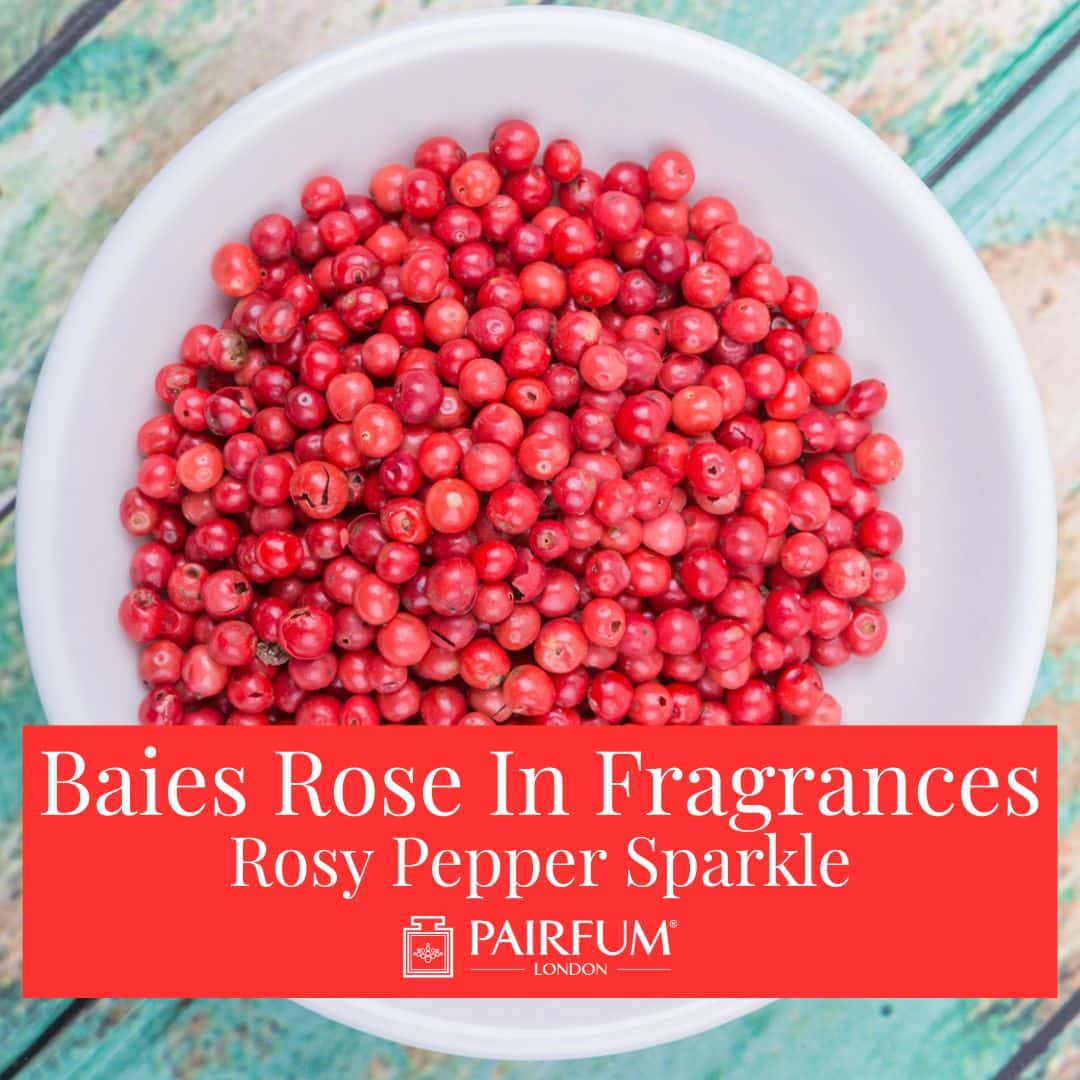
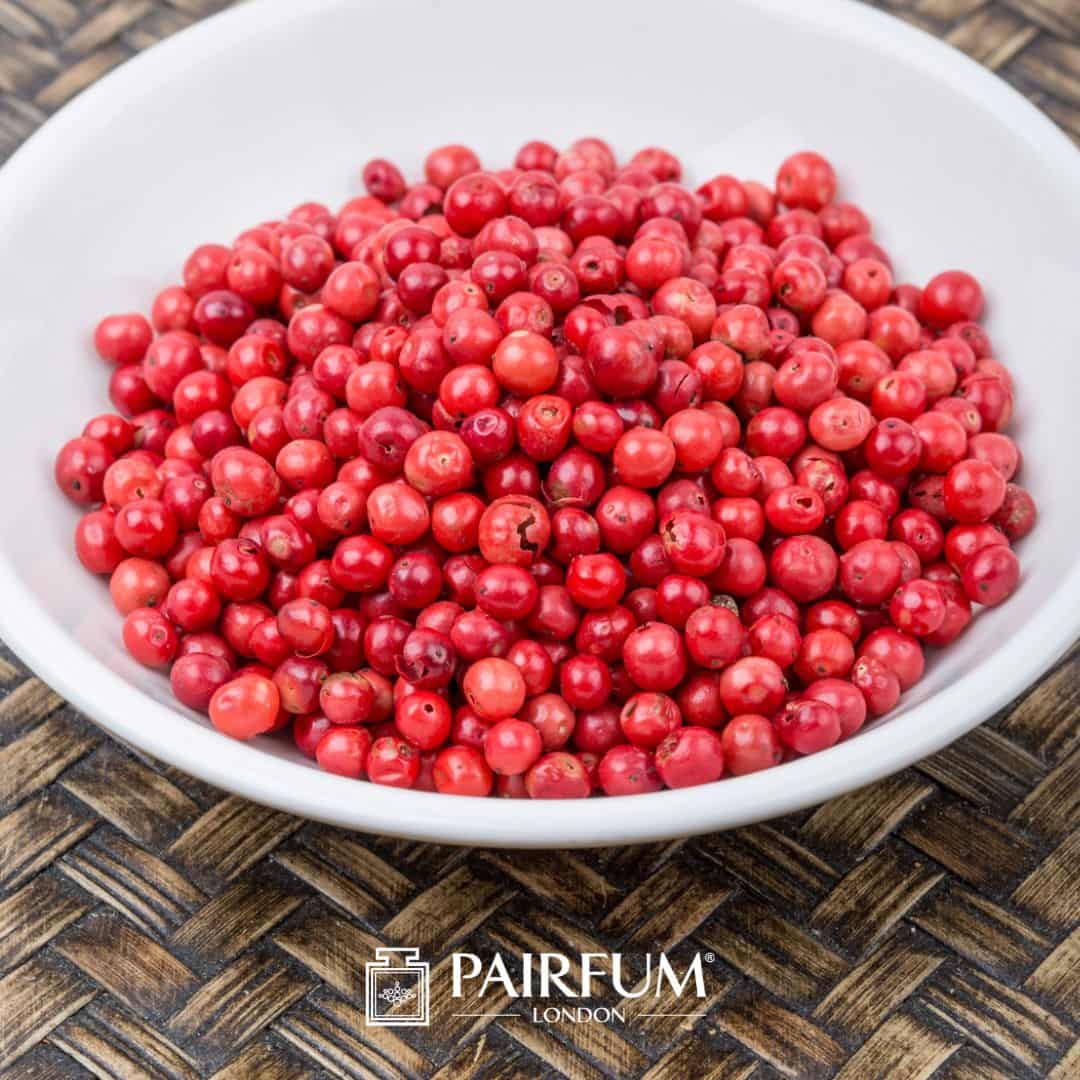
Pink peppercorns are the dried, sweet, and mildly spicy berries of the Peruvian pepper tree or Brazilian pepper tree, rather than true peppercorns. They offer a fruity, slightly citrus note to dishes such as fish, salads, sauces, and even desserts or cocktails, and are valued for their vibrant colour and delicate flavour. Pink peppercorns belong to the cashew family and are most often used as a garnish or light seasoning, adding a distinctive aroma and gentle warmth rather than sharp heat.
Pink Peppercorn is the sort of ingredient that catches you off guard in perfume. Light, fizzy, and just a little spicy, it adds a cheerful spark that lifts everything around it. You will often find it playing a key role in modern floral or woody fragrances, giving them a bright edge that feels fresh but still carries warmth. That makes it a perfect fit for early winter, when we are craving comfort and sparkle at the same time.
It is easy to mix up Pink Peppercorn with black pepper, especially when scanning a fragrance listing. But where black pepper is sharp and dry, pink peppercorn is sweeter, softer, and surprisingly fruity. It has a champagne-like pop that works in both classic and unconventional blends.
There is a quiet confidence to this note, never overpowering, just the right kind of zing. Let us look at where it comes from, how perfumers work with it, and which creations have used it particularly well.
A Little History of Pink Peppercorn
Despite its name, Pink Peppercorn is not a true peppercorn at all. It is the dried berry from the Schinus tree, often called the Peruvian pepper tree, found in parts of South America. The fruit has a rosy colour and mild peppery flavour, which is how it ended up in kitchens long before perfumery.
More specifically, pink peppercorns come from two closely related plants: the Peruvian pepper tree, also known as Schinus molle, and the Brazilian pepper tree, or Schinus terebinthifolius. These trees are sometimes collectively referred to as the Peruvian peppertree, and they are part of a different plant family from true pepper.
This distinction matters. True peppercorns, including black peppercorns, white pepper, and white peppercorns, all come from the same vine and are considered real peppercorns. Pink peppercorns, by contrast, come from a different plant entirely, even though they resemble a regular peppercorn once dried.
- Unlike spices like clove or cinnamon with ancient histories in fragrance, Pink Peppercorn is a relatively new addition.
- It gained popularity among modern perfume houses over the past few decades, particularly as preferences shifted toward lighter, more playful scents.
- Its slightly fruity, gently spicy character made it easy to include in blends across seasons.
The berries themselves start as small green fruit before turning pink as they ripen. These ripe berries are harvested, dried, and transformed into the familiar pink peppercorn. In culinary contexts, they are sometimes called pink berry or baies rose.
It does not have the weight of more established spices, but that is exactly what makes it helpful in adding a clean but shiny feel to a perfume.

How It’s Sourced and Extracted for Perfume
Pink peppercorns grow in clusters on the pepper tree, thriving in warm climates across South America. Both the Peruvian pepper and Brazilian pepper varieties produce generous crops of fruit. These ripe berries are typically picked by hand to protect the delicate berry skins.
Once harvested, the fruit is dried. Each dried berry becomes a peppercorn with a vibrant colour and distinctive flavour. In perfumery, extraction focuses on preserving that freshness.
- Rather than steam distillation, Pink Peppercorn oil is often obtained through CO2 extraction.
- This process captures the fruity, citrus facets without introducing bitterness.
- The result is a naturally bright and zesty perfume ingredient with complex layers.
Unlike black pepper or green peppercorns, which can feel sharp and dry, pink peppercorns feel light and buoyant. This makes them ideal for top or heart notes, where lift and movement are needed rather than depth alone.
Pink Peppercorn, True Pepper, and Common Confusions
Because of its name and appearance, pink peppercorn is often confused with true peppercorns. However, it is not a true pepper at all. True peppercorns come from the pepper vine and include black pepper, white pepper, and green peppercorns.
Pink peppercorns belong to a different plant family. They are closer relatives of plants such as poison ivy, which explains why some people may experience sensitivity when handling large amounts of the raw fruit. In fragrance use, this is not a concern, as the material is highly refined and used sparingly.
Pink peppercorns are also sometimes compared with chilli peppers, but this is another misconception. Chilli peppers deliver heat. Pink peppercorn delivers aroma, sweetness, and a mild peppery flavour without spice burn.
Safety Considerations Around Pink Peppercorn
Pink peppercorns are generally safe when used in small quantities, but they are not suitable for everyone. Because the pepper tree is related to plants such as poison ivy, some individuals may experience allergic reactions when handling or consuming pink peppercorns.
This sensitivity is rare, but it is documented. As a result, pink peppercorns are often labelled separately from true peppercorns in food settings. In fragrance, the extraction process removes proteins that typically cause irritation, making the ingredient safe for use in perfumes under regulated standards.
These distinctions are one reason pink peppercorn is treated differently from true pepper in both kitchens and perfumery.
Culinary Associations and Everyday Uses
Outside perfumery, pink peppercorns are used mainly for their colour and gentle flavour. They often appear sprinkled over a salad, folded into butter, or used as a decorative element in sauces. A mixed pepper mill may include pink peppercorns alongside black peppercorns, white peppercorns, and green peppercorns.
In cooking, pink peppercorns are rarely used alone. They are usually part of a spice blend designed to add visual appeal rather than heat. Their flavour pairs well with vegetables, light fish dishes, and creamy sauces, where stronger pepper would overwhelm the dish.
Because pink peppercorn is not a regular peppercorn, chefs tend to treat it carefully. It adds sweetness and fruit rather than sharp spice, which mirrors how perfumers use it in fragrance.
What It Brings to Perfume Blends
Pink Peppercorn works a little like a squeeze of citrus in cooking. It does not necessarily take centre stage, but it changes everything around it. It adds movement, clarity, and edge.
- In woody blends, it cuts through thick, earthy tones to add contrast and sparkle.
- With florals like rose, peony, or jasmine, it can sharpen the softness and add dimension.
- When paired with musks and ambers, it keeps the warmth feeling airy rather than heavy.
It is especially helpful in perfumes that want to feel youthful but not simple, polished but never sweet. There is a dry quality to it that avoids sugariness, even when used alongside fruit or flower notes.
That is why Pink Peppercorn really shines in winter perfumes, trying to bring lightness into colder months. It creates a bright opening that still fits with the deeper, cosier base that winter-heavy perfumes often lean into.
Pink Peppercorn also brings a feeling of sparkle and freshness to a composition that might otherwise feel a bit too serious or heavy. While it is subtle, it can make a fragrance seem more lively and energetic, perfect for days when you want your scent to add a little extra to your mood. This is why it is often chosen for perfumes aiming to thread the line between comfortable and upbeat, working equally well in daytime or evening wear. Its brightness bridges the gap between cooling citrus notes and deeper spices or woods, helping each layer unfold smoothly on the skin.

Pink Peppercorn Compared to Other Pepper Notes
When set beside black pepper, pink peppercorn feels rounder and more fragrant. Black peppercorn delivers sharp spice, while white peppercorns can feel dusty and intense. Pink peppercorns sit apart, offering a balance of spice, sweetness, and fruit.
Green peppercorns bring a fresh, vegetal edge, but they lack the brightness of pink peppercorns. Red peppercorns is a name sometimes used interchangeably with pink peppercorns, referring mainly to their colour rather than flavour.
This contrast explains why perfumers choose pink peppercorn when they want spice without aggression.
How Pink Peppercorn Differs From Other Peppercorns
True peppercorns all come from the same plant species and differ mainly by processing. Black peppercorn is dried while still green, white peppercorns are fermented and peeled, and green peppercorns are preserved before drying.
Pink peppercorn does not follow this process. It is harvested from a different plant and dried whole, retaining its berry-like structure. This is why it lacks the sharp bite found in true peppercorns.
Understanding this difference helps explain why pink peppercorn behaves differently in both cooking and fragrance. It contributes aroma and nuance rather than intensity.
Iconic Fragrances That Feature Pink Peppercorn
You are more likely to find Pink Peppercorn in niche perfumes, where perfume creators lean into ingredients that feel interesting and modern. But it has also crossed into more classic compositions, giving a lifted sparkle to long-loved favourites.
- It shows up in airy, citrus-forward perfumes where it acts like a bridge between fruit and spice.
- In romantic floral perfumes, it gives a slight shimmer that keeps bouquets from feeling too heavy.
- In moodier perfumes with patchouli, incense, or woods, it is used to sharpen the edges and brighten the entry.
In many cases, Pink Peppercorn is blended with citrus, balsamic resins, or soft white flowers. Some perfumers pair it with juniper berries to enhance its crisp, aromatic quality.
When a fragrance needs an initial burst of uplifting energy, Pink Peppercorn is often chosen to do just that. Its inclusion often signals a perfume with movement and development, rather than one that stays flat or static.
Terre d’Hermès by Hermès
A modern classic built around mineral woods and citrus, Terre d’Hermès uses pink peppercorn to add a bright, peppery lift to its opening. The note sharpens the freshness without adding heat, helping the fragrance feel crisp and structured rather than heavy.
Coco Mademoiselle by Chanel
In Coco Mademoiselle, pink peppercorn adds sparkle to a polished floral composition. It brings a subtle spiced freshness that cuts through the sweetness of citrus and rose, giving the fragrance its distinctive, energetic opening.
Portrait of a Lady – Editions de Parfums Frédéric Malle
This rich, opulent fragrance features pink peppercorn as part of its complex spice structure. Here, the note adds brightness and contrast to deep rose, patchouli, and woods, preventing the composition from feeling dense at the start.
Iconic Pink Peppercorn Home Fragrances by Pairfum London
Pink Powder & Violet – Flacon Room Spray by Pairfum London
A floral fusion of Pink Powdery Rose Petals with Green Violet Leaf and Elegant Iris. The Fragrance opens with top notes of Mandarin, Baies Rose and Pink Peppercorn, and finishes on a sumptuous base of Smooth Patchouli, Musk and Vanilla. Orris, Jasmine and Heliotrope enhance the heart note.

The Lasting Appeal: Why Pink Peppercorn Endures
There is a reason Pink Peppercorn keeps turning up in both niche blends and more familiar perfumes. It is not just about adding warmth or spice. It brings lift, structure, and a sense of easy charm.
This is a note that makes perfume feel clearer and more joyful without making it feel frivolous. Whether used in a floral, a woody perfume, or something herbal and crisp, it lets other ingredients shine. By doing so, it leaves its own quiet flash of energy behind.
For anyone interested in fragrance ingredients, pink peppercorn is a fascinating example of how a dried berry from a pepper tree can redefine what spice means in scent.
Enduring Interest in Pink Peppercorn
Pink peppercorn remains appealing because it occupies a unique space. It suggests spice without heat, and freshness without acidity. This balance allows it to work across many contexts, from food to fragrance.
Its versatility, combined with its distinctive origin and appearance, has kept it relevant as tastes have shifted towards lighter, more nuanced sensory experiences. Rather than replacing true pepper, pink peppercorn stands alongside it as a complementary ingredient.