Home / London / Page 2
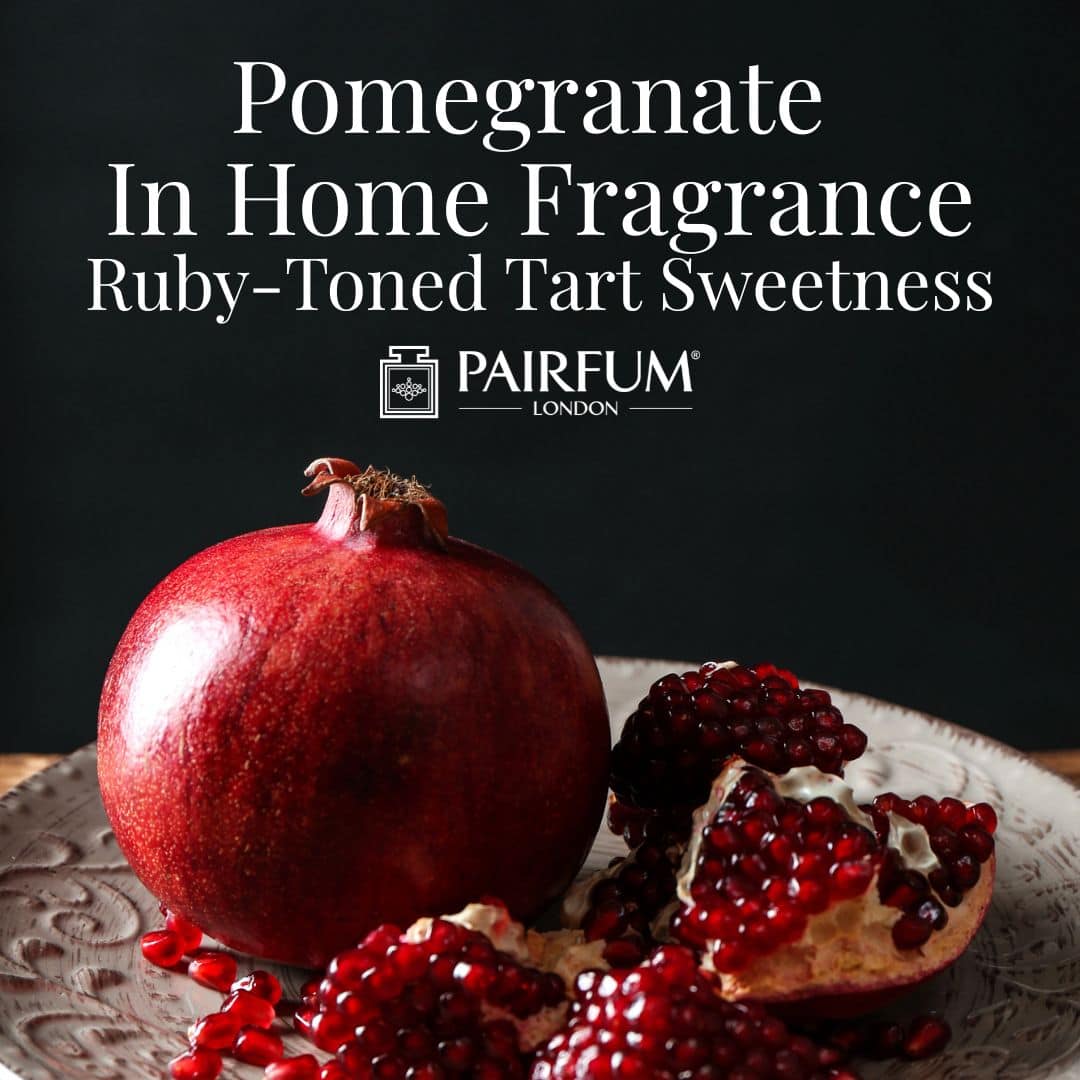
Pomegranate In Home Fragrance

Pomegranate in Home Fragrance: Ruby-Toned Tart Sweetness

Pomegranate is a fruit that attracts attention even before you taste it. Its deep red skin, round fruit shape and clusters of juicy seeds give it a jewel-like appearance. When you open it, the bright pomegranate arils shine beneath the thick leathery skin. The scent is fresh and vivid. It combines tartness, sweetness and a gentle floral air, similar to biting into fresh fruit on a crisp day. This impression of pomegranate fruit has made it a favourite among modern perfumers.

In recent years, pomegranate has grown in popularity in niche and natural fragrances. People often look for perfumes that feel warm yet lively during the cooler months. Pomegranate offers this balance. It is never overly sweet and does not fall into citrus fruit sharpness. Its personality sits neatly between freshness and comfort, which makes it ideal for transitional seasons.

As days grow shorter, many turn to perfumes that feel padded and cosy. Pomegranate adds clarity to these deeper blends. It gives them lift without disturbing their warmth. This is one reason pomegranate works so well in autumn fragrances. It feels like breathing in cool morning air while wrapped in something soft.

A Fruit with a Long Fragrant Past

Pomegranate has travelled through centuries of history. Known botanically as punica granatum, or punica granatum l in full botanical form, it originated across Egypt, Persia and the Mediterranean. The plant grows as a small tree bearing bright blossoms that develop into pomegranates filled with juicy seeds. The granatum part of its name refers to the grain-like seed structure inside.

Across civilisations, the pomegranate tree became a symbol of life, fertility and abundance. It appears in mythology, including stories from Greek mythology, where it represents change, return and renewal. People valued the fruit not only for its flavour but also for what it symbolised.

In ancient kitchens and rituals, the pomegranate fruit was widely used. Its juice, seeds and peel were added to recipes, drinks and remedies. Many early recipes combined pomegranate juice with herbs or olive oil for sauces or salad dressings. Others used pomegranate molasses, a thick syrup made from reduced juice that adds tart depth to dishes. Even today, cooks enjoy using pomegranate in salad to add brightness and texture.

The fruit also held a place in early beauty rituals. People blended pomegranate extract, fruit juice, seed oil, and peel with oils such as olive oil to create simple balms. These preparations linked beauty with nourishment. Cleopatra is often associated with floral scents, yet fruits such as pomegranate likely surrounded her daily life.

Pomegranate’s connection with wellness is equally deep. The fruit contains antioxidants, polyphenols, vitamin C, vitamin K and folic acid. These compounds help the body handle oxidative stress and support general well-being. This is why drinking pomegranate juice continues to be popular and why pomegranate supplementation appears in modern health products. Even the pomegranate peel and certain extract forms are valued for their potential benefits.

pairfum reed diffuser cube classic rich spices

What Pomegranate Smells Like in Perfume

Describing the aroma of pomegranate begins with tart juiciness. It has a lively snap with a soft sweetness underneath. The scent floats between fruit and floral without leaning too far into either side. It recalls fresh pomegranate, yet also hints at berries or delicate petals.

Because pressing pomegranate seeds produces juice rather than fragrance, perfumers recreate its scent using crafted notes. They may blend pomegranate extract impressions, fruit juice-inspired notes, gentle florals and subtle citrus touches. These layers mimic the airy brightness of pomegranate fruit. Sometimes, peel impressions are added for a slight grounding bitterness. Sometimes pomegranate seed oil is used for nuance, although the oil itself is mild in scent.

In perfume structures, pomegranate often acts as a top note. It opens with sparkle, then settles as deeper notes such as rose, amber or musk begin to unfold. This first impression helps balance the perfume. It keeps fruity florals from becoming too sugary and prevents woody or resinous scents from feeling heavy.

The flexibility of pomegranates makes them attractive to perfumers. A small adjustment in the extract or compounds can shift the fruit toward crispness, roundness or softness. This allows the perfumer to create a pomegranate influence that matches the intended style.

Extracting the Aroma

Since real pomegranate does not yield a perfume material through simple pressing, perfumers rely on extract blends, isolates and crafted molecules. These recreate the lively personality of pomegranate juice and the freshness of the juicy seeds. Many perfumers describe this work as building the idea of the fruit rather than lifting a direct scent from the plant.

Crafted extracts allow incredible control. A perfumer might want a sweeter red fruit impression for one fragrance or a clearer tart top for another. Peel notes, seed nuances and fruit juice tones all contribute to the final result. Even though the real fruit is difficult to extract, the impression it inspires is versatile and modern.

Famous Bouquets: Iconic Perfumes That Use Pomegranate

Many well-known perfumes use pomegranate quietly. You might not identify it immediately, yet it shapes the opening with a clean lift. When blended with rose, peony or gentle florals, pomegranate fruit impressions create a smooth transition into the heart of the fragrance. It completes the picture without demanding attention.

Some perfumes rely on pomegranate more deliberately. Heavy bases featuring oud, amber or patchouli can feel dense on their own, so perfumers may add pomegranate to introduce light. It softens the opening and helps the fragrance move naturally. The fruit creates space within the composition, making it feel more wearable.

Because pomegranate sits between fruity and floral, it works well in perfumes designed for anyone. It gives them brightness without turning sugary and adds charm without leaning too floral. This neutrality makes pomegranate a popular top note in contemporary scent design.

Seasonal perfumes also benefit from pomegranate. Late summer often blends into autumn with a distinctive mood change. People begin to prefer scents that feel warm yet still carry freshness. Pomegranate works well here. It gives perfume a gentle spark that suits cooler air without feeling cold.

Growing Pomegranate

Why Pomegranate Fits Autumn Fragrance

Many perfume lovers want a balance of comfort and clarity in autumn. Spices, woods and resins add warmth but can feel heavy if not balanced. Pomegranate provides lift. Wearing a perfume with pomegranate in this season can feel like stepping outside on a cool morning while wrapped in something soft and warm.

The fruit pairs beautifully with classic autumn materials, including:

• Plum for fruity depth
• Incense for smoky complexity
• Labdanum and other resins for smooth warmth

Beyond personal fragrance, home fragrance often uses pomegranate impressions. Candles, room sprays and diffusers rely on the fruit’s ability to add freshness without sharpness. It makes a room feel inviting and clean, particularly during shorter days when people want comfort.

The Lasting Glow of Tart Sweetness

Pomegranate adds liveliness to deeper scents. It became a seasonal favourite because it supports warmth rather than competing with it. It brings clarity to blends that might otherwise feel too thick. Its tart sweetness stays present beneath woods, spices and resins.

Understanding the Fruit Behind the Fragrance

To appreciate pomegranate in perfume, it helps to look at the fruit itself. A pomegranate is a round fruit with a firm peel enclosing hundreds of seeds. Each seed is surrounded by an aril filled with pomegranate juice. This structure gives the fruit its jewel-like look when opened. The juicy seeds offer a burst of tart flavour and colour.

Pomegranate trees thrive in hot, dry climates. The plant is a small tree with vivid blossoms that develop into ripened fruit. Many gardeners grow the pomegranate tree for both ornamental value and harvest. The fruit’s appearance and structure have made it memorable across cultures.

Pomegranate fruit appears in recipes from Persia, Greece, India and North Africa. It is used in sauces, stews, dressings and desserts. Many recipes call for pomegranate juice, while others rely on pomegranate molasses. The molasses gives savoury dishes depth and sweetness. Fresh fruit is popular in salad, offering colour and crunch.

Soft drinks also use pomegranate, often combining fruit juice with sparkling water or herbs. Others enjoy drinking pomegranate juice on its own. Fresh pomegranate can be added to desserts or eaten alone as a refreshing snack.

Even the pomegranate peel is useful. It contains nutrients and antioxidants and is sometimes used to make extract. Traditionally, peel was dried or boiled for remedies. Today, pomegranate peel extract appears in products where natural compounds are valued.

The Science Behind a Timeless Fruit

Pomegranate has been praised for its health benefits for thousands of years. Modern science explains some of this admiration. The fruit contains antioxidants, polyphenols, vitamin C, vitamin K and folic acid. These compounds help manage oxidative stress, support wellness and may help reduce inflammation.

Researchers study the compounds found in Punica granatum to learn more about their effects. Both the seeds and peel contain valuable nutrients. Pomegranate supplementation appears in wellness products, and extracts are used in skincare and supplements. Many value pomegranate seed oil for its gentle properties.

This scientific interest keeps pomegranates firmly in public awareness. People see the fruit as nourishing, colourful and full of vitality.

Fragrance Description Rich Spices Pomegranate Cinnamon Clove Fig

Language and History Behind the Name

The word pomegranate has roots in Old French, where it described an apple filled with seeds. Its Latin form, granatum, refers to the grain-like seeds inside the fruit. These linguistic connections highlight how much people have always been drawn to the structure of pomegranate fruit.

The fruit appears often in art, literature and religious stories. In Greek mythology, it symbolises cycles of the year. This connection enhances its status as a seasonal favourite in both food and fragrance.

From Kitchen to Perfumery: How the Fruit Inspires Scent

Most people encounter pomegranates first through food. The seeds are sprinkled over salad, blended into sauces or eaten as fresh fruit. The flavour is layered with tartness, sweetness and a gentle floral edge. These qualities inspire the work of perfumers who aim to recreate the brightness of pomegranate fruit through carefully balanced extracts.

Traditional recipes often combine pomegranate seeds with herbs and olive oil for savoury dishes. Others use pomegranate molasses to add depth. This syrup, made by reducing pomegranate juice, is valued in Middle Eastern cooking. Exclusive recipes may use pomegranate in both sweet and savoury contexts, showing the fruit’s versatility.

Pomegranate juice appears in drinks, desserts and soft drinks. Some cooks reduce fruit juice to make glazes or syrups. Many enjoy drinking pomegranate juice for its flavour and perceived benefits. Even the peel can be dried and used to create an extract. Pomegranate peel contains nutrients and has been used in remedies for centuries.

The fruit’s structure adds to its appeal. Each aril contains a burst of juice. Opening a pomegranate and releasing the juicy seeds is almost ceremonial. This sensory richness is one reason pomegranates have remained culturally important across many civilisations.

Health and Wellness

People continue to value pomegranates for their nutritional qualities. The fruit contains vitamin C, vitamin K and folic acid. It also provides antioxidants and polyphenols that help reduce oxidative stress. These compounds are studied for their roles in inflammation and general health.

Pomegranate supplementation is common in wellness circles. Extract forms of Punica granatum, including peel extract and seed extract, appear in skincare and nutritional products. Pomegranate seed oil is appreciated for its gentle properties. The research surrounding the fruit ensures ongoing interest in granatum and its potential uses.

What Modern Nutrition Research Says About Pomegranate

Modern nutrition research has taken a close look at pomegranate and found that many parts of the fruit, including the seeds, peel and juice, contain natural plant compounds. These include polyphenols, which act as antioxidants and help the body manage everyday oxidative stress. Several studies have examined how these compounds behave in the body, although most research uses concentrated forms such as peel extract or seed extract, so the findings cannot be applied directly to ordinary eating habits.

Health resources often point out that pomegranate juice provides vitamins and natural sugars and can play a part in a balanced diet. Eating the seeds also adds fibre. Verywell Health and similar sources note that whole fruit is usually the simplest way to enjoy its benefits. Most people can eat pomegranate safely, though concentrated supplements may not be suitable for everyone. As with many fruits, it is best enjoyed as part of varied, good food choices.

Pairfum Bundle Set Reed Diffuser Refill Large Reeds Rich Spices 1 1

Connecting Back to Perfume

For perfumers, pomegranate offers clarity and charm. It opens a fragrance with a lively splash and supports the transition into deeper notes. Even when subtle, the impression of pomegranate makes a perfume feel more balanced.

A pomegranate-inspired top note can brighten florals, soften woods or bring lift to spices. It works well in gender neutral fragrances because its scent sits comfortably between fruity and floral. Its tart sweetness feels natural and modern.

Perfumers often describe pomegranate as a note that helps a perfume breathe. It adds movement. It does not overwhelm other materials but provides a gentle framework that supports the complexity beneath.

Modern Life and Cultural Presence

Today, pomegranate appears everywhere. People use fresh pomegranate in salads, desserts and savoury dishes. Fruit juice blends and soft drinks often highlight its bright colour and flavour. Cookbooks focus on recipes using pomegranate juice or pomegranate seeds to add vibrancy.

Gardening articles discuss the beauty of the pomegranate tree and how to grow Punica granatum in warm climates. Wellness writing includes related articles about antioxidants, inflammation, oxidative stress and pomegranate supplementation. Marketplaces highlight related products such as extracts, supplements or seed oils.

This broad cultural presence reflects the fruit’s long history. From old French names to ancient myths, from recipes to modern science, pomegranates continue to fascinate.

A Seasonal Symbol

The fruit is strongly linked with autumn. Its colour, flavour and texture feel perfectly suited to the time of year. When temperatures drop, people look for warmth and richness with a touch of freshness. Pomegranate provides exactly that. It brightens warm dishes and adds clarity to warm perfumes.

This connection has roots in Greek mythology, where the fruit symbolises cycles of sunlight and darkness. It marks the rhythm of seasons. When used in perfume, it brings this association with it.

Living Room Large Bell Reed Diffuser Luxury Scented Candles

Pomegranate Notes In Home Fragrance With Pairfum London

A reed diffuser can bring the same gentle lift to a room that a pomegranate brings to a perfume. The Bell Reed Diffuser fills a space with a steady flow of fragrance that feels inviting from morning to evening. Its elegant shape suits living rooms, bedrooms or hallways, and it creates a warm and welcoming atmosphere without effort. For anyone who enjoys the brightness of fruit notes or the calm of softer, deeper scents, this diffuser offers a simple way to keep a home feeling fresh and beautifully scented.

Rich Spices – Large Bell Shape Reed Diffuser by Pairfum London

This richly aromatic and captivating spicy accord commences with uplifting hints of Pomegranate and Cranberry, before gracefully flowing into a warm heart of Chestnut, Nutmeg, Cinnamon, and Clove. The scent then culminates by resting upon a luxurious base of Vanilla Pods alongside dried fruits, specifically Figs, Dates, and Persimmons.

Closing Thoughts on a Remarkable Fruit

Pomegranate is a fruit of depth and beauty. Beneath its thick leathery skin lie countless seeds filled with colour and juice. Its flavour is bright and layered. Its juice is used in cooking and soft drinks. Its peel and seeds produce extract and oils. Its antioxidants and polyphenols help manage oxidative stress and inflammation. Its nutrients, including vitamin C, vitamin K and folic acid, support well-being.

Punica granatum has played a role in myth, medicine, art, cuisine and fragrance. It appears in exclusive recipes, wellness practices and perfumery studios. Its scent inspires perfumers to create fragrances that feel lively yet warm, modern yet timeless.

In perfume, pomegranate adds brightness without sharpness and warmth without heaviness. It creates balance and movement. It fits comfortably with florals, woods and resins. Its gentle tart sweetness glows beneath richer notes.

Whether enjoyed as fresh fruit, used in a recipe, admired for its history or appreciated in a fragrance, pomegranate remains a symbol of abundance and vitality. Its presence in perfume reflects everything the fruit represents: clarity, colour and quiet confidence.
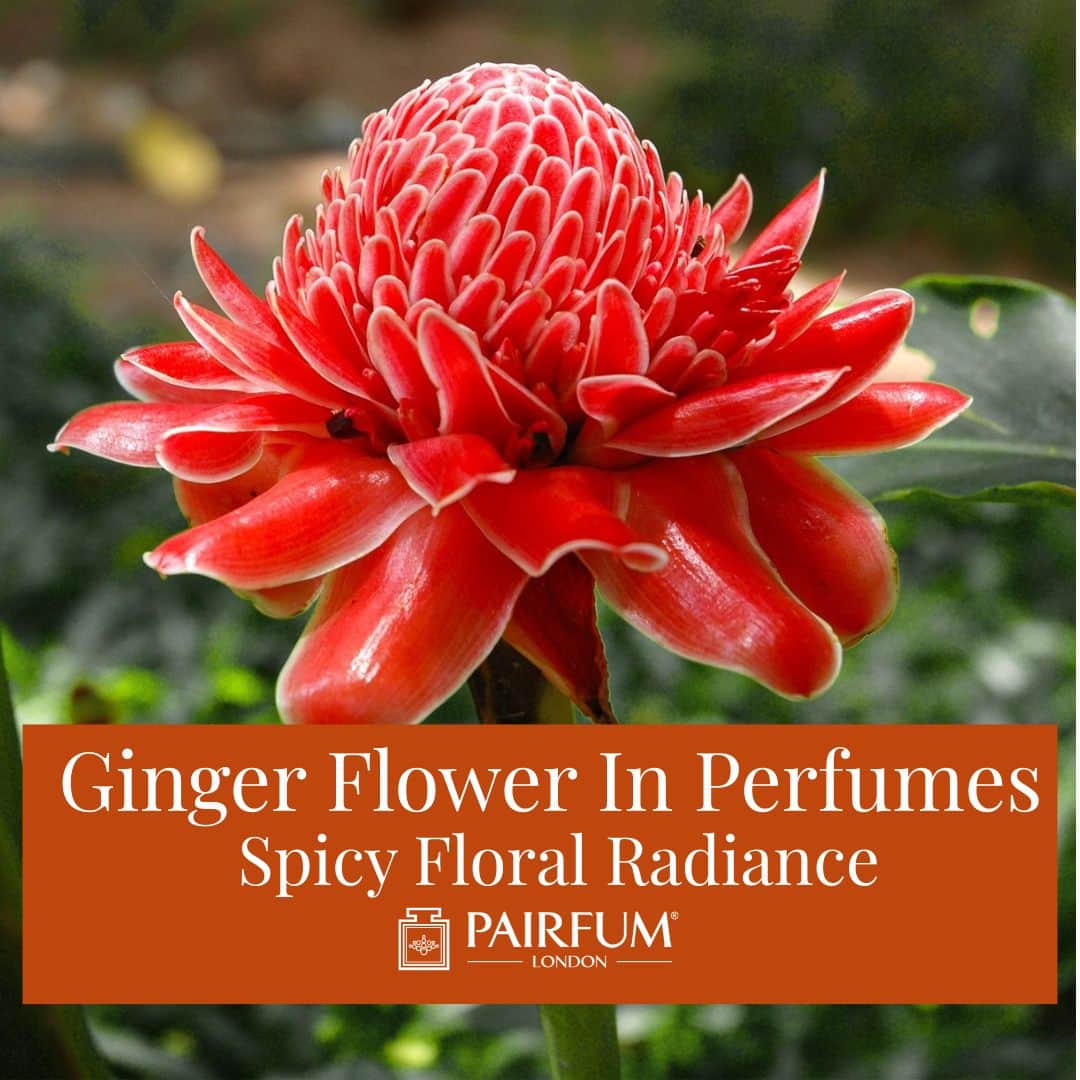
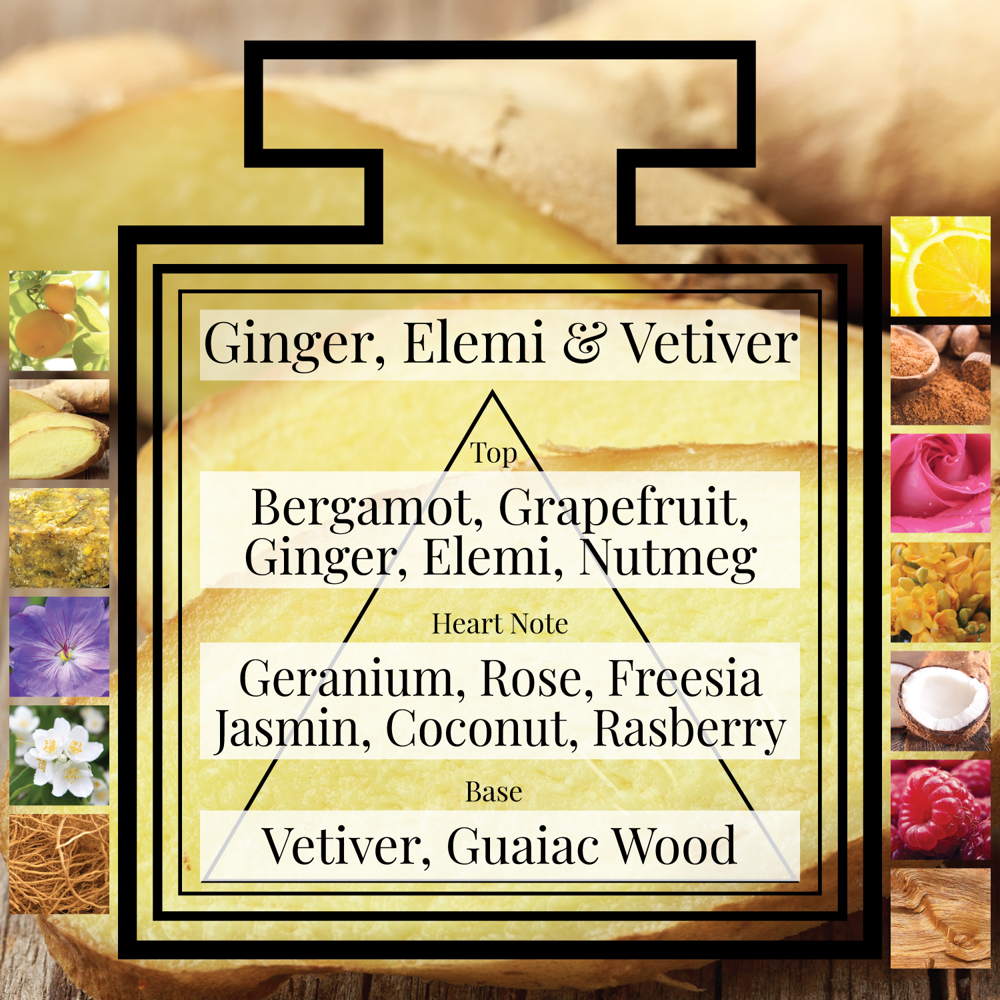
Ginger Flower In Perfumes

Ginger Flower in Perfumes: Spicy Floral Radiance

Ginger flower refers to the showy and often fragrant blooms from the ginger plant family (Zingiberaceae), such as the popular, White Ginger Lily (Hedychium coronarium) or the vibrant orange/red varieties (Hedychium coccineum). These sought-after flowers are prized for adding tropical height and delightful scent to gardens in warm, humid climates, typically requiring moist, well-draining soil and bright, filtered indirect light for successful summer/fall flowering. The culinary ginger (Zingiber officinale), though primarily grown for its root, also produces unique purple-spotted blossoms that emerge directly from the rhizome.

The ginger flower has a bright, naturally spicy character that provides an uplifting effect in almost every blend it touches. In fine perfume, it introduces a floral sparkle that feels simultaneously refreshing and gently warming. This dual warmth and clarity make it a highly favoured ingredient, particularly as the long, bright days of summer naturally begin to recede, and the more gentle pull of mid-autumn starts to take hold. Its crisp, appealing aroma brings forth an undeniable feeling of energy, yet it never presents as too sharp or overly assertive.

Ginger Flower Through History

The ginger flower, which is often gracefully known as the butterfly ginger or the white ginger lily, thrives naturally in genuinely warm geographical regions. It is most commonly found growing in India, various areas of Southeast Asia, and the beautiful Pacific islands. Its wonderfully delicate aroma has been deeply appreciated within these specific regions for numerous generations.

Long, long before it began to successfully appear in sophisticated modern fragrances, this captivating flower played a subtle but important role in everyday local rituals. In many traditional communities, the ginger flower was intentionally placed indoors to delicately refresh the air. It was also sometimes gracefully worn during cultural celebrations, valued for its softly uplifting and serene quality. Its aroma, cool yet very slightly sweet, has been traditionally valued for helping to naturally establish peaceful and harmonious surroundings.

These inherently calm and cheerful qualities quickly captured the discerning attention of master perfumers. The ginger flower’s appealingly crisp edges and its gentle inherent warmth made it absolutely ideal for adding unique brightness and clarity to a great many floral fragrance compositions.

Pairfum Fragrance Ginger Elemi Vetiver Triangle Ingredients

How the Flower Becomes a Fragrance Ingredient

Successfully extracting the beautiful scent of the ginger flower demands a high degree of specialist care. The flower is notably known for releasing only a comparatively small amount of desired aromatic material, meaning that the most gentle and careful methods are absolutely essential to perfectly preserve its subtle, unique character. Steam distillation stands out as the single most common technique utilised. This particular method allows the precious floral aroma to be meticulously collected without risk of losing the innate freshness that makes this ginger flower so incredibly special. A second, more traditional medicine method sometimes employed is known as enfleurage. During this detailed process, the delicate flowers are carefully rested in pure natural fats, which then very slowly and gently absorb their exquisite fragrance.

Maintaining the absolute, true, living nature of the flower is the most significant challenge throughout the process. The characteristic aroma of the ginger flower is light and distinctly watery, presenting a graceful mixture of both floral and very light spice notes that can be regrettably easy to lose if the process involves too much heat. Natural extraction methods are key to successfully capturing this extremely subtle, beautiful balance, ensuring the resulting fragrant ginger flower ingredient feels completely honest to the original, living plant.

The Scent Profile of the Ginger Flower

Describing the true fragrance of the ginger flower can often feel a little like trying to verbally capture a fleeting moment of pure sunlight. It is definitely floral, yet it is decidedly not powdery in the way that classic rose often is. It possesses a gentle touch of natural spice and a soft, pleasingly watery roundness that beautifully imparts a profound sense of calm. There is also a small, intriguing hint of tanginess that successfully creates interest without ever becoming sharp.

The ginger flower generally blends harmoniously with numerous other fragrance ingredients, such as:

  • Jasmine, to provide a sense of rich depth and smoothness.
  • Various Citrus elements, to enhance overall brightness.
  • Soft, refined woods for an ethereal, airy freshness.

It will typically make its valued appearance at either the top or, more commonly, the heart of a fine perfume. It consistently offers a bright, immediate opening that then moves in a very natural manner into warmer or generally deeper fragrance accords. When strategically utilised in high-quality home fragrances, such as elegant candles or functional diffusers, the ginger flower consistently generates a wonderful feeling of clean comfort.

Its authentic and true gift is its incredible balance. It successfully ensures the composition never becomes overly sweet or unpleasantly heavy. It possesses the distinct, airy freshness of a gentle breeze smoothly drifting through a wide, open window.

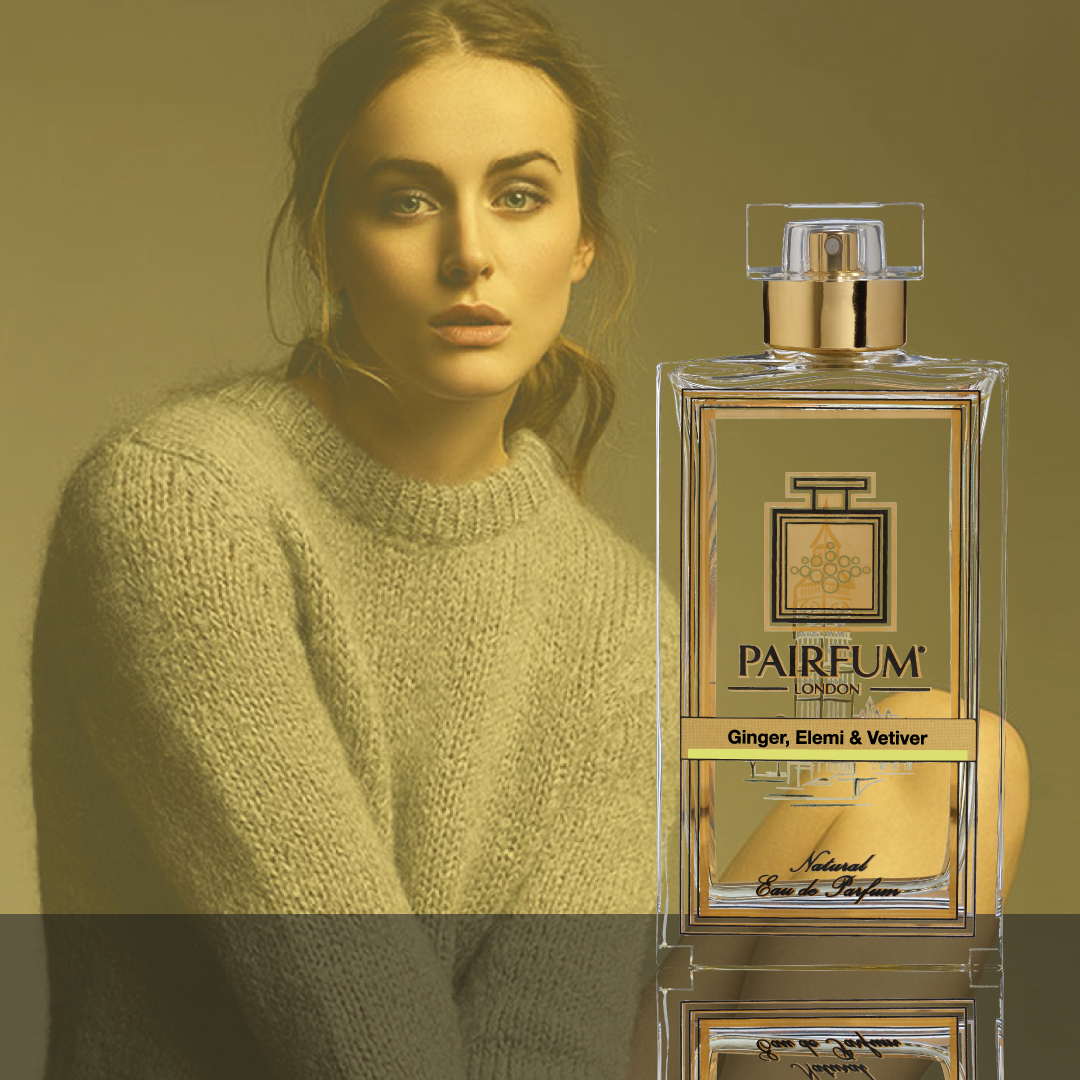
Eau de Parfum Person Reflection Ginger Elemi Vetiver Woman Fresh 1 1

Ginger Flower in Well-Known Perfume Styles

The versatile ginger flower is quite capable of playing either a major leading role or a highly competent supporting one. It is very frequently chosen when a particular fragrance composition needs to introduce freshness that feels distinctly more elegant and refined than purely herbal or straightforward citrus notes alone. Its floral sparkle adds beautiful shape and dimension without ever overpowering the delicate surrounding composition.

Common, appreciated ways the ginger flower successfully appears include:

  • Serving as a vibrant, bright note in light summer perfumes.
  • Being smoothly blended with soft spice notes for maximum finesse.
  • Being combined with watery florals for a desirable, dewy effect.
  • Being expertly paired with citruses, refined tea notes, or gentle musks for a truly modern, clean impression.

Its inherently soft and appealingly creamy floral tone is widely appreciated by those individuals who are actively seeking a scent that feels comfortably familiar yet simultaneously quietly distinctive.

The captivating ginger flower continues to be highly favoured because its delightful aroma is so very easy to enjoy. It is reliably clean, notably light, and instantly inviting. It performs particularly brilliantly during the noticeable transition and shift from the height of summer right into early autumn, a time when many individuals are searching for personal fragrances that manage to feel both distinctly fresh and simultaneously warmly comforting.

It also perfectly suits the welcoming atmosphere of indoor domestic spaces, precisely as the external season gradually cools. A diffuser that is subtly scented with ginger flower can immediately brighten and refresh a living room or a hallway. It offers clarity without the sharp, almost aggressive quality that the stronger citrus notes sometimes tend to leave behind.

Part of its enduring, lasting charm lies specifically in just how incredibly well it successfully combines with other fragrant ingredients. It blends incredibly smoothly, adds a beautiful, subtle glow, and works effectively across many diverse fragrance families.

Ginger Flower and Ginger Root: How They Differ in Perfumery

Although their ginger plant names are clearly quite similar, the ginger flower and the ginger root possess dramatically different characteristics and olfactive profiles. The ginger root is widely familiar in cooking, where its well-known fiery and highly aromatic heat is greatly valued. In the art of perfumery, the ginger root is typically used specifically for its bright, highly energetic quality. It offers a lively, zesty spice that feels sparkling, highly dynamic, and invigorating.

The ginger flower, conversely, possesses almost none of the sharp heat or distinct fieriness that is so often immediately associated with the ginger root. It is overwhelmingly more floral, complemented by a beautifully soft, gentle watery touch. It carries only the absolute lightest suggestion of spice. The ginger flower is primarily valued for its inherent brightness and calming nature, while the ginger root is chosen expressly for its power and sheer vitality.

They originate from the same wider ginger plant family, yet each member offers something completely unique to the perfumer. Perfumers commonly use the ginger root when their blend requires a fresh, lively opening, and they use the ginger flower when they desire grace, true radiance, and a delicate floral lift.

Ginger Flower

Ginger Flower in Aromatherapy and Cultural Wellness Traditions

Although this entire article focuses primarily and specifically on the realm of perfumery, it is certainly worth noting that the ginger flower and ginger root appear within numerous important cultural and long-standing historical wellness traditions. These important cultural additional information references stem from generations of oral traditions, historical rituals, and deeply long-standing practices, rather than modern, empirical scientific explanations.

In The Home

The ginger flower has traditionally been closely associated with relaxation in certain global cultural settings. People have historically placed the delicate flower in water bowls within homes or temples to naturally impart a genuine sense of calm. Ginger root has been used in countless culinary preparations where its distinctive warm spices are genuinely appreciated for their comforting, grounding character. Ginger tea made with thin slices of fresh ginger or finely ground ginger has a long-established presence in many households as a vital part of seasonal rituals, often meticulously prepared with steaming hot water and sometimes deliciously combined with a touch of lemon juice for the desired flavour.

These meaningful examples clearly demonstrate exactly how ginger-related products and preparations are deeply woven into cultural life, but it must be clearly stated that they do not relate to any kind of modern scientific claims. They simply serve to demonstrate how wonderfully the flower and the ginger root have been universally appreciated by numerous diverse communities and countless families over many, many generations.

Speculative (but unproven) health benefits

In traditional medicine, a person might choose to consider the ginger flower alongside its accompanying ginger root as part of a natural remedy for addressing certain everyday bodily symptoms such as common minor pain, joint inflammation, uncomfortable heartburn, or concerns that are broadly diabetes related. The specific active ingredient found within ginger extract is speculated by some historical practitioners to potentially support enhanced circulation, gently promote better blood flow, and potentially benefit the delicate blood vessels for overall enhanced blood health. Ginger supplementation or taking a ginger supplement very often includes natural vitamin C to potentially further promote better eye health, healthy sexual health, and even improved hormones balance. Of course, these many historical claims are not yet fully and scientifically substantiated by current modern science, and a great deal of additional information and rigorous study is absolutely required.

For additional information on these historical uses, growers keenly interested in planting a ginger flower at home should take careful note that applying a thick layer of protective mulch around the plant’s base genuinely helps it to retain essential nutrients in the soil and offers necessary protection from seasonal frost, thereby ensuring the plant thrives to provide its incredibly fragrant flower blooms.

Eau de Parfum Person Reflection Ginger Elemi Vetiver Man Jacket 1 1

Ginger Flower Across the Seasons

The ginger flower possesses a rather interesting and highly versatile ability to successfully suit every single temperature and season of the year.

  • In the bright spring, it pairs wonderfully with refreshing green and leafy notes, offering a genuine sense of deep renewal.
  • In the height of summer, it feels inherently refreshing, successfully bringing clarity without any sense of heaviness.
  • In the cool autumn, it instantly creates a desirable feeling of softness and gentle, inviting warmth.
  • In the depths of winter, it expertly brightens compositions that might otherwise feel too rich or heavy.

This very broad seasonal flexibility clearly explains precisely why the captivating ginger flower makes an appearance across so many diverse fragrance families. Its unique watery brightness works exactly like a perfectly clean ribbon that subtly ties a complex blend together, regardless of the external temperature or the precise time of the year.

The sector of home fragrance has experienced significant growth and notable popularity over recent years, and the versatile ginger flower plays a highly notable role in the most prominent modern trends. Its reliably clean but comforting warm profile is highly appealing to individuals who want their personal spaces to feel fresh yet simultaneously wonderfully inviting.

Current prominent home trends successfully include:

  • Clean, minimalist interiors that wisely utilise subtle floral scents to create inviting softness.
  • Light, incredibly airy home aromas that successfully avoid excessive sweetness.
  • Tropical-inspired themes where exotic flowers such as the magnificent red ginger lily appear beautifully alongside the ginger flower.
  • Spa-like, tranquil interiors that favour calm, sophisticated watery florals.

The ginger flower works exceptionally well in scented candles, highly effective diffusers, instant room sprays, and delicate linen mists. Its naturally soft radiance ensures a room feels genuinely cared for without actively calling strong, overwhelming attention to itself.

The highly versatile ginger flower appears successfully in many established fragrance families, with each one utilising it in a slightly different but impactful way.

  • Fresh florals: The flower is used to add sparkling lift and immediate freshness.
  • Aquatic florals: It beautifully enhances the distinctly watery impression with its soft, dewy nature.
  • Citrus aromatic blends: It brings a gentle floral cushion to successfully lie beneath the brighter citrus notes.
  • Soft florals: It is used to add clarity and refinement without the unwelcome addition of sweetness.
  • Woods and florals: It expertly lightens the deeper base notes and successfully adds a clean, appealing glow.
  • Contemporary unisex fragrances: It reliably supports compositions that deliberately avoid traditional gender boundaries.

The flower’s inherent versatility means it readily adapts comfortably to a great many different fragrance structures without ever truly losing its own unique, beautiful identity.

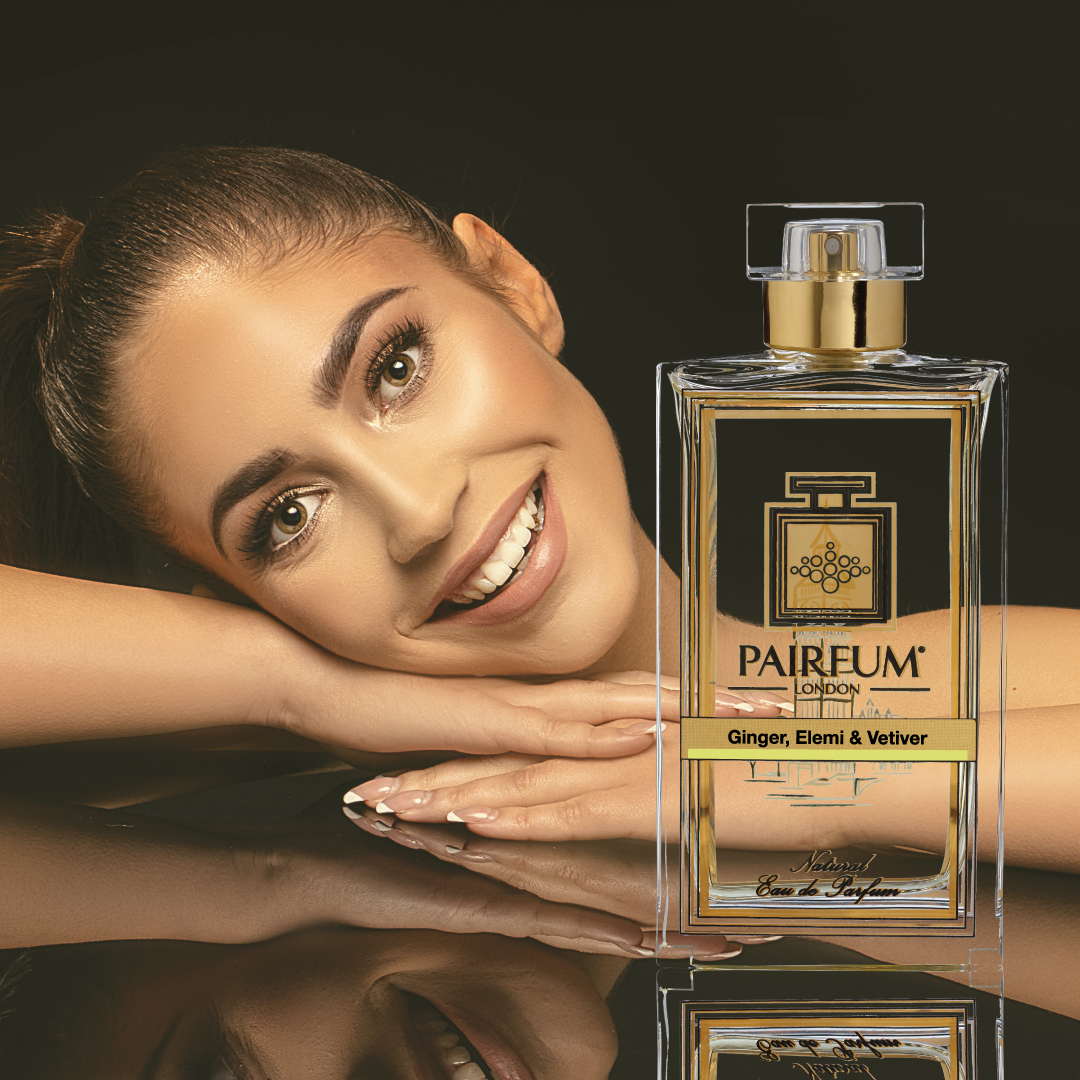
Eau De Parfum Person Reflection Ginger Elemi Vetiver Woman Smile 1 1

Gender Appeal and Why the Ginger Flower Feels So Universal

General fragrance preferences have undergone a significant transformation in recent years. There is now a far greater, active interest in appealing scents that feel naturally unisex rather than those that are strictly masculine or feminine. The exceptional ginger flower fits perfectly and comfortably into this modern approach.

Its innate floral quality naturally imparts a desirable softness, yet its bright, lively edge successfully prevents it from ever feeling overly sweet. It skilfully avoids the heavy, deep richness typically associated with some classic flowers and also manages to avoid the sharpness often found in more assertive spices. This unique balance makes it instantly approachable for a great number of individuals. A person who typically prefers green or straight citrus notes might genuinely enjoy the ginger flower because it successfully offers freshness without sharpness. Someone who generally prefers established floral perfumes might appreciate it because it successfully adds a desirable lift without adding undue intensity.

Its incredibly wide and enduring appeal is a very strong and fundamental reason for its continuously rising popularity within contemporary perfumery.

How Perfumers Use the Ginger Flower in Composition

Understanding precisely how skilled perfumers successfully work with the ginger flower provides an intriguing glimpse into the genuine craft behind a finished fragrance.

  • As a crucial top note, it consistently offers immediate brightness right at the very first spray.
  • As a central heart note it introduces appealing energy to the composition’s central theme.
  • It is used to beautifully soften heavier, richer flowers such as ylang ylang or tuberose.
  • It reliably supports vivid citrus notes by expertly smoothing their edges and angles.
  • It successfully introduces a distinctive watery quality that always feels modern and naturally airy.

Perfumers will very often state that the ginger flower is incredibly useful when a complex blend is in need of perfect balance. It effectively acts as a graceful bridge between highly fresh and deeply warm notes. It also blends surprisingly well with bold spices such as pepper or powerful clove, always bringing clarity to accords that might otherwise feel heavy or muddied.

Its gentle, subtle nature ensures it very rarely dominates any complex blend. Instead, it subtly but meaningfully shapes the overall impression, consistently giving the finished perfume a wonderfully clean and polished feel.

The magnificent ginger flower is occasionally compared with other beautiful tropical flowers, such as frangipani, the vibrant red ginger lily, or even the white blossoms of the wider ginger plant family. Each one of these different plant materials possesses its own completely unique character.

  • The red ginger lily possesses a far richer and much more overtly tropical style, coupled with a creamy depth.
  • Frangipani is generally both sweeter and noticeably more exotic in its profile.
  • Certain other tropical lilies can feel more highly indolic or noticeably creamy.

The distinctive ginger flower sits gracefully between these varying personalities. It possesses the immediate freshness of an airy floral accompanied by only a subtle whisper of spice. It also has a distinctive watery lightness that is often extremely hard to find in the vast majority of other flowers.

Its impressive subtlety makes it absolutely ideal for modern, refined perfumery, where a desired clarity and natural brightness are very often strongly preferred over weight and excessive richness.

Pairfum Eau De Parfum Gold Giftbag Ginger Elemi Vetiver

Ginger Personal Fragrance by Pairfum London

Discover the uniquely invigorating elegance of Pairfum London’s Ginger Elemi Vetiver Eau de Parfum, where the perfectly spicy, beautifully radiant lift of the ginger flower meets the distinctly resinous freshness of elemi and the deep, smoky sophistication of vetiver. This exceptional unisex masterpiece flawlessly captures a sophisticated, warm, earthy sophistication that beautifully lingers from the busy day well into the evening, expertly blending floral brightness with grounding, natural woods for a truly unforgettable trail. Ideal for discerning fragrance lovers actively craving natural vibrancy and modern poise, it is a must-have supplement addition to any sophisticated collection.

Ginger, Elemi & Vetiver – Eau de Parfum by Pairfum London

An unexpected, complex blend of lively spicy warmth and crisp freshness, it smoothly unfolds with immediate top notes of Bergamot, Grapefruit and subtle Lavender, all layered beautifully alongside Ginger, Elemi, Nutmeg and a hint of Cinnamon. The heart of the fragrance skillfully reveals Geranium, Rose, Freesia, Gardenia, Jasmine and Orange Blossom, further accented by gentle, fruity touches of Coconut and Raspberry. Finally, anchoring the beautiful composition, a deep base of Vetiver, Guaiacwood, Cedar, Amber, Cashmere Musks, Vanilla and Moss provides exceptionally beautiful support.

A Final Reflection on the Ginger Flower

The captivating ginger flower continues to charmingly appeal to both master perfumers and dedicated fragrance lovers alike. Its wonderfully quiet glow, gentle natural spices, and delightful watery florals consistently give compositions an inherent sense of life, movement, and effortless grace. It fits beautifully into the natural rhythms of the year and adapts with notable ease to countless different fragrance families.

Whether it is expertly used to truly brighten a person’s personal scent or to successfully create a warm, welcoming atmosphere in the home, the ginger flower consistently brings a highly distinctive, soft radiance. It’s a perfect blend of innate freshness and appealing warmth that creates a profound impression that feels both completely modern and utterly timeless.

If you are genuinely curious about floral notes that successfully offer a subtle sparkle rather than an overwhelming intensity, the ginger flower is a beautiful and elegant starting point. Its truly delicate presence continues to inspire many perfumers and remains one of the single most graceful and versatile flowers in contemporary fragrance.

Olive In Fragrance

Olive in Fragrance: Mediterranean Green and Savoury Nuance

An olive is the small, oval fruit of the evergreen olive tree (Olea europaea), a staple of Mediterranean culture and cuisine, widely utilised for both table food and the production of valuable olive oil. The tree itself is highly drought-tolerant and grows globally, often symbolising peace, prosperity, and wealth. Beyond the fruit, the term “olive” can also refer to the distinct silvery-green colour of the leaves and fruit, or the darker, muted “olive drab” military shade. These fruits are commercially harvested at various stages, either green (unripe) or black (fully ripe), and meticulously preserved in brine or oil before consumption.

Olive brings something different to perfume. It is not sweet or floral, and it does not try to stand out. Instead, it gives a dry, green and savoury feeling, something quiet and grounded. For fragrances that are meant to feel fresh without being sharp, olive is a natural fit. Its calm character pairs perfectly with the cooler weather as autumn settles in.

Used with a gentle touch, the aroma of olive can make a perfume or home fragrance feel like fresh air through a window or a walk under silver green trees. This look into olive explores where these notes come from, how they are used, and why they have become a quiet favourite in many niche perfumes.

A Fragrant Piece of the Mediterranean

The olive tree has long been part of daily life across the Mediterranean. It appears on tables at meals, in regional stories and traditions, and in everyday rituals such as pressing oil. Its long history offers much more than practical use. Olive is a link to place, time and a deep sense of peace.

In fragrance, the tree brings different elements depending on the material used. The leaf is known for its dry bitterness, the fruit for muted softness and the bark for a woody, earthy touch. Each adds something unique but always keeps a natural green balance.

Using olive in perfume often means reaching for the feeling of nature and the comfort of familiar routines. Its role is to ground a fragrance, never to overpower. It delivers a calm glow and a connection to something both simple and shared.

Extracting the Aroma: How Olive Becomes a Perfume Note

To add olive into perfume blends, perfumers usually work with the leaf or the oil from the fruit. These sources bring the purest form of the olive character. Olive leaf can be processed by steam distillation or maceration. Both methods carry the soft herbal bitterness through to the final oil, letting the real green notes stay intact.

Certain perfumes use natural isolates, capturing a single aroma molecule from olive or a closely related plant. This gives control over the final blend, pulling the freshest or greenest note from the olive profile. The result is never overpowering. Olive offers a cool, dry green quality that resembles leaves crushed in the hand.

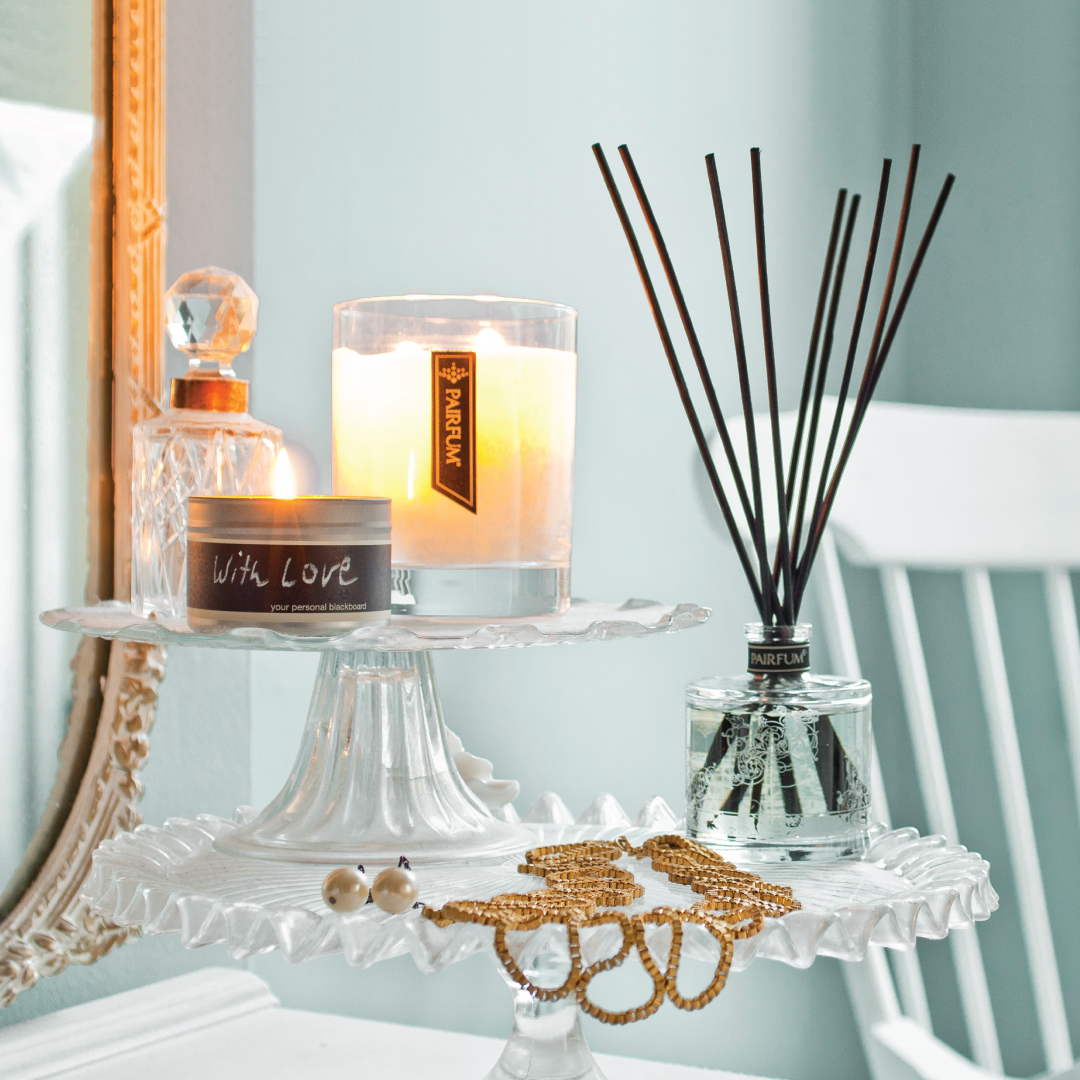
Lifestyle Living Room Natural Reed Diffuser Fragrance Candle 1 1

Where Olive Sits in a Fragrance

Olive fits best at the top or in the middle of a fragrance. You encounter it right at the beginning or as the perfume settles. Olive refreshes without drawing attention or adding sweetness. It lets other ingredients speak clearly.

Some combinations where olive shines include herbs such as sage or thyme, woods such as cedar or vetiver and florals such as lavender or iris. Olive can soften heavy woods or give shape to delicate bouquets.

Cool, Herbal Comfort for Early Autumn

Olive is ideal for early autumn when the air becomes cool but heavier winter spices are not yet welcome. It gives clarity and quietness. In home fragrance, olive offers freshness without sweetness, working especially well in room sprays and diffusers as days grow shorter.

A Natural Pause in the Fragrance Calendar

Olive suits quieter moments. Its green calm captures the thoughtful days before the festive season. It provides structure without weight and gently supports other notes.

Chemical Profile and Key Aroma Molecules

To understand the aroma of olive, it helps to look at the chemistry of the olive tree, known botanically as olea europaea. This plant contains natural compounds that influence both aroma and taste. One of the best known is oleuropein, which is most concentrated in the unripe olive. It contributes strong bitterness to the olive fruit before it is softened through brine, salt or water curing.

Another group of aroma contributors includes green aldehydes such as hexanal. These produce the crisp herbal scent that people recognise from tomato vines or fresh leaves. Anyone who has walked through an olive grove during an olive harvest in southern Spain will know these breezy green notes. They are also present in olive oil, especially extra virgin olive oil, which carries the most vivid aroma. Virgin olive oil also contains aromatic compounds, while refined olive oil is milder and more neutral.

The olive tree also produces natural terpenes that add subtle woodiness. These compounds appear not only in the leaves but also in the wood and fruit. Together they create the distinctive natural aroma associated with olives, the Mediterranean diet and traditional cooking with herbs, tomato and almond.

Types of Olive Raw Materials Used in Perfumery

Perfumers use several materials drawn from the olive tree and its olives. Each has a different scent profile:

Olive leaf
Olive leaf provides fresh green sharpness with hints of bitter almond and tomato plants. It works well with clean herbal or floral accords.

Olive wood
Olive wood gives a gentle, smooth warmth similar to soft cedar or plum wood. It is subtle and steady, ideal for adding structure.

Olive fruit extract
This provides soft green olive or mild black olive nuances. It is not the same as culinary preparations. It is processed for scent rather than taste.

Olive oil
Although olive oil is not typically used as a fragrance concentrate, its recognisable aroma is influential. Extra virgin olive oil has fruity and grassy brightness, virgin olive oil is softer and pure olive oil carries a mild natural scent that can be useful in small quantities in at-home creations.

Olive blossom
The tiny white flowers of the olive tree offer a faint jasmine-like sweetness. While not commonly available, they provide charm and delicacy when used.

Fragrance Description Neroli Olive Pomelo Lime Leather Vetiver

Regional Varietals and Their Scent Differences

Olive trees grow widely across Mediterranean countries, and different varieties give different aromas.

Greek olives often produce a fresh green olive character with herbal clarity. Italian olives, especially from southern regions, are sometimes fuller and fruitier with soft almond or plum nuances. Olives from southern Spain often have a gentle earthy depth shaped by warm climate and mineral-rich soil. Olives from North Africa can feel savoury, with a natural hint of brine that reflects coastal influences.

The wild olive is sharper and more aromatic, often used when perfumers want a vivid green tone.

These regional nuances appear not only in the fruit but also in olive oil and olive leaf extracts. People familiar with the flavour of olives served with anchovies, herbs or butter may notice faint echoes of these impressions in fragrance, though perfume is never intended to taste like cooking ingredients. These references simply help build associations that enrich the imagination.

Sourcing, Sustainability and Traceability

The olive tree has been cultivated for centuries, and sustainable farming matters for fragrance materials. Many growers follow guidelines established by the International Olive Council to ensure that olives are grown responsibly and with respect for land and water. Since aroma content is influenced by soil quality, climate and farming methods, good stewardship is essential.

Traceability also matters because different varieties and locations produce different scent qualities. Sustainable growers protect soil, limit water waste and encourage biodiversity by allowing wild flowers to grow between trees. A well-managed olive grove supports insects and wildlife, and this balance increases the overall health of the trees.

The timing of the olive harvest influences aroma. Early olives retain greener tones. Riper fruit carries softer, more rounded notes. For perfumers, this difference is significant because it helps shape the final character.

DIY and At-Home Blending Guidelines

Olive-inspired materials allow beginners to experiment with natural aroma blending at home. Olive leaf tinctures or infusions can be found in some specialist shops. A simple home fragrance blend might combine olive leaf infusion with lavender water and a light citrus note.

Some people enjoy using extra virgin olive oil or virgin olive oil as a carrier oil. While these already have their own scent, they can still support small amounts of herbal or floral essential oils. If a milder carrier is preferred, refined olive oil may be suitable.

Beginners can follow a few useful guidelines:

Start small. Use tiny amounts of extracts until you understand the scent strength.
Combine olive leaf with herbs or flowers for balance.
Keep notes, as if following a small school experiment, to record proportions and how the scent develops.
Blend with cooled boiled water for gentle room sprays.

Home Fragrance Formulation Advice

Olive works beautifully in home fragrance because it creates a calm and natural feeling. In candles, the soft green presence of olive leaf or olive fruit can be uplifted with herbs such as rosemary or sage. Vegetable waxes often suit this type of composition because they support herbal notes without adding sweetness.

For reed diffusers, olive accords remain gentle but steady. A diffuser blend with olive leaf and light woody tones can create an atmosphere that feels relaxed and clean. During summer, olive combined with citrus can brighten the room. In cooler seasons, a deeper black olive styled nuance paired with cedarwood can produce warmth.

If creating room sprays, test each blend to observe how the fragrance behaves in water. Some materials float while others dissolve more evenly. Writing notes helps build confidence and encourages thoughtful experimentation.

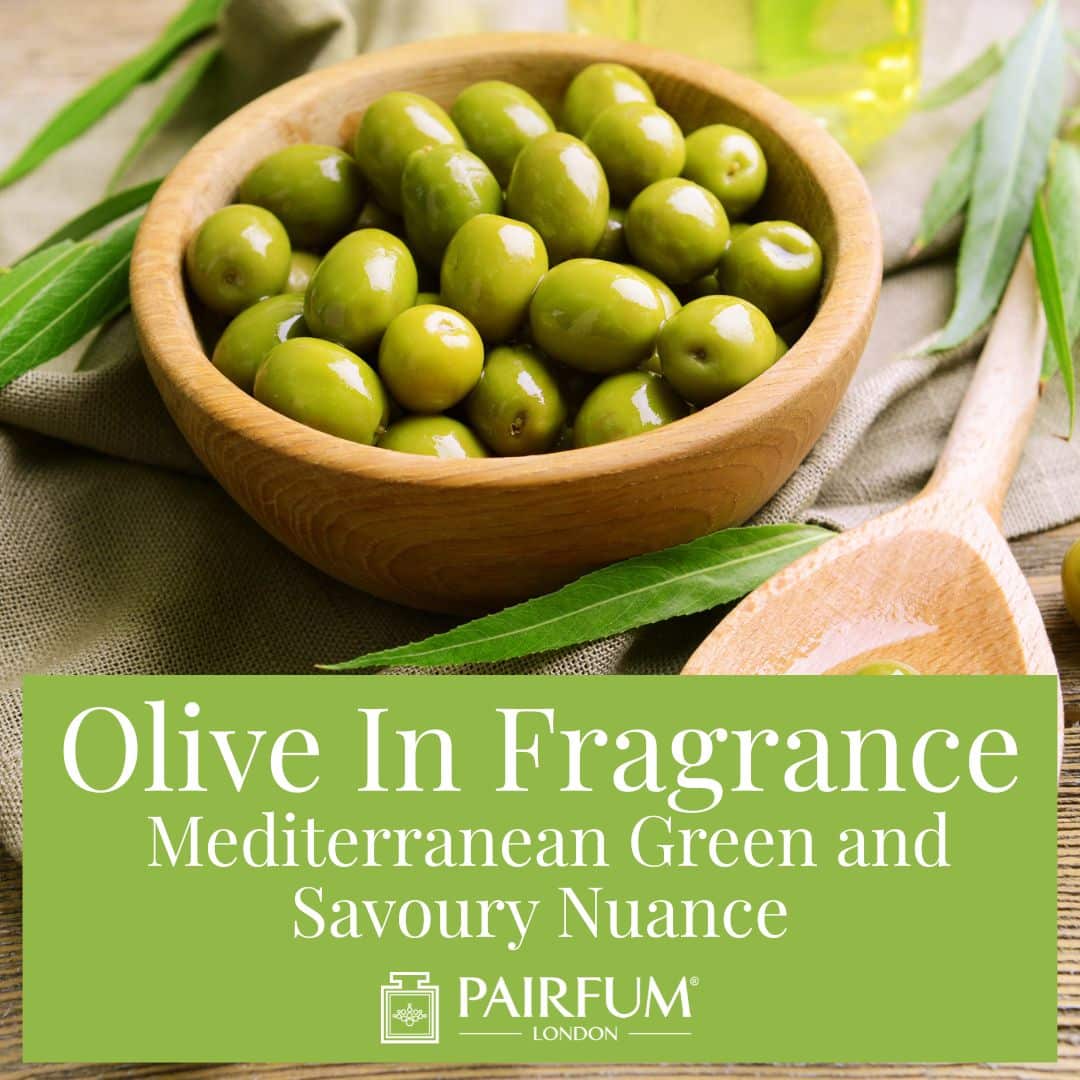
Green Olives

FAQs About Olive in Fragrance

What does olive smell like in perfume?

Olive has a soft green aroma with herbal dryness. It does not smell exactly like olives in brine. Instead, it creates a sense of leaves, earth and gentle freshness.

Is olive oil used in perfumes?

Olive oil is not typically used as a main fragrance concentrate, but the aroma of extra virgin olive oil and virgin olive oil influences olive-inspired accords. Pure olive oil has a mild scent, and refined olive oil is gentle, so these may appear in small roles in simple at-home blends rather than commercial perfumes.

Why do perfumers choose olive?

Olive provides balance. Many green notes are sharp, but olive is smoother. It supports a blend instead of dominating it.

Is olive a fruit or a vegetable?

An olive is a fruit. If listed in a dictionary, it would appear as a noun with roots in Middle English, which in turn derives from the Latin oliva.

Does olive work in summer scents?

Yes. Olive is light and airy, and when combined with citrus it creates a refreshing summer character.

Does olive blossom smell like olive oil?

No, olive blossom is soft and floral. It has a whisper of sweetness rather than the fruity green tones associated with olive oil.

Cultural Significance, Symbolism and Memory

The olive tree has shaped life across the Mediterranean region. The olive branch symbolises peace. The wreath made from its leaves was once used to honour achievement. Many Mediterranean countries have stories that celebrate the endurance of ancient olive trees.

Because the tree is long-lived and often treated with respect, its presence evokes calm reflection. This influences how we perceive the aroma. Olive in fragrance often feels peaceful because it carries the quiet dignity of the olive grove. The colour of the silver leaves, the flowers that appear in spring and the changing shape of the olives as they ripen link the plant to seasonal rhythms.

People also connect olive aromas with food memories. The flavour of olives in salad dishes, or their taste when served with anchovies and herbs, reminds people of coastal cooking. The touch of salt found in olives cured in brine also influences imagination. Even though perfume is not food, these links help the mind form gentle associations. Someone may smell an olive note and recall the warmth of southern Spain or small restaurants near the sea where olives are served before a meal.

Aroma Performance and Blending Techniques

Olive is generally used as a top or heart note. It appears early and then softens. This makes it ideal for compositions that aim for freshness without sharpness. Olive leaf blends well with light flowers and herbs. Olive wood blends well with cedar or vetiver. Olive fruit extracts work when softness is required.

A perfumer may build a summer perfume using citrus, light herbs and a faint green olive suggestion to bring calmness. For autumn, the perfumer may pair olive with soft spices to ease the transition into cooler days. Olive also works well in minimalist fragrances where the goal is clarity and natural elegance.

Modern Appeal of Olive in Niche Fragrance

Olive has become more visible because people gravitate toward natural and subtle scents. Modern fragrance lovers often appreciate materials that feel grounded. Olive fits comfortably within this movement. It reminds people of nature, simple rituals and the gentle rhythm of daily life.

Olive also suits contemporary interior styles where clean lines and soft colours dominate. An olive-inspired room fragrance brings quiet freshness without sweetness. It feels appropriate for those who prefer balance rather than intensity.

Pairfum Large Reed Diffuser Bell Pure Neroli Olive

An Olive Home Fragrance by Pairfum London

Neroli & Olive – Large Bell Shape Reed Diffuser by Pairfum London

Capturing the Spirit of the Mediterranean: this elegant blend opens with lively touches of Neroli, Pomelo, Lime and Petitgrain. Notes of Jasmine petals, Vetiver, Patchouli and weathered leather add richness and depth, evoking the impression of strolling through an olive grove on a sunlit day.

Final Thoughts:

Olive is a note that reveals its beauty slowly. It carries the long history of the Mediterranean region, the culture of the olive tree and the memories of food, water, sun and shared meals. In fragrance, it offers freshness, softness and a sense of place.

The aroma of olive has depth without heaviness. It adapts to many styles and works in perfumes and home fragrances across the seasons. Whether reminding someone of the taste of olives on a warm day, the scent of extra virgin olive oil on a dish of tomato or the sight of an olive branch moving in the wind, olive brings natural peace. Its benefits lie in its ability to calm, support and connect fragrance with nature in a way that feels honest and timeless.

Anjou Pear In Perfumes

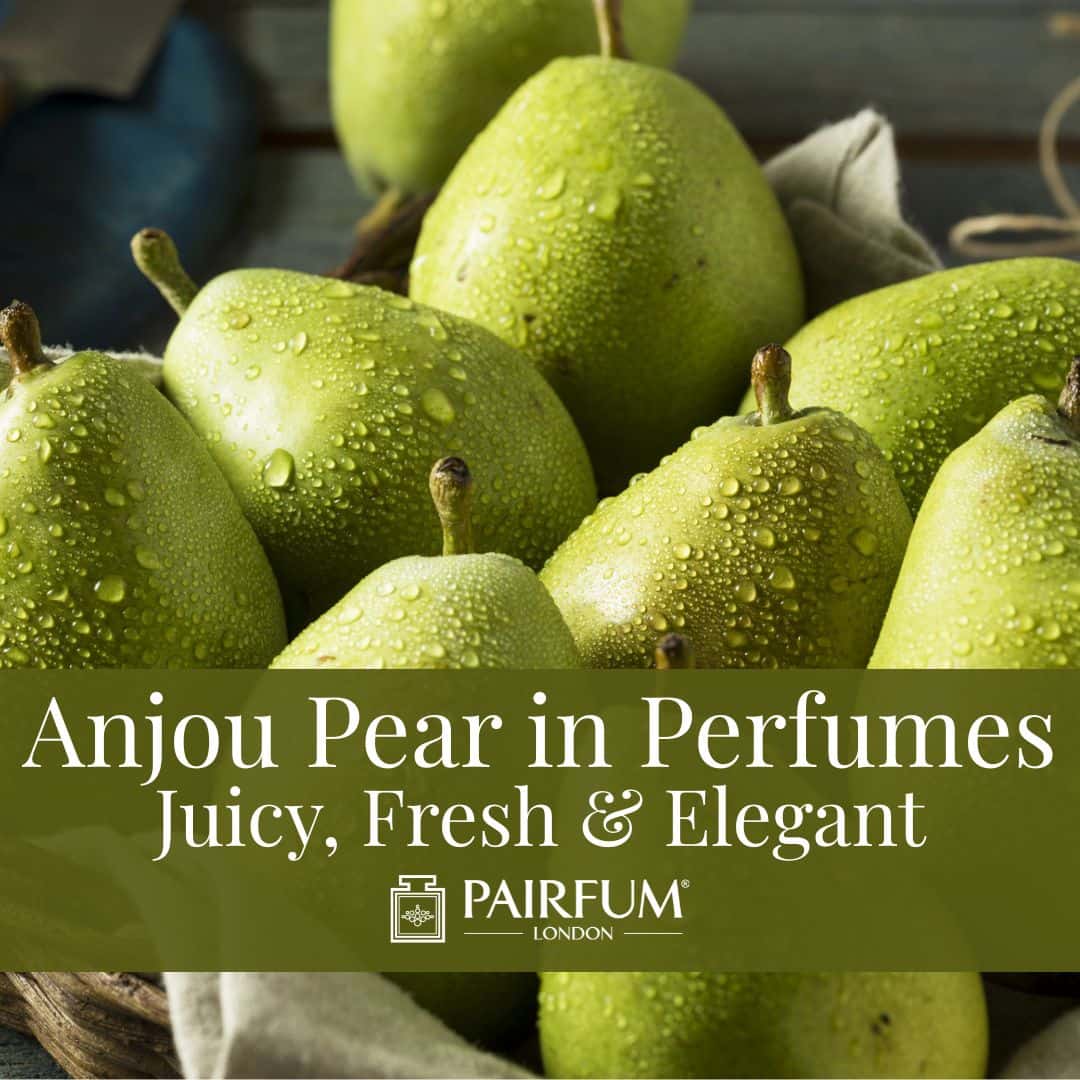
Anjou Pear in Perfumes: Juicy, Fresh, and Elegant

Anjou pear in perfume is celebrated for its naturally light, fresh, and fruity scent. It is often layered with floral, green, or woody notes to produce a fragrance that feels sheer and ethereal. This popular ingredient is widely used to create everyday, clean, and elegant fragrances, usually serving as a top note that opens a scent with a juicy, bright, and mildly sweet aroma.

Anjou pear carries with it a delightful mix of freshness and sophistication that has found a unique place in the world of perfumes. Known for its juicy freshness and elegant aroma, Anjou pear is a favourite for those looking for a perfume ingredient with both versatility and subtle refinement. From light daytime fragrances to complex bouquets for evening wear, this pear brings a touch of class to every composition, offering a scent that appeals across the board.

Its flexibility is one of the many reasons why the Anjou pear stands out in perfumery. Perfume enthusiasts know and love how beautifully it blends with other notes, introducing a burst of freshness that suits floral and woody undertones alike. This adaptability makes it an excellent choice for fragrances that are at once crisp, rich, and luxurious.

What is Anjou Pear? (Botanical and Sensory Profile)

Anjou pears, scientifically labelled as Pyrus communis, are one of the most popular European pear varieties grown today. These pears originated in the Anjou region of France and have since become a staple of both the European pear and the USA pear markets. The green anjou and red anjou are the two main types you will find. Green Anjou pears are known for their bright green colour, which stays much the same even as the pear ripens, and for their mild sweet flavour and smooth skin. The red Anjou variety, meanwhile, boasts a beautiful red skin with a rich colour that becomes more vibrant as the pear matures.

Both types feature a slightly egg-shaped appearance with a broad base and a short neck. The fruit is firm, with abundant juices when fully ripe, making it especially favoured as a fresh pear for eating out of hand and for adding to a fruit bowl or a salad. The texture is fine and dense without graininess, making these pears suitable for poached pear dishes, desserts, and even savoury recipes.

Anjou pears grow on a pear tree, which is a deciduous fruit tree, appreciated as much for its attractive spring blossoms as for its fruit. Both green anjou trees and red anjou trees are reliable, hardy and long-lived. They are popular with gardeners for their consistent yield and moderate size, and can be found among other pear trees and nut trees in home orchards and commercial settings alike. Growing in the Pacific Northwest, Anjou pears thrive alongside a different variety of pears, including Bosc pear, Red Bartlett, and Beurre Bosc. Their resilience to cold and their reliability as a large pear crop make them indispensable to growers.

Fragrance Description Black Orchid Pear Freesia Vanilla Musk

The Origins and History of Anjou Pear in Fragrance

First cultivated in France and widely grown as a European pear, Anjou pears have deep roots in both culinary and fragrance history. With their long shelf-life and dense, juicy flesh, they became favourites not only for eating but also as a natural inspiration for scent makers. Both the green Anjou and red Anjou varieties play a significant role in global production, with the Pacific Northwest now a leading region for USA pears, especially Anjou and its companions like Bosc pear and Bartlett pear.

Perfume houses first embraced anjou pears for their subtle and pleasing aroma. Ancient civilisations valued fruit-based scents as a symbol of abundance and prosperity, a tradition that continues to this day. With its rich history, the pear tree has also come to represent longevity and renewal, several qualities that fragrance lovers continue to appreciate in sophisticated compositions inspired by this fruit.

Why Do Perfumers Love Anjou Pear? (Technical, Sensory, and Emotional Appeal)

Perfumers are particularly fond of Anjou pears because of the balance they offer. The scent profile is delicately sweet, with mild tart notes and a juiciness that closely mirrors the sensation of biting into a ripe pear fresh from the tree. Unlike some fruit scents that are too sugary or cloying, the anjou pear note remains clean and refined.

Green Anjou is loved for its crisp, fresh character, while red Anjou brings a touch of warmth and adds a splash of colour to the olfactory palette. This makes anjou pears useful in everything from classic to contemporary perfume design. Their aroma is gender-neutral, and their abundant juices and mild sweet flavour evoke feelings of comfort, nostalgia, and simple pleasure. For many, the fragrance of ripe pears conjures the memory of a family orchard or a lovingly prepared salad with pear slices.

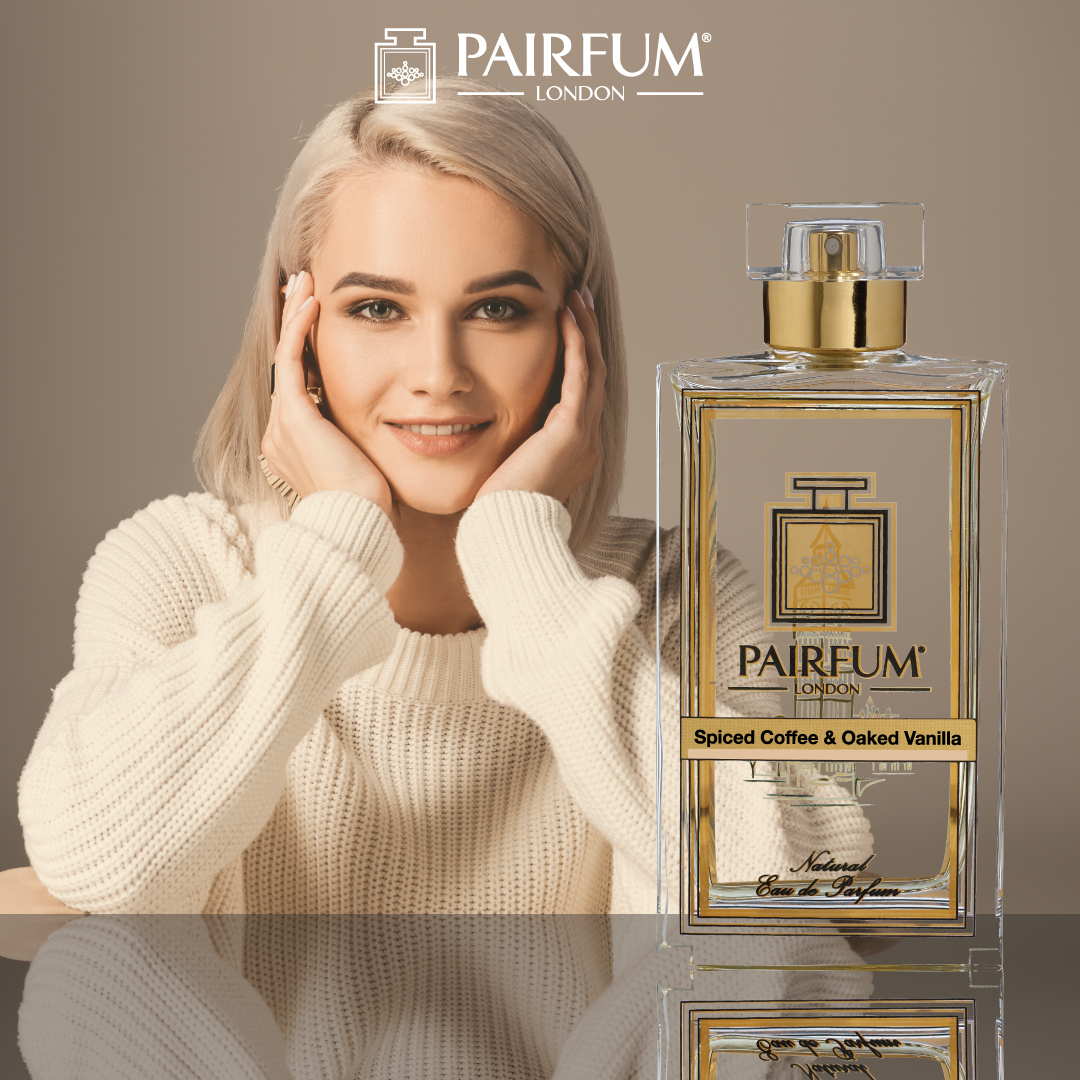
Pairfum Person Reflection Spiced Coffee Oaked Vanilla Eau de Parfum Woman

Today’s perfume trends are all about versatile, wearable fragrances, and anjou pears fit this trend perfectly. With their subtle scent and gentle sweetness, both green anjou pears and red anjou pears are found in a range of modern niche and luxury brands. The ability for these pears to feature as either a prominent note or as part of a supporting blend makes them a popular ingredient in gender-neutral scents.

Perfume houses have noticed how well Anjou pears work in concert with other fresh fruit notes, florals, and even woods. Their restrained sugar content ensures the fruit note never overpowers, and their compatibility with green pears, Bosc pear, or Red Bartlett keeps the scent profile lively and textured. This trend towards “clean” and “natural” is only set to grow, and Anjou pears from the Pacific Northwest and Europe continue to lead the way in quality and scent profile.

The Unique Characteristics and Types of Anjou Pear Aroma

Anjou pears are renowned for their juicy, mild, sweet flavour, moderate sugar content, and subtle tart aftertaste. Green anjou is prized for its bright, clean scent, while red anjou stands out for its unique berry-like complexity and rich colour. The skin of each is thin and edible, and their ivory-hued or yellow flesh remains firm yet moist, offering abundant juices that carry their fragrance exceptionally well, whether in a bottle or in a bowl of fresh pears.

Unlike the Bartlett pear, which often has a more aromatic and ephemeral sweetness, Anjou pears have a more subtle flavour, which is perfect for delicate or sophisticated perfume blends. When compared to the Asian pear or Bosc pear, both green anjou and red anjou are softer and more likely to hold their shape when baked or poached, making them excellent for recipes that focus on both texture and flavour.

The harvesting process ensures pears are picked before full ripeness and allowed to ripen off the tree, which preserves both flavour and aroma in the finished scent. Anjou pears, green and red alike, are known for their storage life, meaning they remain available and aromatic well beyond the main fruit season.

Anjou Pear

Scent Pairing and Olfactory Families

The true beauty of the Anjou pear in fragrance lies in how harmoniously it blends with other ingredients. Florals like peony, jasmine, rose, and freesia accentuate its fresh fruit notes, while gentle woods such as cedarwood and sandalwood effortlessly complement its green freshness. In more gourmand perfumes, Anjou pears can be paired with vanilla, tonka bean, or even with gentle spices, balancing natural sugars and lifting the entire blend.

Anjou pears also work well alongside green pears, Red Bartlett, Bosc pear, and Beurre Bosc, each bringing a slightly different variety of pear nuance. Combining these with musk, amber, or even a woody fig tree note creates a fragrance profile that feels at once familiar and refined.

Methods of Extracting Anjou Pear Essence

Capturing the true essence of anjou pear requires a careful blend of old and new techniques. Traditional pressing retains the purity and abundant juices of the pear, yielding a fresh and authentic aroma ideal for artisanal blends. Cold pressing is commonly used for green anjou and green anjou pears, preserving their freshness but requiring more energy. The increasingly popular supercritical CO2 extraction provides an eco-friendly and precise method, perfect for reproducing the pear’s distinct, mild sweet flavour and subtleties.

Growers and distillers favour pears harvested just before ripeness, ensuring the highest level of aroma and flavour in the final extract. This, along with storing pears at cool temperatures, maintains the balance of sugar and acid and guarantees the resulting fragrance oil is an accurate reflection of the green anjou tree or red anjou tree from which it came.

Pairfum Large Reed Diffuser Tower Signature Black Orchid

Olfactory Pyramid: Role of Anjou Pear (Top, Heart, Base Note)

In fragrance structure, anjou pear is most often used as a top note, offering immediate freshness that lasts through the opening of the scent. As it settles toward the heart, the pear’s tart and juicy characteristics blend with florals and fruits, providing a full and succulent transition. Sometimes, when paired with musks or soft woods, the pear note can linger gently into the base, echoing the enduring aroma you’d find from a ripe pear left to mature on the tree.

Iconic Perfumes Featuring Anjou Pear

Several standout perfumes demonstrate the enduring popularity of Anjou pear. In Jo Malone English Pear & Freesia, the combination of pear and freesia brings out the fresh, floral, and slightly tart characteristics of green Anjou pears. Marc Jacobs Daisy Eau So Fresh uses anjou pear as a lively introduction to a youthful blend of fruits and florals. Lanvin Éclat d’Arpège features pears at the forefront, where their abundant juices and subtle sweetness bring brightness and depth to each spray.

These perfumes show how the subtle, alluring qualities of Anjou pears, along with their ability to complement a wide variety of ingredients, have made them a timeless favourite among both fragrance lovers and perfumers.

How to Choose a Perfume with Anjou Pear

When selecting a fragrance with Anjou pear, consider the type and ripeness of the pear used. If you prefer a bright, refreshing opening, look for green Anjou or green Anjou pears in the top notes. For a deeper, warmer scent profile, choose perfumes that highlight red Anjou, as its colour and natural sugars add body and subtlety to the composition.

Think about the other ingredients included, as pairings with floral, woody, or spicy notes can influence the overall flavour and impression of the perfume. Opt for fragrances with references to fresh pear, abundant juices, or specific pear tree varieties, and sample the scent on your skin to see how it develops throughout the day.

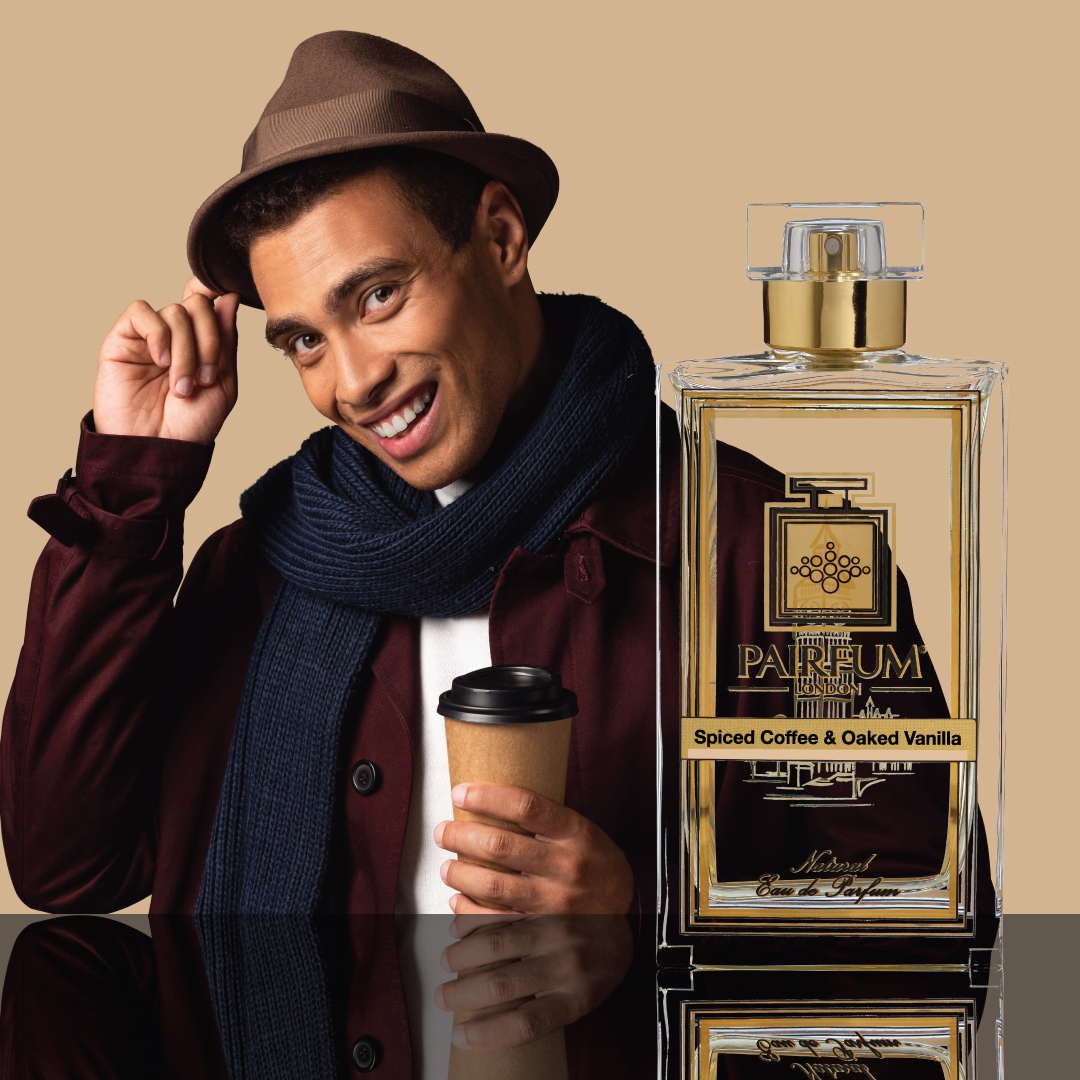
Eau de Parfum Person Reflection Spiced Coffee Oaked Vanilla Man Smile 1 1

Layering and Home Fragrance

The gentle nature of Anjou pears makes them equally well-suited to home fragrance. Pairfum London’s home collection features Anjou pear in diffusers, candles, and sprays, offering the same juicy aroma and colour found in the fresh fruit. For an even more immersive experience, layer a pear perfume with a matching scented body lotion or hand cream to help the fragrance last.

Fragrances with pear notes pair beautifully with citrus, especially a splash of lemon juice, for a zesty uplift. This layering technique works not only with personal scent, but also when fragrancing a room, especially when using products that recall the clean, green scent of a freshly picked pear or notes reminiscent of a fig tree or nut trees.

FAQ Section

What does Anjou pear smell like in perfume?
Anjou pear smells fresh, mildly sweet, and gently tart. The aroma is juicy but restrained, with less pronounced sugar than canned pears, yet more depth than many green pears or even the Bosc pear.

Is Anjou pear a natural or synthetic note in perfumery?
Both natural extracts and nature-identical aroma compounds are used to recreate the true scent of Anjou pear. Due to the delicacy of peppers’ oils and abundant juices, combining both techniques is common for a stable, long-lasting result.

How long does the Anjou pear note last in a fragrance?
Anjou pear is usually found as a top note, but in well-structured perfumes, it can be detected in the heart of the fragrance, especially if layered with other fruits or grounded with musk.

Can men wear Anjou pear fragrances?
Yes, Anjou pear is entirely gender-neutral. It’s clean, uplifting and mildly sweet flavour pairs well with earthy or woody notes, making it versatile for all.

What is the difference between green Anjou and red Anjou in fragrance?
Green Anjou provides a crisp, bright freshness, while red Anjou brings a touch of rich colour and berry note. Both varieties offer abundant juices, but the red anjou adds extra complexity to the aroma.

How does Anjou pear compare to other pears?
Compared to Bartlett pear, Bosc pear, Red Bartlett, Asian pear, and Danjou pears, Anjou pears have a denser texture, less graininess, and a more understated, mild sweet flavour and sugar.

What are some culinary uses of Anjou pears?
Besides being enjoyed as a fresh pear, Anjou pears are perfect for salads, desserts, and poached pear dishes. Their shape and abundant juices help them stand up in recipes where other varieties might soften too much.

How do you ripen Anjou pears?
Store Anjou pears at room temperature. Ripe pears yield to gentle pressure near the stem. Harvesting is done before peak ripeness to ensure full flavour and colour as the pear matures off the tree.

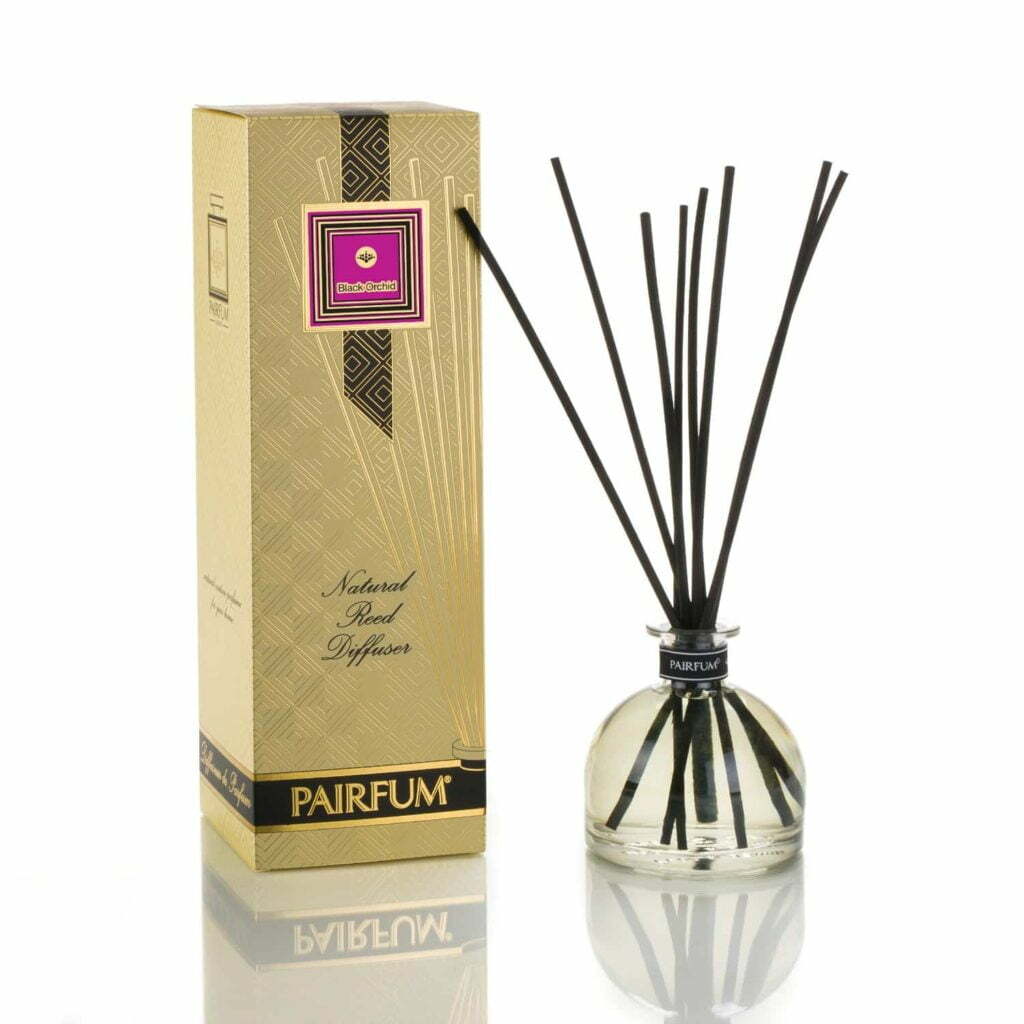
Pairfum Reed Diffuser Tower Classic Signature Black Orchid

Anjou Pear and Pear-Inspired Home & Personal Fragrance Products by Pairfum London

Black Orchid Tower Reed Diffuser by Pairfum London

This rich, Oriental fragrance opens with a vibrant blend of Anjou pear, dark cassis, and fresh orange slice as its top notes. The heart reveals an elegant floral bouquet featuring black orchid and powdery violet. The base is finished with a divinely sensuous mix of musk, copahu balm, and vanilla pod.

Spiced Coffee & Oaked Vanilla – Eau de Parfum by Pairfum London

This warm, oriental spicy fragrance begins with top notes of pink pepper, orange blossom, and crisp pear. At its heart, the fragrance features a contemporary combination of rich, dark coffee and the elegance of jasmine. The sophisticated base concludes with vanilla aged in oak, patchouli, and cedar.

Embrace the Fresh Elegance of Anjou Pear with Pairfum London

The journey of the Anjou pear in perfumery is a story of refinement, freshness, and charm. From its roots as a classic European pear in the Anjou region, to its current prominence in both culinary arts and modern fragrance, green Anjou pears and red Anjou pears continue to enchant with their elegance. Their balanced flavour, vibrant colour, and unique scent profile evoke the simple happiness of a walk through a pear orchard or the pleasure of enjoying a fresh pear from the tree.

Explore how Pairfum London weaves this beautiful note into its collection, creating fragrances that are both timeless and contemporary. Discover the artistry and natural allure of Anjou pears in our Natural Eau de Parfum range, and let the subtle sophistication of this classic fruit bring joy to every day.

Black Orchid In Perfume

Black Orchid in Fragrance: Dark Floral Opulence

In the world of floral opulence, the black orchid emerges as both muse and mystery. This flower, dark as midnight velvet, keeps its secrets close. Many have gazed upon the black orchid, wondering at its richness and the sense of drama it projects. In fragrance, it’s easy to spot: a single breath of black orchid perfume alters the mood of a room, veiling the air in sophistication. No ordinary bloom, this rare orchid symbolises not just beauty but opulence and a certain, enigmatic allure.

There’s charm in the way black orchid weaves through a scent composition – sometimes spirited, sometimes haunting. Its notes flit from spirited spice through textured, earthy depths, ending with subtle hints that leave an impression lingering far after the last note. Perfume aficionados return time and again to black orchid, not just for the fragrance, but for the mood it creates: richly floral, unforgettably dark, undeniably unique.

Botanical and Scientific Details

Ask a botanist for additional information about the black orchid, and a knowing smile might appear. A proper black orchid is few and far between. The likes of Fredclarkeara After Dark, certain Draco and Cymbidium species are classic examples with petals nearly absolutely absorbing light. Yet, the truth is, most “black” orchids wear deep reds or purples. Orchid flowers dazzle with colour diversity, yet black orchids are prized for their puzzling allure and hypnotic hues.

Across tropical climes from Central and South America to parts of Asia and Australia, orchids grow in wild profusion. Even so, a true black orchid is something to boast about.  A flower might simply be a flower, but with orchids, and especially black orchids, the fascination runs deep.

Meanwhile, within the laboratory and the atelier, “black orchid” doesn’t describe an ingredient to be plucked or distilled at all. Perfumers sketch the concept using a palette of notes: a little of this, a hint of that. The result is something abstract, not literal, and it’s this freedom that gives black orchid fragrances so much range and personality. That’s worth considering next time a bottle tempts you to place an order.

Pairfum Flacon Room Perfume Spray Black Orchid Flower 1 1

The History of Black Orchid in Perfumery

The whispers of black orchid in the perfume world are not historical whispers from antiquity, but stories woven in modern times.

  • Origins and Early Uses: In rainforests and cloud forests, black orchids were feted for what they represent—power, secrecy, intrigue. Their rarity alone made them emblems among indigenous cultures.
  • Cultural Significance: Victorian collectors, ever on the hunt for the next marvel, found their match in black orchids. During that era, rarest equalled dearest, and black orchids soon became trophies of horticultural bravado.
  • Historical Anecdotes: Written records don’t often mention black orchids in ancient scents, but tales about fearless botanists risking everything just to add black orchids to their collection abound. The romance stuck, and now black orchid holds a place in the modern canon of perfumery.

Now, black orchids are associated with cutting-edge design and stand at the crossroads of tradition and trend in designer fragrance.

Black Orchid in Perfumery Chemistry

Black orchid perfumes are more about inspiration than extraction. Here, scent artisans orchestrate accord upon accord to bring the glamour and sensuality of black orchid to life.

A classic black orchid scent is usually structured around a luxurious floral heart, anchored by rich dark accords: patchouli, amber, sandalwood, each chosen for its resonance. Additional flourishes, such as blackcurrant or black truffle, lend intrigue and unconventional depth. Spicy notes such as pepper or cardamom create drama, while vanilla and dark chocolate wrap things in comfort. Bergamot, appearing often as a top note, refreshes, after which jasmine (often both classic and French Jasmine types) elaborates on the theme. These elements lead, at last, into base notes of vetiver and incense, solidifying the perfume’s complexity and guaranteeing a lasting impression.

Many black orchid perfumes are artfully blended, using both carefully sourced botanicals and well-chosen synthetics. Orchid, spice, sandalwood, vanilla, patchouli, and amber are all deployed for a multidimensional journey. Even a single drop may deliver waves of sophistication, a kind of aromatic “bold statement” seldom replicated.

Eau De Parfum Person Reflection Cardamom Tonka White Oud Hat 1 1

Unique Characteristics of Black Orchid Fragrance

Black orchid scents do not blend in. There is drama to their composition, a velvety texture, an aura that separates them from softer blooms.

  • Distinctive Aroma: Expect a presence that interlaces heady florals, just a glint of spice, hints of the forest, and a finishing note that gestures toward dark chocolate and blackcurrant. Each black orchid perfume claims its place as an alluring potion, a scent that makes its wearer the source of intrigue.
  • Comparison with Other Floral and Dark Notes: Rose speaks to romance, jasmine calls to mind innocence and light; in contrast, black orchid holds court among the deep and layered. Its base notes—patchouli, sandalwood, vetiver, amber—create a resonance reminiscent of twilight, of evening sophistication. The mood is undimmed confidence.
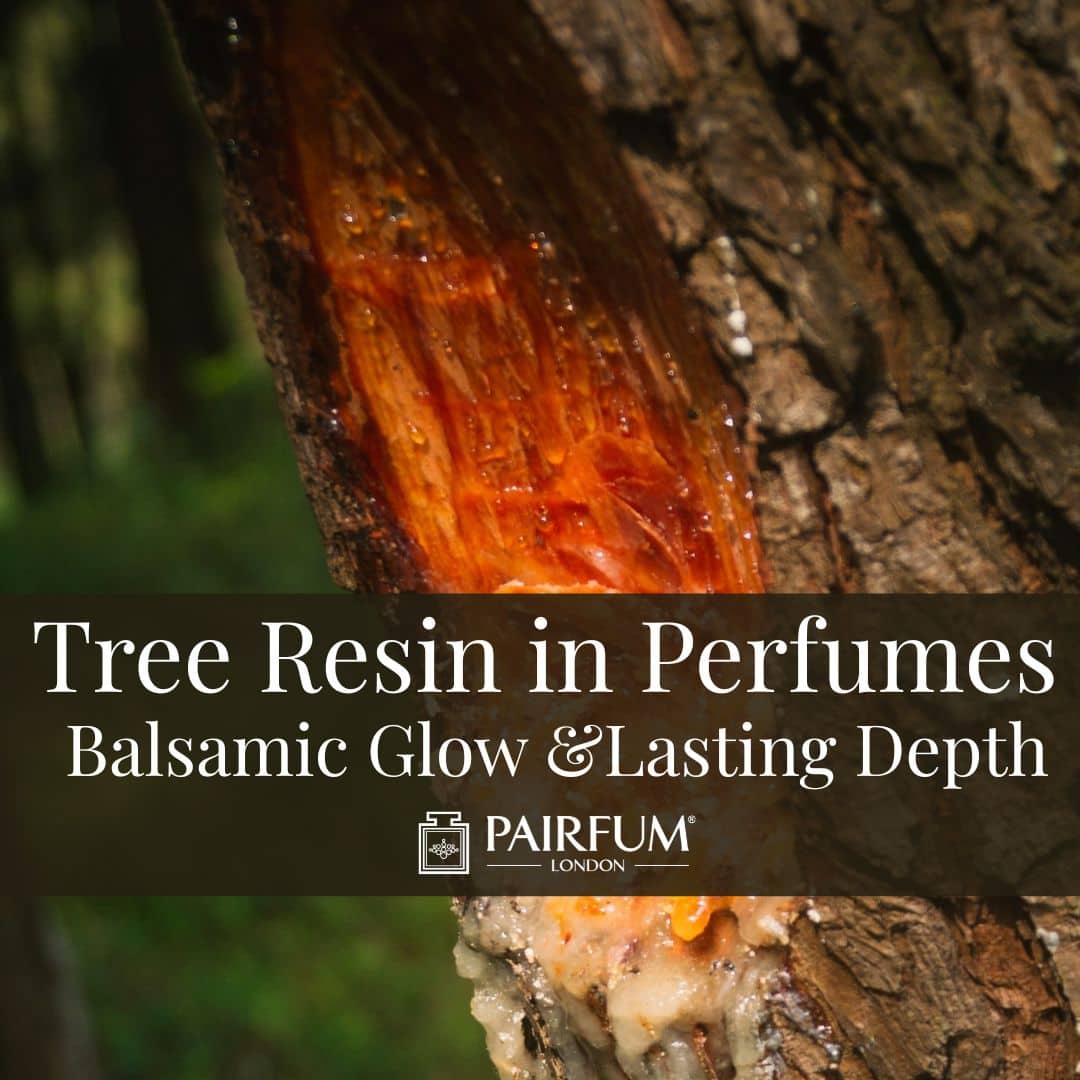
What results is an iconic fragrance that resists fleeting attention and is remembered for its theatricality and the lasting impression it bestows.

Extraction Methods for Black Orchid Essence

Even by orchid standards, black orchid essence defies easy capture. There are tried and tested routes, though each brings challenges.

  • Steam Distillation: Steam courses through petals and the stem, carrying fragrance into the cooled, collected oil. For many orchids, this technique is all but essential.
  • Solvent Extraction: Here, orchids steep in gentle chemicals, their scent ultimately becoming a concentrated absolute—thicker, richer, more suited for creative blending.
  • Enfleurage: An old-fashioned process, involving fat and time. Orchid petals sit in clean fat, their fragrance seeps in, and the perfumer, at last, extracts the scented base. Most would call this artisanal; a few call it essential.

Preserving orchid extracts means protecting them from light and heat. The simplest, smartest solution? Store every absolute or essence in fluted black glass, shielding the notes for future enjoyment.

Black Orchid Sketch

Sustainability and Ethical Considerations

The rush to embrace black orchid in modern fragrance demands a pause. Many orchids, especially black orchids, sit on the brink of endangerment. Harvesting from the wild brings clear risk to populations. Sustainable perfume houses—including Pairfum London—embrace techniques that avoid damaging natural stocks, working instead with laboratory-crafted notes or carefully farmed botanicals.

Choosing a black orchid perfume crafted in this way supports sustainability and preserves one of the world’s great floral wonders. Each new bottle ordered represents a vote for conservation, ethical luxury, and a long-view approach to sophisticated scent.

Black orchid stands at the heart of a broader movement: perfumes embracing darkness, depth, and a complex, worldly glamour. When Tom Ford Black Orchid made its debut, the landscape shifted. Black orchid, black truffle, spicy notes, rich dark accords—these came together in one scent, setting a new gold standard for luxury and iconic style.

Stars and stylists alike now reach for black orchid fragrances, seeking the perfect mix of sensuality and subtle power. The trend pushes beyond gender boundaries; fragrances built around black orchid and base notes like patchouli, amber, and incense are no longer just for evening, and special occasions see their own black orchid favourites. Transparency has also become crucial, with shoppers requesting additional information on ingredients and sourcing before they order. The ability to consult selection results and easily browse required fields gives fragrance collectors and newcomers alike the perfect starting point.

Pairfum Eau De Parfum Person Reflection Cardamom Tonka White Oud Couple Plane 1 1

Iconic Perfumes Featuring Black Orchid

Black orchid’s legacy is cemented in bottles that sit on vanity tables around the globe. The flower stars in perfumes that are both headline-grabbing and quietly complex.

  • Classic Creations: Some of the best-known luxury perfumes use black orchid as their anchor. These are often the sort that become a signature scent, distinctive and impossible to ignore.
  • Notable Examples: Wise perfumers know to blend in vanilla, patchouli, black truffle, dark chocolate and amber, layering spice and floral in precise measure. The bouquet glows with intensity, giving depth to the black orchid’s story.
  • Impact on Composition: Black orchid supplies the backbone, often complemented by jasmine or french jasmine. The result is a perfume for evening or for those occasions that call for presence and structure.

Tom Ford Black Orchid remains a touchstone, appearing in its fluted black glass bottle—an iconic scent, uniting black orchids, black truffle, spicy notes, vanilla, patchouli, incense, amber and more. Its enduring appeal is the mark of its iconic fragrance status and its lasting impression on the world of perfumery.

Occasion, Layering, and Gender

Black orchid perfumes have a breadth that few others can match. Evening, with its low golden lights, may be the obvious setting, but black orchid also punctuates special occasions and daily rituals. Feature it in selected gift sets for a gesture that feels personal and unexpected.

Universal in its appeal, black orchid defies age and gender. Those with a taste for layering will find it combines well with citrus highs or green accents, softened with base notes of sandalwood or vanilla. Application to clean skin—especially on desired areas like pulse points—ensures every accord can shine, bringing that iconic style to life.

Offered as a gift, black orchid perfume is rarely forgotten, especially if discovered within a thoughtfully curated set including bath or home luxuries.

Fragrance Description Black Orchid Pear Freesia Vanilla Musk

Embracing Dark Floral Opulence in Your Collection

There are few quicker ways to lend depth and intrigue to a perfume collection than to add black orchid. Wearing such a fragrance communicates sophistication, a flair for the dramatic, and an openness to the unexpected.

  • Selecting the Right Fragrance: Seek out black orchid perfumes paired with amber or cardamom for spicy warmth, or vanilla for smoothness. Patchouli and sandalwood often anchor the scent, offering a refined base.
  • Wearing Tips: A little black orchid goes a long way. Try a mist in autumn or as a finishing touch before evening. As the scent unfolds, expect shifting notes. Sometimes spice, sometimes a ghost of dark chocolate but always a richness that emerges as the oils warm on the skin’s required fields.
  • Enhancing Your Collection: In a landscape dominated by fresh florals or citrus, black orchid introduces contrast, complexity, and that ever-important lasting impression.

Perfume wardrobes, whether focused on designer names or niche treasures, only gain from the inclusion of an orchid scent with sophistication and broad appeal.

Pairfum Person Reflection Cardamom Tonka White Oud Eau de Parfum

Black Orchid in Home Fragrance

Black orchid is not reserved for pulse points. The same qualities grace homes in the form of candles, reed diffusers, and room sprays. Rooms given a touch of black orchid become instantly more inviting, filled with the extraordinary richness that earns the fragrance its reputation.

Home fragrances with black orchid are especially welcome during evening gatherings or relaxed afternoons. Accords found in the finest perfumes are echoed here: rich dark notes, hints of spice, and the unmistakable orchid undercurrent. Presentation in fluted black glass adds both preservation and iconic style, with exclusive gift sets available to order for thoughtful occasions.

How to Choose and Care for Black Orchid Perfumes

A new fragrance deserves careful attention. Read the short description and, if given, required fields for details on notes, longevity, and strength before ordering.

Try the perfume on clean skin, applying to desired areas such as the wrists or neck, letting the scent unfold fully. Layering with florals, woods, or spices can build on the black orchid accord, enriching sillage and character.

Proper storage is critical. Perfumes are best kept in a dark, cool place—ideally in fluted black glass, both for its tradition and its effectiveness at shielding the fragrance from spoiling light. Keep bottles capped tight, and freshness (along with those signature notes) should linger for months, even years.

Unsure which black orchid to pick? Pairfum London offers discovery sets and practical selection results, making it easy to sample, compare, and discover a favourite black orchid perfume before placing a final order.

Pairfum Large Reed Diffuser Bell Signature Black Orchid

Frequently Asked Questions

What is “Black Orchid Parfum”?

Black orchid parfum designates a high-strength perfume, featuring the signature black orchid accord. Tom Ford Black Orchid Parfum, known for its concentration and luxurious fluted black glass packaging, stands as a prime example—blending powerful scent, longevity, and iconic style.

Are there other notes commonly used with black orchid perfumes?

Absolutely. Alongside orchid, black orchid, and base notes like patchouli, amber and vanilla, perfumers often use jasmine, french jasmine, black truffle, sandalwood, spicy notes, incense, bergamot, dark chocolate, and blackcurrant. These notes contribute depth and layered intrigue.

How should black orchid perfume be stored?

To keep a black orchid perfume fresh, store it in a cool, dark place. Fluted black glass bottles shield precious orchid notes from light, safeguarding performance and ensuring the iconic fragrance remains true.

Black Orchid Inspired Fragrance by Pairfum London

Black Orchid – Large Bell Reed Diffuser by Pairfum London

This rich, Oriental fragrance opens with a vibrant blend of Anjou pear, dark cassis, and fresh orange slice as its top notes. The heart reveals an elegant floral bouquet featuring black orchid and powdery violet. The base is finished with a divinely sensuous mix of musk, copahu balm, and vanilla pod.

Cardamom, Tonka & White Oud – Eau de Parfum by Pairfum London

This opulent and passionate scent begins with lively notes of Lime and Mandarin, complemented by Cardamom, Nutmeg, Clove, and subtle touches of Cassis. At its heart lies a spicy blend of White Lily, Rose, and Orange Blossom. The fragrance settles into a sensual base featuring Tonka, White Oud, Cedarwood, Sandalwood, and Amber, completing this distinctive creation.

Eau De Parfum Person Reflection Cardamom Tonka White Oud Man Suit 1 1

Final Thoughts

The black orchid continues to captivate both fragrance creators and connoisseurs, offering far more than just a scent; it invites discovery, individuality, and timeless sophistication. Whether chosen for personal elegance, gifted as a memorable gesture, or welcomed into the home, black orchid perfumes represent the pinnacle of dark floral opulence. With each encounter, the allure endures, ensuring that this enigmatic orchid remains a defining note in the world of iconic fragrance.

Tree Resin In Perfume

Tree Resin in Perfumes: Balsamic Glow and Lasting Depth

Tree resin is a sticky, solid or sometimes semi-solid material produced by trees, mainly to protect themselves from injury, infections, and insect attacks. For thousands of years, people have used resin in various ways, including as adhesives, sealants, incense, and in traditional medicine. Well-known examples are pine resin, frankincense, and myrrh, which can be sourced directly from living trees or found as fossilised resin, commonly known as amber.

Perfume has been deeply influenced by tree resin for centuries. Used for its scent and as a symbol of healing and tradition, tree resin brings warmth, depth, and complexity to fragrance. Today, these botanical treasures are solidified on bark or around a tree trunk, wafting from incense, or forming key notes in luxury perfume and remain essential to artisan scent.
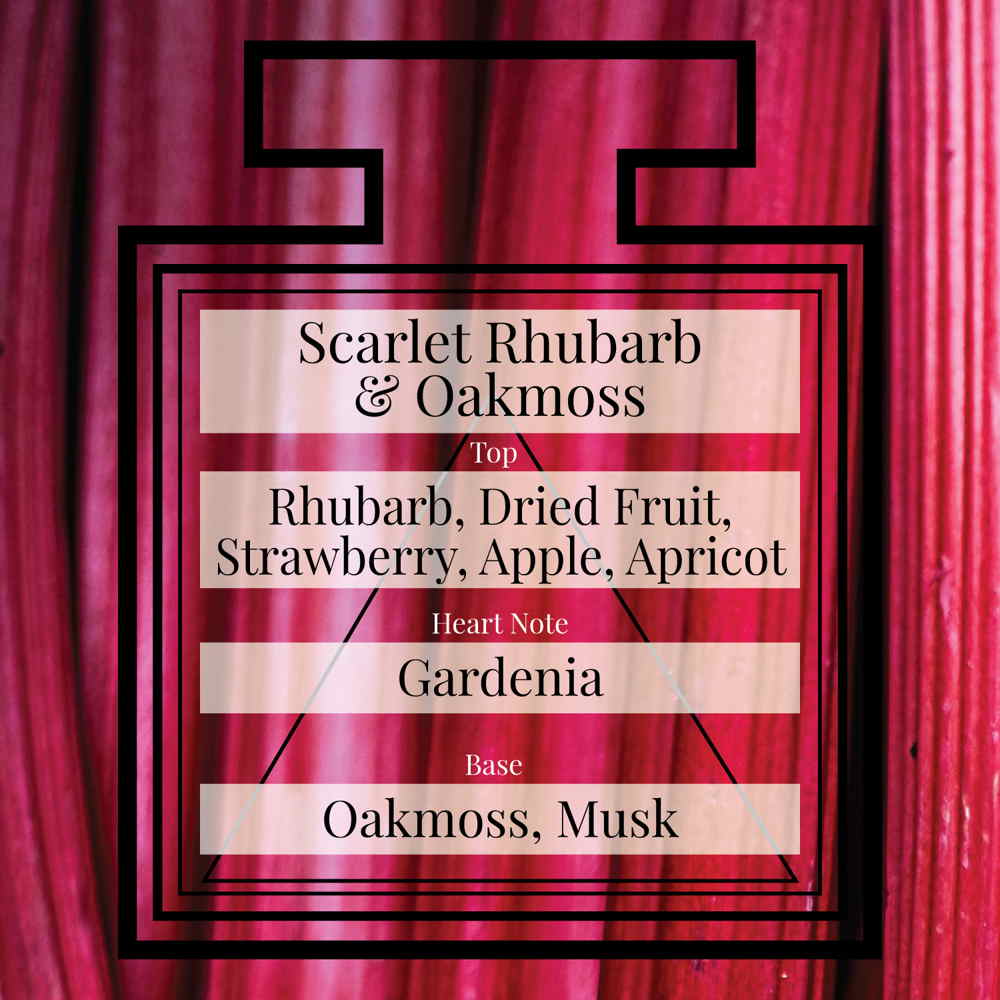
What Is Tree Resin? A Botanical Overview

Tree resin is a sticky substance secreted by certain trees, especially coniferous trees, as a defence when their bark is injured or stressed. These resins, rich in terpenes and containing resin acid, have a strong aroma and important protective qualities. Different from sap collected for maple syrup or from water-soluble gum, resin is channelled through resin ducts, helping trees quickly seal wounds. As this plant resin comes into contact with air, it can harden to become solidified resin. If left undisturbed, resin sometimes transforms into fossilised resin, which we recognise as amber. Both a gift from nature and a marvel of time, tree resin has long been treasured.

Eau de Parfum Person Reflection Spiced Rum Lime Guaic Wood Man Wood 1 1

Types of Tree Resins Used in Perfume

Perfumery relies heavily on both natural and plant resins. Each resin has its own story and chemistry.

  • Pine resin, which comes from pine trees and other coniferous trees, brings crisp, green notes that evoke the forest. Pine resin tends to seep out from pine bark, and often collects on the tree trunk, pine cones, or pine needles. When pine sap sets, it becomes hard resin or what some call raw resin. Pine resin, once distilled, results in wood rosin, used for stringed instruments, as well as turpentine—a staple for cleaning, painting and crafts.
  • Frankincense is derived from the Boswellia tree and delivers an aromatic, pine-like, citrus quality, making it a staple in incense and in many ceremonial traditions.
  • Myrrh, which is tapped from the Commiphora plant, gives a deep, earthy warmth, valued for both healing and for its balsamic scent in blends.
  • Benzoin is sourced from Styrax trees and lends vanilla-almond sweetness.
  • Labdanum, collected from Cistus plants, offers an ambery, leathery scent as sticky resin forms on leaves or stems.
  • Mastic resin is obtained from the mastic tree, Pistacia lentiscus. This hard resin has aromatic, herbal qualities and is used in incense, and, historically, as a form of chewing gum in the Mediterranean.
  • Styrax has a soft balsamic aroma that can blend smoothly with floral or woody perfumes.

The number of plant resins is vast, but these few remain central to perfumery, incense and more.
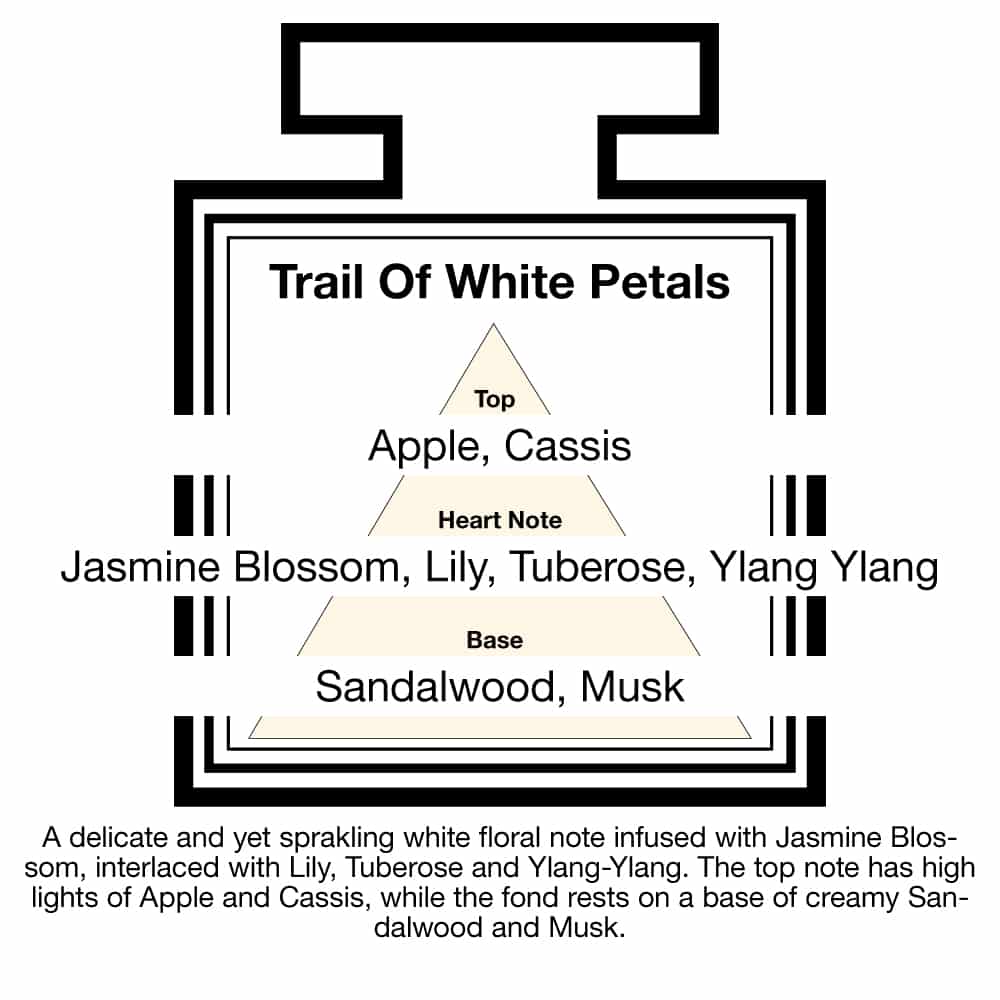
The Nature, Healing, and Function of Resin in Trees

Nature provides an automatic remedy for trees when wounds open in the bark of a living tree: resin flows and seals the area, helping to block decay and infection. Pine, fir, and their relatives all utilise sticky resin, which contains resin acid as well as terpenes, vital for protection and healing. Pine resin, first released as pine sap, will gradually become hard resin. It is not uncommon to spot layers of plant resin on a tree trunk or clustered near bark that has faced repeated stress. This natural resin is invaluable for the tree and for those who value incense, perfume, and other healing products.
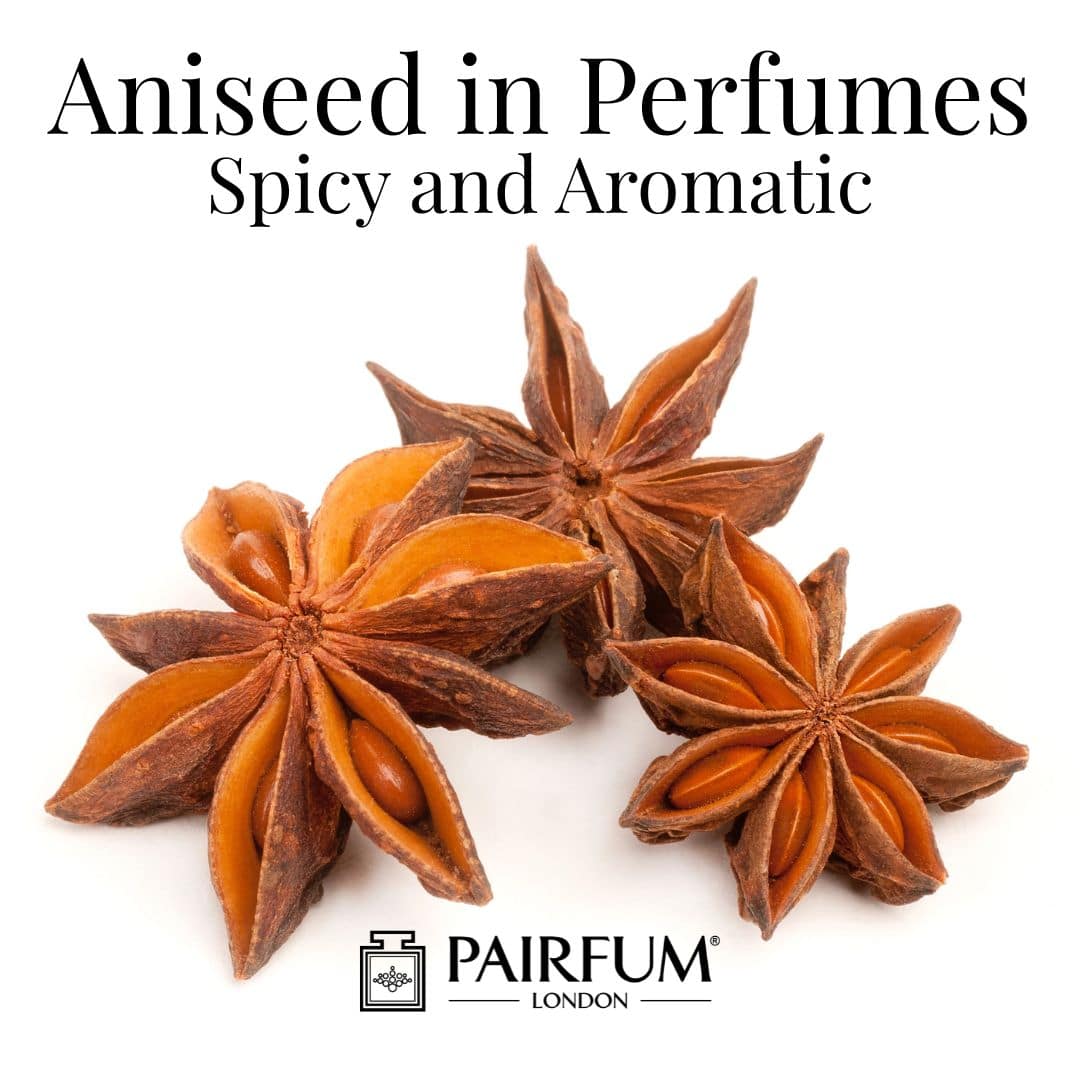
Harvesting: Cultural and Ecological Impact

To collect tree resin, harvesters make careful incisions in the bark, allowing resin to flow. This traditional skill has ensured that the plant can heal and continue growing. In many societies, particularly among Native American groups, pine resin and beeswax have been used to create incense, as well as healing balms and even adhesives. Mastic resin, valued for centuries, served as a popular chewing gum and played a key role in incense traditions. Fragments of hard resins such as raw resin have been used to make glue, natural varnish and oleoresin balms for use on wounds.

Pairfum London is committed to sourcing plant resin from sustainable, ethical supplies (whether it be pine, labdanum, myrrh or mastic), championing the long tradition of resin’s use in perfume and incense, and also supporting nature.

Pairfum Person Reflection Spiced Coffee Oaked Vanilla Eau de Parfum Girls

Tree Resins in History and Ritual

Since the earliest civilisations in Egypt and Mesopotamia, tree resin has found a sacred place in spiritual life. Incense made with frankincense, myrrh, pine resin and plant resins has filled homes, temples and places of gathering across ancient and modern cultures. In Egypt, burning tree resins on charcoal was central to both healing and spiritual ceremonies, and over time, beeswax was often melted in as well. Certain traditional blends include touches of maple syrup to create a sweetly scented smoke. Each of these rituals carries an element of healing, with pine resin, labdanum and mastic being regularly used for support and purification.

Extraction and Applications

Once gathered, hard resins such as pine resin are sorted and cleaned for use. Steam distillation is a common process: pine resin, for example, can produce turpentine and also wood rosin for musicians. Resin from benzoin or labdanum often gets extracted via alcohol or solvents, helping perfumers unlock the full depth of their complex scent. Mixing resin with beeswax—and occasionally grated beeswax—can produce incense or even a balm. Tree resin remains incredibly versatile, playing roles in incense, ornaments, healing balm, glue, natural varnish and more.

Resin in Artisan Perfumery

For the artisan perfumer, resin is the very heart of a fragrance’s structure and longevity. It’s not simply a fixative—it links top notes and plant-based aromas, grounding and enriching them. Pairfum London uses natural resins of all types, like labdanum’s sticky resin, pine, myrrh, mastic and benzoin, aiming to create nuanced scents that feel timeless yet fresh. Beeswax and plant resin, blended with care, give our perfumes a warmth that could only come from nature.

Tree Resin

Iconic Perfumes Featuring Tree Resins

Some of the world’s most memorable perfumes rely on tree resin to set them apart. Blends centred on frankincense, myrrh or labdanum are famous for their longevity and sophisticated trail. Perfumes with rich resin notes are often cited for their elegance and depth. Skilled perfumers use a balance of plant resin with lighter notes such as citrus and florals, creating a scent that bridges ancient tradition and present-day luxury. Classic techniques allow the full character of resin to come through, offering a perfume that feels distinctly personal.

Choosing, Collecting and Caring For Resin Perfumes

Anyone drawn to tree resin can start with fragrances featuring benzoin or frankincense. Pine resin, mastic or myrrh lend a resinous, outdoorsy touch, while beeswax and labdanum round things off with creamy comfort. You may want to layer your perfume with lighter or woodier scents for year-round wear. Store them somewhere cool and dark—resin-based perfumes can fade with too much light or heat. Enthusiasts who enjoy making their own incense can use pine resin, beeswax, charcoal and grated beeswax; those interested in natural skin care may enjoy making balm from raw resin blended with wax.

Other Traditional and Modern Uses

Tree resin has more uses than many realise. Pine resin supplies turpentine, while wood rosin is valued by those who play stringed instruments. Plant resins help produce traditional varnish, glue, healing ointments, balms and adhesives. Chewing gum was once made from mastic resin or chunks of raw resin gathered from pine. Pine and even maple syrup are occasionally paired in regional food traditions. People everywhere have turned to resin for incense, protective sealers, crafts, and for its special role in healing.

The Future of Sustainable Natural Resin

Interest in natural, ethical perfume is growing steadily. Managing pine, mastic tree, pistacia lentiscus and other resin source plants responsibly is now more important than ever. Sustainable practices for gathering resin—such as eco-friendly oleoresin production for incense and balm—protect the future of these remarkable trees. At Pairfum London, we promise to help protect both these vital species and the communities that rely on them for their livelihood and art.

Eau de Parfum Person Reflection Spiced Rum Lime Guaic Wood Man Jacket 1 1

Frequently Asked Questions About Tree Resins

What is the difference between resin, sap and gum? Pine resin and tree resin are sticky, aromatic and protect trees after injury. Sap is much thinner and is used for maple syrup. Gums are water-soluble and work mainly as adhesives.

What is pine resin? It is the substance tapped from the bark of pine trees—a vital ingredient for incense, turpentine, adhesives, balms and stringed instruments.

Why do trees release resin? Trees use resin to seal wounds, prevent disease, and promote healing.

What is resin acid? This component in pine and other coniferous resins is naturally antimicrobial and helps preserve the resin.

How is resin used for incense and balm? Most traditional recipes include frankincense, myrrh, pine resin, mastic resin, beeswax, grated beeswax, and sometimes charcoal.

Is chewing gum ever made from resin? Before synthetics, many cultures used mastic resin or pine resin as a form of chewing gum.

What is fossilised resin? This is amber—ancient, solidified resin from prehistoric forests.

What is wood rosin? The solid product from pine resin distillation, used especially for stringed instruments.

What is oleoresin? A naturally occurring mix of essential oils and resins, found mostly in coniferous trees and prized for both incense and perfume.

How do resin ducts function? Resin ducts are small tubes that help a tree mobilise resin quickly when facing stress or injury.

Why pair beeswax with resin? Beeswax improves the structure, burn and longevity of balms, adhesives, incense and perfume.

Explore Exquisite Tree Notes with Pairfum London

Spiced Rum, Lime & Guaiac Wood – Eau de Parfum by Pairfum London

This Connoisseur’s blend begins with the bold scent of Rum accompanied by hints of Lime and Lemon, enhanced by a luminous mix of Nutmeg and Pepper. The heart unveils a deep richness of Tuberose, Iris, and aged Leather. The base settles into Guaiac Wood, Cedar, warm Amber, Vanilla Pod, and Musk, bringing this opulent fragrance to a refined and lasting close.

Spiced Coffee & Oaked Vanilla – Eau de Parfum by Pairfum London

This inviting, oriental spicy fragrance starts with vibrant top notes of Pink Pepper, Orange Blossom, and fresh Pear. At its heart is a contemporary mix of robust, dark Coffee paired with refined Jasmine. The scent concludes with a sophisticated finish of Oak-aged Vanilla, Patchouli, and Cedar, ensuring an elegant and memorable base.

Eau de Parfum Person Reflection Spiced Coffee Oaked Vanilla Man Smile 1 1

Conclusion

Tree resin has woven its way through centuries of culture, craftsmanship, and scent, continuing to captivate with its natural depth and versatility. Whether enhancing a precious perfume, kindling the heart of incense, or nurturing a tree’s healing, resin is a true wonder of nature. At Pairfum London, we celebrate these remarkable ingredients, ensuring every fragrance honours both tradition and the living world that provides them. If you are seeking scents with enduring warmth and history, look to the timeless beauty of tree resin.

Apple Perfume

Apple Perfume: Crisp and Fresh

Apple perfume generally refers to fragrances that feature a prominent apple note, which can range from fresh and crisp green apple scents to sweet and warm spiced or candied apple aromas. Apple notes are highly versatile, blending well with a variety of florals, woods, and spices to create diverse scent profiles and fragrances.

Fragrance is one of those things that can paint a picture without words, and apple is a note that speaks volumes. Its crisp, fresh, and slightly sweet aroma is instantly recognisable and incredibly comforting. From a stroll through a dew-soaked orchard to the aroma of warm apple desserts or apple brandy, apple has a way of connecting us to cherished memories. The scent of apples can evoke a sense of nostalgia, reminding us of autumnal days spent picking apples or enjoying a warm apple pie fresh from the oven. Apple perfume is a popular choice among fragrance enthusiasts, and for good reason.

History Of Apple In Perfumery

Apples have spent a long time in the spotlight, both in myth and in daily life. Ancient civilisations like the Greeks and Romans associated apples with beauty, love, and even temptation. The story of the Apple of Discord in Greek mythology, for instance, highlights the fruit’s symbolic significance. These symbolic ties made apples a natural fit for use in early perfumery, where ingredients were often chosen not just for their aroma, but also their meaning. The use of apples in perfumery dates back to ancient times, where they were likely used in maceration processes to infuse their character into oils and fats, creating fragrance oils with a distinct apple scent.

Early versions of apple-based fragrances were likely created through maceration, where apples were soaked in fats or oils to infuse their character. Even though the extraction methods were simple, the results were captivating. Apple quickly became a sought-after ingredient in perfumed oils, creams, and early blends. As perfumery evolved, so did the techniques for incorporating apple into fragrances. Perfumers in later centuries refined the use of apples, learning how to combine them with other notes to create balance and depth. Apple’s naturally fresh and juicy quality meant it could uplift earthier tones or add a spark to soft florals and spicy woods.

The historical significance of apples in perfumery is also reflected in the traditional use of apple blossom and leaves in fragrances. The delicate floral scent of apple blossoms adds a subtle yet alluring quality to perfumes, while the leaves contribute a fresh, green note. This multifaceted approach to using apples in perfumery highlights the fruit’s versatility and enduring appeal. Apple blossom is a particularly popular note in spring-inspired fragrances, often paired with other floral notes to create a fresh and airy scent.

Pairfum Person Reflection Scarlet Rhubarb Oakmoss Eau de Parfum Hat

Types Of Apple Aromas

There isn’t just one apple note in perfumery. Each variety of apple brings its own personality to a fragrance, depending on how it smells when fresh and how it behaves in a blend. Here are a few popular types used in perfumery:

Granny Smith: 

This variety gives a tart, citrus-like edge to the fragrance. Zesty and sharp, it brings energy and lightness. It’s often used in fresh, active aromas that are designed to wake up the senses. The bright, snappy quality of Granny Smith apples makes them a popular choice for perfumes that require a lively, uplifting note, such as green apple perfume.

Red Delicious: 

This apple is known for its mellow, almost honey-like sweetness. In perfume, it adds warmth and comfort. It’s often the note that rounds out sharper top notes or supports fruity-floral hearts. The sweetness of Red Delicious apples is particularly suited to perfumes that aim to evoke a sense of warmth and cosiness, often blending with vanilla for a smooth, creamy scent. Red apple is a popular variation used in perfumery.

Golden Delicious: 

Smooth, balanced, and less tart than others, Golden Delicious gives a sweet aroma without being overpowering. It’s a versatile middle ground between bright and rich. Golden Delicious apples are often used in perfumes that require a subtle, nuanced apple note.

Each of these varieties tells a different story in perfume. Whether it’s crisp and energetic or warm and nostalgic, apple can make apple-based perfumes truly unique. The diversity of apple varieties allows perfumers to experiment with different characteristics, creating unique and captivating fragrances that can be classified as best apple perfumes. Apple fragrances are a staple in many perfumers’ collections, and for good reason.

Extraction Methods

Turning apples into perfume oil is not quite as simple as squeezing the juice. The process has to capture the apple’s true aroma without breaking it down or altering it too much. That’s why perfumers use specific techniques to extract apple essence. The resulting fragrance oil can then be blended with other notes to create a sophisticated scent.

Cold pressing is one way to retrieve the oil. It involves squeezing and pressing the apple without heat. This protects the light, fruity top notes and keeps the final result smelling true to the original fruit. This method is most effective for capturing the vivid freshness of a green apple. The fragrance resulting from cold pressing is often used in home fragrance products, such as scented candles and diffusers.

Steam distillation is another method, where steam is pushed through the apple material to collect the aromatic compounds. It’s more complex and can sometimes result in a slightly cooked profile, but it’s valuable when the goal is to blend apple with deeper or warmer notes, such as amber.

Some apple aromas used in modern perfumery may also be re-created using natural isolates or synthetic compounds. This allows perfumers to pick out specific apple qualities—like tartness, sweetness, or crispness—and control how they show up in a fragrance. The use of natural isolates and synthetic compounds provides perfumers with greater flexibility and precision when crafting apple fragrances. Fruity fragrances, like those featuring apple, are particularly popular among perfume enthusiasts.

Livingroom Bell Large Reed Diffuser Natural

Iconic Perfumes With Apple

Apple has had its moment in many popular perfumes, becoming central to fragrances that have made a lasting impression. Here are a few standout examples that celebrate the apple in all its splendour.

DKNY Be Delicious: A fragrance that lives up to its name, this perfume made green apple a fashion-forward note. It pairs the apple’s fresh edge with cucumber, grapefruit, lily-of-the-valley, and sandalwood. The result is lively, modern, and effortlessly wearable. DKNY Be Delicious introduced many people to the idea that fruit, when done well, could be just as sophisticated as florals or spice.

Nina by Nina Ricci: This is a more whimsical take. Here, apple is softened and sweetened with light florals and a base of vanilla and woody notes. It captures the aura of a fairytale apple—one that’s both sweet and slightly mysterious. Nina has a romantic feel that appeals to anyone looking for something charming and nostalgic.

In addition to these iconic perfumes, many modern fragrances continue to feature apple as a key note. For example, Juicy Couture Viva La Juicy and Marc Jacobs Daisy Eau So Fresh both showcase apple in a contemporary context, blending it with other fruity and floral notes to create fresh, youthful fragrances. Other notable examples include Kate Spade New York Stash, which combines apple with floral and woody notes for a sweet and sophisticated scent, and Viktor & Rolf Flowerbomb, which features a subtle apple note amidst its floral bouquet.

Why Choose Apple-Based Aromas

Apple-based perfumes are often those that people return to time and again. There’s something universally agreeable about apple. It’s familiar without being boring, sweet without being candy-like, fresh but grounded.

Crisp Freshness

Apple brings a lively, brisk quality that appeals to those who love clean and natural aromas. It’s like a breath of fresh air—both comforting and energising. The crisp freshness of apple is particularly suited to spring and summer perfumes, where it adds a bright, uplifting quality to the fragrance. Fresh apple is a popular note in many perfumes, often paired with other fruity notes, such as juicy apple or candied apple.

Versatility

Apple pairs well with nearly everything. Whether matched with florals, woods, musks, or spices, apple adds a top note that lifts the entire profile. It complements summer bouquets and suits cosy autumn perfumes just as easily. The versatility of apple makes it a valuable ingredient in perfumery, allowing perfumers to create a wide range of fragrances, from fruity scents to sophisticated scents. Florals and fruit are a classic combination in perfumery, and apple is no exception.

Nostalgic Joy

For many, apple evokes special moments. From school lunches to orchard visits, it’s woven into personal memories. That emotional connection can make apple-based perfumes feel more intimate and personal. The nostalgic quality of apple is a key factor in its enduring appeal, as it taps into fond memories and emotions, much like the scent of a plum blossom or cherry. Apple love is a common phenomenon among perfume enthusiasts, who often cherish fragrances that feature this beloved note.

Apple might not always be the star of the show, but when it is, it shines. It adds charm, brightness, and a down-to-earth feeling that’s hard to find elsewhere. Apple-based perfumes can be considered best sellers due to their timeless appeal and the joy they evoke. Eden juicy apple is just one example of a fragrance that showcases the appeal of apple.

Crisp & Fresh Apple Perfume

How To Choose The Perfect Apple Perfume

When selecting an apple perfume, consider your personal preferences and the occasions you plan to wear it for. Do you prefer fresh and energetic scents, or something warmer and more comforting? Think about the concentration of the fragrance as well; eau de parfum is generally richer and longer-lasting than eau de toilette.

If you’re looking for a scent that captures the essence of a crisp autumn day, a perfume featuring Granny Smith apple notes might be the perfect choice. On the other hand, if you prefer something sweeter and more romantic, a fragrance with Red Delicious or Golden Delicious apple notes could be more to your liking. You might also consider perfumes that blend apple with other fruits, like grapefruit or citrus, for a refreshing scent.

Creating A Signature Scent

To create a signature scent, consider blending apple with other complementary notes. For example, pairing apple with vanilla can create a smooth, creamy fragrance, while combining it with floral notes like plum blossom can add a delicate, alluring quality. The key is to find a balance that suits your personal taste and style. A signature scent is a personal expression of one’s style and preferences, and apple perfume can be a great choice for those looking for a unique and captivating fragrance.

When it comes to related products, apple-based perfumes are often paired with other fragrances that feature fruity or floral notes. For example, a perfume that combines apple with cherry or grapefruit can create a sweet and tangy scent. Fruity fragrances are particularly popular among perfume enthusiasts, who often appreciate their bright and uplifting qualities.

Pairfum Fragrance Scarlet Rhubarb Oakmoss Triangle

Best Apple Perfumes

When it comes to finding the best apple perfumes, there are several factors to consider. Look for fragrances that feature high-quality ingredients, a well-balanced blend of notes, and a scent that resonates with you. Some popular apple perfumes include those that blend apple with other fruity notes, like juicy apple or candied apple, creating a sweet and sophisticated scent.

Ultimately, the best apple perfume is one that makes you feel confident and comfortable. Whether you’re looking for a fresh, energetic scent or something warmer and more comforting, there’s an apple perfume out there that’s sure to delight. Apple scented perfumes are a great place to start your search, and you may also want to explore apple fragrances that feature a blend of apple with other notes.

Fresh Scent and Crisp Apple Fragrance Notes with Pairfum London

Scarlett Rhubarb & Oakmoss – Eau de Parfum by Pairfum London

This bold, floral Chypre fragrance opens with a blend of fresh Tart Rhubarb, Sun-Dried Fruits and Ripe Strawberries. Hints of Crisp Apple & Apricot wrap around the warmth of the heart of elegant White Gardenia. The base of Oakmoss and Sensuous Musk provides a rich and lingering drydown.

Trail of White Petals – Large Bell Shaped Reed Diffuser by Pairfum London

A delicate and yet sparkling white floral note infused with Jasmine Blossom, interlaced with Lily, Tuberose and Ylang-Ylang. The top note has highlights of Apple and Cassis, while the fond rests on a base of creamy Sandalwood and Musk.

Fragrance Description Trail White Petals Jasmine Tuberose Ylang

Conclusion

In conclusion, apple is a versatile and beloved note in perfumery, offering a range of possibilities for fragrance creation. From its historical significance to its modern applications, the apple continues to captivate perfumers and fragrance enthusiasts alike. Whether you’re drawn to the crisp freshness of green apple or the warmth of red apple, there’s an apple perfume out there that’s sure to captivate your senses and evoke a sense of nostalgia and joy. Apple tree-inspired fragrances are a great example of how perfumers can draw inspiration from nature to create unique and captivating scents.

Aniseed In Perfumes

Aniseed in Perfumes: Spicy and Aromatic

Aniseed is the seed of the anise plant (Pimpinella anisum), a flowering herb originally from the Mediterranean region and parts of Southwest Asia. It has a naturally sweet, liquorice-like taste and aroma and is widely used in cooking and baking, from pastries and candies to liqueurs and savoury dishes. Beyond its culinary uses, aniseed has also been valued in traditional medicine for easing digestive discomfort, soothing coughs, and naturally freshening breath.

Scents mingle in the air, some delicate, others bold. Among them, aniseed is instantly recognisable, standing out with its sweet, spicy, liquorice-like quality. Imagine stepping into a space filled with fragrance. It brings both surprise and a feeling of familiarity, creating perfumes that lodge themselves in memory. Used carefully, it adds warmth, clarity and a note of intrigue to compositions that might otherwise slip into the ordinary.

What is Aniseed? From Plant to Perfume

Aniseed is derived from Pimpinella anisum, an aromatic herb belonging to the Apiaceae family, which also includes carrots, fennel and parsley. The plants are native to the Eastern Mediterranean and Western Asia but are now cultivated across much of southern Europe, with Spain being a well-known producer.

It is a bushy annual growing up to half a metre tall, producing finely divided aromatic leaves and sprays of tiny white flowers that form broad dome shaped heads typical of the carrot family. Once pollinated, these umbels develop into oval, ridged fruits that many refer to as seed pods. Though commonly called seeds, they are technically schizocarps, which split when ripe to release the true seed.

The plant prefers free-draining soils in sunny sites and is often sown in situ as it dislikes root disturbance. Gardeners are advised to avoid transplanting because moving the seedlings can affect vigour. With the right conditions, this annual thrives and produces an aromatic harvest famed for its role in perfumes, cooking and teas.

Botanical Characteristics and Hardiness

Pimpinella anisum is not especially noted for cold hardiness and so it is usually grown in warmer climates or under protection. In temperate areas, it is sown after the risk of frost has passed, usually in late spring. When grown for its aromatic seed, the crop is harvested several months later as the fruits ripen and dry.

The flowers appear in airy clusters, attracting pollinators such as bees. Once ready, the fruits can be dried and stored for a variety of uses, ranging from culinary product preparations to the distillation of oils for fragrance.

Pairfum Fragrance Black Cherry Oolong Tea Triangle

Aroma and Sensory Profile

The essential oil of aniseed is dominated by anethole, which creates the characteristic sweet, liquorice-like odour. It is both fresh and warming:

  • Sweet yet spicy
  • Clean yet rounded
  • Comforting yet invigorating

Perfumers value its balance because it sits comfortably between gourmand sensations and crisp herbal clarity. It can lift a composition when used as a top note, or anchor it with subtle spice as a heart note.

Cultural Associations of Aniseed

Throughout history, aniseed has held significance far beyond perfumery. The ancient Egyptians cultivated anise, while the Greeks and Romans recorded it as both a flavouring and a ritual ingredient. One Roman example was sweet cakes flavoured with aniseed, served after feasts as both a digestive and aromatic treat.

In medieval Europe, apothecaries and monasteries grew Pimpinella anisum for use in herbal remedies and potions. Later centuries saw it incorporated into drinks such as pastis, ouzo and sambuca. For many cultures across the Mediterranean, the scent of aniseed is inseparable from the shared experience of a meal or a leisurely drink.

For perfumers and fragrance lovers, these associations enrich the olfactory story. Wearing a perfume with aniseed is not simply about scent, but also about memory, symbolism and heritage.

Aniseed in the History of Fragrance

Ancient World: Egyptians valued it for ritual and healing; the Greeks and Romans prized its energising qualities. A well-documented example is its use in aromatic infusions worn on the body or added to oils.

Middle Ages: Aniseed reached further across Europe, where it became part of herbal gardens. It was valued as much for sweetening the breath as enlivening the atmosphere in home mixtures.

Modern Era: Over the last two centuries, it has gained renewed recognition as perfumers sought unusual notes. Today, an example of aniseed in fragrance is found in gourmand and oriental families, where it tempers sweetness and deepens spice.

Eau de Parfum Person Reading Black Cherry Oolong Tea 1 1

Types of Aniseed Oils and Extracts

Perfumers generally use seed-derived materials in the following forms:

  • Aniseed Oil: Produced predominantly through steam distillation of dried fruits. It gives perfumes their most vivid version of the note.
  • Aniseed Extract: A lighter method, creating subtle accents rather than dominance.

Both are valued because they can either lead a perfume or act as a link between ingredients that would not otherwise blend in harmony.

Extracting the Essence

The transformation of aniseed into perfumer’s oil is delicate.

  • Steam Distillation: Steam is passed through crushed seed to release the oil. This method yields a faithful expression of the aroma.
  • CO2 Extraction: Provides a clean, concentrated essence, capturing more complex notes without heat.
  • Cold Pressing: Rare for anise, but sometimes used to produce oils with a sharper edge.

Each method gives perfumers a slightly different interpretation, broadening their creative order as they design compositions.

Aniseed in the Olfactory Pyramid

Depending on its concentration, aniseed can be used as either a top or heart note. It pairs beautifully with citrus in the opening of a perfume, bridges the sweetness of vanilla and tonka in the middle, and complements woods such as cedar in the base.

Its versatility allows it to feature in gourmand, fougère, aromatic and oriental families, appearing in both unisex blends and compositions with distinct character.

Iconic Perfumes Featuring Aniseed

Several celebrated fragrances highlight aniseed:

  • Guerlain’s L’Heure Bleue, where anise joins florals and spices to create depth and mystery
  • Lolita Lempicka, blending cherry, vanilla and anise into a whimsical, fairy-tale scent
  • Designer reinterpretations which use aniseed for brightness against heavier accords

These examples illustrate how aniseed tempers sweetness, enhances warmth and injects playful intrigue into otherwise familiar combinations.

Aniseed And Orange

From Perfume to Everyday Uses

Beyond fragrance, aniseed holds a prized position in food, medicine and ritual. It flavours confectionery, biscuits, breads, and liqueurs. Herbalists use it in soothing teas, often to calm digestion. For many households, the aroma brings both comfort and nostalgia.

The versatility of the product is striking: harvested once the umbels dry, the fruits are dried, ground, pressed into oils or distilled into extracts. Growers in Spain and other Mediterranean countries have exported these seeds for centuries, ensuring aniseed remains part of global culture.

Cultivating Anise: Horticultural Insights

Gardeners continue to cultivate Pimpinella anisum as both an herb and ornamental. Grown as a bushy annual, it performs best when sown in situ. Because the seedlings are delicate and prone to damage, root disturbance from transplanting is avoided. Once established, it produces broad dome shaped heads of tiny white flowers, which eventually give way to the glossy fruits known as seed pods.

Harvesting occurs as the fruits dry. They can then be cleaned, dried thoroughly and stored in sealed containers to preserve their essential oils. The dried spice is easy to keep for long periods and can later be used in cooking, remedies, or as a perfumery raw material.

With its moderate hardiness, the plant adapts best to sunnier, warmer climates, though it can be raised outdoors during British summers. Like many aromatic plants, it performs well in free-draining soil and rewards the gardener with fragrance, history and usefulness.

Why Aniseed Belongs in Perfumery

Aniseed is more than just a spice. It bridges culture, history and olfactory pleasure in a way few ingredients do. From its delicate flowers in the field to its role in ancient feasts and modern perfumery, it offers continuity through centuries.

It can refresh and uplift when used lightly, or add depth and richness when placed more centrally within a composition. For fragrance lovers, it is the aromatic chameleon that never fails to delight, creating perfumes that feel both timeless and surprising.

Eau De Parfum Person Reflection Black Cherry Oolong Tea Woman Arms 1 1

Aniseed & Personal Fragrance with Pairfum London

Aniseed has a rich tapestry of uses, weaving through the annals of history as both an aromatic and a healing element. Its unique, sweetly spiced profile melds tradition with innovation, making it a cherished choice in modern perfumery. Embracing this essence, our Black Cherry & Oolong Tea Eau de Parfum elevates the experience by blending aniseed’s timeless allure with luscious black cherry and the subtle sophistication of oolong tea. Crafted for those who appreciate the art of fragrance, this perfume invites you to explore a symphony of scents that not only captivate the senses but also tell a tale of aromatic legacy.

Black Cherry & Oolong Tea – Eau de Parfum by Pairfum London

This fragrance begins with a vibrant blend of black cherry, bergamot, red berries, and nutty almond. The heart offers an elegant mix of oolong tea, Bulgarian and Turkish roses, and liquorice. The rich base is characterised by notes of aniseed, tonka, iris, and patchouli, creating a harmonious and captivating scent.

Final Reflections

The story of aniseed moves effortlessly from the gardens of antiquity to the ateliers of modern perfumers. It is grown in situ as a bushy annual, producing umbels of tiny white flowers, harvested for their aromatic seed pods, refined into oils and then transformed into perfumes that intrigue and comfort.

From the ancient Mediterranean to historic Europe, from Roman banquets to contemporary teas and drinks, its cultural journey has been rich and varied. The enduring presence of Pimpinella anisum in human life stands as a testament to the fragrance, usefulness and charm of this remarkable plant.

Whether encountered in a sweet confection, a herbal infusion, a home product, or a complex perfume, the note of aniseed is instantly recognisable and endlessly captivating.

Sweet Almond

Almond Scents: Sweet and Nutty Fragrances

An almond is the edible seed of the almond tree (Prunus dulcis), classified as a nut with an oval form and light brown outer covering. It is commonly enjoyed as a snack or incorporated into cooking and baking, valued as a nutrient-dense “superfood” high in protein, fiber, calcium, iron, and healthy omega-3 fatty acids. Almonds are available in many varieties, including raw, roasted, blanched, sliced, or ground, and are also processed into products such as almond flour and almond butter.

Now imagine yourself in a flourishing almond orchard in early spring. The almond tree is full of delicate blossoms, and the scent drifting from the petals feels both soft and slightly fruity. This natural aroma is the first hint of the almond fruit that will develop later in the season and eventually be harvested for food, oil, and fragrance. For centuries, almonds have travelled with us across cultures and continents, appearing not only in kitchens but also in beauty rituals, medicine, and perfume.

Today the almond remains a symbol of nourishment, longevity, and elegance. From almond milk to almond oil, from almonds in desserts to bitter almond in perfumes, this nut has earned its place as both practical and poetic.

The Allure of Almond in Perfumery

There is something immediately recognisable about the scent of almond. It is not simply sweet but layered, with tones that feel creamy, nutty, and faintly woody. When almonds are used in perfumery, the impression can go in several directions. Sweet almond is smooth and comforting, while bitter almond creates an intense, marzipan-like power that lingers on the skin. Both interpretations stir feelings of indulgence and closeness.

These effects are also tied to human association. People familiar with almond milk in drinks, almond butter on toast, or the nostalgic taste of flaked almonds in cakes and desserts carry scent memories that make almond perfumes feel deeply personal. The nut never arrives alone: where there is almond, there are layers of warmth, comfort, and refinement.

Pairfum Fragrance Black Cherry Oolong Tea Triangle

A Botanical and Historical Perspective

The almond belongs to the species Prunus dulcis and falls into the same botanical family as cherries and apricots. Although we eat the almond nut, what we commonly refer to as “almonds” is actually the seed of the almond fruit. The trees are cultivated most famously in the Central Valley of California, where almond farmers have shaped the landscape into one of the world’s leading centres of almond production. The almond board oversees standards, research, and sustainability practices within the industry, recognising the importance of bees for pollination and the long-term resilience of the tree nut sector.

Historically, almonds were among the first domesticated trees, with archaeological findings suggesting use in food, oil preparation, and even sacred offerings. Tutankhamun’s tomb contained almonds, a testament to their value in ancient Egypt. Romans used Jordan almonds during weddings to symbolise wishes of fertility and prosperity. Across the Mediterranean, almonds often featured alongside other mixed nuts such as pine nut, cashew nut, and brazil nuts in both festive and everyday meals.

The symbolism attached to almonds made them ideal for fragrance traditions. In the Middle East, almond extract and almond oil were part of perfumed oils that blended rose petals and saffron. Later, in Renaissance Europe, almond-scented gloves and powders were a mark of elegance.

The Nutritional and Emotional Side of Almonds

Almond consumption is as culturally widespread as it is nutritionally rich. Almonds are a source of protein, fibre, magnesium, and vitamin E. Nutritional experts note that eating raw almonds or blanched almond can support cardiovascular health due to their content of healthy monounsaturated fat, while also providing antioxidants that defend against oxidative stress. Research suggests almonds may help regulate blood sugar, improve eye health, and support healthy eating.

In fact, almonds contain healthy fat and monounsaturated fats that are often recommended as an alternative to spreads high in saturated fat. Compared with peanut butter or other nut butter options, almond butter offers a creamy but slightly more delicate flavour. When ground almonds or almond meal are used in baking, they replace traditional flour with a gluten-free almond flour alternative, widely loved in pâtisseries. Almond milk too has become an increasingly popular beverage, replacing dairy in many diets. Its creaminess, slightly nutty flavour, and versatility in drinks and recipes account for its rise.

Further scientific studies highlight that almonds not only support magnesium intake — improving blood sugar stability — but also supply vitamin E, which nourishes hair and skin. This explains why almond oil has been widely adopted in skincare, reinforcing the ancient tradition of almonds in both health and beauty.

Beyond nutrition, almonds resonate emotionally. Almond butter spread on warm bread, sliced almonds sprinkled over salads, or ground almonds stirred into cake batter all stimulate a sense of home and celebration. Perfumers draw on this edible nostalgia when reworking almond into scent — almond perfumes are often described as indulgent because they trigger the mind’s connection to almond consumption.

Almonds in Modern Fragrances

Modern perfumers take inspiration from the versatility of almonds. Almond perfumes often fall into several families:

  • Floral combinations: Almond with jasmine, tuberose, or rose creates tenderness in compositions.
  • Woody depth: Almond layered with sandalwood or cedar has a grounding, sophisticated presence.
  • Gourmand associations: Almond with sugar, maple syrup, butter, or chocolate feels edible and indulgent without losing refinement.
  • Spiced accords: Bitter almond paired with cinnamon or cardamom offers exotic richness.

The adaptability of almond means that perfumes do not have to commit to one single mood. Whether sweet almond or bitter almond, almonds fit chameleon-like into the context given by the other materials.

Pairfum Large Reed Diffuser Bell Noir Anise Black Vanilla

Extraction and Preparation

Perfumers and artisans have multiple approaches to capturing almond’s scent:

  • Pressed almond oil: Obtained by pressing almonds, it is nourishing for the skin and offers gentle fragrance. This practice aligns closely with how almond oil has traditionally been used in cosmetics.
  • Aroma molecules: Compounds such as benzaldehyde are used to capture the intense marzipan effect of bitter almond. This technique allows perfumers to work with a stable and reliable material, ideal for modern perfumery where precision is needed.

In food too, preparations vary. A food processor may turn raw almonds into almond butter, almond meal, or even homemade almond milk. Blanched almond can be used in almond flour, while sliced almonds and flaked almonds are common garnishes.

Almonds in Ritual and Symbolism

Almond trees flower early in spring, making them a long-standing symbol of renewal. The almond fruit itself has carried cultural weight through centuries, linked with abundance, resilience, and long life. In Mediterranean wedding traditions, Jordan almonds still represent wishes for health and happiness.

Religious texts have referenced the almond tree as representing watchfulness and promise, emphasising its role as not only a food or nut, but as a spiritual motif.

Health and Scientific Insights

Nutritional research continues to highlight almonds as a healthy snack, often recommended as part of healthy eating. Studies suggest that almond consumption supports magnesium balance, stabilises blood sugar, and provides protection through high vitamin E content. That is why dieticians frequently suggest mixed nuts incorporating almonds, pine nut, cashew nut, and brazil nuts in moderation.

Almond research also explores links to hives for those allergic to tree nuts. While almonds can be beneficial for most, almond extract and other derivatives may cause reactions for sensitive individuals. This is why almonds are often clearly labelled in packaged products.

Almond Perfume

Almond in Cosmetics and Skincare

Sweet almond and bitter almond both appear in cosmetics. Sweet almond oil is a well-known emollient in skincare, softening and protecting skin with its healthy monounsaturated fat and vitamin E levels. Bitter almond extract, meanwhile, provides fragrance in creams without the same nutritive functions.

Almond oils have been used for centuries for both practical and luxurious purposes. Their antioxidant qualities, due to vitamin E, make them particularly valued for moisturising dry skin.

Iconic Creations Around Almond

The role of almond in scent is diverse. Just as almond flour serves a purpose in baking and ground almonds enrich cakes, almond perfume notes enrich and round compositions:

  • Bitter almond as the star: Typically placed with vanilla or spice, bitter almond provides sensual impact.
  • Sweet almond as comfort: Used to anchor florals, it creates softness.
  • Gourmand almond combinations: Almond with butter, sugar, or maple syrup becomes indulgent but sophisticated.

These examples illustrate not only versatility but also the symbolic layering of almond as food, fragrance, and culture.

Choosing an Almond Perfume

When choosing an almond perfume, it may help to consider parallels with food preparation:

  • Those who enjoy almond milk or desserts with almond flavour may appreciate lighter, floral compositions.
  • Lovers of almond butter or nut butter may gravitate towards richer gourmand interpretations.
  • Those who like raw almonds for a healthy snack may prefer refined fruity almond perfumes that feel fresh and natural.
  • Fans of indulgent desserts with butter, sugar, and ground almonds may find almond gourmand blends particularly irresistible.

Environmental factors also affect choice. Some wearers find sweet almond perfumes more uplifting in warm weather, while bitter almond with amber or spice feels fitting on cooler evenings.

Bedroom Large Reed Diffuser Bell Fragranced Candle Room Spray

Almond Home & Personal Fragrance with Pairfum London

Anise & Black Vanilla – Bell Shaped Reed Diffuser by Pairfum London

This beautifully soft ‘Noir’ fragrance opens with top notes of Anise and Liquorice to add mystique to a heart built around the Vanilla and Almond nuances of Heliotrope and Powdery Violet. Sandalwood and Amber add warmth to the fond.

Black Cherry & Oolong Tea – Eau de Parfum by Pairfum London

This fragrance opens with the sparkling interplay of the aromas of Black Cherry, Bergamot, Red Berries and Nutty Almond. The heart is a most elegant fusion of Oolong Tea, Bulgarian & Turkish Roses and Liquorice. The sensuous base rests on Aniseed, Tonka, Iris and Patchouli.

Eau De Parfum Bottle Black Cherry Oolong Tea Noir Fluid

Almond: A Nut with Endless Presence

The almond nut is one of the world’s most versatile ingredients. Its use stretches across nutrition, medicine, perfumery, cosmetics, symbolism, and rituals. Prunus dulcis continues to feed both the body and the imagination. As the almond farmer works within the Central Valley to sustain orchards, bees perform the vital task of pollination that ensures harvests of almonds for food and fragrance.

Whether you hold raw almonds in your hand, add sliced almonds to a dish, drink almond milk, create almond butter in a food processor, or explore almond scents in fine fragrances, almonds connect us to history, health, and sensory pleasure. Almonds reflect the spirit of both tradition and innovation.

To learn more, consider how almonds link food and fragrance, nutrition and beauty, health and culture, unfolding a story as rich as the tree itself.

Black Cherry Perfume Note

Black Cherry: A Deep and Luscious Perfume Note

Black cherry has long fascinated perfumers, botanists and those who encounter it in the wild. The fruit carries a rich, sweet yet tart quality that translates beautifully into fragrance, flavour and cultural significance. Known for its deep red to almost black fruit, the black cherry inspires associations of refinement, sensuality and depth.

Whether inhaled in a carefully crafted perfume, admired on a majestic cherry tree in bloom or savoured in food and drink, the black cherry retains a timeless appeal. To truly grasp its allure, it is helpful to understand not only its fragrance profile but also its roots in the natural world.

What is Black Cherry?

The black cherry, also known by its scientific name Prunus serotina, is a native deciduous tree of North America that belongs to the rose family (Rosaceae). It is the largest of the native cherries on the continent and can reach up to 30 metres tall when fully mature. The common name black cherry applies to the plant due to its dark-coloured fruit that ripens in late summer. It is sometimes referred to as rum cherry, wild cherry, mountain black cherry and even wild black cherry.

A young tree has smoother, paler bark, whereas the mature black cherry develops thick, black bark with scales that resemble burnt potato crisps. These changes make the black cherry tree easy to identify across seasons. Its leaf is simple, oval-shaped, finely toothed and has a glossy green surface, which turns yellow to red in late spring to early autumn. Black cherry leaves were historically used in some traditional remedies, particularly its inner bark which was brewed as an infusion.

The flower clusters of the black cherry emerge in early spring to late spring, bearing small white blossoms that attract pollinators including birds and bees. The berries that follow mature into a ripe black cherry in clusters during late summer. Although the black cherry fruit is bitter when eaten raw, it is enjoyed by many forms of wildlife and features prominently in food such as jams, syrups and flavourings for ice cream.

Pairfum Fragrance Black Cherry Oolong Tea Triangle

Ecology and Distribution

Wild black cherry trees grow widely across the eastern and central United States, extending into southern Canada and parts of Mexico. They prefer well-drained soils and can be found in woodlands, fields and along hedgerows. While the tree often flourishes in full sun, it tolerates partial shade which allows seedlings and saplings to establish beneath taller forest trees.

The fruits are cherished by countless species of birds, from thrushes to robins, which consume the cherries and spread the seed. Small mammals too feed on the black fruit, contributing to its natural propagation. For this reason, the black cherry plays an essential ecological role in forest communities.

The mature tree is valued not only for its fruit but also for its wood. Cherry wood from black cherry is considered among the finest American hardwoods, prized for cabinetry, furniture and instruments. The wood of the mature black cherry has a reddish hue that deepens with age, making it as beautiful as it is durable.

Cultural Uses of Black Cherry

Indigenous communities in North America used various parts of the black cherry, from the inner bark to the leaf, in medicinal preparations such as cough remedies. Early settlers later discovered its versatility in tonics and food flavourings. The sharp but distinctive taste of the fruit evolved into its frequent use in preserves and desserts, with ice cream and liqueurs being classic examples where the black cherry taste shines.

In ornamental horticulture, black cherry also has its place. The Royal Horticultural Society describes the species as attractive yet challenging because of its tendency to naturalise aggressively in non-native regions. Still, in its homeland it is often admired as a shade tree with sweeping form and aromatic spring blossoms.

The Aroma Profile

The scent of black cherry in perfumery is multidimensional. Its aroma balances sweetness and tartness, with echoes of almond, marzipan, vanilla and wine-like richness. Some describe a faint chocolate nuance in the background. This broad aroma palette explains why perfumers continually return to the fruit when they want to craft fragrances that are both lively and sensual.

Interpreting the black cherry note can produce varying results: playful when leaning toward sugar, sophisticated when embracing tartness, or grounding when balanced between the two.

Pairfum Person Reflection Black Cherry Oolong Tea Eau de Parfum

Black Cherry in Perfumery

From a perfumery perspective, black cherry is rarely extracted directly from the fruit because cherries yield little essential oil. Instead, perfumers recreate black cherry accords using combinations of natural extracts and aromatic molecules. These allow the note to be finely tuned, depending on whether the goal is juiciness, deep darkness or a balance evocative of ripe black cherries.

This creative liberty has allowed black cherry to feature across fragrance families:

  • In gourmands, it enhances edible notes like almond, cocoa or vanilla.
  • In orientals, its brightness cuts through heavier spices and resins.
  • In florals, it adds modern vibrancy to rose, peony or jasmine.
  • In woody scents, it softens depth while enriching warmth.

This explains how black cherry perfumes can be both playful daytime companions and sensual evening fragrances.

Types of Black Cherry Notes in Fragrance

Perfumers commonly classify the black cherry effect in three styles:

  • Sweet black cherry: playfully fruity, working well with citrus and flowers.
  • Tart black cherry: sharp with a sour edge that balances creamy bases.
  • Traditional black cherry: a middle ground, often used in classic luminous perfumes.

This ability to shift mood explains the popularity of perfumes that use black cherry as a central note.

Botanical Details

Classified under the genus Prunus, the species epithet serotina refers to its relatively late flowering and fruiting. Compared to sweet cherry, which fruits earlier, prunus serotina develops blossoms and cherries somewhat later in the season. This accounts for its common name, which translates as “late-bearing cherry.”

The seed inside each small fruit must be handled with care, as it contains compounds that can be toxic in large amounts. Similarly, the leaf and bark can produce cyanogenic substances when damaged. Still, in controlled preparations, the inner bark has long had medicinal associations.

As a plant, the black cherry is both admired and approached with caution due to these properties. For foresters, however, its growth rate and the high value of its wood have made it one of the most economically important fruit trees in the United States.

Fresh Black Cherry

Symbolism and Associations

The black cherry fruit has long symbolised temptation, luxury and fleeting enjoyment. Poets and artists have drawn upon imagery of cherry blossom or dark cherries for centuries. In fragrance, black cherry is equally weighted with passion and sophistication, tempting the senses in the same way as ripe black fruit tempts the palate.

From sensual imagery in literature to its place in the dining table or perfume bottle, the cherry theme recurs across human culture because it appeals directly to indulgence and beauty.

Growth and Appearance of the Tree

Like other fruit trees, the black cherry grows first as a young tree, with smooth bark and vigorous upward shoots. Over time, the mature tree develops deeper fissures, broader canopy and presents as a true forest specimen. Its flower racemes in late spring are highly ornamental, which briefly give the trees a delicate, snow-like appearance.

As a shade tree, the black cherry does not always receive recognition beyond its timber and fruit. Yet, to wildlife including pollinators, birds and mammals, it provides essential resources. The seedlings often grow beneath the parent tree, using partial shade to survive until light gaps open in the canopy.

The mature black cherry can live for many decades. Its black bark and majestic size make it an iconic sight in both wild and settled landscapes, where its importance ranges from ecological utility to cultural inspiration.

Everyday Uses

The bark and inner bark have historically been an ingredient in syrups and medicinal formulations. The fruit is transformed into jams, preserves, juices and ice creams, with one of the most memorable being black cherry ice cream. The taste of black cherries lends a sophisticated twist compared to lighter fruit flavours.

The hardwood is another valued by-product. Cherry wood is treasured by furniture makers for its fine grain and the way it develops a warm patina, much like black walnut, another prized American timber.

Iconic Fruity Unisex Eau de Parfum

Rich Black Cherry with Pairfum London

Black Cherry & Oolong Tea – Eau de Parfum by Pairfum London

The scent opens with an uplifting rush of black cherry, its sweetness lifted by bright bergamot and the tang of red berries, while almond lends a soft nutty accent. The heart reveals a sophisticated pairing of oolong tea, both fruity and smoky, entwined with the opulence of Bulgarian and Turkish roses and the gentle sweetness of liquorice. As it settles, the fragrance deepens into a lingering finish of aniseed, tonka, iris and patchouli, creating a base that is at once warm, elegant and enduring.

Conclusion

The story of black cherry is one of dual significance: as an elegant note in perfumery and as a prominent native species of great ecological and cultural importance. From the delicate white flower of its young tree in late spring to the ripe black cherry clustering on a mature tree in late summer, every part of the plant has played a role in shaping human appreciation.

Through its presence in fragrance, cuisine, woodcraft and cultural symbolism, the black cherry remains more than simply another fruit. It endures as a scent, a flavour, a material and a metaphor. Whether admired on a forest walk or savoured in a perfume, the experience of black cherry connects people deeply to both tree and tradition.

    0
    Your Cart
    Your cart is emptyReturn to Shop