Clean burning candles are made of non-toxic, natural waxes such as 100% pure beeswax, soy, coconut, or rapeseed wax rather than petroleum-based paraffin, which releases soot and VOCs like benzene when burned.
Autumn evenings in the UK feel different. The air cools, the light softens, and blankets, hot drinks and the first match of the season all come back out. Strike it, and the room changes. But a candle is not just décor. It is something you and your family actually breathe in.
That is where clean burning candles earn their place. They are about more than scent and a pretty jar. They are about how a flame behaves in your home, over hours and days. Read on for what clean burning really means, what luxury buyers often overlook, and how to tell whether your favourite candle is treating your air as kindly as it should.
Why Clean Burning Candles Are the New Quiet Luxury
Days shorten, evenings move indoors, and candlelight turns into a ritual. One match, a soft glow, a comforting scent. For plenty of people, that is quiet luxury at its simplest.
But luxury has shifted. Buyers now ask what sits inside the wax and what happens to it when it burns. A famous name on the glass counts for less than the air in the living room, where children play, guests sit and pets curl up.
Here is the tension many candle lovers miss:
- A candle can look beautiful yet give off more soot than you would think
- A fragrance can seem rich but feel heavy, even headache-inducing, after an hour
- A luxury logo can sit on a jar filled with cheap paraffin wax and little else
Most scented candle shoppers never check. They sniff the lid, admire the label and pay, a habit that made sense when traditional candles were judged on looks and price alone.
Clean burning candles are becoming the new quiet luxury because they link comfort with care. Pleasure and well-being, in a single flame.
What Clean Burning Really Means in a Luxury Candle
The phrase clean burning candles gets used constantly, yet it is rarely explained. A clean burn simply means the flame uses the wax and fragrance steadily and efficiently, with nothing left to smoulder.
Signs of a genuinely clean burn include:
- Minimal soot during normal burning
- A steady, calm flame without constant flickering
- Wax that melts in an even pool while burning, right out to the edge
- No strong smoky smell when you blow it out, the classic paraffin giveaway
Wax type is only one piece of the puzzle. Even a clean soy wax can burn poorly if:
- The wick is the wrong thickness for the vessel
- The fragrance load is too high for the wax system
- The glass shape funnels heat in the wrong direction
Serious makers test relentlessly before a candle ever reaches a shelf, watching flame height, wick behaviour, the soot gathering on the glass, the way fragrance fills a room and how the burn time holds up from first light to last. For a luxury buyer, this is refinement as much as safety. No mushroom-shaped wick. No black streaks climbing the jar. No heavy wall of scent sitting in the throat.
Ask for the best clean burning candles and opinions will differ, yet burn time never lies.

The Hidden Ingredients Lurking in Many Designer Candles
Not every high-end-looking candle is made with care. Many designer candles use wax blends chosen for cost or ease of production, not burn quality or sourcing. Paraffin wax is the usual suspect: a petroleum by-product, the cheapest candle wax around, easy to scent and prone to soot. Paraffin wax candles fill the budget shelves, and plenty of luxury labels quietly share the same paraffin base. Lower grade soy wax, palm wax and paraffin blends can smoke too when the rest of the candle is poorly matched.
Other hidden details count just as much:
- Synthetic dyes that give bright colour but can add to soot
- Metal-core or cheap candle wicks that burn too hot or too fast
- Heavy use of basic aroma chemicals, such as synthetic fragrance oils, in place of refined perfume compositions
These choices lead to blackened jars, a sharp edge to the scent, or irritation for people with sensitive noses. Talk of toxic candles can sound alarmist, and the science is more measured than the headlines. Even so, soot and harsh fragrance are real reasons to choose with care, and most toxic candles are simply cheap ones: poor wax, poor wick, far too much scent. Cheap paraffin candles, with their soot and heavy fragrance, are the obvious example. The candle might look gorgeous on the coffee table, yet after a few hours the room feels stuffy.
A more thoughtful approach focuses on:
- Natural wax systems chosen with care, such as soy wax, coconut wax or rapeseed wax
- Cotton or paper-core wicks, or a well-made wooden wick, matched to each vessel
- Low or no added colour, so the flame, not the dye, is the focus
- Fragrance built as perfume, not just strong smell for the sake of impact
Each wax has its own character. Coconut wax is smooth, coconut wax candles feel rounded, and many makers blend coconut wax with soy wax for a creamier finish. Beeswax candles burn slowly and cost more, and a single beeswax candle needs almost no added scent, which is why beeswax candles suit anyone sensitive to perfume. A soy candle feels softer.
Natural wax candles are not automatically clean, and even beeswax candles smoke with an oversized wick. A natural soy wax poured badly will still smoke, a natural wax blend can hide paraffin, and a soy wax candle from a careful maker beats a vague “natural candle” every time. Conventional candles rarely compete.
Being curious helps. Read the label, ask what the wick is made of and look for ingredient transparency. Shoppers hunting for non toxic candles should be extra curious, since the phrase has no formal definition. A non toxic candle is only as trustworthy as the brand behind it, and the surest way to choose non toxic candles is to ask whether the wax is soy wax or coconut wax, then about the wick and the fragrance.
How to Spot a Truly Clean Burning Candle at Home
You do not need lab tools to judge a candle, because a few simple checks while you enjoy it will tell you plenty.
Watch for these while burning:
- Flame height: steady, not too tall
- Smoke: a brief wisp on lighting or blowing out is normal, ongoing smoke is not
- Glass: after several burns, is there a thick black ring or only a light haze?
Your own habits matter too, even with the best made candles. Good burning practice includes:
- First burn: let the wax melt right to the edge, especially with soy wax, to set a clean “memory”
- Wick trimming: keep it to about the length of a grain of rice before each burn
- Placement: keep candles away from open windows, fans and radiators
Burn time deserves a thought too. Short sessions leave a tunnel and waste burn time, while two to three hours of burning lets the pool reach the rim and earns a longer burn time overall.
Pay attention to the safety symbols and notes under the jar. Thoughtful brands include clear guidance, not as a legal formality but because they want the candle to perform as designed. The same questions apply to wax melts.
Many people like to build a small candle wardrobe for autumn and winter, with a few scents they can trust:
- A cosy gourmand, like vanilla or soft spice, for TV nights
- A woody or amber accord for reading or late-night talks
- A gentle floral or fresh note for mornings or working from home
Fragrance candles earn a place in that wardrobe only if they behave, and a scented candle that clouds the room never will. Choose clean candles, and even one clean candle lit with care can lift the mood.

From Soot to Sillage: The Fragrance Science Behind Clean Burn
Good perfume inside a burning candle is about balance. It needs enough strength to create sillage, the scented trail that drifts through a room, but not so much that it chokes the flame or overwhelms the senses.
When fragrance is built with care for candle use, it can:
- Diffuse evenly through the wax pool
- Keep the fragrance true to character while burning, from the first burn to the last
- Smell rounded and spacious, not sharp or chemical
Most makers rely on a fragrance oil designed for hot wax, and its quality decides much of the outcome. Synthetic fragrance is not automatically the villain, but cheap artificial fragrance is sharp, flat and quick to clog a wick. Essential oil candles sound purer still, yet essential oils behave unpredictably in heat.
Complex natural notes and layered accords can give a feeling of cleanliness, even when the scent is rich. Think of a woody amber that still feels airy, or a comforting vanilla with a soft, light finish instead of a sticky cloud.
Perfumery skill matters here. Knowing which ingredients perform well in hot wax, which ones sit closer to the flame and how different raw materials affect wick behaviour can mean the difference between a graceful, quiet burn and one that struggles.
As evenings cool, many people reach for deeper, more enveloping scents. A well-designed clean burning candle lets you enjoy that cosy richness without the room feeling heavy, smoky or stuffy. That is what separates clean candles from merely pretty ones.
A Pairfum London Candle Worth Lighting
The test is simple: does a candle behave as well as it smells? Pairfum London, an artisan niche fragrance house, brings its perfumery together with more considered, natural candle formulations.
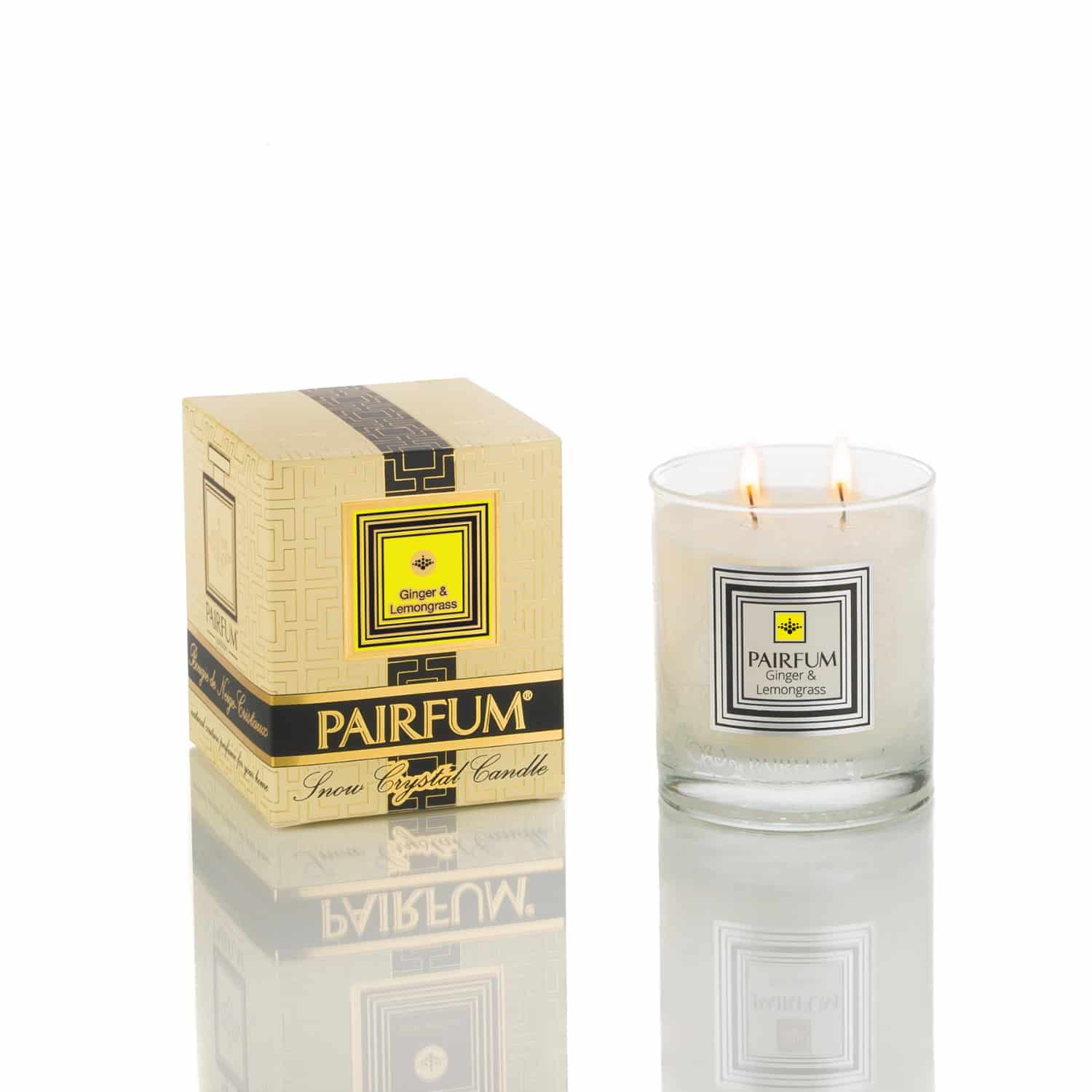
Snow Crystal Fragranced Candles Classic by Pairfum London
Snow Crystal is an Eau de Parfum candle, handmade and gift-wrapped by artisans in the UK. The wax is a natural stearin, the cotton wicks are free from metal filaments, and two wicks keep the surface burning evenly. Scent comes from essential oils, with 20 options including Pink Grapefruit and Black Orchid. The listed burn time runs to roughly 40 to 50 hours.
Elevate Your Evenings with Candles That Care for Your Air
Luxury at home usually means textures, colours and scent on first lighting. Yet the real test of a candle comes after two or three hours of burning, when the wax pool is deep and the room is full of its breath.
Clean burning candles respect that shared air. They still feel indulgent, still look beautiful and still perfume the room, but they do it gently and calmly. As the colder months arrive, notice which candles leave marks on glass, sting the eyes or feel cloying. That is the moment to rethink what counts as luxury on the mantelpiece.