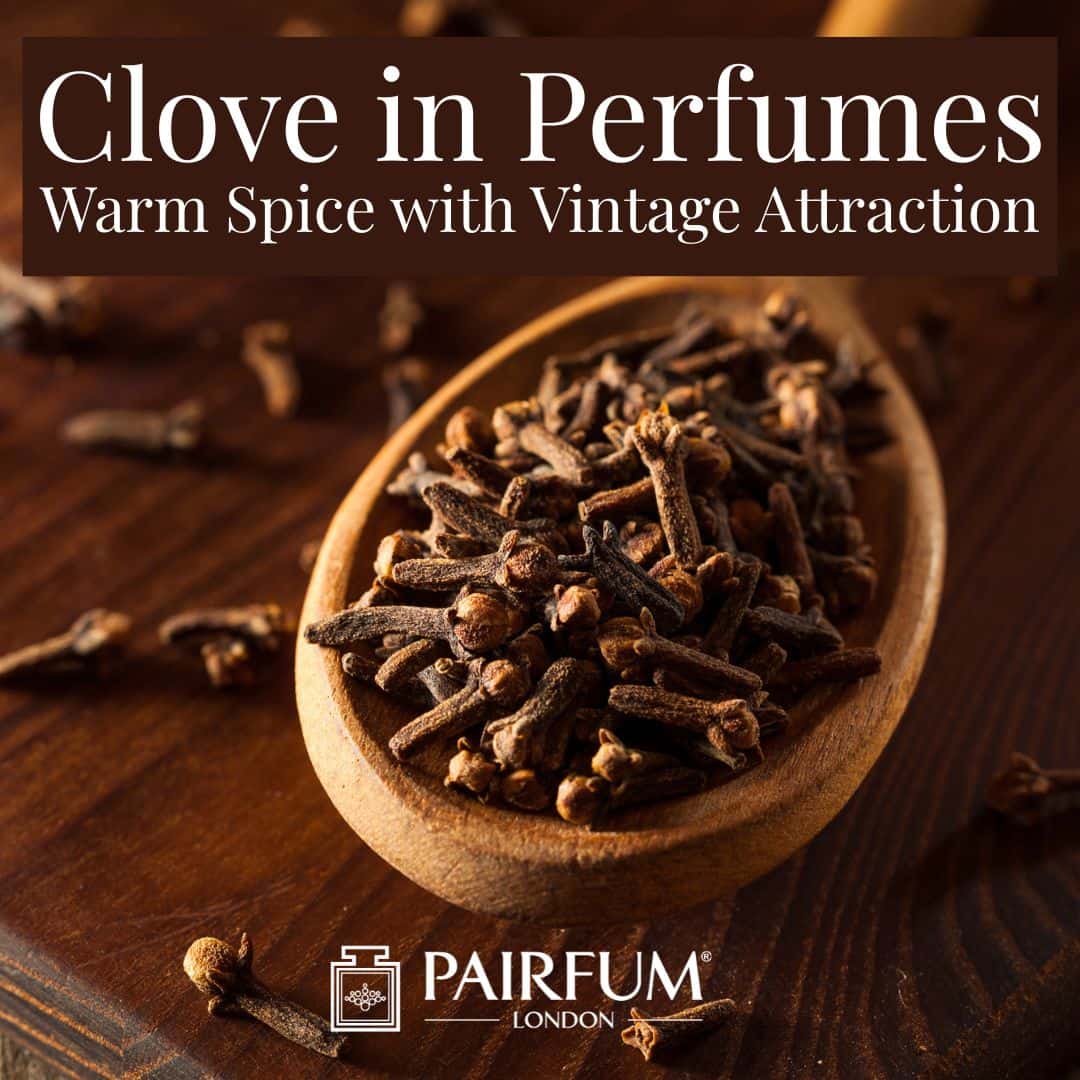
Clove in perfumery provides a potent, warm, spicy, and subtly sweet aroma, adding depth, richness, and an exotic touch. It is often used as a middle or base note to complement florals, woods, and other spices like cinnamon for cosy, amber, or festive scents, thanks to its key compound, eugenol, which mimics carnation or adds a fiery warmth.
Clove brings a warmth to perfume that many of us recognise straight away, even if we struggle to describe it clearly. There is comfort in clove, certainly, but also a slight edge that prevents it from feeling soft or obvious. The spicy warmth of clove tends to unfold slowly. It does not rush. It settles on the skin, then seems to wait there, sometimes noticed again later in the day. That quiet persistence is part of its appeal.
We often think of cloves first in a culinary sense, and that early association shapes expectations. In perfumery, however, clove behaves differently. It feels older somehow, and perhaps more reflective. As colder months arrive and the air changes, clove often feels particularly appropriate. Among spices, clove occupies a specific space. It is familiar, yet it rarely feels casual.
A Spice with a Story: The History of Clove in Perfume
Clove has been valued for centuries, long before modern fragrance existed as we know it. The dried flower bud of the clove tree, botanically classified as Syzygium aromaticum, was traded widely across early civilisations. From Southeast Asia, cloves travelled along established routes into the Middle East and onward to Europe. They were valued for flavour, yes, but also for scent, preservation and ritual activity.
The clove tree originates in the Maluku Islands, historically referred to as the Spice Islands. Control of cloves once shaped global trade in ways that are now easy to overlook. From those islands, cultivation spread to Sri Lanka, parts of Africa and eventually the Caribbean. Over time, cloves became part of daily life far beyond their place of origin.
In Middle English writing, clove appears as a word linked to shape, referencing its resemblance to a nail and the verb cleave. This detail is small, but revealing. It shows how present cloves were in everyday routines. Historical sources describe clove water used to scent fabrics and interiors, appreciated for a clean yet warming presence.

The Botany of Clove: From Flower Bud to Fragrance
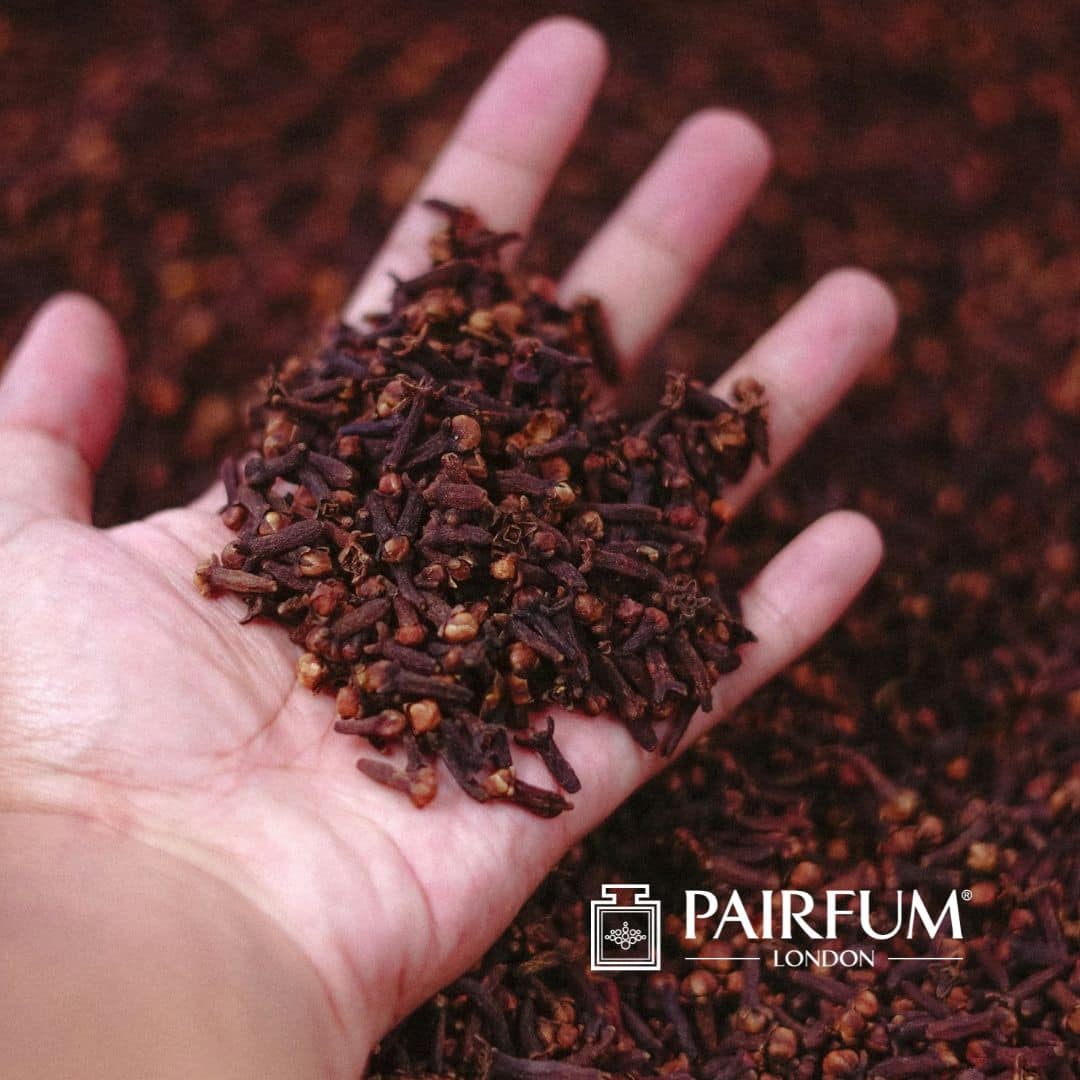
Cloves are harvested from the clove tree just before the flower buds open. These flower buds are picked by hand, at a moment that matters more than it sounds. They are then laid out to dry. As they dry, they darken and harden, becoming the familiar spice. Each dried flower bud carries a surprisingly concentrated aroma.
The botanical name Syzygium aromaticum appears alongside older references such as Eugenia caryophyllata, or the shortened S aromaticum. All describe the same plant, part of the myrtle family. Within the dried flower bud sits a complex mixture of compounds, most notably eugenol.
Alongside eugenol, smaller amounts of eugenol acetate and other elements contribute to aroma. These compounds do not behave identically in every harvest. Climate, soil and processing all play a role. This is why cloves from different regions can feel subtly different, even to an experienced nose.
Chemical Composition and Aroma Science
From a chemical perspective, clove is notable for its high eugenol content. In many cases, eugenol makes up more than half of the volatile oil. Eugenol has been widely examined for its aroma and biological activity. In fragrance, this activity contributes to warmth, diffusion and how long a scent remains noticeable.
Eugenol acetate plays a quieter role. It softens the sharper aspects of eugenol and introduces a smoother edge. Together, these compounds shape the overall effect of clove within a perfume structure. They also influence how clove interacts with other notes as time passes.
Because of this intensity, clove essential oil must be handled with care. As an essential oil with strong activity, even a small amount can have a pronounced effect, both aromatically and on the skin.
How Aroma is Captured: The Extraction of Clove in Perfumery
The aroma of clove is most commonly obtained through steam distillation. This produces clove oil from either clove buds or leaves. In fine fragrance, oil distilled from clove buds is generally preferred. Leaf oil is sharper and often used for more functional purposes.
In some cases, clove extract or isolated aroma components are used to ensure consistency. This gives perfumers greater control over how clove behaves within a blend. Both clove oil and clove essential oil are valued tools, though rarely used casually.
For topical use, clove oil is always diluted with a carrier oil. Undiluted topical clove oil has a well-documented activity on skin, and misuse can cause irritation.

Not All Cloves are the Same: Types and Perfume Profiles
Cloves vary according to origin, harvest timing and processing. These differences are not theoretical. They are noticeable.
- Clove buds tend to produce a rounded scent with warmth.
- Leaf oil often contains higher levels of eugenol and feels drier, sometimes medicinal.
In perfumery, these distinctions matter. Bud-based clove supports comforting compositions, while sharper forms add structure. Both have a place among spices used in fragrance creation.
Clove in Harmony: How Perfumers Blend with It
Clove blends with a wide range of materials, which explains its longevity in perfumery. It can support sweet accords as easily as dry ones. This flexibility is not accidental.
Vanilla, patchouli, sandalwood, rose, and jasmine are classic companions. In these blends, clove often sits in the heart, helping the fragrance move from top notes to base notes. Its activity helps hold the composition together.
Used lightly, clove adds depth. Used too heavily, the effect can become insistent. Balance matters more than strength.
Culinary Roots and Shared Sensory Memory
Cloves are deeply familiar through food. They appear in baked goods, pumpkin pie and festive desserts, and whole cloves are often pressed into baked ham. In savoury dishes, cloves are paired with garlic, rice and lentils, adding depth of flavour.
Ground clove appears in spice blends and are sometimes combined with poppy seeds and other spices. These shared experiences shape how clove is perceived in fragrance, whether we realise it or not.
The flavour of clove is intense. In both cooking and scent, restraint tends to work best.
Traditional Uses and Modern Understanding
Historically, clove has been associated with relief from toothache and pain, largely due to the numbing activity of eugenol. It has also been linked to digestion and digestive health in traditional practice.
Modern research, including work referenced by national institute bodies, explores clove in relation to infections, inflammation and blood clotting. These studies provide insight, but they are not medical advice.
Topical clove oil and clove oil cream should be used carefully. Misuse can lead to pain or irritation, particularly around the nail bed. Personal information should never be shared when discussing health-related use.
Language, Craft, and Curious Associations
The word clove appears in places far removed from fragrance. A clove hitch is a practical knot used in sailing and climbing, reflecting ideas of holding and securing.
The clove cigarette traditions found in parts of Southeast Asia offer another example of how cloves enter daily ritual. These associations add texture to clove’s identity beyond scent alone.

Perfumes That Stand the Test of Time: Iconic Uses of Clove
In classic perfumery, clove often played a structural role rather than a starring one. It added warmth and presence without sweetness.
Modern perfumers continue to rely on clove for similar reasons. It supports rather than dominates. As a versatile spice, it remains dependable.
Clove Notes in Personal & Home Fragrance with Pairfum London
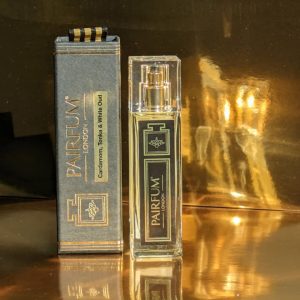
Cardamom, Tonka & White Oud – Eau de Parfum by Pairfum London
This intense, passionate scent opens with Lime and Mandarin, Cardamom, Nutmeg, Clove and subtle fruity notes of Cassis. The heart of this accord features spicy White Lily, Rose, and Orange Blossom, while a sensual base of Tonka, White Oud, Cedar, Santal, and Amber completes the creation.
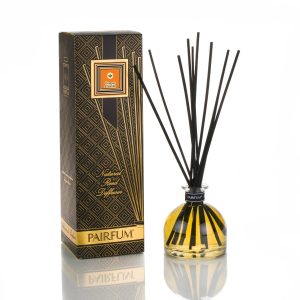
Rich Spices – Bell Shape Reed Diffuser by Pairfum London
This fragrant and spicy scent accord opens with notes of Pomegranate and Cranberry, before flowing into a warm heart of Chestnut, Nutmeg, Cinnamon and Clove, to finally settle on a base of Vanilla Pods and dried Figs, Dates and Persimmons.

The Quiet Fire of Clove: Why It Still Works Today
Clove continues to resonate because it connects scent with memory. From the dried flower bud of Syzygium aromaticum to refined essential oil, it carries history, chemistry and emotion.
The effect is rarely immediate. It unfolds, settles and stays. Among spices, clove remains compelling not because it demands attention, but because it rewards it.