Heliotrope is a sweet, powdery, floral scent recognised for its almond-like marzipan and soft vanilla aroma. Often described as creamy and comforting, heliotrope can remind people of cherry pie or delicate face powder, making it a popular powdery floral note in perfumery. The fragrance is usually recreated using the aroma molecule piperonal, also known as heliotropin.
Heliotrope brings something gentle yet memorable to perfume. Heliotrope smells like soft powder with a hint of sweet almond and warm vanilla. There’s a slight floral touch, but not in a bright or showy way. It is often described as a fragrant heliotrope accord, where the scent blends vanilla, almond and soft flower tones into something creamy and calm. It’s a cosy note that feels peaceful, especially during late winter when we start to crave comfort without anything too heavy.
This makes heliotrope a common favourite in both natural and niche perfumes. While some florals feel loud or sticky, heliotrope leans quiet and soft. Its powdery edge adds a smooth finish to a perfume, while its sweet core blends easily with other notes. When we’re searching for something warm enough for February but fresh enough to carry into spring, heliotrope holds a lovely middle ground.
A Soft Touch: Heliotrope’s History in Perfume
Heliotrope has been used in perfumery for generations. Long before heliotrope appeared in modern perfumes, people recognised the scent of this delicate flower. The heliotrope flower gives off an aroma reminiscent of vanilla, almonds and soft spring air. In early blends, this flowering plant was part of herbal remedies and body waters thought to calm the mind.
The name heliotrope has roots in Middle English and older Greek, referring to a plant that turns towards the sun. This reflects a real botanical trait, as heliotrope flowers are known to follow sunlight throughout the day.
Native to South America, heliotropium arborescens became widely admired for both its scent and ornamental value. In Victorian times, heliotrope flowers symbolised devotion and quiet charm. The powdery scent became linked to elegance, giving heliotrope a place in creams and early perfumes.
Today, heliotrope continues to appear in modern compositions. Perfumers return to heliotrope when they want softness and balance.

Heliotrope Varieties and Their Aromatic Nuance
When we describe heliotrope, we often refer to accords inspired by heliotropium arborescens rather than direct extraction. The heliotrope plant itself produces very little oil, yet its scent has become iconic.
Different interpretations of heliotrope can feel:
- Creamy with vanilla and almond
- Slightly dry with woody notes
- Softly floral when paired with other flower accords
The heliotrope plant, especially common heliotrope, offers a gentle profile that adapts easily. Some heliotrope perfumes feel warm and enveloping, while others stay light and airy.
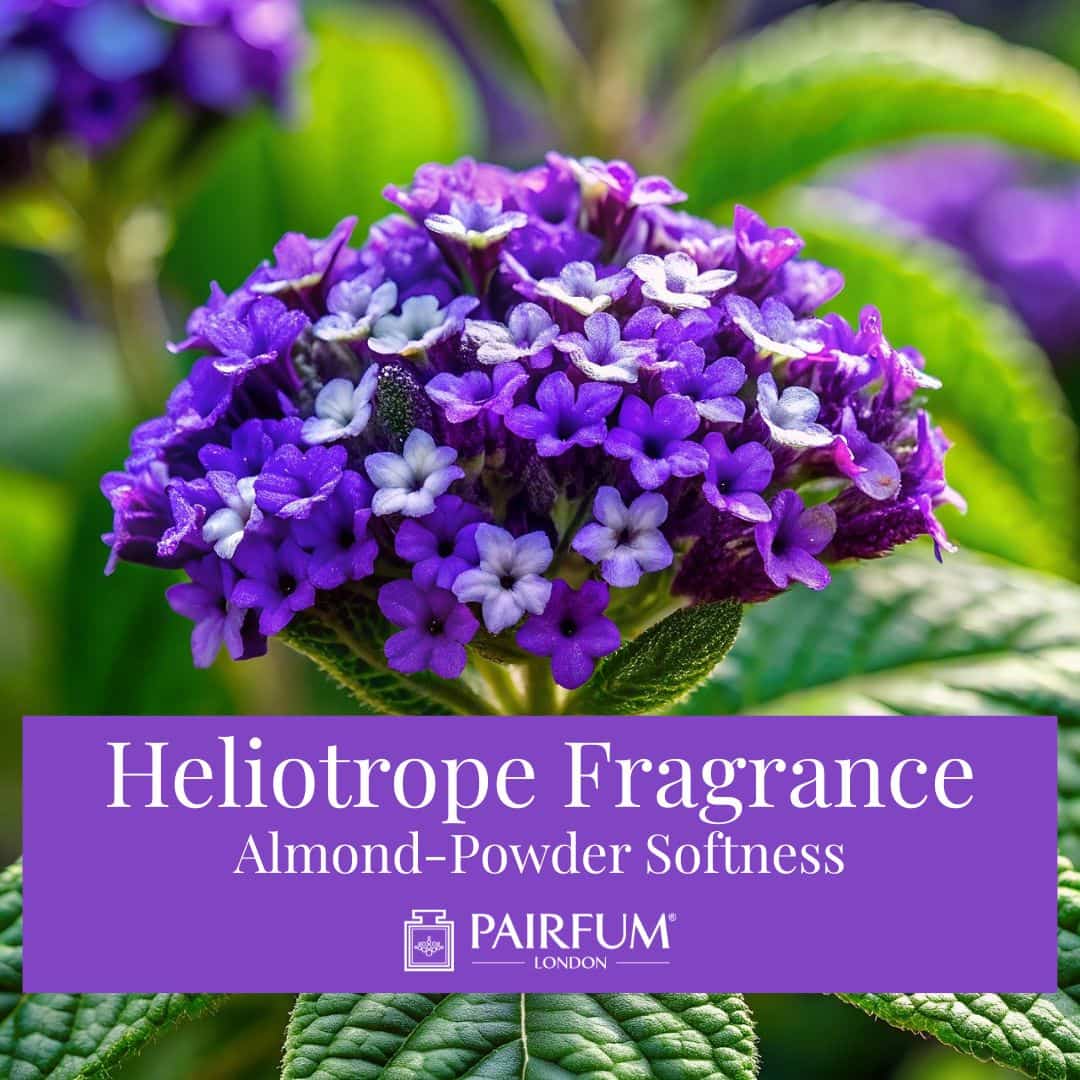
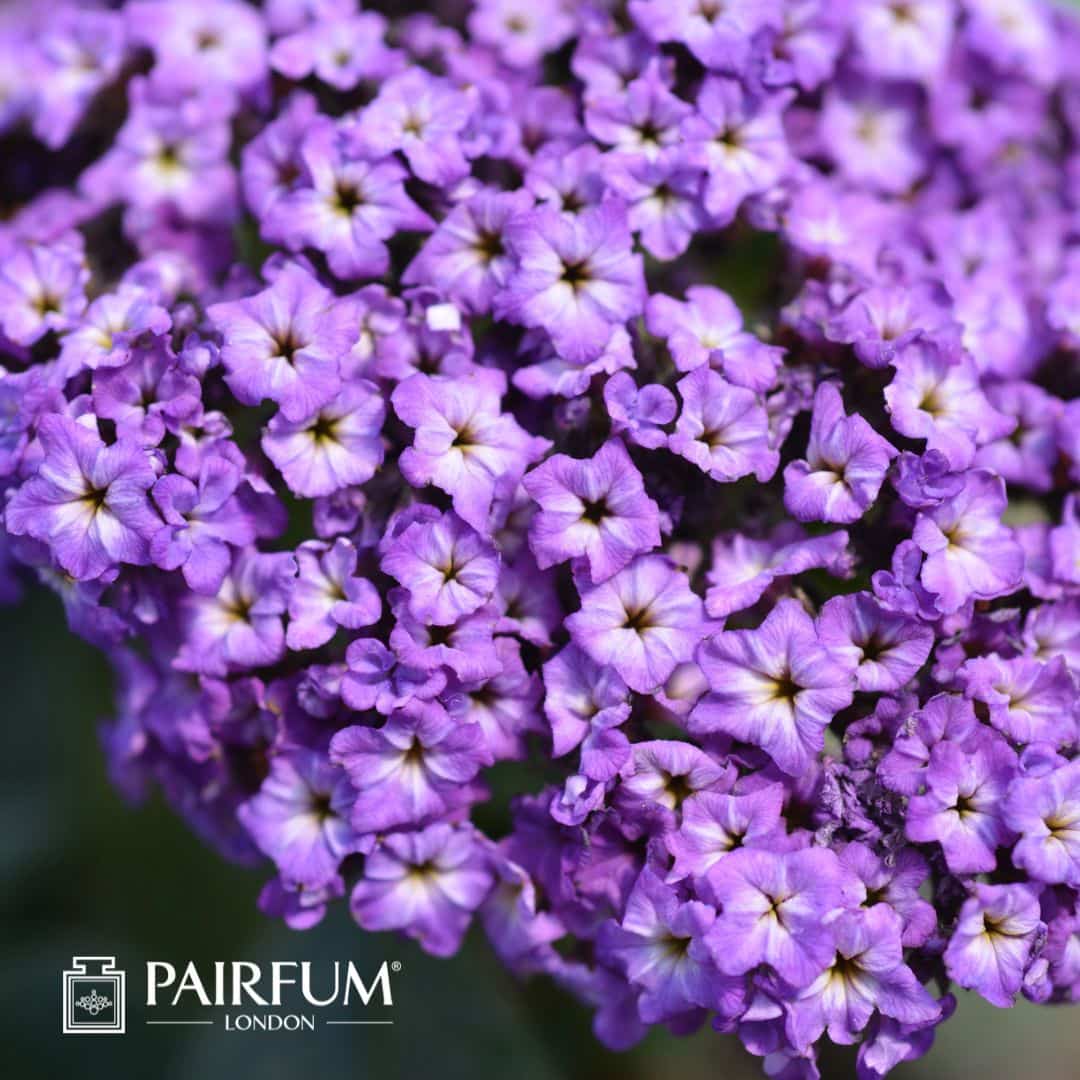
Botanically, heliotropium arborescens is a flowering plant with clusters of small, often purple or blue blooms and soft green leaves. These heliotrope plants are known for their dense clusters of scented flowers that appear throughout summer.
How Heliotrope Is Extracted and Used
Because the heliotrope flower yields little natural oil, heliotrope in perfumery is usually recreated. A key material is heliotropin, which captures the essence of heliotrope with its blend of vanilla sweetness and almond softness.
Heliotrope sits comfortably in the heart of a fragrance. It connects brighter top notes with deeper base notes. Heliotrope works particularly well with vanilla, musks and soft woods.
Even when subtle, heliotrope plays an important role. Without heliotrope, many blends would lose their smooth and comforting quality.

Heliotrope in the Garden: From Soil to Scent
Beyond perfumery, the heliotrope plant is a favourite in gardens. Garden heliotrope is valued for its fragrant heliotrope clusters and ease of care. Many gardeners grow heliotrope for both its scent and its ability to attract pollinators such as bees and butterflies.
Heliotrope is especially appreciated in wildlife friendly spaces, as its flowers provide nectar and pollen for bees and other pollinators.
Growing heliotrope successfully depends on the right soil and conditions. Well drained soil enriched with compost helps the plant thrive. The soil should retain some moisture while still allowing excess water to drain away, as heliotrope does not tolerate waterlogged conditions.
Heliotrope plants prefer direct sunlight, though they can tolerate partial shade, particularly in warmer climates. In the UK, heliotrope is usually grown as a tender plant because frost can damage it. In fact, outside its native South America, heliotrope is often treated as an annual due to its sensitivity to frost.
You can grow heliotrope in borders or as container plants. Using a container or pots allows better control over soil and placement. Hanging baskets are also popular for heliotrope plants, where their trailing habit can be appreciated.
Growing Heliotrope at Home
For those interested in growing heliotrope, it is worth understanding its seasonal habits. Heliotrope thrives in summer, producing clusters of small flowers that create a continuous bloom effect when well maintained.
To grow heliotrope:
- Start with a healthy seed or young plant
- Use fertile soil mixed with compost
- Place in a sunny spot with some shelter from strong winds
- Water regularly to maintain steady moisture
Heliotrope can also be grown indoors, especially in cooler climates. Indoors, position the plant where it can receive direct sunlight for several hours each day.
Propagation can be done by seed or by cuttings taken in summer. Seeds are often started indoors before the last frost to give the plant time to develop before planting outside.
Heliotrope is often listed among RHS plants suitable for seasonal displays. Some varieties have even received recognition for garden performance, reflecting their reliability and ornamental appeal.

Care and Challenges of Heliotrope Plants
Like many plants, heliotrope requires care to stay healthy. Watch for issues such as powdery mildew or spider mites, especially in warm or enclosed environments.
Good air circulation and careful watering can help prevent powdery mildew. Spider mites may appear on the leaves if conditions are too dry.
Heliotrope plants should be watered regularly, but care should be taken not to overwater. Consistent moisture is important, though excess water can damage roots.
Because heliotropium arborescens is not frost hardy, it is important to protect plants during colder months. Bringing container plants indoors before frost is often the best solution.
In warmer regions, heliotrope may behave like temperate perennials. In the UK, it is more commonly grown as an annual due to frost sensitivity.
Design Uses and Planting Ideas
Heliotrope is a versatile plant in garden design. It works well in borders, cottage gardens and patio displays. Its compact growth and strong scent make it ideal for container planting.
Heliotrope is often planted in groups to create impact, or used as edging along paths where its scent can be enjoyed up close. It also performs well in hanging baskets and mixed container arrangements.
In summer planting schemes, heliotrope pairs well with other flowering plants. Its rich scent complements visual colour, adding another layer to the garden experience.
Because heliotrope flowers are highly attractive to butterflies and bees, it is often included in wildlife friendly planting designs.
Heliotrope and the Language of Scent
Heliotrope carries a distinctive scent that many people recognise instantly. The combination of vanilla, almond and soft floral notes makes heliotrope both comforting and familiar.
Interestingly, heliotrope has also been linked to folklore. In some traditions, the plant was associated with protection and even connected symbolically to bloodstone.
The scent of heliotrope is not overpowering. Instead, heliotrope offers a quiet presence that enhances other notes.
Why Heliotrope Feels Just Right in Early May
Early May brings a different kind of shift. Spring is in full flow, yet there can still be a trace of cool air, especially in the morning and evening. Heliotrope suits this moment well, offering a soft balance between gentle warmth and light freshness. It feels like a natural companion as spring moves towards early summer.
Heliotrope blends easily with musks, woods and amber. This versatility allows heliotrope to adapt to the changing season, sitting comfortably between brighter spring florals and the deeper tones we leave behind from winter.
There is also a sense of familiarity in heliotrope. Whether it brings to mind powder, vanilla desserts or soft fabric, heliotrope continues to demonstrate it is one of the proven winners when it comes to creating a feeling of comfort while the season settles into its warmer rhythm.
Quiet Confidence: The Staying Power of Heliotrope
Heliotrope has never needed to be loud. Its strength lies in subtlety. Heliotrope adds elegance without overwhelming the senses.
From garden heliotrope displays to perfume compositions, this plant continues to charm. Whether grown in soil outdoors, placed in pots, or kept indoors, heliotrope remains versatile.
As spring approaches and summer follows, heliotrope continues to bridge seasons. It connects the richness of winter with the brightness of warmer days.

Iconic Uses of Heliotrope in Natural and Niche Perfumes
We often use heliotrope alongside other soft notes to build calming perfumes. Heliotrope pairs beautifully with vanilla, tonka bean and violet.
In home fragrances, heliotrope adds warmth without heaviness. The scent feels clean yet comforting.
In niche perfumery, heliotrope softens stronger accords such as leather or spice. This makes heliotrope valuable in complex blends.
Guerlain L’Heure Bleue Eau de Parfum (Guerlain) – A classic composition where heliotrope adds a soft, powdery sweetness alongside vanilla and iris, creating a nostalgic and elegant scent.
Etro Heliotrope Eau de Toilette (Etro) – A more modern interpretation that places heliotrope at the centre, with almond and vanilla notes giving it a creamy, comforting feel.
Serge Lutens Rahat Loukoum Eau de Parfum (Serge Lutens) – A rich gourmand fragrance where heliotrope blends with rose, sugar and vanilla to evoke the scent of sweet Turkish delight.
Heliotrope Notes in Signature Home Fragrances by Pairfum London
Anise & Black Vanilla – Large Snow Perfumed Candle by Pairfum London
This soft and elegant ‘Noir’ fragrance begins with notes of anise and liquorice, bringing a subtle sense of intrigue. At its heart, heliotrope reveals its gentle vanilla and almond character, layered with powdery violet. A base of sandalwood and amber provides a warm and lasting finish.
Final Thoughts
Heliotrope stands apart as both a botanical subject and a fragrance note. From heliotropium arborescens in South America to modern perfume labs, heliotrope has travelled far.
Whether you are interested in growing heliotrope, exploring heliotrope plants in the garden, or appreciating the scent of heliotrope in perfumery, there is always more to discover in related articles on our website.