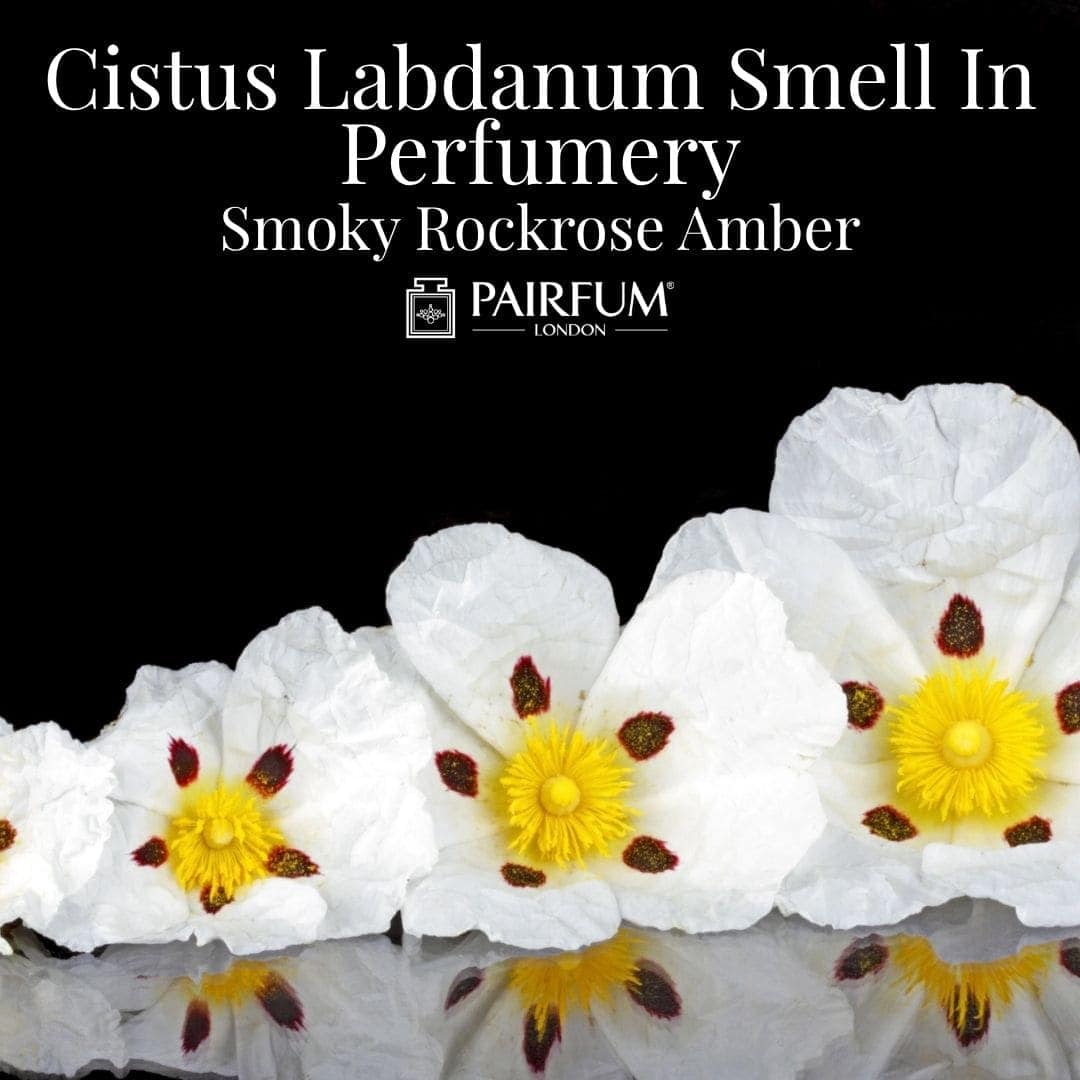
Cistus labdanum (rockrose) has a complex, warm, and tenacious scent profile, often described as a blend of balsamic amber, rich leather, and honey-like sweetness. Extracted from the labdanum resin of the cistus shrub, it offers woody, smoky, and slightly animalic undertones that serve as a natural fixative in fine perfumes.
Cistus Labdanum carries a smoky, earthy tone that fits perfectly as winter gives way to spring. This natural resin, drawn from a plant known as rockrose, has an aroma that feels warm, deep, and grounded. For centuries, it has been used in rituals and ceremonies, adding richness to the air and early fragrance blends. Often called the champion of perfume, it remains a cornerstone of the industry due to its incredible versatility and animalic allure.
Today, it still holds a place in perfumery, especially in compositions that want to feel grounded, soothing, or quietly luxurious. We often turn to it in both niche perfume and natural blends for its smooth amber style with gentle smoky edges. Here is how we think about it, where it starts, what makes it special, and how it is used by perfumers today.
The Origins of Cistus Labdanum
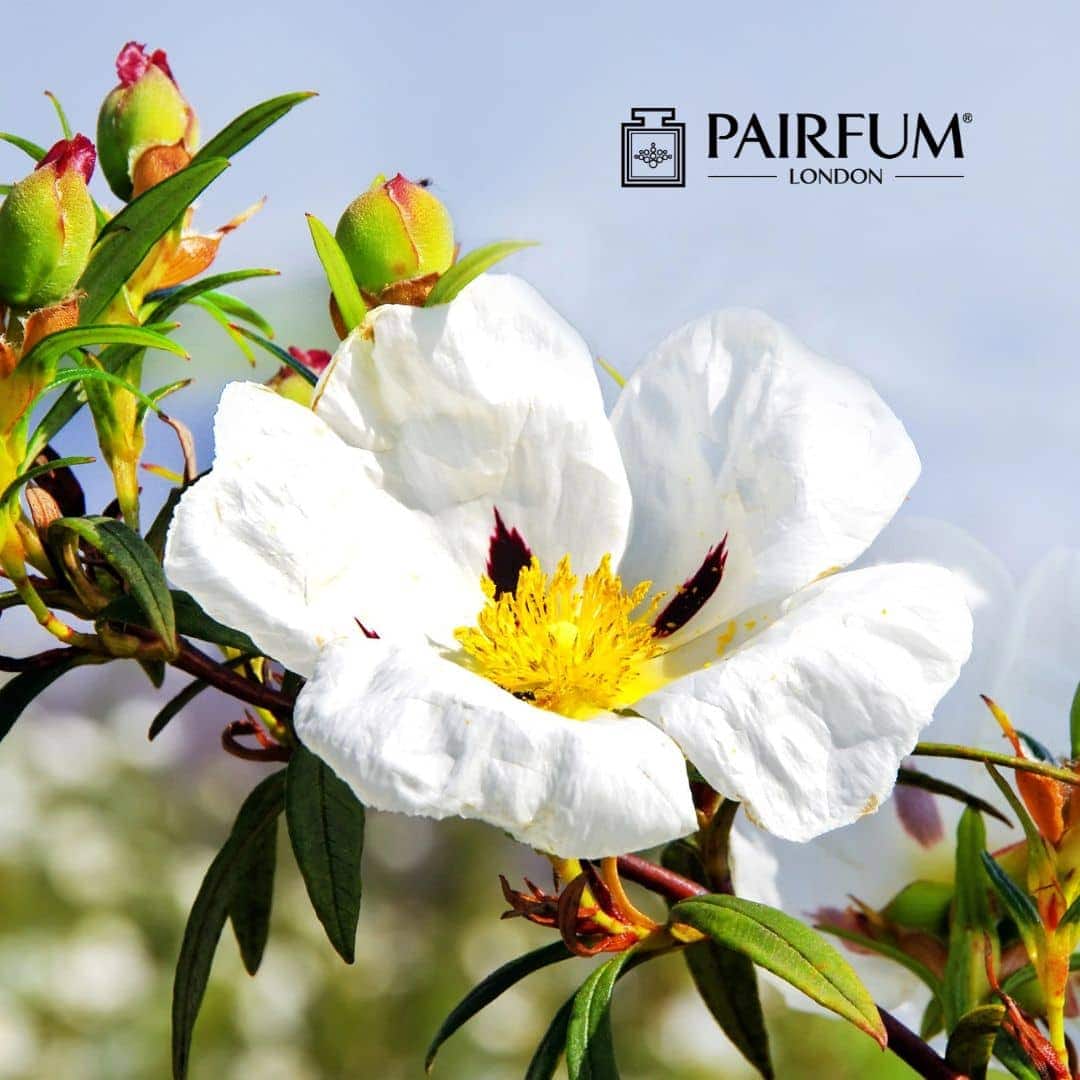
Cistus Labdanum comes from the leaves and twigs of the Cistus ladanifer plant, which grows around the Mediterranean. This hardy, evergreen shrub is not flashy, but it produces a thick, sticky brown resin that was treasured in ancient times for more than just its fragrance. The plant thrives in dry, nutrient-poor soil and is known for its five fragile white petals that resemble crepe paper, often marked with deep maroon spots at the base.
In early Mediterranean cultures, labdanum resin was collected using wool or leather combed through the plants. Historically, it is said that goats and sheep would wander through the cistus scrub, and the fragrant resin would stick to their coats and beards, only to be scraped off later by shepherds. In Ancient Egypt, this was so highly valued that pharaohs reportedly wore false beards made of goat hair soaked in the resin. Later, the labdanum gum was used in religious ceremonies or burned as incense. It was believed to have healing powers and was even utilised in herbal medicine to treat various ailments such as colds, coughs, and rheumatism.
The plant itself is often called rock rose, but Cistus Labdanum refers to the rich resin that seeps from it. That is the part used in perfumes. The botanical name is Cistus ladanifer, though you might sometimes see it referred to as Cistus ladaniferus or Cistus creticus, depending on the specific subspecies found across the Western Mediterranean, North Africa, and parts of the Middle East. The name Cistus actually stems from the Greek word kistos, the original name for the shrub in antiquity.
Perfumers from long ago liked cistus for its bold, smoky character. It easily blends with other materials used in spiritual oils and incense sticks, which gives it a strong link to both tradition and warmth.
Extraction: Transforming Raw Material into Liquid Gold
Collecting labdanum resin can be a slow and careful process. Traditionally, branches were brushed with leather or wool, trapping the sticky brown resin. After drying, the resin was scraped off and shaped by hand. Even with fewer machines, the result smelled remarkably full and warm. Modern producers in countries like Spain and Morocco still use traditional rakes called Ladanisterion to collect the gum during the peak heat of summer.
Modern extraction uses a few different methods to turn the raw material into a usable extract:
- Steam distillation is a common approach. By turning the plant oil into steam and then cooling it, we can gather cistus essential oil. This extraction method results in a soft, more subtle version of the resin with fruity and balsamic overtones.
- Solvent extraction gets a deeper, stickier result, known as labdanum absolute. This absolute is full of that smoky amber character. It can make the fragrance richer but might feel heavier.
- In natural perfumery, many prefer clean, pure labdanum essential oil gathered without added chemicals. They keep the true depth of the cistus plant without the harshness.
Each extraction method gives slightly different outcomes. While cistus oil is often distilled from the leaves and twigs to create a lighter, more herbal scent, labdanum refers specifically to the products derived from the gum resin itself. This distinction is vital for perfumers looking to balance the bright, sharp top notes of a fragrance with a deep, heavy base. The labdanum absolute is particularly prized for its ability to mimic the scent of ambergris, a rare animal-derived ingredient once sourced from whales. By using cistus, perfumers can achieve that oceanic, salty, and sweet warmth ethically.
A Deep Amber Touch: Uses in Fine Fragrance
In a finished perfume, cistus often appears in the base or heart. That is where the long-lasting, grounding notes usually go. Cistus ladanifer excels here because of its natural depth and presence. It acts as a superb fixative, slowing the evaporation of lighter notes and helping the scent stay on the wearer for longer.
It pairs beautifully with other strong oils like patchouli, frankincense, myrrh, and even sweet notes like vanilla. This helps round out sharp edges and create a warm, inviting finish. In fact, if you blend cistus ladaniferus with a carrier oil, you can begin to see how it anchors more volatile scents. While most oils like citrus evaporate quickly, labdanum resin stays at room temperature and lingers on the skin for a significant amount of time.
In chypre fragrances, cistus holds everything together. This fragrance family was pioneered by Francois Coty in 1917 and relies on the contrast between citrus and a mossy, resinous base. These blends often include citrus, moss, and woods, and labdanum resin anchors the mix with softness and smoke. Amber perfumes would not be the same without it. Cistus labdanum can give amber blends their signature richness that lingers on the skin for hours.
We keep coming back to cistus because it fills in gaps. It deepens sweet perfumes without making them too heavy and gives woody or earthy perfumes something almost soft at their centre. Whether used as an essential oil or a concentrated absolute, it provides hints of complexity that are hard to replicate.
Cistus Labdanum Across the Senses: Character and Mood
The aura of cistus labdanum is hard to miss. It is warm, heavy, a bit leathery, and sometimes slightly sweet or smoky depending on how it is used. This gives it a strong emotional edge as well.
- Grounding: It feels steady without being too dry. People often call it relaxing or meditative, as it brings a calm that does not demand too much attention.
- Versatility: It shows up often in masculine or unisex perfumes, especially when the goal is to create strength without being too crisp or sharp. It has a balsamic, almost tobacco-like quality that adds sophistication.
- Skincare: Beyond scent, cistus is often found in products for mature skin. When diluted in carrier oils, the essential oil is thought to have astringent and toning properties, often used in anti-ageing formulations.
- Seasonal: As cold seasons linger in late winter or early spring, cistus suits the moment. It adds comfort, like a warm wool jumper or a mug of spiced tea.
It does not stand out the way florals or fruits do, but it adds body and warmth to almost anything it touches. That is why it is so loved in perfumery: it never tries to steal the show, but it holds everything together. Even in the culinary world, one might find hints of similar earthy complexity in ingredients like boletus edulis, though cistus remains firmly rooted in the world of scent.
Iconic Perfumes Featuring Smoky Cistus Labdanum
Some well-known perfumes feature cistus labdanum as a key note, and they have helped keep it in the mix for many years now. You will usually find it near the base, bringing structure and warmth to the final fragrance. It is the secret ingredient in many legendary classics, providing a sense of weight and history.
It often appears in niche perfumes that want to feel rooted in traditional materials. The resin balances out brighter tones like citrus or spice, keeping things from feeling too sharp or dry. Whether the bottle is sold in the United Kingdom, the United States, or anywhere else in the world, the pickup availability of these cistus heavy scents remains high because of their timeless appeal.
Each perfume brings out different parts of the cistus ladanifer plant. Some pull forward the leathery parts, others highlight the ambergris style, and some let the smoky depth of the labdanum absolute do the talking. It is often described as the heartbeat of a fragrance, providing the rhythm that allows other notes to dance.
The way labdanum resin holds a fragrance together makes it a favourite in blends built to last. It gives the perfume a longer finish on the skin, which people often notice even if they cannot quite name it.
Signature Labdanum Notes with Pairfum London Home Fragrances
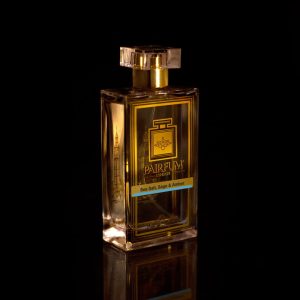
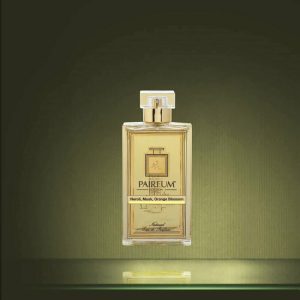
Cognac & Vanilla – Flacon Perfume Room Spray by Pairfum London
The aroma worthy of a Connoisseur: Sherry Aged Oak, rich Bourbon Vanilla, Golden Cognac, Caribbean Patchouli, Amber Benzoin and Ancient Labdanum.
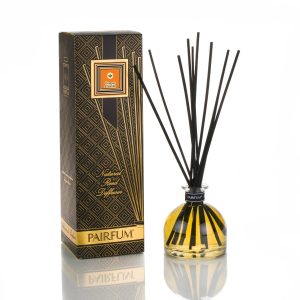
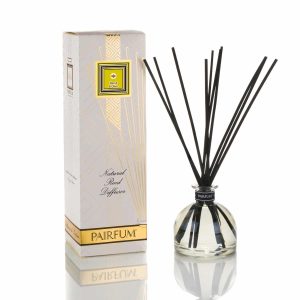
White Sandalwood – Classic Tower Reed Diffuser by Pairfum London
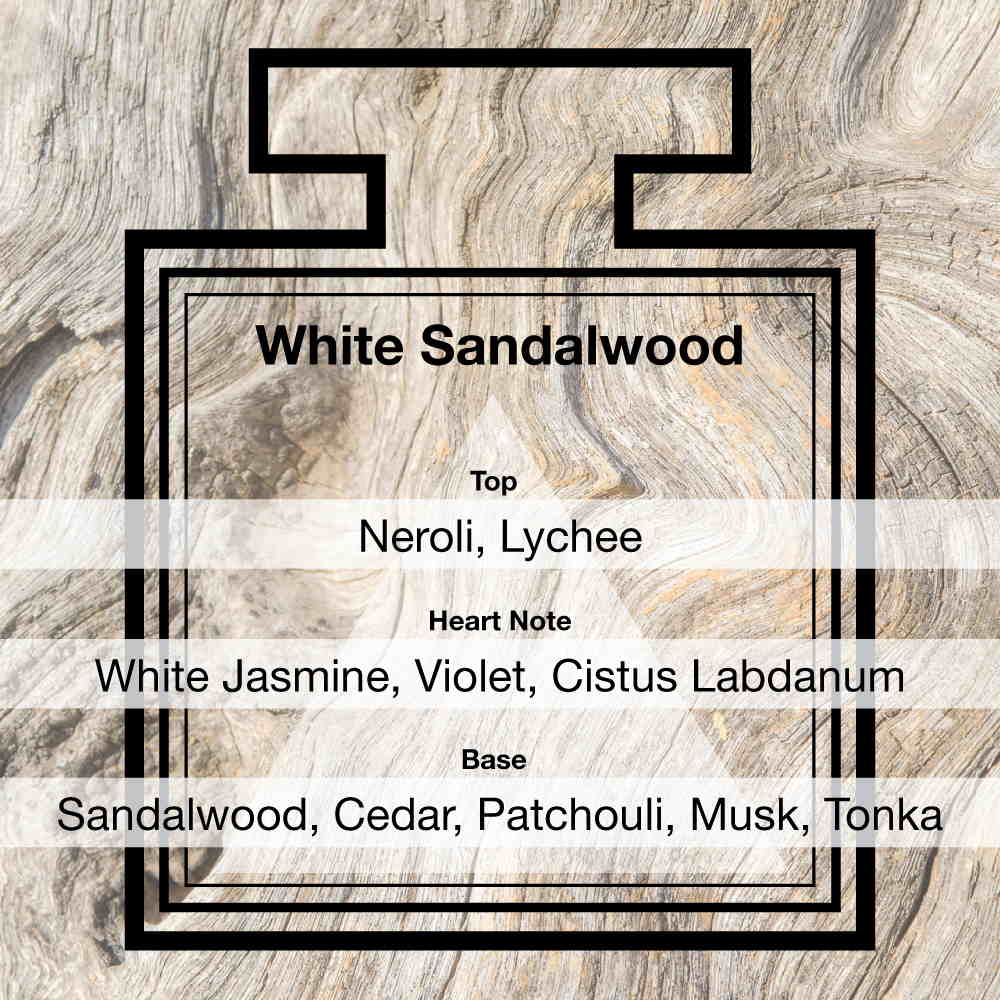
A Creamy Sandalwood accord with a hint of Chypre. It includes top notes of Neroli and Lychee, a floral heart of White Jasmine, Violet and Cistus Labdanum, and a base of sun-bleached Cedar, Patchouli, Musk and Tonka Bean.

Conclusion
Cistus labdanum is one of those rare perfume notes that feels current while carrying deep roots in history. Its amber-like, smoky tone fits perfectly in this nearly spring season, when we want scents that are smooth but still comforting.
Because cistus is a natural resin, its quality can vary based on the soil and sun of the Mediterranean. Perfumers must be experts in selecting the right labdanum absolute to ensure consistency. This raw material is more than just a scent; it is a bridge between the ancient world of burning incense and the modern world of high-end perfumery.
Experience the timeless allure of cistus labdanum. Its smoky, amber warmth adds a unique touch to every scent, making it a staple in any fragrance collection. Let this enduring note transform your journey with its comforting depth and sophisticated charm. Discover the art of scent that balances tradition with modern elegance.