Home / Evergreen / Page 7
Pink Lavender In Perfumes

Pink Lavender In Perfumes: A Soft Floral Twist On Aromatic Calm

Pink lavender refers to specific varieties of the herb plant, primarily English lavender (Lavandula angustifolia), which produce soft, rose pink flowers instead of the standard purple. These plants offer a gentler flower colour for gardens while keeping that classic fragrance and ease of care. Widely known cultivars feature lavender rosea (sometimes called Jean Davis), loddon pink, and the more recent beezee pink, which are famous for attracting pollinators. They thrive in sunny, well-drained conditions, which makes them ideal choices for borders, pots, and traditional cottage gardens.

Not all floral notes need to shout to be heard. Some are soft, steady, and offer their own kind of calm. That is where pink lavender comes in. It brings a gentle, dreamy feel to perfumes, like a warm whisper in a quiet room. You might know lavender as sharp and herbal, but pink lavender is softer. It has a light floral quality that still holds your interest without taking over the whole fragrance. In the world of perfumery, where heavy ouds and sharp citruses often dominate the conversation, this subtle botanical offers a much-needed pause.

At first, this note was better known for the lovely pale blooms in garden borders. But over time, its subtle presence began to catch the eye of perfumers looking for something less expected. Around winter, when the days grow quiet and the air turns cool, adding a light floral note like pink lavender can be a welcome shift. It does not fight the season; it softens it. For the reader who is keen to understand how a scent is constructed, it is helpful to think of this ingredient as the velvet lining of a winter coat. It provides comfort and a layer of sophistication that is felt rather than announced.

The Origins of Pink Lavender

Pink lavender comes from a type of garden lavender bred to produce blush-tinted flowers. It is a hybrid, usually blending the tougher English lavender with varieties that offer less colour but a softer aroma. The name, quite simply, comes from the flower colour. While most people immediately picture a deep violet field when they think of this plant, the pink variations have a history that is just as rich. Cultivars such as lavender rosea have been cherished for decades, particularly in traditional British gardens where they provide a contrast to the more common purple hues.

What makes it different is how toned down it feels. Where typical lavender might feel brisk or a bit overgrown, pink lavender carries a rounded, almost airy feel. There is less of that green edge and more of a fresh floral lift. This softer aroma has helped pink lavender find its way into more refined, niche fragrances where balance matters. Historically, these plants were often overlooked by commercial growers who wanted the most vibrant pigments for visual impact. However, the perfume industry began to realise that what the plant lacked in saturated colour, it more than made up for in its delicate balsamic sweetness. It started gaining attention quietly, mostly in small batches and carefully composed oils. Those looking for gentle touches or wanting to stay away from bold florals would turn to it. Over time, it earned a place in perfumes that needed poise over power.

Fragrance Description Pink Lavender Tangerine Mint Rose Amber

Understanding the Lavender Plant Species

To appreciate the oil, one must understand the plant. While Lavandula angustifolia is the most famous species for fine perfumery, there are many perennial plants in this family. For instance, French lavender and Spanish lavender (known as lavandula stoechas) offer a more camphorous scent that can sometimes feel medicinal. In contrast, angustifolia varieties like the compact hidcote pink provide the delicate pale pink flowers that perfumers crave. If you view illustrations of these lavender plants, you will notice the foliage is often a silvery grey or grey green, which beautifully sets off the pink flowers.

Unlike the common varieties, pink lavender cultivars such as Beezee Pink have a unique flowering time. They often begin flowering in late spring and continue through late summer. This long flowering period makes them a favourite garden plant for those wanting to attract bees and butterflies. When you look closely at the botanical structure of Lavandula angustifolia, you see that the oil glands are located at the base of the tiny florets. In pink varieties, these glands often produce a scent that is less about the punchy camphor and more about a honeyed, hay like sweetness. This makes the lavender plant a versatile tool for the fragrance house.

Botanical Characteristics and Growth

When choosing a lavender plant, plant size and pot size are important. Most pink English lavender varieties function as a small shrub, staying neat in pots or borders. They are drought-tolerant once established, though they dislike partial shade, preferring full sun to develop their aromatic oils. If you view illustrations of a mature Rosea or Loddon Pink, you will see a bushy habit that reaches about sixty centimetres in height. These plants are exceptionally hardy, often rated as H5 by experts, meaning they can survive the harsh UK winters if they are kept in well-drained soil.

For those who study rhs plants, it is clear that the herb plant is versatile. It is not a tree, but a hardy shrub that maintains its foliage through much of the year. Whether you grow garden plants for a cut flower arrangement or for oil extraction, the angustifolia species remains the gold standard. To ensure the best fragrance, growers often avoid over fertilising, as lean soil actually encourages the plant to produce more essential oil. This is a fascinating paradox of nature where a bit of struggle results in a more beautiful scent.

Practical Cultivation for Scent Enthusiasts

If you wish to grow your own lavender plants, you can view illustrations of successful herb gardens for inspiration. Placing lavender in pots near a doorway allows the foliage to release its scent as you brush past. Because pink lavender is a hardy plant, it can survive the winter in many climates, provided the pots have good drainage. To keep the scent profile fresh, it is recommended to prune the plants every year in late summer once the flowers have faded. This prevents the wood from becoming leggy and ensures a flush of new growth the following year.

Watching the flowering process from late spring through the summer provides a visual reminder of the fragrance you enjoy in your bottles. The flowers can even be dried and used as cut flowers to scent your home, echoing the notes of your favourite lavender perfume. For those with limited space, keeping smaller varieties in pots on a sunny windowsill is a great way to enjoy the plant year round. It is a rewarding experience to see the lifecycle of the ingredient that eventually ends up in a sophisticated glass bottle on your dressing table.

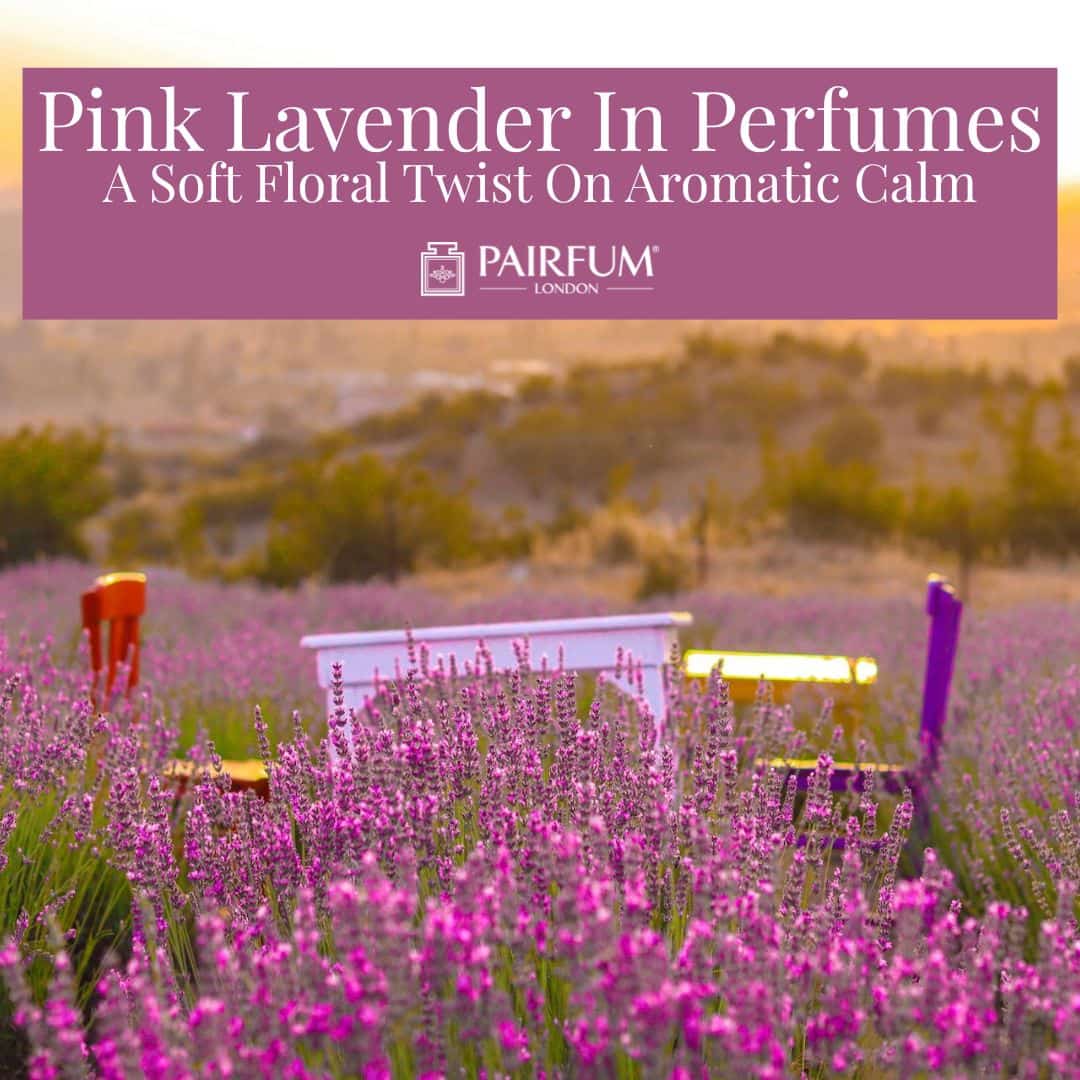
Pink Lavender Growing

How Pink Lavender Is Used in Perfume

Perfumers often look for ways to bridge sharp top notes and heavier bases. Pink lavender fits right in the middle. It works best as a heart note, tying everything together with ease. It is particularly adept at softening the transition from a bright citrus opening to a deep, resinous finish.

  • It blends well with powdery florals, soft woods, and gentle musks.
  • It adds roundness to citrus or herbal openings.
  • It smooths stronger base notes like amber or tonka.

What is pleasing about pink lavender is that it does not lean overly sweet or too green. It walks the line, offering peace and structure in a fragrance without drawing too much attention to itself. For winter focused perfumes, it can bring a sense of hush and space. It adds a floral softness that does not feel out of place on chilly days but adds warmth when the rest of the bouquet might feel cool or crisp. In many ways, it acts like a mediator, ensuring that no single note becomes too aggressive or jarring.

How the Essence Is Extracted

The most common method of capturing the aroma of pink lavender is steam distillation. This process involves passing steam through the freshly picked flowering tops of the plant and collecting the aromatic oil. It is a delicate science that requires a deep understanding of temperature and pressure.

Here are a few points about its extraction:

  • The oil tends to be lighter and more delicate than classic lavender.
  • Perfumers often add supporting notes to protect its soft profile.
  • Organic variations like weather or soil can make each batch slightly different.

Its gentler aroma means precision matters. Too much heat, and you lose the fragile top layer. Too little, and the oil will not hold. So craft and climate both influence how the final essence turns out. The resulting oil is often described as having a pear like or balsamic quality, which is quite distinct from the sharper, more medicinal oil produced by some of the more common varieties. This unique chemical fingerprint is what makes pink lavender a prized possession for niche perfumers.

Comparison of Lavender Varieties in Perfumery

When comparing varieties for use in scents, English lavender is prized for its sweet, clean, and traditionally floral profile, making it a staple for both fine fragrance and high-quality cut flowers. It is the classic scent that many associate with clean linen and tranquil afternoons. In contrast, pink lavender offers a much softer, powdery, and almost balsamic experience, which is why it is so highly valued for heart notes in niche perfumery. It lacks the sharp, camphoraceous hit that can sometimes make people shy away from traditional scents.

Meanwhile, Spanish lavender tends toward a more medicinal scent with notes of camphor and pine, often making it more suitable for soaps and aromatherapy than for delicate personal fragrances. When you look at the angustifolia species, the sky blue or purple types are common, but the bright pink flowers of certain hybrids offer a more sophisticated product description for high-end scents. This distinction in flower colour and scent depth is what allows a perfumer to create a specific mood, moving away from the expected and into the realm of the extraordinary.

Why Pink Lavender Feels Right for Winter Calm

December days often feel colder, not just in the weather, but in pace. This makes it a natural time to reach for perfume notes that help slow things down. Pink lavender feels made for this. It does not add loud colour, it softens the edges and makes space for peace. It is the olfactory equivalent of a soft cashmere scarf or the glow of a candle in a dim room.

Here is why it works so well for winter:

  • It balances sharper cold weather spices with a quieter floral tone.
  • Its aroma adds just enough warmth, without leaning into sweetness.
  • On skin, it creates a graceful aura that stays close rather than floating outward.

When people look for a winter perfume, they often have warmth in mind, but not everyone wants gourmand or smoky types. Pink lavender gives another option. It creates calm but keeps things interesting. This appeals to the personal aspects of scent selection, where the wearer seeks a fragrance that mirrors their internal state. It is about finding a scent that feels like home, even when the world outside is cold and unfamiliar.

Perfumes That Highlight Pink Lavender Beautifully

The perfumes that feature pink lavender best are often the quiet ones. These are not the blends that try to quickly impress or fill a room with a heavy cloud of scent. They build slowly, letting notes unfold in simple, thoughtful layers. You will find pink lavender in winter Eau de Parfums and related products where gentle florals meet white flowers, almond, butter-soft vanilla, or musky woods. It often follows crisp top notes like citrus or green herbs, offering a floral centre before drifting into warmer bases.

Iconic Soft Lavender Fragrances

  • Chanel Jersey (Les Exclusifs) This fragrance is widely celebrated for its use of high-quality lavender that feels creamy and rounded. By blending the floral essence with notes of vanilla and musk, it creates a soft and sophisticated trail that avoids any medicinal edges. 
  • Guerlain Mon Guerlain Perhaps the most famous modern interpretation of a feminine lavender, this scent uses a specific variety called Carla lavender. It is prized for its ability to feel silky and warm, especially when paired with sambac jasmine and sandalwood to create a truly pink floral experience. 
  • Jo Malone London Wisteria and Lavender This composition highlights the more ethereal and light aspects of the plant. It feels like a gentle walk through an English garden, where the lavender provides a peaceful backdrop to the sweetness of wisteria and the softness of white musk.
Pairfum Large Reed Diffuser Bell Pure Pink Lavender

To truly capture the hushed tranquillity of pink lavender within your own four walls, you might consider an elegant bell-shaped reed diffuser. This large glass vessel is designed to hold a generous amount of perfume, ensuring that the soft floral notes linger in the air for many months. Because it works through natural capillary action, it provides a consistent and subtle backdrop of scent that never feels forced or heavy. It is a wonderful way to ground a room in the same aromatic calm that we find so captivating in fine fragrance, acting as a visual and olfactory reminder of the beauty found in nature’s quietest moments.

Pink Lavender – Large Bell Shape Reed Diffuser by Pairfum London

This vibrantly fresh and sparkling fragrance opens with top notes of Tangerine, Bergamot and Minty Dew Drops. In its heart, the accord combines a Fruity Pink Lavender note with Freesia, Rose and Lily of the Valley. The base is rich with Musk, Amber and Dried Lavender to provide a deep and lasting finish.

Final Thoughts

Choosing a place for pink lavender in your daily life is really about embracing a more thoughtful kind of beauty. It is not a scent that demands attention with a sudden burst of power, but rather one that unfolds slowly and mirrors the quiet transition of the seasons. Whether you decide to plant a few stems in a simple clay pot or you are hunting for that perfect winter perfume, this delicate botanical serves as a constant reminder that the most memorable experiences are often the ones that whisper. It is a true hidden treasure of the British garden that feels just as much at home in a refined glass bottle as it does tucked away in a sunny summer border.
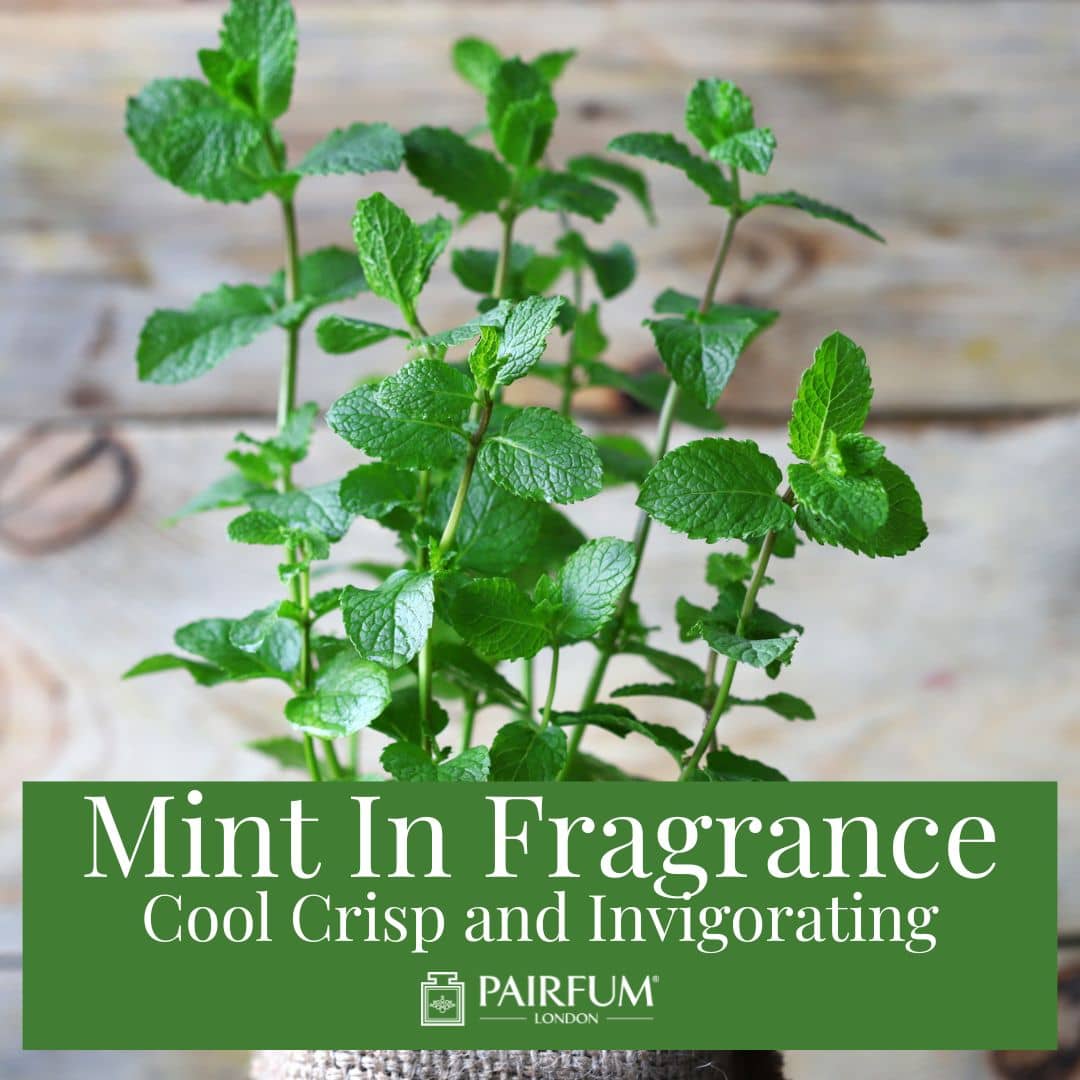
Mint In Fragrance

Mint In Fragrance: Cool Crisp and Invigorating

Mint refers to a popular aromatic herb (from the genus mentha) known for its refreshing flavour, used in cooking, drinks, and remedies for digestion. However, it can also mean something excellent in slang, a place where money is made at a coin mint, or even an operating system. Key types include peppermint (stronger, for sweets) and spearmint (milder, for dishes, mint sauce or mint tea).

Mint brings an unmistakable feeling of freshness to perfume. It is clean. It is crisp. It has a cooling effect that makes other notes pop. Think of that first deep breath outdoors on a frosty morning: a sharp clarity with a hint of green. Mint is often connected with summer, but it is not limited to warm-weather blends. It plays an important role in cold-season perfumes too. It offers contrast and lift when everything else begins to feel more intense. Many fragrances released around December include a trace of this brisk herbal oil, especially during winter when heavier accords dominate the composition. Today, this article takes a closer look at how mint moves within perfume, its origin, how it is used, and why it keeps turning up in modern and timeless creations alike.

Meaning, Language, and Usage

Before exploring mint in fragrance, you should understand mint as a word. Mint is a noun with several distinct meanings. As a noun, mint may refer to an aromatic plant, a place where a coin is produced, or a description of condition and quality. These meanings developed over time. They are still reflected in modern terms and everyday language. In Old English, mint referred both to the plant and to a place associated with coin production. During Middle English, usage expanded further. This reinforced links between value, purity, and freshness.

This linguistic history explains why phrases such as mint condition and perfect condition are still used today. You see them when people describe objects like collectables, books, or even a perfume bottle that has never been opened. The phrase mint condition originally related to the appearance of a coin fresh from the royal mint, untouched and without wear. In modern usage, it no longer refers to money alone. It remains closely linked to ideas of quality and care. Mint has several synonyms depending on context. In culinary and fragrance language, synonyms often relate to freshness or flavour. In financial language, synonyms relate to origin and authenticity. These overlapping terms give mint its unusual flexibility as a noun.

Fragrance Description Pink Lavender Tangerine Mint Rose Amber

The Roots of Mint in Fragrance

Mint has a long history. For thousands of years, mint plants have been used across cultures as a cooking herb, natural remedy, and refreshing infusion. Long before it made its way into fragrance, people relied on mint for stomach troubles, headaches, and to freshen the air in homes and public spaces. Perfumers noticed its naturally clean and energising quality. Across fragrance houses, mint began appearing as a way to open a perfume with brightness and ease. It added shape to compositions that might otherwise lean too floral, citrus, or woody. Different types of mint offer different aromas. Each one supports other ingredients in its own way. From cooling top notes to green herbal hearts, mint continues to add a fresh angle to the classic perfume structure.

The Mint Plant: Botany and Growth

Mint refers to a group of aromatic plants within the mint family, botanically known as Lamiaceae. The mint plant belongs to the genus Mentha, more commonly written as Mentha. There are many recognised mint varieties, along with natural hybrids that occur where species grow close together. A typical plant is a hardy perennial plant with a spreading root system. This root network allows the plant to regenerate year after year, even after winter dormancy. Above ground, the plant develops a square stem, textured leaves, and small flowers when mature. Each flower is usually pale purple, pink, or white. Because of its vigorous growth, mint is often grown in containers or a dedicated pot rather than directly in open soil. This prevents the plant from spreading too aggressively.

Growing Mint at Home

Growing mint is considered straightforward, even for beginners. Mint prefers moist soil, moderate temperatures, and partial shade, although many varieties will tolerate full sun if watered well. The plant can be grown outdoors or indoors, provided there is adequate light and airflow. When planting mint, young nursery plants are usually recommended rather than seeds. This ensures accurate identification of the plant, whether peppermint, spearmint, apple mint, or another cultivar. Gardeners often harvest mint leaves regularly. This encourages bushier growth. Left to flower, the plant continues to attract pollinating insects and remains healthy throughout the growing season.

Green Mint

Mint Leaves, Menthol, and Extraction

The aroma of mint comes primarily from its leaves. Mint leaves contain aromatic compounds, most notably menthol, which is responsible for the cooling sensation associated with mint. Menthol interacts with cold-sensitive receptors in the skin and nose. It creates a perception of freshness rather than actual temperature change. To extract scent for fragrance, the leaves are usually steam-distilled. This process produces a concentrated essential oil that captures the characteristic aroma of the plant. Peppermint oil is one of the most widely used extracts due to its clarity and strength. Because peppermint oil is highly concentrated, perfumers use it carefully. A small quantity can influence the entire structure of a fragrance.

Types of Mint Used in Perfume

Not all varieties are the same. Each brings a distinct character to the fragrance. Peppermint (Mentha piperita) is the most widely recognised. Peppermint is a natural hybrid of spearmint and water mint. It contains a high level of menthol, giving it a sharp, cooling profile. Peppermint oil, derived from piperita, is often used to create a clear and energetic opening. Peppermint remains one of the most recognisable mint notes in perfume.

Spearmint (Mentha spicata) is softer and greener. Spearmint blends easily with florals, citrus, and herbal notes. It is often chosen when a more rounded freshness is required. Apple mint, botanically known as mentha suaveolens, has a gentle aroma and soft leaf texture. Chocolate mint offers a subtle cocoa nuance. Corsican mint is low-growing but intensely aromatic. Wild mint and other varieties grow naturally near streams and damp ground, offering an earthier profile.

Food, Culture, and Daily Life

Mint is deeply embedded in daily life. Fresh mint is widely used in salads, desserts, and cold drinks, while dried mint appears in spice blends. Mint sauce is traditionally served with savoury dishes such as roast lamb. Mint sauce remains a familiar part of British cooking. This aromatic herb provides a unique flavour profile that is hard to replicate. Mint flavour is also found in sweets and chewing gum, where it is associated with freshness and cleanliness. Mint tea, made by infusing leaves in hot water, is valued for its gentle taste and calming qualities. Because mint connects scent, taste, and memory, it has a strong presence in cultural habits from Europe to New Zealand. While sharing personal information about one’s favourite tea is common, almost everyone agrees on the refreshing power of this herb.

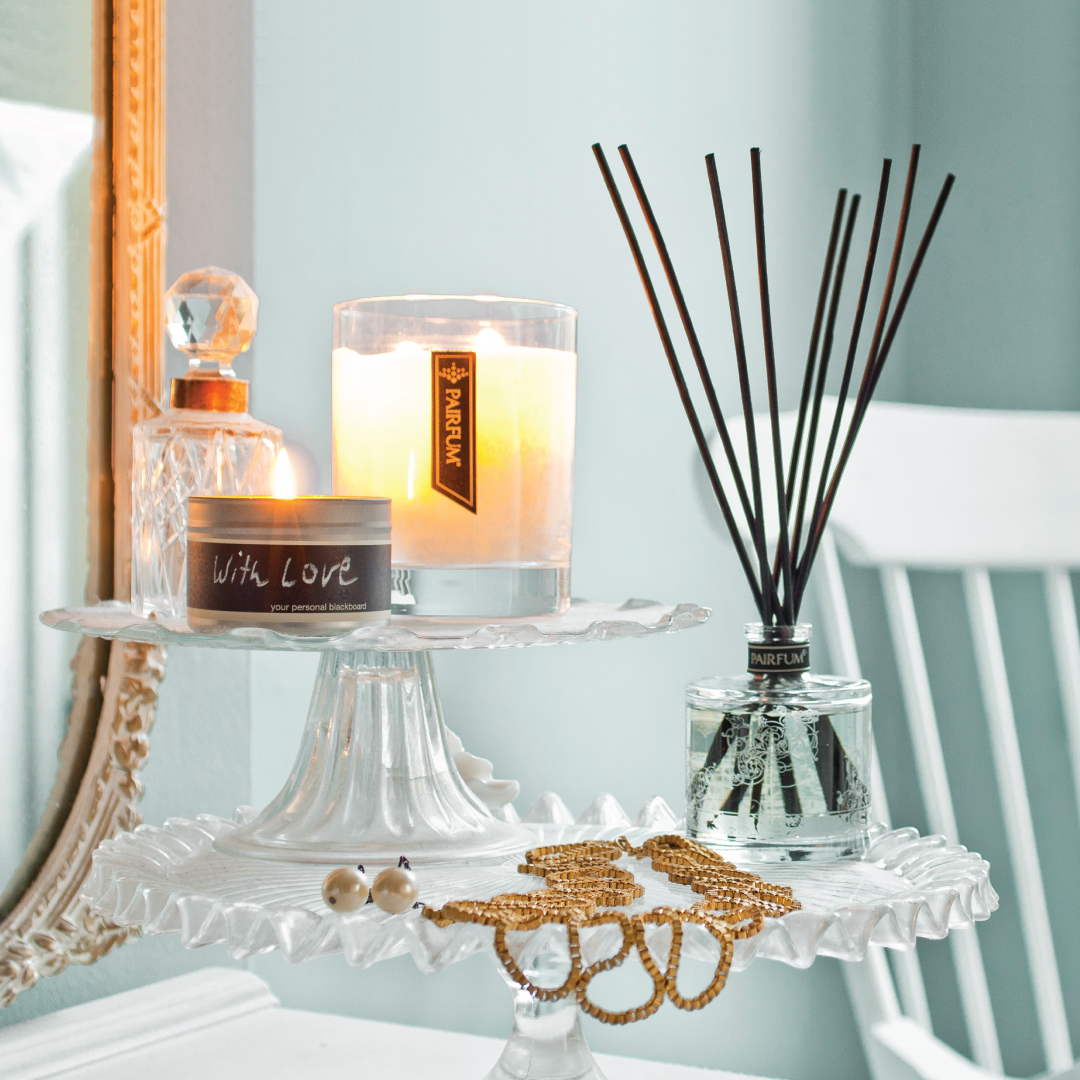
Lifestyle Living Room Natural Reed Diffuser Fragrance Candle 1 1

Why Mint Shines in Winter Perfumes

During winter, perfumes often feature spice, resin, and wood. While these notes suit the cold, they can feel dense. Mint plays a valuable role in winter compositions. In these fragrances, mint:

  • Lifts heavier accords
  • Adds contrast and brightness
  • Evokes cold air and freshness

Mint is frequently paired with clove, fir, patchouli, or cinnamon to balance warmth with clarity during the colder months.

How Perfumers Extract and Use Mint

The essential oil used in fragrance comes from the leaves, usually through steam distillation. This method gently heats the plant material. Aromatic compounds rise with the steam, then condense into oil. The resulting peppermint oil is light, volatile, and highly aromatic. Mint is typically used as a top note. It is one of the first impressions experienced when applying a fragrance from a bottle. Many perfumers:

  • Blend peppermint with citrus oils for a fresh opening
  • Mix it with herb notes to enhance structure
  • Use it against woods or resins for contrast

In each case, peppermint adds clarity and prevents heaviness.

Iconic Fragrances

Several well-known perfumes rely on peppermint to sharpen their structure. It is especially common in men’s and unisex fragrances where clarity and balance are important. Mint is often found:

  • Following spicy or woody openings
  • Paired with citrus or green notes
  • Used to lighten floral compositions

Mint does not dominate. Instead, it creates space within the fragrance.

Iconic Perfumes Featuring Mint

Guerlain – Héritage 

A refined classic where peppermint adds a subtle lift to a warm, woody and spicy structure. The note is restrained rather than dominant. This helps to keep the fragrance elegant and breathable, particularly in cooler weather.

Amouage – Beach Hut Man 

A vivid green fragrance built around fresh peppermint, ivy, and galbanum. Here, the aroma feels wild and herbal rather than icy. It evokes open air and natural landscapes while adding sharp definition to the composition.

Comme des Garçons – Amazingreen 

A modern, unconventional take on green freshness. Peppermint is paired with palm leaf and gunpowder notes. This creates a crisp yet mineral effect. The peppermint provides clarity and contrast rather than traditional sweetness.

Pairfum Large Snow Crystal Candle Pure Pink Lavender

Mint Notes & Home Fragrance At Pairfum London

Bring the fresh clarity of winter indoors with the Snow Crystal Perfumed Candle. Crafted from natural stearin wax, this large candle releases a refined fragrance as it burns. It creates a calm and inviting atmosphere. Its crystal-like finish and clean burn echo the crisp, uplifting sensation that mint brings to fragrance. This makes it an elegant addition to seasonal living spaces.

Pink Lavender – Large Snow Crystal Perfumed Candle by Pairfum London

A bright and refreshing fragrance that opens with lively notes of tangerine, bergamot and cool mint inspired dew. At its heart, a fruity pink lavender accord blends with lily of the valley, freesia and soft rose. The base reveals a warm combination of musk, amber and gently dried lavender.
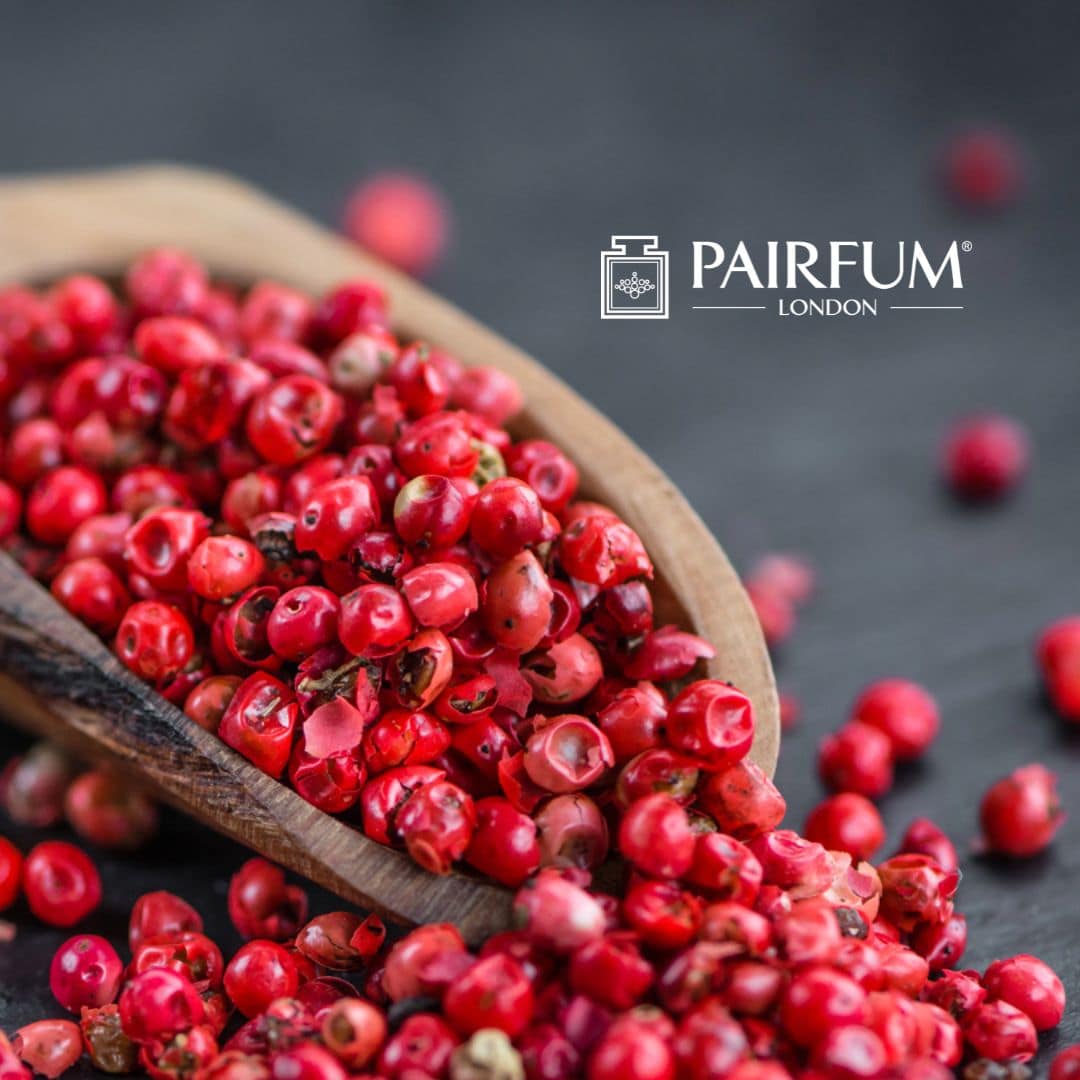
Cool Clarity That Lasts

At first, mint might seem simple: an ingredient that only adds freshness. In perfume, it does much more. Mint shapes the space of a fragrance. It adds contrast and prevents blends from becoming overwhelming. Whether someone prefers light fragrances or complex compositions, mint helps each element remain distinct. Its crisp presence lingers long after application. It creates a sense of freshness that feels appropriate in every season.

Magnolia In Perfumes

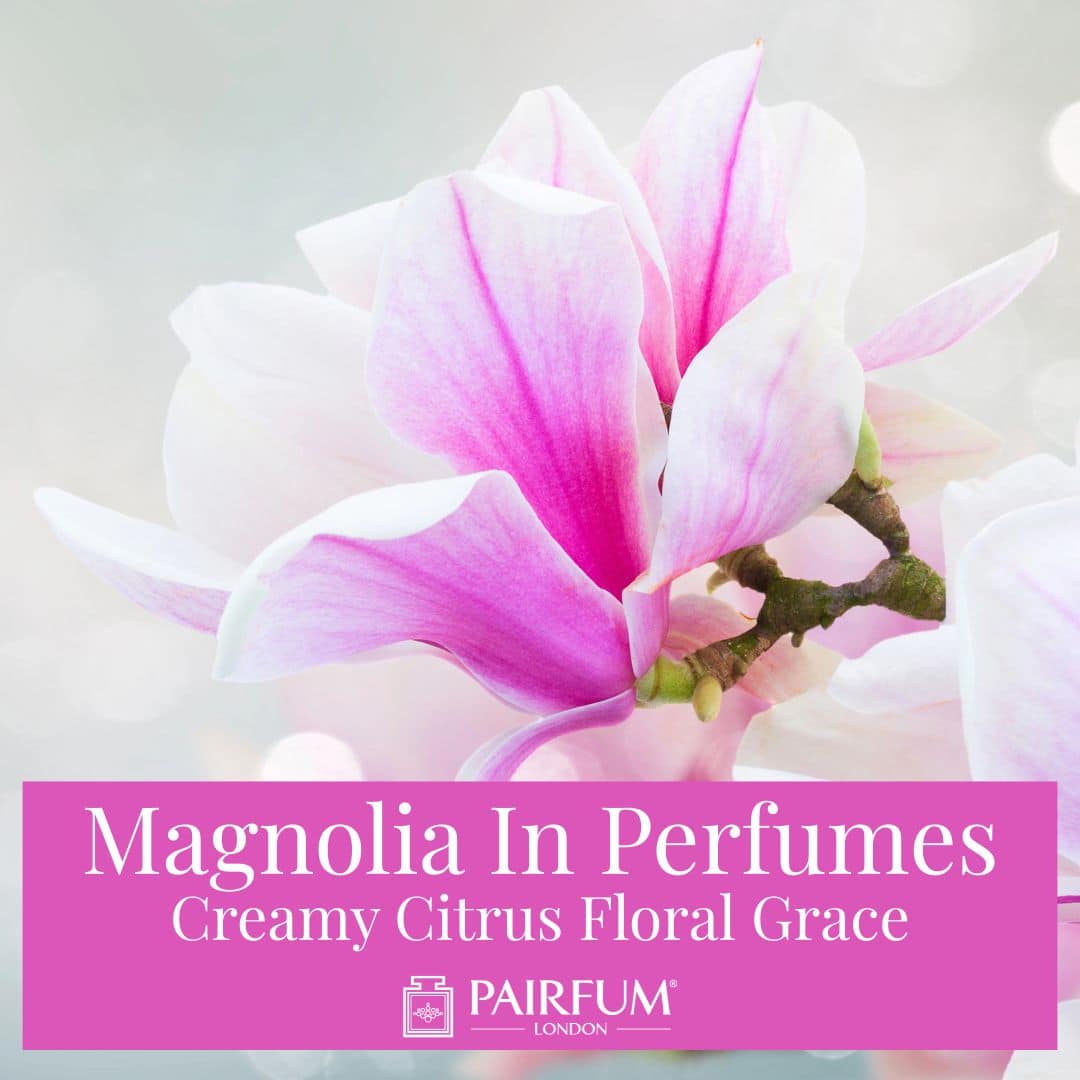
Magnolia in Perfumes: Creamy Citrus Floral Grace

Magnolia in perfume has a way of appearing quietly. It does not rush forward or dominate the senses. Instead, magnolia settles into a fragrance with a soft, creamy floral glow that sits somewhere between citrus freshness and smooth petals. There is brightness, but it is gentle. Magnolia never overwhelms.

That quality feels particularly welcome in December and January. As days shorten and the air turns colder, many people look for a fragrance that brings comfort without becoming heavy. Magnolia does exactly that. It offers lift without sharpness and warmth without sweetness, which is not always easy to achieve.

Magnolia does not shout. It has a calm presence that feels grounded and luminous at the same time. Rather than bold spice or sugary notes, magnolia leans towards creaminess, like petals opening with just a hint of lemon. Once recognised in a perfume, magnolia tends to linger in memory.

Over time, magnolia has become more familiar in fine fragrance. It suits those who enjoy subtle floral notes, especially during winter when many perfumes lean towards deep or intense. Magnolia provides an alternative. Quiet, elegant, and easy to live with. To understand why, it helps to look at where magnolia comes from and how it is used.

A Flower with a Story: Magnolia’s History in Perfumery

Magnolia belongs to one of the oldest groups of flowering plants on Earth. Fossil records show that magnolia species existed long before bees appeared, which explains some of their unusual botanical traits. There is something steady about magnolia, shaped by time rather than fashion.

The name Magnolia was introduced in the seventeenth century by a French botanist, in honour of Pierre Magnol. From botanical classification, magnolia slowly entered wider cultural awareness and eventually perfumery.

  • Magnolia appeared early in perfume within traditional floral blends.
  • Magnolia was often paired with rose or jasmine to soften compositions.
  • Later fragrances began to highlight magnolia for its freshness and clarity.

Magnolia trees are native to both Asia and North America. This wide distribution allowed magnolia to develop through different traditions. In China and Japan, magnolia flowers were valued for their aroma long before modern extraction existed. In the southern United States, the southern magnolia became a recognisable flowering tree, admired for its scent as much as its appearance.

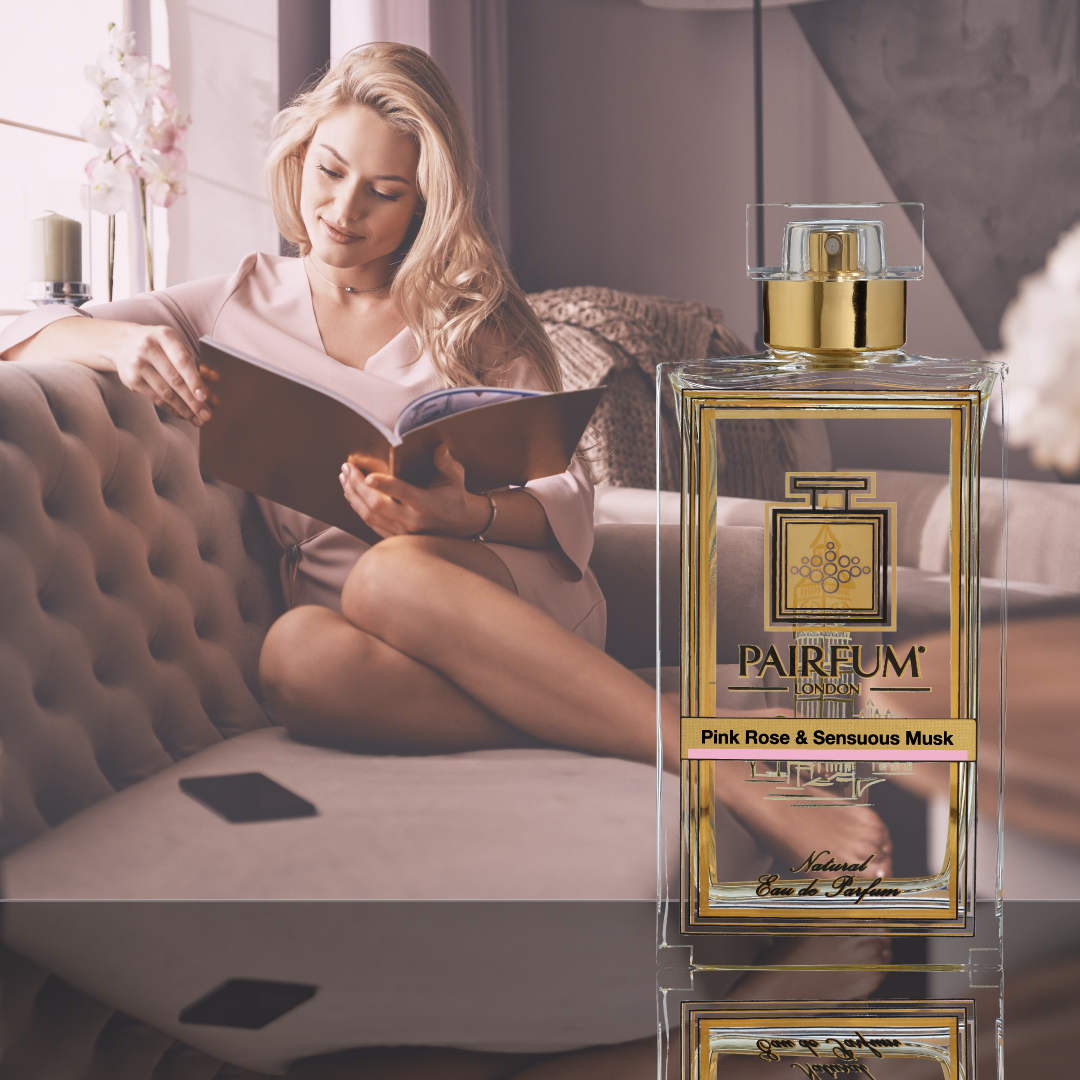
Eau de Parfum Person Reading Pink Rose Sensuous Musk

What Does Magnolia Smell Like?

Magnolia has a scent that is appealing but not obvious. It feels creamy and floral, yet light. Often, there is a soft citrus edge that gives magnolia lift.

  • Magnolia commonly suggests creamy white petals with a gentle lemon tone.
  • Some magnolia species show green or tea-like nuances.
  • In perfume, magnolia usually balances rather than dominates.

Unlike heavier florals, magnolia rarely becomes cloying. It works well with citrus, woods, and musks, helping perfumes feel composed. This makes magnolia an easy choice for everyday wear, even for those who usually avoid floral fragrance.

The Types and Oils of Magnolia Used in Perfumes

There are more than two hundred magnolia species, ranging from low shrubs to tall evergreen forms. Only a small number are used in perfumery, selected for scent quality and stability.

  • Magnolia grandiflora is one of the most common types, valued for its creamy, lemon-tinged aroma.
  • Magnolia grandiflora may be listed as M grandiflora in ingredient details.
  • Michelia alba offers a softer, more rounded floral character.

Oils are produced through solvent extraction or distillation. Magnolia absolute captures richness, while isolates allow perfumers to focus on specific facets. Growing conditions also matter. Magnolia grown in the southern United States develops slightly different characteristics from magnolia cultivated elsewhere.
Bedroom Large Perfumed Candle Natural Room Spray

Magnolia as a Plant, Tree, and Garden Presence

Magnolia is appreciated beyond fragrance. As a plant, magnolia is widely used in gardens for its form and seasonal interest.

Magnolia plants may grow as a shrub or develop into a small tree. Some species mature into larger magnolia trees with broad canopies and thick, glossy leaves.

  • Magnolia stellata, also known as star magnolia, suits smaller gardens.
  • Star magnolia flowers in early spring on bare branches.
  • Other magnolia trees bloom in late spring or early summer.

Magnolia grows slowly and lives long. Many magnolia plants can begin life in pots before being planted out. The golden globe cultivar is known for its rounded shape and soft colouring.

Leaves, Pollen, and the Seasonal Cycle

The leaves of a magnolia tree are distinctive. Thick and leathery, they often remain glossy throughout the year, giving structure even when flowers are absent.

Magnolia pollen is heavy and sticky. This reflects magnolia’s ancient origins, as the plant evolved to be pollinated by beetles rather than bees. Magnolia is an early example of a flowering tree adapted to insect behaviour.

The seasonal rhythm is unhurried.

  • Flower buds appear in late summer.
  • Blossoms open in early spring, late spring, or early summer.
  • Leaves mature through spring and remain into autumn.

This slow pace contributes to magnolia’s reputation for reliability.

Light Pink Magnolia

Magnolia also appears in modern culture through film. The film Magnolia, released in 1999, is set in Los Angeles and the San Fernando Valley. The film explores coincidence, emotional connection, and unresolved pain.

The film Magnolia features an ensemble cast including Julianne Moore, William H Macy, Melora Walters, and Ricky Jay. Characters such as Frank TJ Mackey, Earl Partridge, Jimmy Gator, Stanley Spector, and Jim Kurring form the emotional framework.

Aimee Mann’s music shapes the tone of the film. While Stanley Kubrick was not involved, the film’s ambition has often prompted comparison. Links to Boogie Nights are also noted because of shared creative history.

Magnolia as Symbol and Character

In literature and film, magnolia often symbolises dignity and restraint. The magnolia tree, with its strong leaves and enduring structure, becomes a quiet metaphor for continuity.

Within the film Magnolia, each character reveals fragility beneath composure. Frank Mackey, also referred to as Frank TJ Mackey, captures this tension. Magnolia functions as a device that connects emotional exposure with resilience.

The Winter Appeal of Magnolia

Magnolia works particularly well in winter.

  • Magnolia brightness lifts cold air.
  • Magnolia creaminess brings comfort.
  • Magnolia avoids heaviness or excess sweetness.

In winter, magnolia feels reassuring rather than dramatic. It hints at spring without feeling out of place, offering balance during darker months.

Pairfum Flacon Room Perfume Spray Magnolia Flower 1 1

Magnolia plays a versatile role in perfume.

  • Magnolia blends well with woods, citrus, and musks.
  • Magnolia softens stronger florals.
  • Magnolia can lead or support.

Because magnolia sits between floral and citrus families, it adapts easily across styles. Its presence often adds refinement without demanding attention.

Iconic Magnolia Perfumes

Chanel – Les Exclusifs Eau de Cologne

A citrus floral composition where magnolia adds softness beneath freshness, keeping the fragrance polished.

Frederic Malle – Eau de Magnolia

Magnolia sits at the centre, framed by citrus and woods, allowing its clean character to remain clear.

Acqua di Parma – Magnolia Nobile

Magnolia blends with citrus and white flowers, creating a refined and radiant floral perfume.

Magnolia With Pairfum London – Personal & Home Fragrances

Pink Rose & Sensuous Musk – Eau de Pairfum by Pairfum London

Fruity Peach lifts Sparkling Lemon and Lime. The heart combines Pink Rose, Magnolia, and Frangipani, supported by Sensuous Musk, Amber, and Precious Woods.

Magnolias In Bloom – Sleep & Pillow Spray by Pairfum London

A Spring Flowers accord opens with Ozone, White Flower Petals, and Watery Melon. Magnolia blends with Lily, Geranium, Rose, and Violet, resting on Musks and Rosewood.

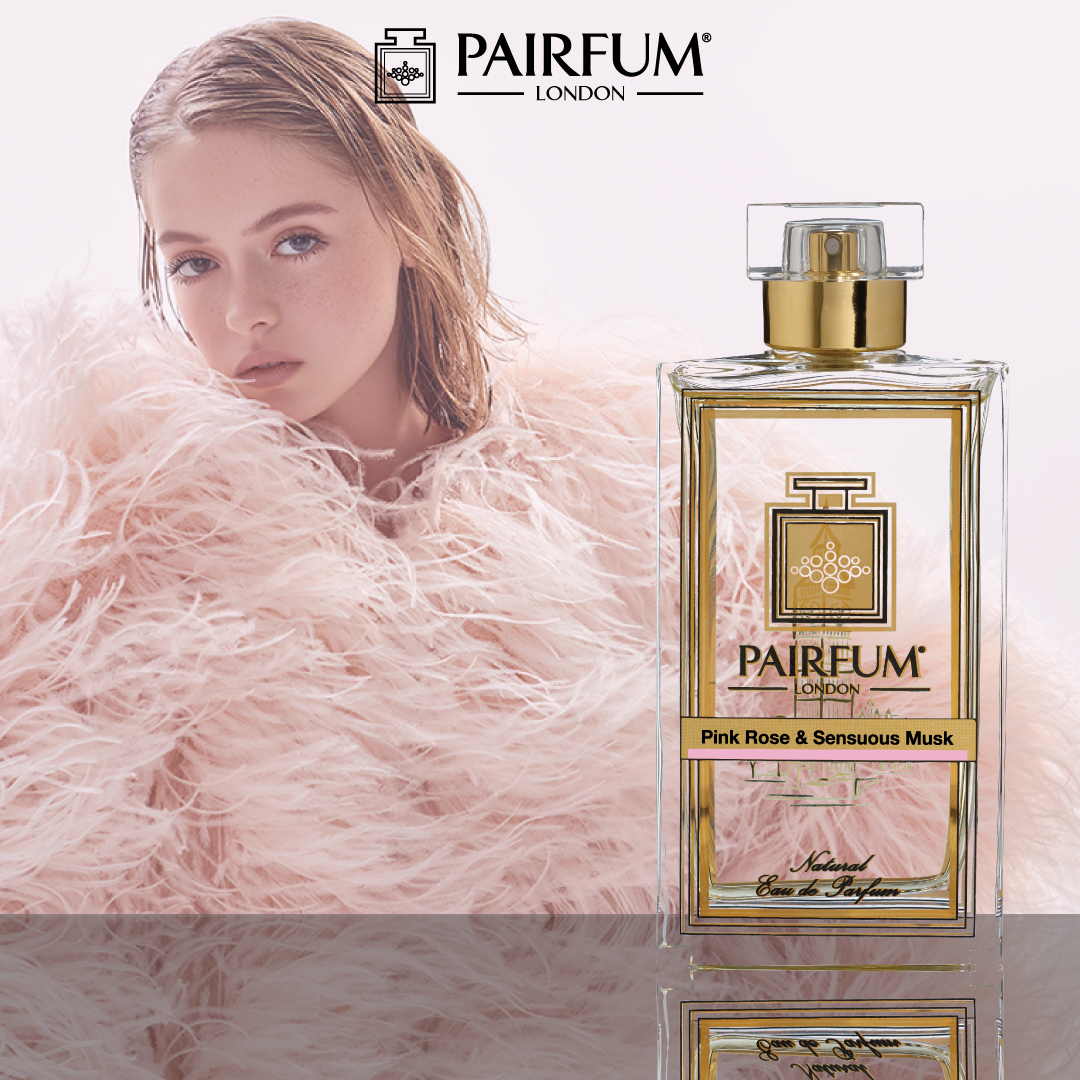
Pairfum Person Reflection Pink Rose Sensuous Musk Eau de Parfum

A Fragrance That Feels Like Grace

There is something quietly lasting about magnolia. As a plant, a tree, a film title, or a perfume note, magnolia carries balance.

Even when written incorrectly as ‘mangnolia’, the meaning remains. Magnolia shows that subtlety can endure. From bare branches in spring to creamy floral notes worn in winter, magnolia continues to offer beauty that feels calm, thoughtful, and timeless.

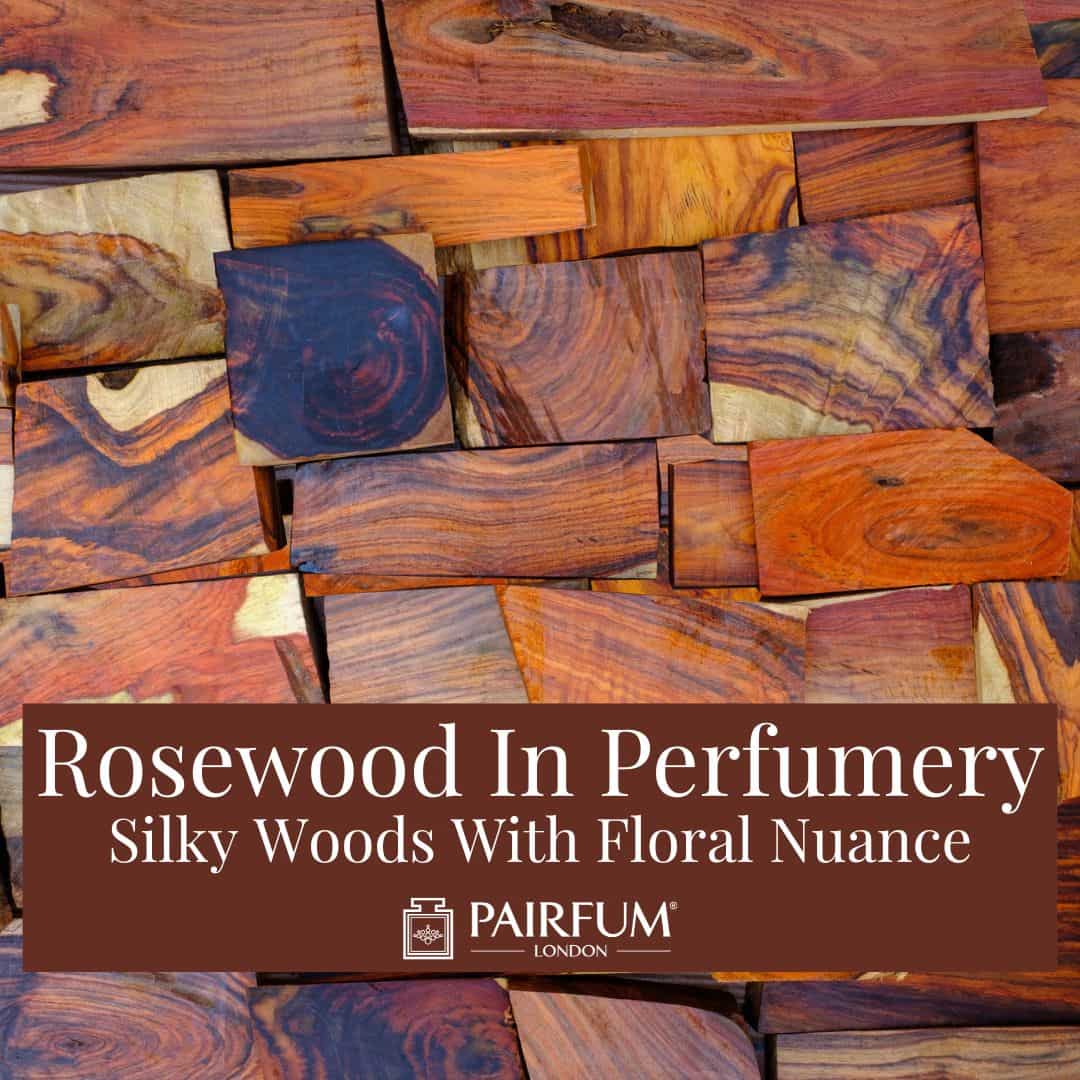
Rosewood In Perfumery

Rosewood In Perfumery: Silky Woods With Floral Nuance

Rosewood in perfumery offers a soft, sweet, woody and lightly floral scent, with gentle citrus and spicy nuances. It adds warmth, depth and a sense of quiet luxury, and is valued for its uplifting yet grounding aroma that blends easily with other notes. As traditional rosewood from Aniba rosaeodora is now protected, modern perfumery more often relies on ethically sourced materials or carefully crafted synthetic alternatives due to conservation concerns.

It is one of those fragrance notes people often recognise without quite realising it. Many have smelled it before, even if they would struggle to name it. There is something reassuring about rosewood. It smells warm, smooth and familiar, like polished wood that has been handled over time. In perfumery, rosewood has been used for decades, not because it demands attention, but because it quietly supports everything around it. It is the sort of note that tends to be missed until it is gone.

Unlike louder woods, rosewood usually feels calm. It brings depth without heaviness and softness without sweetness. During winter months in particular, rosewood seems to make more sense. It fits the mood. In this article, we explore where rosewood comes from, how it is used in perfumery, what it smells like, and why it continues to appear in fragrance even as materials and methods change.

A History Rooted in Aroma

Rosewood became part of perfumery through trade, craft, and availability. In the nineteenth and early twentieth centuries, improvements in distillation made it easier to extract fragrant oils from wood. At that time, South America, especially Brazil, was the primary source of rosewood oil used in perfume.

Rosewood was not only valued for scent. It was widely used in furniture making and decorative carving. Its fine grain and natural sheen made it popular in homes where materials were chosen to last. This same appeal translated into fragrance. Rosewood smelled refined, steady and comforting. It suited a period when perfumes were often soft, warm and close to the skin. That style feels familiar again now, perhaps for similar reasons.

That link between interiors and aroma still matters. Many people find rosewood familiar because it reminds them of lived-in spaces, rather than of perfume counters or trends.

Fragrance Description Magnolias Bloom Ozone Melon Violet Rosewood

What Makes It Rosewood?

Despite the name, rosewood does not come from one single tree. It refers to a group of hardwood species, most often from the Dalbergia genus. In classic perfumery, Brazilian rosewood from Dalbergia nigra was the preferred source. Today, its harvesting is heavily restricted to protect the species.

Rosewood is technically a wood, yet it carries a gentle floral tone. This is where its name comes from. Some describe a faint rose-like quality, though it is never as obvious as an actual rose note. That restraint is important. It gives rosewood its elegance. Some perfumers still describe it as surprisingly modern.

True rosewood oil is now quite rare. Most modern fragrances recreate its profile using other materials. Perfumers rely on combinations of natural oils and aroma molecules to echo its creamy, lightly floral woodiness. These thoughtful choices reflect how perfumery has adapted to modern expectations around sourcing and responsibility.

Extracting the Essence

Traditionally, rosewood oil was produced through steam distillation. Pieces of wood were chipped, heated with water and the resulting vapour condensed to collect the oil. This process captured the characteristic scent of rosewood, fresh at first then warm and gently spicy.

Today, genuine rosewood appears far less often. Environmental concerns have changed how perfumers approach materials. Even so, rosewood remains part of many compositions, often recreated rather than extracted. It usually sits in the middle or base of a fragrance, where it helps everything else make sense.

Rosewood rarely leads a perfume outright. Instead, it supports. It smooths sharp edges, anchors lighter notes and adds a subtle veneer to richer accords. Without it, some fragrances would feel incomplete even if the wearer could not say why.

Bedroom Reed Diffuser Luxury Scented Candle Room Spray 1 1

The Rose Meets the Tree: Its Fragrance Profile

Rosewood has a scent that feels balanced rather than dramatic. It can seem dry and creamy at the same time. There is a mild sweetness but it never becomes sugary. Alongside the woodiness, a soft floral note appears, sometimes compared to pale rose petals or dried blossoms. Not everyone notices it in the same way.

Rosewood works well with many other notes, including:

  • Light florals such as jasmine or orange blossom
  • Gentle spices like cardamom or cinnamon
  • Soft musks and amber
  • Green or citrus top notes that add contrast

Rosewood is often used in winter fragrances, particularly around December. In cold air it feels warming without becoming dense. It suits both personal fragrance and home scent, where it creates atmosphere without overpowering a space.

Another strength of rosewood is its flexibility. It appears comfortably in feminine, masculine and neutral compositions. Its texture within a fragrance is smooth, helping to connect contrasting notes. It can also bring to mind antique furniture or older interiors which adds a sense of history while still feeling current.

Rosewood as a Sensory Reference Beyond Perfumery

The name rosewood has also become associated with design and hospitality more broadly. Rosewood London, located on High Holborn near Covent Garden and the British Museum, is known for its considered interiors and calm atmosphere. The Rosewood Hotel there includes well-known spaces such as Holborn Dining Room, Scarfes Bar and the Mirror Room, each offering distinctive venues with their own character.

Across the Rosewood Hotel Group, properties such as Rosewood Hong Kong, Rosewood Amsterdam and Rosewood Mayakoba in the Caribbean Atlantic region follow a similar philosophy. From a premier suite or grand premier suite to a pearl suite or another room type, the focus is on comfort, texture and tailored spaces. Details such as bedroom layout, room service and how guests experience shared areas all play a role.

Whether it is a Rosewood resort near a golf course, a city landmark in Beverly Hills or a property close to Oxford Street, the experience is consistent. Each location offers unique experiences while maintaining what many describe as distinctive Rosewood service. Together, they form a recognisable rosewood collection.

Rosewood Table

Journeys, Stories, and Cultural Touchpoints

Over time, the language around rosewood has expanded. Phrases like Rosewood Escapes, Rosewood Advance and Rosewood Travel Desk suggest curated discovery journeys rather than standard travel. Recent stories shared by the group often include art afternoon gatherings, quirky tales of local culture and references such as Gongan Beian or Hôtel Crillon.

There is also a growing focus on Rosewood Impacts, which reflects environmental and social awareness. This mirrors shifts within the fragrance world, where sustainability has become central. New openings across different destinations continue to shape how the rosewood name is understood.

In London, mentions of Chancery Rosewood link the name to heritage buildings and modern urban living, reinforcing its connection to place and history.

Fragrances That Showcase Rosewood

Although true rosewood oil is now uncommon, its scent profile remains influential in practice. It is often used when a fragrance needs balance rather than drama.

Rosewood commonly appears in:

  • Woody floral perfumes that need a steady centre
  • Exotic blends where mild spice adds structure
  • Home fragrances designed to feel warm but not heavy

Many classic perfumes from the mid twentieth century relied on rosewood to create a soft, radiant heart. Today, perfumers recreate this effect using materials such as linalool, ho wood, coriander and carefully built accords. The aim is not exact replication but emotional familiarity.

Iconic Fragrances

Chanel – Égoïste: A woody oriental where rosewood smooths spice and adds warmth.

Guerlain – Samsara: A composition built around woods and florals, with rosewood contributing to its creamy feel.

Yves Saint Laurent – Jazz: An aromatic fragrance where rosewood brings balance and softness.

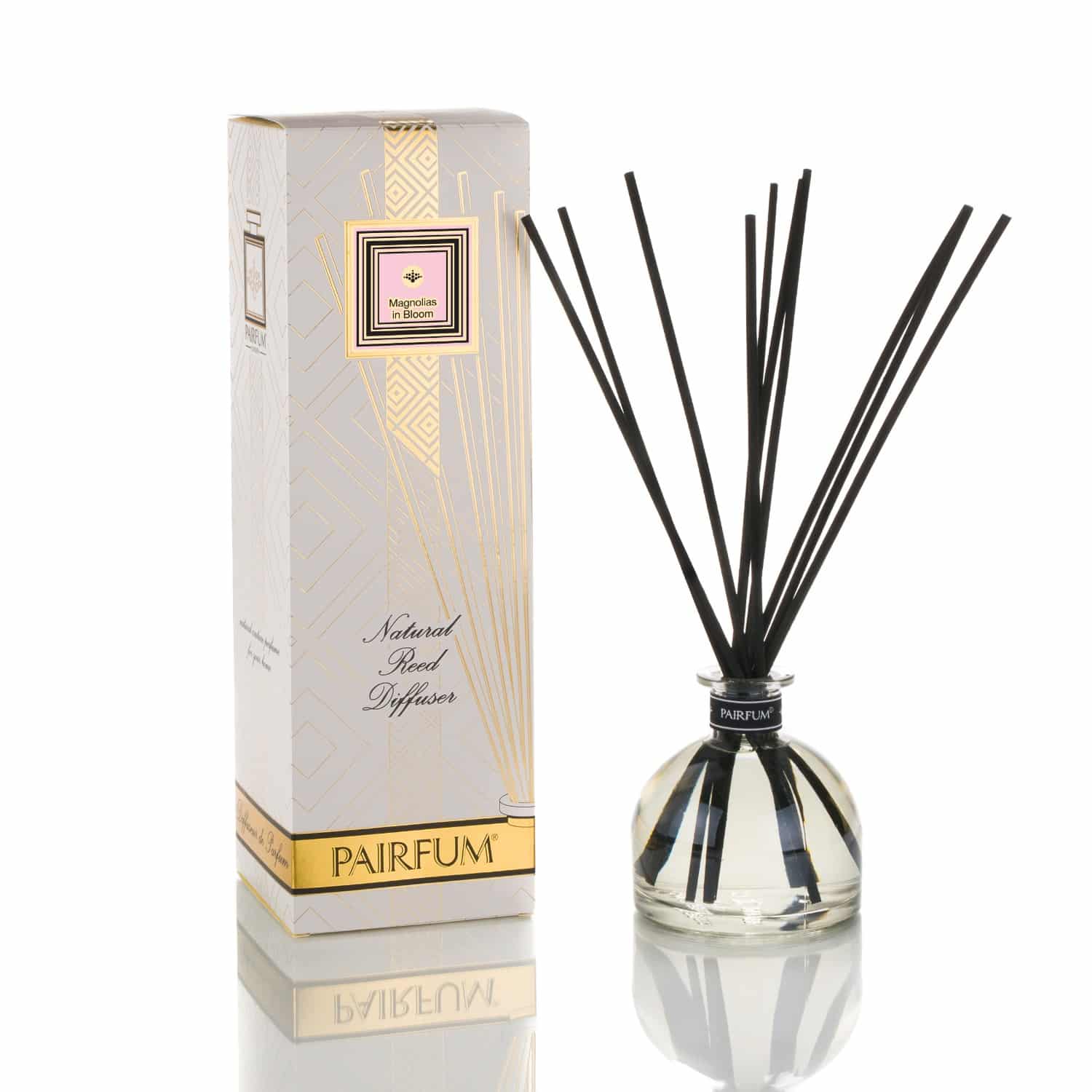
Pairfum Large Reed Diffuser Bell Pure Magnolias In Bloom

Rosewood Base Notes In Home Fragrances by Pairfum London

An elegant large bell reed diffuser offers a natural way to enjoy rosewood at home. Designed to release fragrance slowly, it allows the creamy warmth to develop over time alongside soft floral notes. It works well in living spaces, a bedroom or quieter corners of the home, adding atmosphere without becoming intrusive.

Magnolias In Bloom – Large Bell Reed Diffuser by Pairfum London

This spring floral opens with airy ozone, white petals and a hint of watery melon. The heart blends magnolia, lily, geranium, rose and violet, before settling into gentle musks and rosewood.

The Lasting Appeal of Silky Woods

Rosewood continues to hold its place in perfumery because it avoids extremes. It is neither sharp nor sweet, neither heavy nor fleeting. Few woods combine warmth and floral nuance in the same way, which makes rosewood quietly distinctive. That balance is harder to achieve than it sounds.

As winter progresses and people reach for fragrances that feel comforting, rosewood offers calm rather than impact. It does not shout. It lasts. Even as sourcing methods change, the character of rosewood remains appealing. Silky, woody and softly floral, it is a note that continues to feel worth keeping close.

Melon In Fragrance

Melon in Fragrance: Juicy Freshness with Watery Sweetness

Melon in fragrance offers a fresh, juicy, sweet, and watery scent, most often created using synthetic materials such as calone to suggest its cooling, aquatic character. This makes it well-suited to light, summer, or clean perfumes, where it pairs naturally with citrus, florals, and aquatic notes to create a vibrant and uplifting effect across fine fragrances and scented candles.

Melon often brings summer to mind, yet in fragrance it has a place far beyond warm days. Its gentle sweetness and high water content give perfume a sense of lift that works throughout the year. As colder months arrive, richer notes such as woods and musks become more common, but melon has a way of cutting through them. It introduces a watery clarity that feels calm rather than sharp. This is not simply a beachside fruit note. Used with care, melon balances depth with lightness and keeps a composition feeling open and breathable. With its mild fruit character and clean impression, melon can feel as clear as cold water and as reassuring as a crisp morning.

Looking more closely at how melon entered modern perfumery helps explain why it remains such a popular choice today.

A Brief History of Melon in Perfume

Melon is a relatively recent addition to fine fragrance. It became widely recognised during the 1990s, when aquatic and fruity floral styles reshaped ideas of freshness. These perfumes favoured clean lines and airy structures, and melon fitted naturally within them.

The word melon itself has deeper roots. It appears in Middle English texts and can be traced back through French and Latin. By the fourteenth century, melons were already being grown and traded across Europe and the Mediterranean. They were valued as a cooling fruit during warmer weather and appreciated for their refreshing juice.

In perfumery, melon offered something different from citrus fruit. Its sweetness was softer and rounder, without sharp edges. This made it useful for balancing bitter green notes or salty marine accords. Over time, melons became linked with ideas of clean skin, water, and ease. These associations helped shape the popularity of melon-based fragrances for everyday wear.

Lifestyle Living Room Natural Reed Diffuser Fragrance Candle 1 1

Melons as Plants and Botanical Background

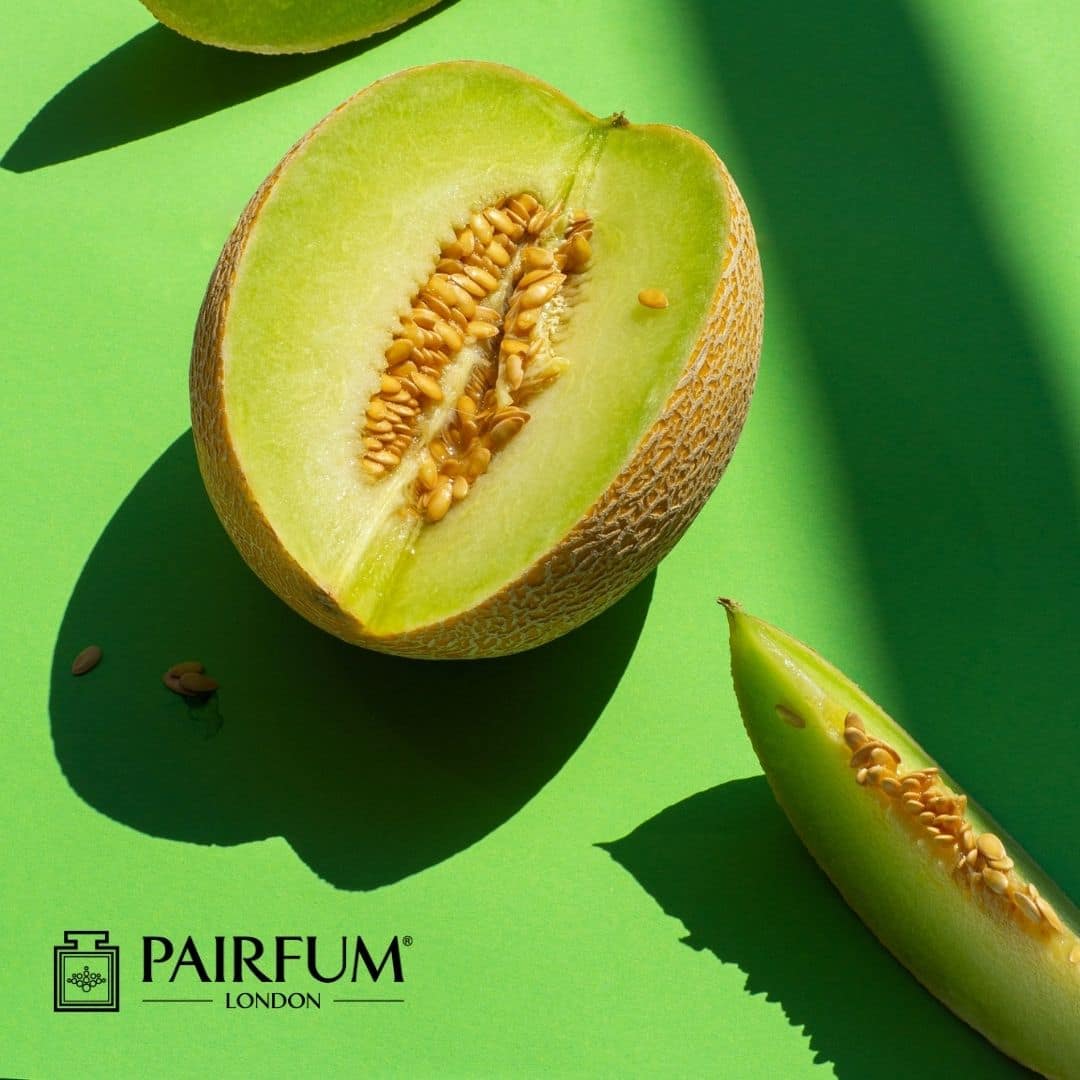
From a botanical perspective, most cultivated melons belong to the species Cucumis melo, part of the gourd family. Within Cucumis melo there are many varieties, including cantaloupe, honeydew, canary melon, Persian melons, Charentais melon, Hami melon, and the Santa Claus melon. Watermelon is often grouped with melons in daily language, although it belongs to a different species, Citrullus lanatus.

Melon plants are annual and grow along the ground or over supports on a trailing vine. Each plant produces large leaves that protect the developing fruit from strong sun. Both male and female flowers appear on the same plant, and pollination is essential for fruit to form.

As the fruit develops, sugar levels rise, water increases, and aromatic compounds form within the flesh. The rind thickens as protection, while the central cavity surrounds the seed mass. The size and number of seed varies by type, yet melon seeds are always present in mature melons.

Melons thrive in warm conditions with good drainage and steady watering. These growing habits explain why melons are so closely tied to summer, even though types such as winter melon are bred for storage rather than immediate use.

The Types of Melon Used in Fragrance

Different melons create different impressions in scent. Across the many varieties grown worldwide, changes in water content, sugar, and flesh colour influence how we perceive their aroma.

  • Cantaloupe: A cantaloupe melon is recognised by its netted rind and soft orange flesh. Its aroma is gentle and rounded, suggesting ripeness rather than strong sweetness. In fragrance, cantaloupe adds warmth and softness. Cantaloupe appears frequently when a mellow fruit note is required.
  • Honeydew: Honeydew melon has smooth pale skin and light green flesh. Honeydew melons are prized for their clean sweetness and high juice content. This clarity makes honeydew suitable for fresh and watery compositions. The note of honeydew feels calm and restrained.
  • Watermelon: Watermelon has crisp red flesh and very high water content. Its scent is light and fleeting, often used to suggest freshness rather than a distinct fruit flavour.

Other references include canary melon with its bright yellow rind, and Charentais melon, which is valued in France for its intense aroma. Persian melons are larger and elongated, while the Santa Claus melon is known for its thick rind and long keeping quality.

In perfumery, melon is recreated rather than extracted. The aim is to suggest fruit water, freshness, and light sweetness without heaviness.

How Melon Is Created for Perfumery

Melon does not produce an essential oil suitable for traditional extraction. Its scent is delicate and closely tied to water, making it impossible to capture through distillation.

Instead, perfumers build a melon impression using aroma molecules. Calone is one well-known material, adding a marine and watery character that recalls fresh fruit and sea air. Fruity aldehydes, lactones, and green notes are layered to suggest the textures of melon flesh.

By adjusting these elements, perfumers can move between the crisp bite of watermelon and the softer creaminess of ripe melon. This flexibility explains why melon continues to appear in modern fragrance design.

Melon’s Role and Pairings in Perfume

Melon rarely dominates a composition. More often, it acts as a connecting note that smooths transitions between accords.

It pairs naturally with cucumber, reinforcing the watery and green aspects of the scent. Other fruit notes, such as pear or apple, can enhance its brightness. Herbs like mint add lift, while soft florals introduce elegance.

Melon also works well with musks and light woods. In this role, it prevents a perfume from feeling dense and keeps the overall structure airy.

Melon Slice

Melon in Food Culture and Scent Memory

Our response to melon in fragrance is shaped by how we experience melons as food. A ripe melon releases its aroma as soon as it is cut, signalling freshness through smell alone.

Melons appear in simple dishes such as chilled slices, salad, and fruit salad. A familiar pairing is melon with prosciutto, where sweetness meets salt. Melon also works alongside salty cheese, herbs, or a splash of lime or lime juice to sharpen the taste.

These everyday memories influence how melon is perceived in scent. It suggests hydration, cleanliness, and ease rather than indulgence. Many melon dishes rely on simplicity rather than complex recipes.

Lesser Known Melons and Cultural References

Not all melons are sweet dessert fruit. Bitter melon is valued for its sharp taste and is used in savoury cooking. Its aroma is not associated with fragrance.

Winter melon, despite its name, is harvested in warm months and stored for later use. It has firm flesh and a mild flavour, making it suitable for cooking rather than fresh eating. These contrasts show how broad the category of melons really is.

Melon Day celebrations and agricultural events reflect the importance of melons as a crop. Growers often define the perfect melon by balanced sugar, firm flesh, an intact rind, and a well-developed aroma.

The Santa Claus melon takes its name from its ability to keep into the festive season, linking summer fruit with winter traditions.

Iconic and Niche Perfumes Featuring Melon

Melon had a strong influence during the 1990s, when aquatic fragrances reshaped ideas of freshness. Many of these scents remain well-known.

In niche perfumery, melon is used more quietly. It may appear briefly at the top or sit in the background, adding clarity to unusual structures. This approach reflects a move towards atmosphere rather than obvious fruit notes.

L’Eau d’Issey Pour Homme by Issey Miyake

A landmark aquatic fragrance where melon blends with watery accords and soft woods to create a clean and airy impression.

Escape by Calvin Klein

A fruity floral that uses melon to bring openness and brightness, balancing green notes and flowers.

Cool Water Woman by Davidoff

A fresh floral aquatic where melon supports the crisp top notes and enhances the sense of coolness.

Pairfum Natural Wax Candle Pure Magnolias In Bloom

Watery Melon Top Notes In Pairfum London Home Fragrance

For those drawn to the uplifting nature of melon in fragrance, the Snow Crystal Fragranced Candle offers a similar feeling within the home. Its clean scent recalls winter light and gentle sweetness, echoing the watery clarity associated with melon-inspired compositions. It is designed to create space and balance, whatever the season.

Magnolias In Bloom – Classic Snow Crystal Fragranced Candle by Pairfum London

A Spring Flowers accord with a fresh top note of ozone, white flower petals, and a light hint of watery melon. The heart remains floral with magnolia, lily, geranium, rose, and violet, while musks and rosewood form the base.

A Breath of Freshness All Year Round

Although melon is often linked with summer, its role in fragrance extends well beyond warm weather. In cooler seasons, it provides contrast and lightness.

In perfumery, melon is less about sweetness and more about water, air, and light. Across the many species and varieties of melons, from Cucumis melo to Citrullus lanatus, shared qualities of juice and freshness continue to inspire scent creation.

From cantaloupe and honeydew to watermelon and beyond, melons connect agriculture, fruit growing, memory, and fragrance. Their presence in perfume reminds us that scent is shaped by everyday encounters with plant life, taste, and place.

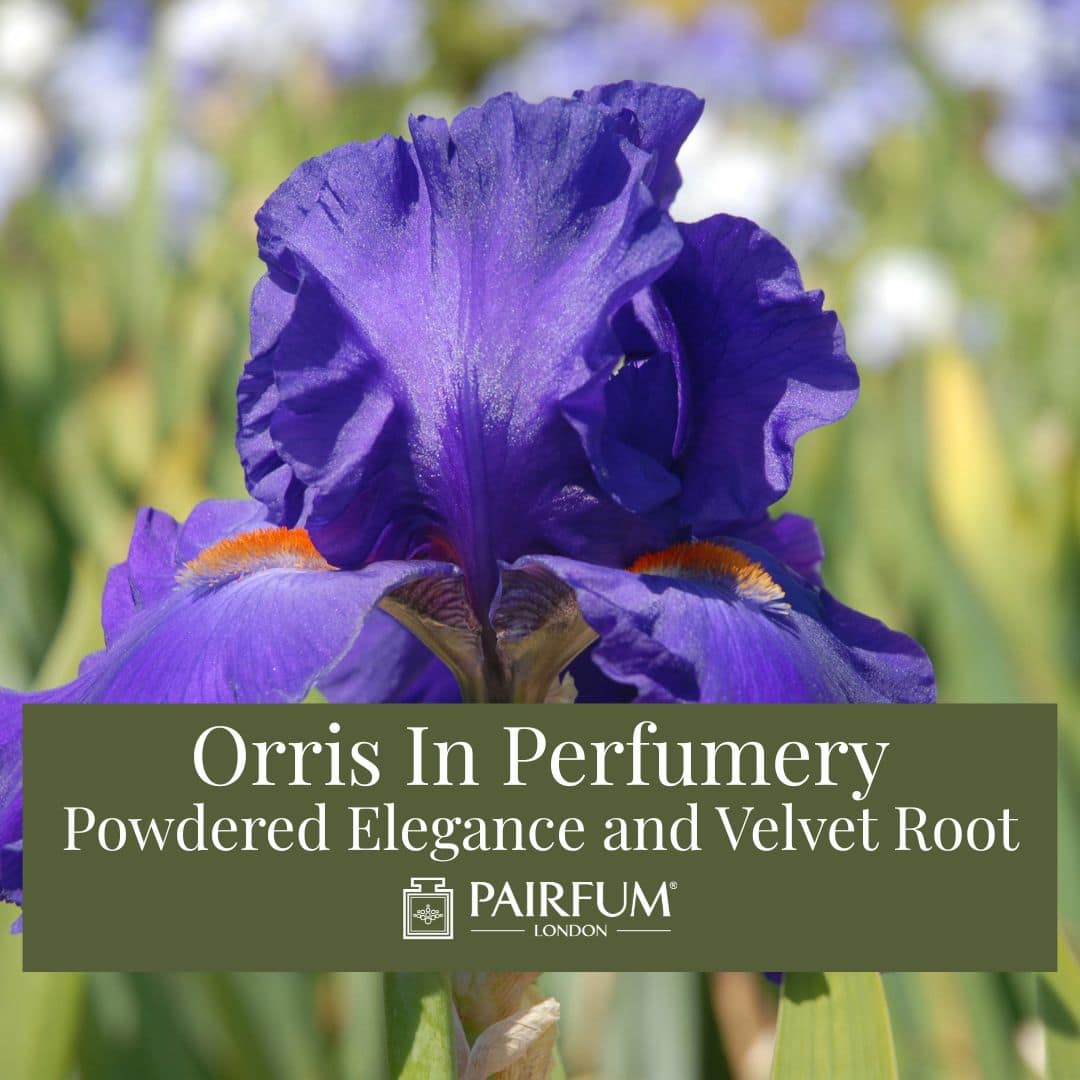
Orris In Perfumery

Orris in Perfumery: Powdered Elegance and Velvet Root

Orris refers essentially to the dried and ground rhizomes (the underground stems) of certain iris species, most notably Iris germanica and Iris pallida. It is highly valued in the perfume and spirits industries for its distinct powdery, violet, and earthy aroma, serving as a natural fixative to harmonise various scents. Historically, it has also been utilised in traditional medicine and cosmetic applications. After a multi-year drying process, the initial bitter, earthy odour matures into a sophisticated floral fragrance reminiscent of violets, rendering it a precious, though costly, botanical component.

There’s something quietly beautiful about orris. Powdery, soft, and smooth to the point of feeling creamy, it’s a note that lingers gently and leaves behind a feeling rather than a statement. A whisper of violet, pale suede, or warm fabric might come to mind when you try to describe it. Orris comes from the root of the iris flower, not the petals, and it takes years to become ready for perfume. That patience pays off. It’s a favourite during winter, when its velvet-like richness and lightly floral aura bring comfort and calm. Here, we look at the story behind orris, what gives it its distinctive character, and how it continues to hold a prized place in fragrance and perfumery today.

A Root with a Rich History

Orris isn’t new to perfumery, far from it. This soft, powdered note has been used in luxury oils and fragrance blends since ancient Egypt. Back then, dried iris root was burned with oils or added to balms, creams, and early lotions. By the time of the Renaissance, especially in places like Venice and Florence, finely ground orris root powder was packed into linen chests and wardrobes. It helped preserve textiles, repel insects, and scent garments with a gentle powder that aged gracefully.

  • Centuries ago, orris root was used as a fixative, helping other perfume ingredients last longer.
  • Its subtle nature made it a natural choice for adding softness and balance, especially when other ingredients were overly sharp or bold.
  • Before modern perfume-making, orris appeared in medicine, soap, and beauty preparations, often blended into powders and spirits for both scent and flavour.

In historical records, orris is sometimes referred to as the Queen Elizabeth root, a name linked to its popularity in Tudor England. Even as synthetic aroma chemicals emerged, orris retained its place, especially in refined perfume, where nuance matters more than impact.

The Iris Family Behind Orris

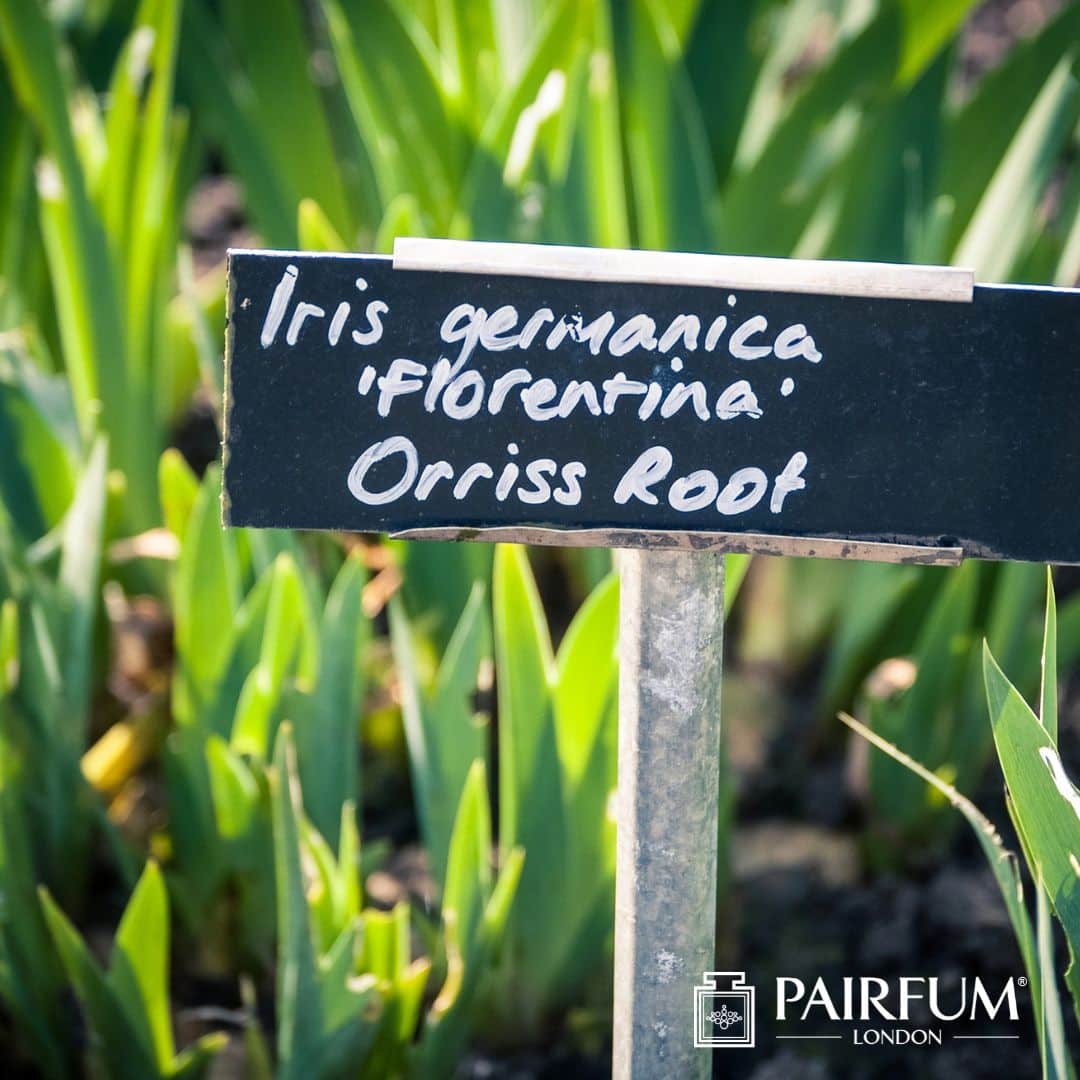
To understand orris, you need to understand iris. Several species are used, each lending subtle differences. The most prized varieties are Iris Pallida, Iris Germanica, and Iris Florentina. You may also see references to German iris or pallida in older perfumery texts.

  • Iris pallida is known for a softer, more floral profile.
  • Iris germanica brings slightly earthier, woody tones.
  • Iris florentina has long been associated with Italian orris production.

These iris plants are grown for their rhizomes, often called iris root once harvested. The living plant has very little scent. The magic only begins after drying and ageing, when natural compounds develop into what we recognise as orris.

Pairfum Lifestyle Reed Diffuser Tower Classic

From Flower to Fragrance: Extracting Orris Oil

It’s easy to think orris would come from the flower of the iris. But it’s the root, or rhizome, that holds the aroma. And the process of getting orris oil, often called orris butter, takes a long time.

  1. Iris roots are harvested from mature plants of Iris Pallida or Iris Germanica.
  2. The roots are washed, peeled, and left to dry for at least three years. During this time, the scent slowly forms.
  3. After ageing, the dried orris root is ground. At this stage, it may be sold as orris root powder for potpourri or traditional uses.
  4. Steam distillation or solvent extraction produces orris concrete, which is then refined into orris butter or, less commonly, orris absolute.

True orris butter is pale, waxy, and solid at room temperature. It melts with warmth, releasing a creamy, buttery iris aroma that is prized in high-end perfume.

Why Ageing Orris Cannot Be Rushed

Fresh iris root is almost scentless. This is one of the most important and least intuitive facts about orris, and a key reason it is so rare. According to documented agricultural and chemical studies, the characteristic aroma develops only during long-term ageing, as naturally occurring compounds slowly transform into aromatic molecules known as irones.

These changes happen over years rather than months. Attempts to speed up the process result in a flatter, less complex scent. This is why traditional producers insist on extended drying and storage, even though it delays any financial return.

Orris as an Ingredient in Modern Perfumery

Orris is one of the most expensive natural ingredients in perfumery. Its cost reflects time, labour, and low yield. For this reason, it is used sparingly, often as a base note or structural element rather than a feature.

As an essential oil substitute, orris butter provides depth rather than diffusion. It anchors lighter notes and smooths transitions between top and base. Many perfumers value it for how it blends with soft musk, sandalwood, amber, and patchouli, adding a polished, powdery finish.

Because of its density, orris also helps stabilise volatile ingredients, making a perfume last longer on the skin.

Fragrance Description Pink Powder Violet Rose Iris Orris

What Does Orris Smell Like?

It’s hard to describe orris without comparing it to textures. It doesn’t jump out the way citrus or spice might. Instead, it feels like a fragrance worn close to the skin. Silky and smooth, slightly creamy, with a refined powder quality. Many say it reminds them of:

  • Violet petals and soft floral powder
  • Old-fashioned face powder or cosmetics
  • A fine piece of paper, suede, or clean fabric
  • A whisper of almond, wood, or a faint fruity undertone

Orris can also carry a buttery iris impression, sometimes described as cosmetic or lipstick-like. This powdery effect is why it appears so often in classic perfume styles.

Orris Root Powder and Traditional Uses

Beyond perfume, orris root powder has a long history. It has been used in potpourri, scented drawers, and even early dental powders. In some traditions, powdered orris root was added to soap, giving a gentle scent and helping the bar age well.

Its use in flavour was rare but documented, especially in spirits and liqueurs, where a trace amount added a floral nuance. These uses declined as safety standards tightened, since prolonged exposure can cause mild irritation in some people.

Where Orris Is Grown Today

Today, commercial orris production is limited to a small number of regions. Italy remains the most significant source, particularly Tuscany, where iris florentina has been cultivated for centuries. The region’s dry summers, well-drained soils, and long agricultural tradition support the slow development required for high-quality orris root.

Smaller quantities are grown in parts of France and North Africa, but global production has declined. Many farmers have moved away from orris cultivation due to the long wait before harvest and the uncertainty of long-term pricing.

Orris Root

Why Orris Is Considered One of the Rarest Perfume Ingredients

Orris is often described as one of the world’s rarest perfume ingredients, not because the iris plant itself is uncommon, but because so few producers can sustain the process. Fields must be maintained for years without income, followed by further years of storage after harvest.

This extended timeline requires land, labour, and specialist knowledge passed down through generations. As a result, orris butter can command exceptionally high prices, reflecting time and expertise rather than simple scarcity.

Iconic Pairings and Notes That Suit Orris

Orris works best when paired thoughtfully. In perfumery, it often supports rather than leads.

Common companions include:

  • Soft musk for warmth and intimacy
  • Woody notes such as sandalwood or vetiver
  • Patchouli, used carefully to add depth without heaviness
  • Amber for resinous warmth
  • Jasmine in small amounts to lift the floral side
  • Juniper or citrus in the opening to contrast its softness

Together, these notes create balance. Orris smooths sharp edges and gives structure to complex perfume compositions.

Famous Orris Fragrances

Guerlain – Après l’Ondée

A classic composition where orris lends a delicate, powdery softness, blending seamlessly with violet and aniseed to create a wistful, atmospheric scent that feels both romantic and introspective.

Chanel – No. 19

Known for its elegant restraint, this fragrance uses orris to soften crisp green notes and iris, giving structure and poise while maintaining a cool, refined character.

Dior – Homme (Original)

A modern icon built around a smooth, buttery iris and orris accord, balanced with subtle woods and musk to create a contemporary, intimate fragrance with distinctive depth.

Pairfum London – Pink Powder & Violet

A floral fusion of Pink Powdery Rose Petals with Green Violet Leaf and Elegant Iris. The fragrance opens with top notes of Mandarin, Baies Rose and Pink Peppercorn, and finishes on a sumptuous base of Smooth Patchouli, Musk and Vanilla. Orris, Jasmine and Heliotrope enhance the heart note.

Orris in Winter Perfume Palettes

There is something fitting about orris in the colder months. When the air outside is sharp, the powdery warmth of orris feels comforting. It evokes wool, old books, and polished wood rather than sweetness.

  • In winter perfume, orris helps temper spice and resin.
  • It pairs well with incense, soft balsams, and woody accords.
  • It brings a calm presence that lasts throughout the day.

Because it sits close to the skin, orris perfume never feels overwhelming, even when layered with richer notes.

Bedroom Reed Diffuser Classic Perfumed Candle Room Spray

Natural Variations and Quality Differences

Not all orris is equal. Soil, climate, and ageing conditions all affect the final scent. Italian-grown orris, particularly from iris florentina, is often considered the benchmark. Differences between pallida and german iris also matter, with some lots leaning more floral and others more earthy.

Quality is judged by smoothness, lack of harshness, and the balance between powder and wood. Lower quality material may smell dry or dusty, lacking the creamy character associated with fine orris butter.

Orris and the Role of the Perfumer

Using orris well requires restraint. A skilled perfumer understands how little is needed. Too much can mute a fragrance or make it feel cosmetic. Used properly, it gives cohesion and elegance.

In a finished perfume, you may not immediately identify orris, but you would notice its absence. It is often the quiet reason a blend feels finished rather than fragmented.

A Note on Safety and Skin Use

As with many natural ingredients, orris must be handled carefully. In its raw form, orris root powder can cause irritation if inhaled or applied directly. In finished perfume, however, it is used at safe, regulated levels and is suitable for skin contact.

Why Orris Still Matters

Orris continues to hold attention because it never tries to be fashionable. In a market filled with bold launches and attention-grabbing notes, it offers something calmer and more assured. Powdery yet warm, woody yet floral, it brings together contrasts in a way that feels natural rather than engineered.

For those new to fragrance, orris can come as a quiet surprise. It encourages slower appreciation and a closer awareness of scent. For experienced perfume lovers, it remains a clear signal of quality and careful craft. As perfumery keeps evolving, this soft, velvety root still plays an essential role, connecting contemporary creations to centuries of tradition.

Pairfum Reed Diffuser Tower Classic Noir Pink Powder Violet

Exploring Orris Beyond Perfume 

While orris is best known for its role in fine fragrance, it has quietly made its way into other scented products. You will now find it in well-made candles, traditional soaps, and smaller niche items where subtle scent work is valued. Orris has a way of smoothing out a composition, taking away sharp edges and giving the whole fragrance a more considered feel. This makes it especially useful outside perfume, where balance matters more than impact.

Whether someone comes across orris as a concrete, an absolute, or the much-talked-about orris butter, the experience is rarely immediate. It is an ingredient that asks to be lived with rather than judged quickly. In perfumery, there are very few materials that manage to feel both rich and restrained at the same time, which is part of the reason orris remains so highly regarded.

Orris Base Notes in Pairfum London Home Fragrance

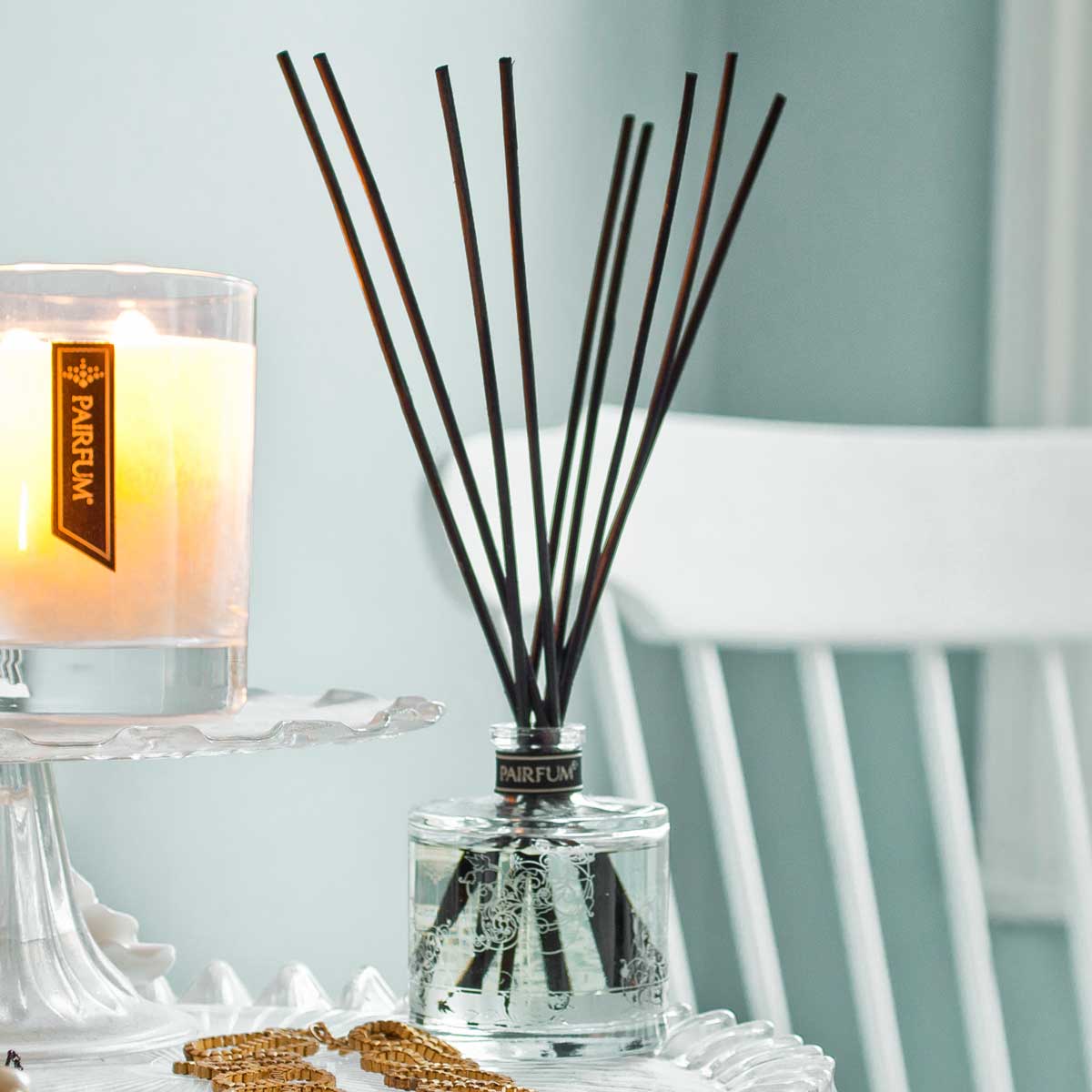
Using orris in the home brings a sense of calm that feels natural rather than styled. This classic reed diffuser tower is designed to release fragrance slowly, which suits a note like orris particularly well. Instead of filling a room all at once, the scent builds gently in the background. Over time, the powdery softness becomes more noticeable, adding warmth without ever feeling heavy.

Placed in a living room, bedroom, or hallway, the diffuser creates an atmosphere that feels settled and comfortable. It brings to mind freshly laundered fabrics, smooth wood surfaces, and a quiet kind of luxury. These are the same qualities that have made orris such a valued ingredient in perfumery for generations.

Pink Powder & Violet – Classic Tower Reed Diffuser by Pairfum London

This fragrance combines pink, powdery rose petals with elegant iris and fresh green violet leaf. The opening notes include mandarin, baies rose, and pink peppercorn, offering a gentle lift at first. As the scent develops, it settles into a soft base of patchouli, musk, and vanilla. Jasmine, orris, and heliotrope sit at the heart, helping to tie the composition together and keep it balanced.

Conclusion

Orris reminds us that some perfume ingredients cannot be rushed. From the long ageing process of the iris root to the delicate, powdery effect it brings to a finished scent, everything about orris reflects time and careful handling. It is never showy and never fleeting, yet it leaves a lasting impression. For anyone interested in how fragrance can feel deep without being overpowering, Orris continues to offer one of the clearest examples.

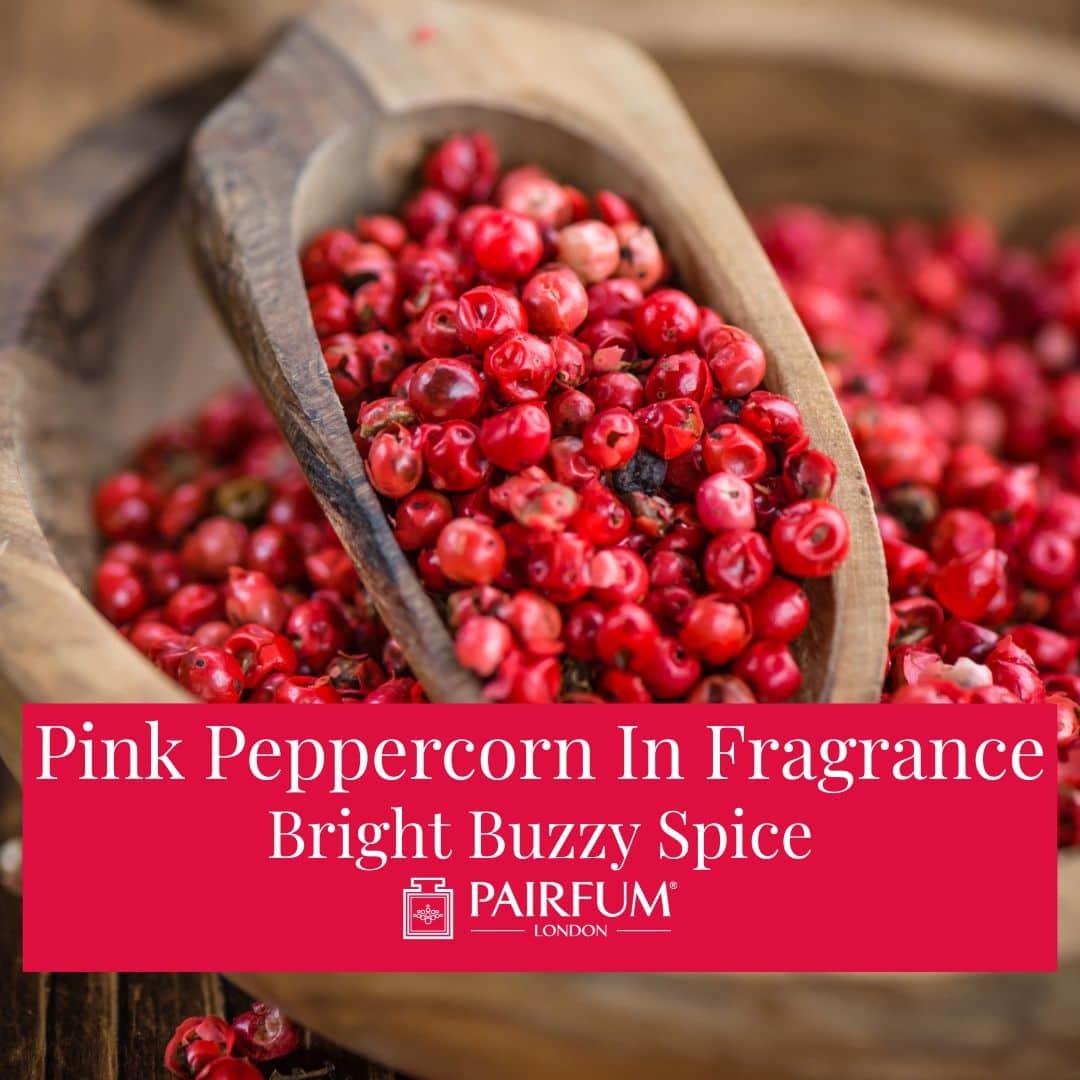
Pink Peppercorn In Fragrance

Pink Peppercorn In Fragrance: Bright Buzzy Spice

Pink peppercorns are the dried, sweet, and mildly spicy berries of the Peruvian pepper tree or Brazilian pepper tree, rather than true peppercorns. They offer a fruity, slightly citrus note to dishes such as fish, salads, sauces, and even desserts or cocktails, and are valued for their vibrant colour and delicate flavour. Pink peppercorns belong to the cashew family and are most often used as a garnish or light seasoning, adding a distinctive aroma and gentle warmth rather than sharp heat.

Pink Peppercorn is the sort of ingredient that catches you off guard in perfume. Light, fizzy, and just a little spicy, it adds a cheerful spark that lifts everything around it. You will often find it playing a key role in modern floral or woody fragrances, giving them a bright edge that feels fresh but still carries warmth. That makes it a perfect fit for early winter, when we are craving comfort and sparkle at the same time.

It is easy to mix up Pink Peppercorn with black pepper, especially when scanning a fragrance listing. But where black pepper is sharp and dry, pink peppercorn is sweeter, softer, and surprisingly fruity. It has a champagne-like pop that works in both classic and unconventional blends.

There is a quiet confidence to this note, never overpowering, just the right kind of zing. Let us look at where it comes from, how perfumers work with it, and which creations have used it particularly well.

A Little History of Pink Peppercorn

Despite its name, Pink Peppercorn is not a true peppercorn at all. It is the dried berry from the Schinus tree, often called the Peruvian pepper tree, found in parts of South America. The fruit has a rosy colour and mild peppery flavour, which is how it ended up in kitchens long before perfumery.

More specifically, pink peppercorns come from two closely related plants: the Peruvian pepper tree, also known as Schinus molle, and the Brazilian pepper tree, or Schinus terebinthifolius. These trees are sometimes collectively referred to as the Peruvian peppertree, and they are part of a different plant family from true pepper.

This distinction matters. True peppercorns, including black peppercorns, white pepper, and white peppercorns, all come from the same vine and are considered real peppercorns. Pink peppercorns, by contrast, come from a different plant entirely, even though they resemble a regular peppercorn once dried.

  • Unlike spices like clove or cinnamon with ancient histories in fragrance, Pink Peppercorn is a relatively new addition.
  • It gained popularity among modern perfume houses over the past few decades, particularly as preferences shifted toward lighter, more playful scents.
  • Its slightly fruity, gently spicy character made it easy to include in blends across seasons.

The berries themselves start as small green fruit before turning pink as they ripen. These ripe berries are harvested, dried, and transformed into the familiar pink peppercorn. In culinary contexts, they are sometimes called pink berry or baies rose.

It does not have the weight of more established spices, but that is exactly what makes it helpful in adding a clean but shiny feel to a perfume.

Fragrance Description Pink Powder Violet Rose Iris Orris

How It’s Sourced and Extracted for Perfume

Pink peppercorns grow in clusters on the pepper tree, thriving in warm climates across South America. Both the Peruvian pepper and Brazilian pepper varieties produce generous crops of fruit. These ripe berries are typically picked by hand to protect the delicate berry skins.

Once harvested, the fruit is dried. Each dried berry becomes a peppercorn with a vibrant colour and distinctive flavour. In perfumery, extraction focuses on preserving that freshness.

  • Rather than steam distillation, Pink Peppercorn oil is often obtained through CO2 extraction.
  • This process captures the fruity, citrus facets without introducing bitterness.
  • The result is a naturally bright and zesty perfume ingredient with complex layers.

Unlike black pepper or green peppercorns, which can feel sharp and dry, pink peppercorns feel light and buoyant. This makes them ideal for top or heart notes, where lift and movement are needed rather than depth alone.

Pink Peppercorn, True Pepper, and Common Confusions

Because of its name and appearance, pink peppercorn is often confused with true peppercorns. However, it is not a true pepper at all. True peppercorns come from the pepper vine and include black pepper, white pepper, and green peppercorns.

Pink peppercorns belong to a different plant family. They are closer relatives of plants such as poison ivy, which explains why some people may experience sensitivity when handling large amounts of the raw fruit. In fragrance use, this is not a concern, as the material is highly refined and used sparingly.

Pink peppercorns are also sometimes compared with chilli peppers, but this is another misconception. Chilli peppers deliver heat. Pink peppercorn delivers aroma, sweetness, and a mild peppery flavour without spice burn.

Safety Considerations Around Pink Peppercorn

Pink peppercorns are generally safe when used in small quantities, but they are not suitable for everyone. Because the pepper tree is related to plants such as poison ivy, some individuals may experience allergic reactions when handling or consuming pink peppercorns.

This sensitivity is rare, but it is documented. As a result, pink peppercorns are often labelled separately from true peppercorns in food settings. In fragrance, the extraction process removes proteins that typically cause irritation, making the ingredient safe for use in perfumes under regulated standards.

These distinctions are one reason pink peppercorn is treated differently from true pepper in both kitchens and perfumery.

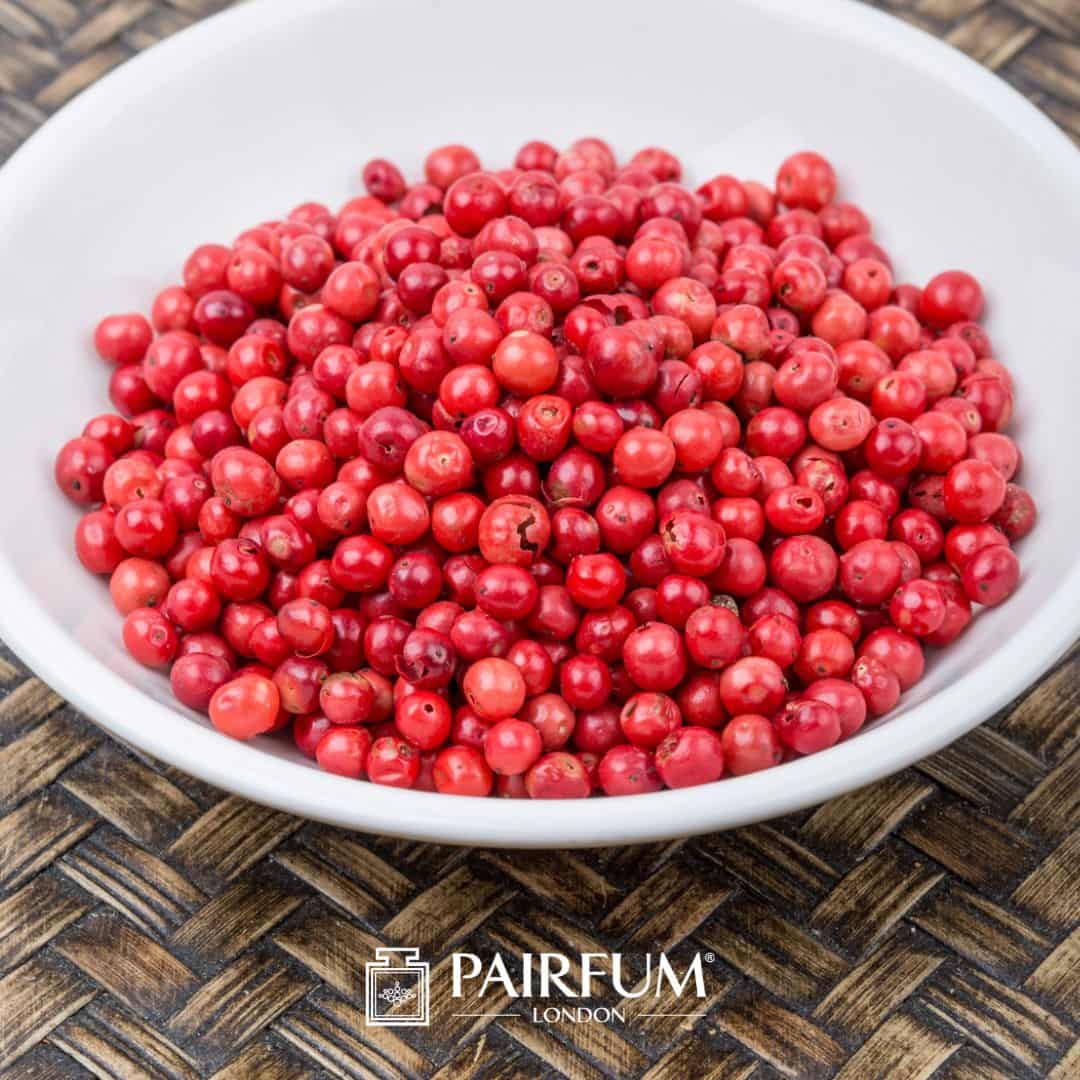
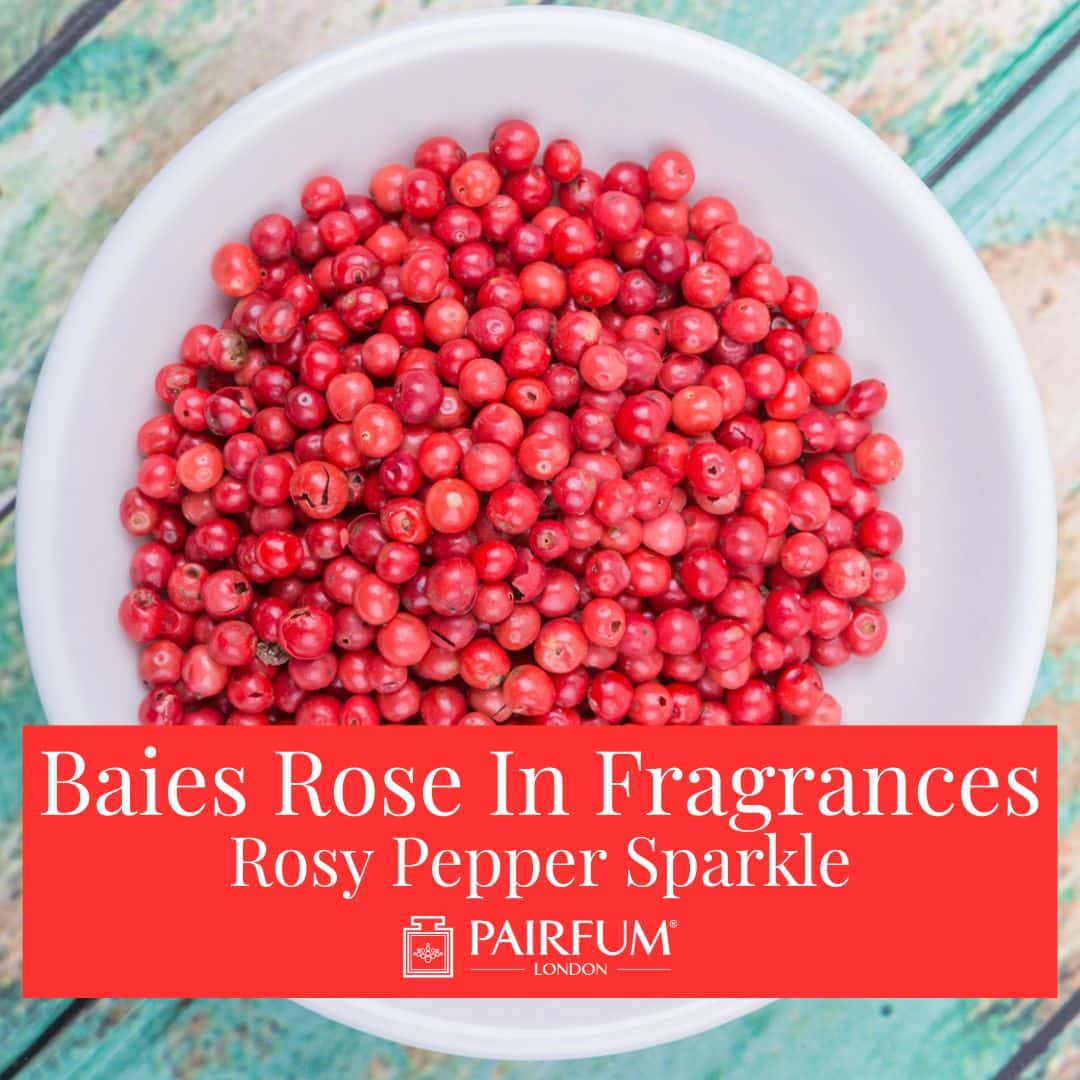
Pink Peppercorn In A Bowl

Culinary Associations and Everyday Uses

Outside perfumery, pink peppercorns are used mainly for their colour and gentle flavour. They often appear sprinkled over a salad, folded into butter, or used as a decorative element in sauces. A mixed pepper mill may include pink peppercorns alongside black peppercorns, white peppercorns, and green peppercorns.

In cooking, pink peppercorns are rarely used alone. They are usually part of a spice blend designed to add visual appeal rather than heat. Their flavour pairs well with vegetables, light fish dishes, and creamy sauces, where stronger pepper would overwhelm the dish.

Because pink peppercorn is not a regular peppercorn, chefs tend to treat it carefully. It adds sweetness and fruit rather than sharp spice, which mirrors how perfumers use it in fragrance.

What It Brings to Perfume Blends

Pink Peppercorn works a little like a squeeze of citrus in cooking. It does not necessarily take centre stage, but it changes everything around it. It adds movement, clarity, and edge.

  • In woody blends, it cuts through thick, earthy tones to add contrast and sparkle.
  • With florals like rose, peony, or jasmine, it can sharpen the softness and add dimension.
  • When paired with musks and ambers, it keeps the warmth feeling airy rather than heavy.

It is especially helpful in perfumes that want to feel youthful but not simple, polished but never sweet. There is a dry quality to it that avoids sugariness, even when used alongside fruit or flower notes.

That is why Pink Peppercorn really shines in winter perfumes, trying to bring lightness into colder months. It creates a bright opening that still fits with the deeper, cosier base that winter-heavy perfumes often lean into.

Pink Peppercorn also brings a feeling of sparkle and freshness to a composition that might otherwise feel a bit too serious or heavy. While it is subtle, it can make a fragrance seem more lively and energetic, perfect for days when you want your scent to add a little extra to your mood. This is why it is often chosen for perfumes aiming to thread the line between comfortable and upbeat, working equally well in daytime or evening wear. Its brightness bridges the gap between cooling citrus notes and deeper spices or woods, helping each layer unfold smoothly on the skin.

Pairfum Fragrance Candle Flacon Room Perfume Spray Bathroom Spa 1 1

Pink Peppercorn Compared to Other Pepper Notes

When set beside black pepper, pink peppercorn feels rounder and more fragrant. Black peppercorn delivers sharp spice, while white peppercorns can feel dusty and intense. Pink peppercorns sit apart, offering a balance of spice, sweetness, and fruit.

Green peppercorns bring a fresh, vegetal edge, but they lack the brightness of pink peppercorns. Red peppercorns is a name sometimes used interchangeably with pink peppercorns, referring mainly to their colour rather than flavour.

This contrast explains why perfumers choose pink peppercorn when they want spice without aggression.

How Pink Peppercorn Differs From Other Peppercorns

True peppercorns all come from the same plant species and differ mainly by processing. Black peppercorn is dried while still green, white peppercorns are fermented and peeled, and green peppercorns are preserved before drying.

Pink peppercorn does not follow this process. It is harvested from a different plant and dried whole, retaining its berry-like structure. This is why it lacks the sharp bite found in true peppercorns.

Understanding this difference helps explain why pink peppercorn behaves differently in both cooking and fragrance. It contributes aroma and nuance rather than intensity.

Iconic Fragrances That Feature Pink Peppercorn

You are more likely to find Pink Peppercorn in niche perfumes, where perfume creators lean into ingredients that feel interesting and modern. But it has also crossed into more classic compositions, giving a lifted sparkle to long-loved favourites.

  • It shows up in airy, citrus-forward perfumes where it acts like a bridge between fruit and spice.
  • In romantic floral perfumes, it gives a slight shimmer that keeps bouquets from feeling too heavy.
  • In moodier perfumes with patchouli, incense, or woods, it is used to sharpen the edges and brighten the entry.

In many cases, Pink Peppercorn is blended with citrus, balsamic resins, or soft white flowers. Some perfumers pair it with juniper berries to enhance its crisp, aromatic quality.

When a fragrance needs an initial burst of uplifting energy, Pink Peppercorn is often chosen to do just that. Its inclusion often signals a perfume with movement and development, rather than one that stays flat or static.

Terre d’Hermès by Hermès

A modern classic built around mineral woods and citrus, Terre d’Hermès uses pink peppercorn to add a bright, peppery lift to its opening. The note sharpens the freshness without adding heat, helping the fragrance feel crisp and structured rather than heavy.

Coco Mademoiselle by Chanel

In Coco Mademoiselle, pink peppercorn adds sparkle to a polished floral composition. It brings a subtle spiced freshness that cuts through the sweetness of citrus and rose, giving the fragrance its distinctive, energetic opening.

Portrait of a Lady – Editions de Parfums Frédéric Malle

This rich, opulent fragrance features pink peppercorn as part of its complex spice structure. Here, the note adds brightness and contrast to deep rose, patchouli, and woods, preventing the composition from feeling dense at the start.

Iconic Pink Peppercorn Home Fragrances by Pairfum London

Pink Powder & Violet – Flacon Room Spray by Pairfum London

A floral fusion of Pink Powdery Rose Petals with Green Violet Leaf and Elegant Iris. The Fragrance opens with top notes of Mandarin, Baies Rose and Pink Peppercorn, and finishes on a sumptuous base of Smooth Patchouli, Musk and Vanilla. Orris, Jasmine and Heliotrope enhance the heart note.

Pairfum Flacon Perfume Room Spray Signature Pink Powder Violet

The Lasting Appeal: Why Pink Peppercorn Endures

There is a reason Pink Peppercorn keeps turning up in both niche blends and more familiar perfumes. It is not just about adding warmth or spice. It brings lift, structure, and a sense of easy charm.

This is a note that makes perfume feel clearer and more joyful without making it feel frivolous. Whether used in a floral, a woody perfume, or something herbal and crisp, it lets other ingredients shine. By doing so, it leaves its own quiet flash of energy behind.

For anyone interested in fragrance ingredients, pink peppercorn is a fascinating example of how a dried berry from a pepper tree can redefine what spice means in scent.

Enduring Interest in Pink Peppercorn

Pink peppercorn remains appealing because it occupies a unique space. It suggests spice without heat, and freshness without acidity. This balance allows it to work across many contexts, from food to fragrance.

Its versatility, combined with its distinctive origin and appearance, has kept it relevant as tastes have shifted towards lighter, more nuanced sensory experiences. Rather than replacing true pepper, pink peppercorn stands alongside it as a complementary ingredient.

New Year New Fragrance

New Year, New Fragrance: Finding The Scent That Defines The New You

The start of a new year has a way of making people pause, even if only briefly. It is often the smaller details that come into focus first, the everyday things that quietly shape how life feels. Fragrance sits firmly in that category. A scent can be tied to a memory, a mood, or a sense of confidence, sometimes without us realising it at the time. Trying something new does not mean letting go of old favourites. It is more about curiosity and seeing whether a different fragrance might suit the person you are becoming.

Some people naturally lean towards warm, spiced scents, while others prefer something fresh, floral or quietly woody. There is no right direction to take. Choosing a fragrance for the year ahead can simply be a way of marking intention, however loosely defined that intention might be. It is a gentle nudge beyond the familiar, and an opportunity to let a new scent by Pairfum London find its place in everyday life.

Oriental Fragrances

Spiced Coffee & Oaked Vanilla

Pink peppercorn and pear give the opening of this Oriental Spicy fragrance a bright, slightly playful lift, softened by orange blossom. Very quickly, the scent moves into deeper territory, where roasted coffee takes on a smoother edge through the presence of jasmine. As it settles, oak-aged vanilla becomes more prominent, supported by patchouli and cedarwood that add warmth and polish.

This fragrance often appeals to those who feel ready to step away from predictable choices. The mix of coffee and florals feels modern without being showy, and there is a confidence to how it wears over time. It is the kind of scent people tend to comment on when they notice it unexpectedly. Thanks to its layered warmth, it works just as well later in the day as it does in the morning, making it an easy signature for the year ahead.

Cardamom, Tonka & White Oud

A lively rush of lime and mandarin sets the tone here, with cardamom, nutmeg and clove adding immediate warmth. Cassis weaves through the opening before florals begin to emerge, with white lily, rose and orange blossom shaping the heart. In the background, tonka bean, white oud, sandalwood, cedarwood and amber build a rich and lingering base.

This is a fragrance for those who enjoy a sense of momentum in their scent. It opens brightly, grows warmer as it develops, and leaves a lasting impression without feeling heavy. Many people find that it becomes more noticeable several hours after first wearing it. It feels well-suited to anyone embracing change or renewed focus in the year ahead.

Eau De Parfum Person Reflection Cardamom Tonka White Oud Dress 1 1

Floral Perfumes

Pink Rose & Sensuous Musk

Lemon and lime introduce this fragrance with a fresh sparkle, followed by a gentle hint of ripe peach. The floral heart feels soft rather than dramatic, with a pink rose joined by magnolia and frangipani. As the fragrance wears on, musk and amber come through, supported by precious woods that give it a subtle warmth.

There is an uplifting quality to this scent that makes it feel especially fitting for new beginnings. It manages to feel light and elegant at the same time, avoiding anything overly sweet. It is often chosen by those who want a floral that feels easy to live with day after day. The musky base gives it quiet confidence, allowing it to sit comfortably as an everyday floral with character.

Neroli, Musk & Orange Blossom

This fragrance begins with neroli, offering a clean and natural freshness from the first spray. Orange blossom and Madagascan jasmine follow, creating a white floral heart that feels balanced and unforced. Cedarwood and musk form the base, adding softness and a gentle sense of depth.

For those who prefer clarity over complexity, this scent feels reassuring and easy to wear. The florals are refined rather than loud, giving it a timeless quality that suits many occasions. It often feels particularly comforting when worn close to the skin. As it settles, the musky notes provide warmth and comfort, making it a dependable choice for the year ahead.

Aromatic Scents

Sea Salt, Sage & Amber

Sage and grapefruit lead the opening of this fragrance, with bergamot and tangerine adding brightness. As it develops, the scent takes on a coastal feel, shaped by sea salt, kelp and marine notes that suggest fresh air and open space. Musk, amber and cedarwood soften the finish and keep everything well balanced.

This fragrance feels particularly refreshing without being sharp or fleeting. The marine heart gives it character, while the base ensures it remains wearable throughout the day. Some people associate it with moments of mental clarity or a change of pace. It is often chosen by those looking for a clean, modern scent that still feels considered and distinctive.

Ginger, Elemi & Vetiver

Bright citrus notes of bergamot and grapefruit appear first, quickly warmed by ginger, elemi, nutmeg and cinnamon. Lavender adds a calming touch before a complex floral heart emerges, featuring geranium, rose, freesia, gardenia, jasmine and orange blossom. Subtle hints of coconut and raspberry sit beneath the florals. Vetiver, woods, amber, musks, vanilla and moss shape the base.

This fragrance rewards attention as it wears, revealing different facets over time. It is well-suited to those who enjoy contrast in their scent, moving between freshness, spice and softness. It tends to feel slightly different depending on the time of day it is worn. The base gives it depth and longevity, making it a confident choice for expressing individuality.

Eau de Parfum Person Reflection Ginger Elemi Vetiver Man Coat 1 1

Fougere Perfumes

Bergamot, Basil & Patchouli

The opening here is fresh and green, with bergamot and lime supported by leafy notes and basil. Floral tones of lily, freesia, violet leaf, rose, and geranium form the heart, adding brightness and balance. Patchouli, vetiver, sandalwood, cedarwood and amber anchor the fragrance and give it a lasting presence.

This fragrance feels versatile by nature, shifting easily between freshness and warmth. It has a classic fougere structure but wears in a contemporary way. Many people return to it because it feels familiar without becoming dull. For those reassessing their signature scent, it offers reassurance alongside character.

Grapefruit, Pepper & Black Cedar

Grapefruit and bergamot give this fragrance an energetic start, immediately catching attention. As it develops, leather comes forward, supported by black pepper and nutmeg that add warmth and texture. The base is deep and woody, built around black cedar, patchouli, tonka bean and moss.

There is a boldness to this scent that feels deliberate rather than overpowering. The freshness of the opening keeps it approachable, while the leather and woods give it strength. It is often worn when someone wants to feel especially self-assured. It suits those who want their fragrance to project confidence and direction.

Woody Fragrances

Spiced Rum, Lime & Guaiac Wood

Rum sets the tone at the opening, warm and full-bodied, lifted by lime and lemon with a touch of spice from nutmeg and pepper. The heart introduces tuberose and iris alongside a pronounced leather note, adding texture and depth. Guaiac wood, cedarwood, amber, vanilla pod and musk complete the fragrance with a smooth, lingering finish.

This scent has a measured richness that unfolds gradually. It appeals to those who enjoy craftsmanship and detail, rather than immediate impact. Many find it particularly satisfying during quieter, more reflective moments. The warmth of the base makes it well-suited to a more intentional fragrance choice.

New Year Celebrations

Chypre Perfumes

Mandarin Blossom & Sandalwood

Mandarin blossom opens this floral chypre with a bright, fresh note, joined by apricot and white hyacinth. The heart feels soft and romantic, blending sweet pea, jasmine and ylang-ylang. As it dries down, sandalwood, patchouli, amber and musk provide warmth and a gently lingering trail.

This fragrance feels elegant without being formal. The contrast between freshness and a traditional chypre base gives it depth, while remaining approachable. It often appeals to those who enjoy classic styles interpreted with lightness. It works beautifully as a personal signature.

Scarlet Rhubarb & Oakmoss

Tart rhubarb introduces this fragrance with immediate vibrancy, joined by sun-dried fruits and ripe strawberries. Apple and apricot lead into a floral heart of white gardenia, which softens the brighter notes. Oakmoss and musk form the base, adding richness and longevity.

There is a confidence to how this fragrance develops, moving from bright and lively to warm and grounded. The chypre base gives it structure, while the fruit keeps it expressive. It tends to leave a lasting impression without needing to be reapplied often. It is a strong choice for marking a new chapter.

Fruity Fragrances

Black Cherry & Oolong Tea

Black cherry and red berries define the opening here, lifted by bergamot and rounded with almond. The heart introduces oolong tea alongside Bulgarian and Turkish roses, with a gentle hint of liquorice adding interest. Aniseed, tonka bean, iris and patchouli complete the fragrance with a smooth and balanced base.

This scent feels thoughtful and composed rather than overtly sweet. The tea note brings calm sophistication, while the fruit keeps it engaging. Many people find it feels particularly personal, as though it settles uniquely on them. As it wears on, the base adds depth and confidence.

Pairfum Eau de Parfum Person Reading Black Cherry Oolong Tea 1 1

Bringing in the New Year with Pairfum London

For those who enjoy discovering a new fragrance at the start of the year, the Pairfum London Fragrance Library Perfume Experience Box offers an easy and thoughtful way to explore without commitment. It allows you to spend time with different scent families, noticing how each one feels across different days and moments, before deciding which fragrance truly resonates. It is a relaxed, personal approach to finding a scent that suits where you are now.

Discover the PAIRFUM Fragrance Library Perfume Experience Box

The Fragrance Library Perfume Experience Box is a curated collection of luxury extrait de parfum samples, each crafted with high concentrations for depth and longevity. Presented in elegant packaging, the set includes a range of distinctive fragrances, giving you the chance to experience how each develops on your skin over time. It is designed for those who value quality, craftsmanship and the freedom to explore fragrance at their own pace.

Pairfum Collection Niche Perfume Experience Fragrance Library 6 Square

Final Thoughts

Finding a new fragrance is rarely an instant decision. Often, it is the way a scent behaves over time that matters most, how it settles on the skin, how it feels during ordinary moments, and how it quietly becomes part of a routine. What counts is not following trends or rules, but choosing something that feels honest and comfortable. When a fragrance fits naturally, it does more than smell good. It becomes part of how the year is remembered.

Baies Rose In Fragrance

Baies Rose In Fragrances: Rosy Pepper Sparkle

Baies Rose, or pink peppercorn, is utilised as both a culinary spice with a sweet, fruity, and subtly peppery taste and a favoured note in perfumery for its vibrant, spicy, and fresh floral scent. It is not a true pepper but a berry related to the cashew family.

There is a light, rosy spice that shows up in many modern perfumes, especially as the weather cools. It is soft, warm, and uplifting without being too floral or too sharp. This bright note is called Baies Rose, also known as pink pepper. The name can be misleading, as it is not a rose at all, despite its gentle association with roses and its soft, petal-like touch.

Baies Rose brings a gentle warmth that blends beautifully with florals, woods, or vanillas. It does not shout. Instead, it adds energy and polish to many niche fragrance creations, especially those made for autumn or early winter. If you enjoy aromas that are a little spicy but still cheerful and wearable, you have likely come across this note before, even if you did not know its name.

Take a closer look at this creamy pink berry, where it comes from, how it is used, and why perfume lovers return to its soft spice again and again over time and across different styles of scent.

What Is Baies Rose?

Baies Rose refers to the dried pink berries from the Peruvian pepper tree. These berries look a bit like red peppercorns, which is why they are often confused with pink peppercorns or even standard black peppercorns, but they do not belong to the same botanical family. Despite the name, there is no direct link to a rose flower either.

The aroma of baies roses is what makes it stand out. It combines several facets into a balanced whole:

  • Slightly fruity, with a hint of sweet berry and subtle fruit
  • Warm and lightly pepper-like, without aggressive heat
  • Rounded by a floral softness that brings roses to mind

This soft piquancy makes it an appealing addition to many perfume structures. It can lift a composition, add brightness, or gently contrast heavier elements. Perfumers often describe it as an intriguing spice because it suggests warmth without overwhelming the senses. Among the many spice materials used in perfumery, baies roses offer one of the most approachable profiles.

Baies, Berries, and Botanical Roots

The word baies simply means berries in French, and this ingredient lives up to its name. The small pink berries are sometimes described as jewelled seeds because of their glossy surface and vivid colour, ranging from pale blush to deep crimson.

These berries grow on trees native to South America, though they are now cultivated in other parts of the world, including regions with similar climates such as New Zealand. The berries have long been used in cooking, where they appear in sauces, marinades, and seasoning blends, valued for their gentle sweetness and aromatic pepper tone.

Unlike culinary peppercorns, which deliver heat, these pink peppercorns provide aroma first. Their flavour hints at pomegranate, crimson juice, and even rich ruby fruits, making them popular with chefs as well as perfumers.

Fragrance Description Pink Powder Violet Rose Iris Orris

A Bit of History and Origin

Baies Rose grows mainly in South America, especially in Peru and Brazil. The tree it comes from, Schinus molle, has been part of local life for centuries. Indigenous communities used the berries in food, medicine, and daily rituals, valuing their scent and gentle stimulating quality.

In perfumery, baies roses appeared much later. Their rise began in the 20th century, when perfumers started seeking alternatives to heavy spice materials. Black pepper and clove were powerful but could dominate a composition. Pink peppercorn offered a softer option, with more nuance and less heat.

This shift aligned with changing tastes. As people looked for fragrances that felt lighter and more natural, baies roses became popular. Their ability to suggest warmth while remaining airy made them suitable for daily wear, office environments, and modern lifestyles. Over the years, they have become a familiar but still interesting presence in fine fragrance.

Culinary Use and Sensory Parallels

Before becoming popular in perfume, baies roses were well known in cooking. They are used to season fish, vegetables, cheeses, and light sauces, where their gentle pepper quality enhances rather than dominates.

Culinary descriptions often mention hints of pomegranate, crimson juice, and even rich ruby fruits. These associations help explain why the note translates so effectively into fragrance, where it adds brightness without heaviness.

The crossover between culinary and olfactory use also contributes to the familiarity of the scent. Many people recognise it instinctively, even if they cannot name it.

How Baies Rose Is Extracted and Used in Perfumery

To transform the dried berries into usable fragrance oil, perfumers rely on careful extraction. The most common methods are steam distillation and gentle solvent processes, both designed to preserve the delicate aromatic molecules.

The resulting oil captures the essence of the pink berries: lightly spicy, faintly sweet, and softly floral. In perfume structures, baies roses most often appear in the top notes, where they provide an immediate sparkle. Sometimes they are also used in the heart to bridge fresh openings and deeper bases.

Common pairings include:

  • Citrus notes, where pepper adds lift and contrast
  • Vanilla, which enhances warmth and sweetness
  • Rose and other floral notes, reinforcing a rosy impression
  • Woods and musk, which ground the composition

Because this ingredient is never too forceful, it can be layered without risk. It adds complexity rather than dominance, making it a favourite among perfumers crafting balanced creations.

Bedroom Reed Diffuser Luxury Scented Candle Room Spray 1 1

Baies Rose in Modern Perfumery

In contemporary perfumery, baies roses are valued for their versatility. They appear in a wide range of styles, from minimalist compositions to layered niche blends.

They work particularly well alongside:

  • Citrus, where pepper sharpens the freshness.
  • Woods, where they provide lift and contrast.
  • Florals, especially roses, where they enhance radiance.
  • Soft bases, including musk, which benefit from a bright opening.

In some perfumes, the note is used almost transparently. In others, it is more pronounced, offering a clear touch of spice that defines the opening impression.

Iconic Perfumes Featuring Baies Rose

Today, baies roses appear in countless modern perfumes, particularly those aimed at autumn and winter wear. They are especially effective in blends that need a bright opening before settling into something richer.

You will often encounter them in:

  • Spicy floral fragrances, where pepper lifts petals and prevents sweetness from becoming heavy
  • Gourmand styles, where the berry facet plays against edible notes
  • Woody perfumes, where pink peppercorns cut through density

This ingredient works beautifully with patchouli, amber, cedar, and rose. When paired with woods, baies roses bring clarity. When paired with florals, especially roses, they enhance freshness. Even in compositions featuring juniper or aromatic herbs, a hint of pink peppercorn adds polish.

Although rarely the star, their presence is unmistakable once you recognise it: a lively opening that softens into warmth, leaving a creamy scent behind.

Iconic Baies Rose Fragrances

Le Labo – Baie 19
A modern, mineral fragrance where baies rose adds a cool, peppery brightness to damp earth, woods, and soft musk, giving the scent its clean yet atmospheric opening.

Chanel – Chance Eau Fraîche
In this fresh woody floral composition, baies rose contributes a gentle pepper sparkle that lifts citrus and floral notes, keeping the fragrance light, polished, and energetic.

Hermès – Eau des Merveilles
Here, baies rose is used subtly to add warmth and contrast, softening amber and woody notes while maintaining an airy, refined character rather than overt spice.

Pairfum London – Pink Powder & Violet

A floral fusion of Pink Powdery Rose Petals with Green Violet Leaf and Elegant Iris ! The fragrance opens with top notes of Mandarin, Baies Rose and Pink Peppercorn, and finishes on a sumptuous base of Smooth Patchouli, Musk and Vanilla. Orris, jasmine and Heliotrope enhance the heart note.

Texture, Touch, and the Feeling of Baies Rose

One of the most appealing qualities of baies roses is the way they feel in a fragrance. They create a smooth transition from the first spray to the dry-down, offering a tactile sense of comfort. Many people describe this as a silky or creamy scent, even when no dairy or vanilla notes are present.

This sensation comes from the balance between pepper and fruit, between brightness and warmth. The result is a fragrance that feels close to the skin, offering a gentle touch rather than an aggressive projection. It is a quality that suits everyday life and changing seasons.

In September, when the air begins to cool, perfumes with baies roses often feel just right. They echo the shift in nature without feeling heavy, marking a subtle change in time and mood.

Baies Rose

Baies Rose Beyond Perfume

Although best known in fragrance, baies roses have a broader cultural presence. In food, they are used to season fish, vegetables, and even desserts. Their gentle pepper note enhances rather than masks other flavours.

It is important to note that these berries are safe for culinary use but not suitable for animals, which is why they are handled carefully outside of human consumption. This distinction is part of the essential information surrounding the ingredient.

Their versatility has also made them popular in scented candles, bath products, and home fragrances, where a mild spice can create a welcoming atmosphere without overwhelming a space.

Choosing and Sharing Fragrance with Baies Rose

Perfumes featuring baies roses are often chosen as thoughtful presents. Their broad appeal makes them suitable as a gift for many tastes. Because the note is neither too sweet nor too sharp, it works well for people new to fragrance as well as seasoned enthusiasts.

They are commonly found in curated gift sets, alongside lotions or travel sprays. When ordering such items, people often appreciate clear delivery options, especially around a special date or celebration.

In this context, baies roses play a practical role. They help ensure the fragrance will be worn and enjoyed, rather than set aside.

Baies Rose Fragrance at Pairfum London

Pink Powder & Violet – Large Bell Shape Reed Diffuser by Pairfum London

A floral blend of Pink Powdery Rose Petals with Green Violet Leaf and Elegant Iris. The scent opens with top notes of Mandarin, Baies Rose and Pink Peppercorn, and concludes on a sumptuous base of Smooth Patchouli, Musk and Vanilla. Additionally, Orris, jasmine and Heliotrope work to enhance the heart note.

Pairfum Large Reed Diffuser Bell Noir Pink Powder Violet

A Modern Classic Ingredient

Over the years, baies roses have moved from novelty to staple. They reflect a broader trend in perfumery toward transparency, balance, and comfort. As tastes evolve, this ingredient continues to adapt, appearing in new interpretations and combinations.

Its enduring appeal lies in its ability to enhance without overwhelming. Whether supporting rose, wood, or gourmand notes, it adds just enough pepper to keep things interesting. It speaks to people who value subtlety and craftsmanship.

In the end, Baies Rose is less about making a statement and more about enhancing everyday moments. It brings warmth, sparkle, and a sense of ease to fragrance, reminding us that sometimes the smallest berries leave the longest impression.

Persimmon In Fragrance

Persimmon in Fragrance: Velvet Fruit with Subtle Sweetness

A persimmon is a sweet, edible orange fruit from the Diospyros genus, frequently referred to as kaki or Sharon fruit, known for its honey-like flavour and jelly texture when ripe (though firm varieties also exist). Popular in winter, these fruits are rich in fibre, minerals, and vitamins (like beta-carotene), with different types eaten firm (like an apple) or soft (scooped with a spoon). Their skin and flesh are usually edible, often exhibiting brown specks (resulting from tannins) when ripe.

Persimmon is not an obvious perfume note. Most people do not think of fruit like this when they think about fragrance. Still, it quietly fits colder months. As winter approaches and the air changes, scent choices tend to shift. Heavier. Softer. Less bright. This is where persimmon begins to make sense.

It is not sugary. It is not loud. Persimmon brings a light sweetness and a smooth feel that stays close to the skin. It supports a fragrance rather than taking over. In autumn and winter, persimmons contribute to a sense of comfort that feels familiar rather than dramatic.

In the sections below, we look at how persimmons entered perfumery, how the persimmon tree is grown and classified, and why this fruit works so naturally in both personal fragrance and the persimmon home.

Botanical Origins and the Persimmon Tree

The persimmon belongs to the genus Diospyros, which includes many trees and shrubs. Some of these species are also known for ebony wood. The most widely grown persimmon is Diospyros kaki. It is often called the Japanese persimmon, or simply kaki. This fruit originated in China and later spread to Japan and South Korea, where it became part of everyday life.

A persimmon tree is deciduous and slow-growing. Most reach between five and ten metres. The tree develops broad leaves that protect the fruit as it ripens. Its roots run deep, which helps it tolerate cooler conditions. Many people plant the tree for appearance as much as for fruit.

In late winter, bare branches holding bright orange persimmons are a familiar sight in parts of Asia. The persimmon leaf has also been used traditionally, particularly in teas and food wrapping. The aroma is mild. The use is practical. Simple.

Fragrance Description Rich Spices Pomegranate Cinnamon Clove Fig

Species, Types, and Geographic Spread

There are several persimmon species grown around the world, though Diospyros kaki dominates commercial production. The American persimmon, also called the common persimmon, is native to the eastern United States and parts of North America. For native Americans, this fruit was important. It was eaten ripe. It was sometimes fermented. It did not go to waste.

Persimmons grow best in temperate regions. Today, they are cultivated across southern Europe, the United States, South Africa, and parts of South America. Once established, the tree is relatively low-maintenance.

Coverage in publications such as the Los Angeles Times has noted how persimmons are appearing more often at local market stalls. Seasonal fruit is having a moment again.

The Asian Persimmon and Seasonal Ripening

The Asian persimmon is scientifically described as persimmon diospyros kaki. You may also see it shortened to d kaki. It comes from regions where tropical trees grow alongside temperate plants. While not fully tropical, it shares traits with tropical trees, including broad leaves and a need for warm summers.

Fruit development usually begins in early fall. At this stage, the unripe fruit often contains high levels of tannin. The colour is bright. The flesh is firm. Sweetness comes later. Variety choice and timing matter, especially when the fruit is being interpreted for fragrance.

Varieties, Tannin, and Ripeness

Tannin defines how persimmons behave. An astringent persimmon, such as the hachiya persimmon, contains soluble tannin when firm. Eaten too early, it is unpleasant. Fully ripe, it becomes soft and sweet as the tannin changes.

A non astringent persimmon like fuyu persimmons can be eaten while still firm. The flavour is mild. Slightly sweet. Often compared to an apple with honey notes. Sharon fruit, developed by Israeli growers, is a seedless kaki variety created to reduce astringency and improve consistency for export.

Each persimmon variety creates a different sensory experience. That difference matters when the fruit is recreated in scent.

Lifestyle Living Room Natural Reed Diffuser Fragrance Candle 1 1

Nutritional Composition and Texture

Persimmons are a nutrient rich fruit. They provide vitamin A, which supports vision and immune health, along with vitamin C and manganese.

Fibre is one of the reasons persimmons feel satisfying. This fibre slows sugar release and supports digestion. A single fruit can provide a noticeable amount of daily fibre.

Research has identified antioxidants in persimmons, including carotenoids and flavonoids. These are found in both flesh and peel. When fully ripe, the texture becomes soft and custard-like. Almost a dessert, even without preparation.

Culinary and Cultural Uses

Persimmons are eaten fresh, dried, baked, and used in desserts. In Japan and South Korea, dried persimmons are a traditional winter food, often served with tea. Drying intensifies the flavour and changes the texture.

In Western cooking, persimmons appear in baking, salads, and preserves. Their sweetness works well with spices such as cinnamon, as well as dairy and grains. These traditions connect persimmons with comfort and domestic life.

Fresh vs Dried: How Persimmon Shows Up in Fragrance

Persimmon appears in fragrance in two main forms. Fresh persimmon notes are light and softly fruity. They sit somewhere between pear and apricot. They are used to soften an opening rather than define it.

Dried persimmon notes feel warmer. Deeper. They suggest baked fruit and gentle sweetness. These accords suit autumn and winter and tend to appear later as the fragrance settles.

Some perfumers combine both impressions. The scent changes slowly. Naturally.

How Perfumers Recreate Persimmon

Persimmon does not produce an essential oil. Its scent is built instead through accords. The goal is not realism, it is mood.

Soft fruit notes are blended with woods, musks, and restrained spice. Cinnamon appears occasionally, used carefully. Too much would overwhelm the idea.

The persimmon accord supports the structure of the fragrance. It does not ask for attention.

Persimmon

Iconic and Niche Perfumes Featuring Persimmon

Persimmon is still uncommon in perfumery. When it appears, it is usually in balanced compositions. Persimmons are paired with tea, woods, or amber to create calm and continuity.

Persimmon also appears in home fragrance. In the persimmon home, the note adds warmth without weight. It works quietly in shared spaces.

Iconic Fragrances Featuring Persimmon

Rouge by Comme des Garçons
Uses persimmon with beetroot and woods to create an earthy fruit impression.

Amour by Kenzo
Introduces persimmon early, adding warmth to rice, vanilla, and musks.

Green Tea Yuzu by Elizabeth Arden
Uses persimmon to soften citrus and support the tea accord.

Rich Spices by Pairfum London
This composition opens with pomegranate and cranberry, moves into chestnut, nutmeg, cinnamon, and clove, and settles into vanilla pods, dried figs, dates, and persimmons.

Why Persimmon Fits the Season

As winter settles in, fragrance choices often change. Persimmon fits this moment. It softens wood, it rounds spices, and it adds warmth without heaviness. The effect is subtle. Reassuring. It stays close to the skin.

Persimmon in the Modern Market

Persimmons are now firmly part of the global market. Across Europe, the United States, and South Africa, they appear reliably during colder months. The word persimmon also appears outside food and fragrance. References such as housebuilder Persimmon have made the name familiar in everyday life.

Persimmon in Pairfum London Home Fragrances

Rich Spices – Snow Crystal Fragranced by Pairfum London

This aromatic blend opens with pomegranate and cranberry, moves through chestnut, nutmeg, cinnamon, and clove, and rests on vanilla pods, dried figs, dates, and persimmons.

Pairfum Large Snow Crystal Candle Pure Rich Spices

A Velvet Fruit for Winter

Persimmons occupy a quiet place among fruit notes. They are gentle. Warm. Comforting. Whether experienced as fresh persimmon, dried fruit, or a carefully constructed fragrance accord, persimmons appeal through restraint. In winter, that restraint matters. Readers interested in botanical ingredients, seasonal fruit, and scent culture may wish to explore related articles to see how plants and trees continue to shape modern fragrance.

    0
    Your Cart
    Your cart is emptyReturn to Shop