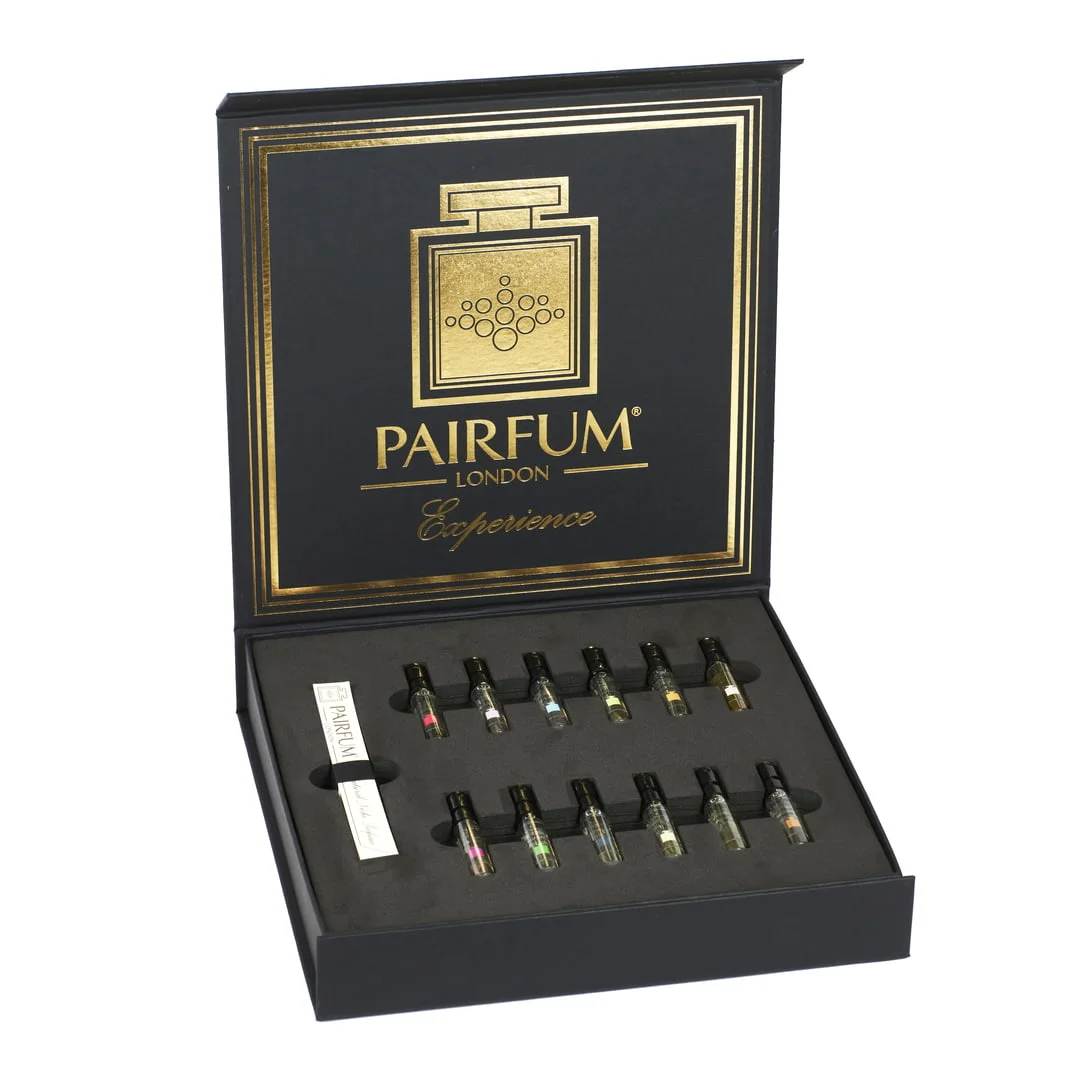
A Women’s perfume gift set is proof that great things truly do come in small packages. Many high-quality sample perfume bottles can last months or even years.
Furthermore, the humble fragrance gift comes in packages as large as shoeboxes while only being only slightly more expensive than a full-sized bottle – making them a fantastic bargain.
A women’s perfume gift set allows that special lady to test out different fragrances. Unfortunately, in the beauty industry perfume often comes at the bottom of the list. A gift set can give a woman the freedom to try something new and broaden their horizons.
Even if the recipient of the gift set already has a signature fragrance, it is likely they will want to have another addition to their collection.
There is an astoundingly wide range of signature notes that can be found in perfume. Having several at their disposal will leave your loved one prepared for almost every occasion.
The Essential Fragrance Categories For Any Women’s Perfume Gift Set
Woody Perfume
Earthy and mossy notes are synonymous with a woody fragrance. The typical perfume notes one ought to expect are sandalwood, cedarwood and vetiver.
Oriental Perfume
Oriental fragrances are likely to be the heaviest perfume to feature in a women’s perfume gift set. Oriental perfumes tend to be spicy, musky and sometimes sugary. Their most popular notes are vanilla and cinnamon.
Aromatic Perfume
Aromatic fragrances are known to remind people of freshly mown grass or vibrant herb garden. Sage, rosemary, lavender and basil are all staple notes of aromatic perfumes.
Citrus Perfume
Citrus fragrances are a must-have in any women’s perfume gift set and are the perfect choice for those who prefer to avoid traditional fragrances. the zesty aroma of orange and lemon notes are attractive due to being fresh but also subtle.
Fruity Perfume
Fruity fragrances make the perfect gift due to the extensive ingredients at their disposal. Fruity perfumes can come from any fruit you can think of, be it peach, black current or even apple.
Floral Perfume
Last but by no means least comes the most common and feminine fragrance of all. Not only are there countless flowers to choose from (e.g. rose, daisy, magnolia etc.), there are just as many floral perfume brands to chose from.
In fact, the choice of brands can be so extensive that we recommend starting by choosing your favourite flower rather than a particular brand.
Women’s Perfume Gift Set Top Tips
1. When testing their perfume gifts, we recommend the recipient pays close attention to the base notes rather than the top notes for they will create longer-lasting aromas.
2. There are two key terms that will appear a lot when looking for a women’s perfume gift set. Eau de Parfum and Eau de Toilette. These terms can be quite confusing and therefore we recommend you read this short article by Hello! Magazine.
Does the Perfect Fragrance Gift Set Exist?
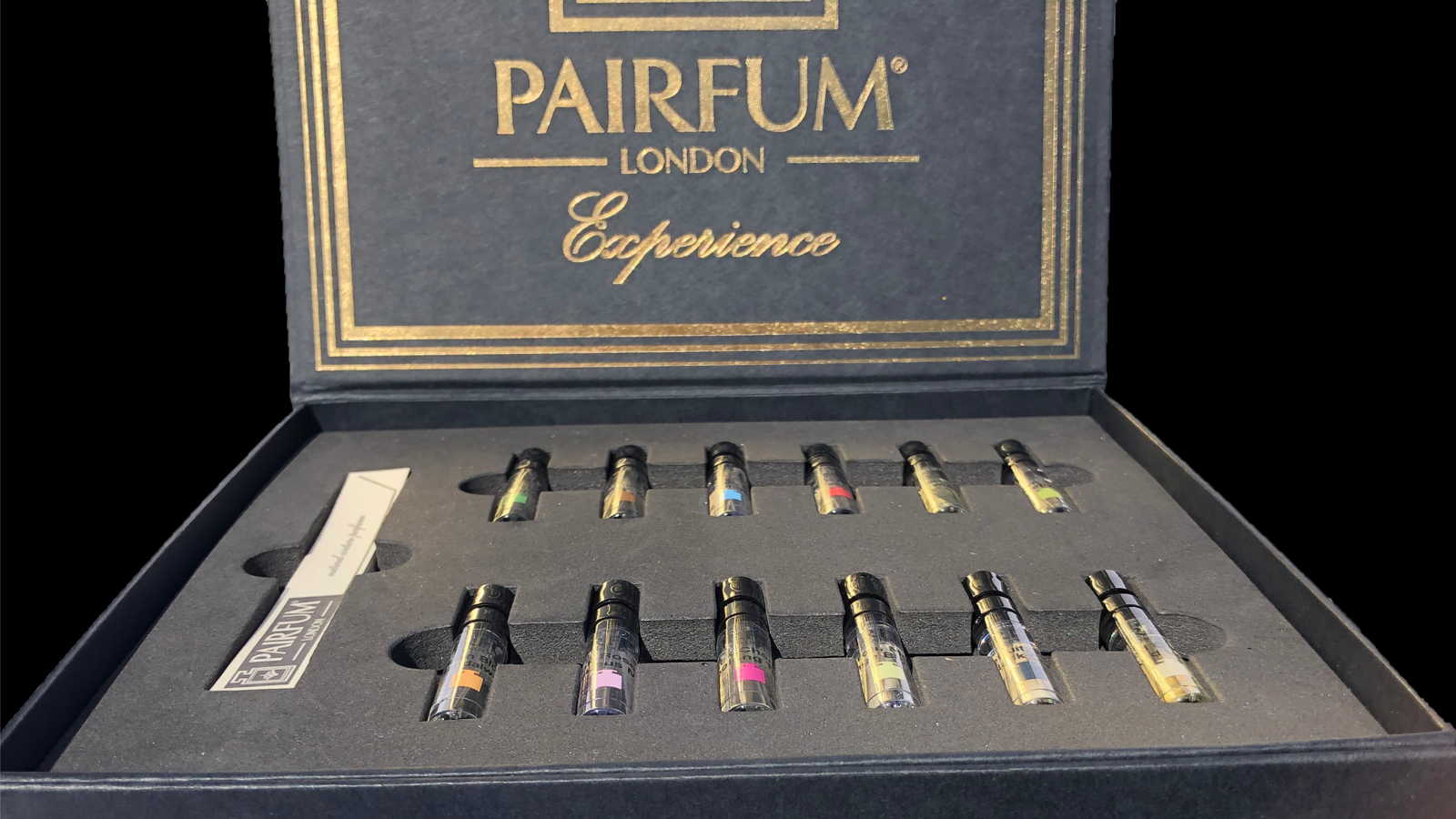
Maybe, maybe not. Regardless, there are countless gift sets on offer and you should certainly shop around. Although, we do invite you to consider our Fragrance Library | Perfume Experience Box. Not only does it include a vast array of perfumes, once the man in your life has found ‘their’ fragrance, but you can also get the cost of the experience box refunded when you buy the full-sized bottle.
If someone is looking for the perfect men’s perfume gift set, it is safe to assume they are looking to treat a special man in their life – be it family, friend or colleague.
Fragrances continue to be a classic choice as a gift for men as it is regarded as a very thoughtful and personal gift.
However, what if the wrong fragrance is chosen and while you believe that one fragrance encapsulates your loved on, they have a completely different view of themselves altogether?
This is why men’s perfume gift sets were invented in the first place.
Benefits of a Men’s Perfume Gift Set
First of all, it empowers that special man to discover their own identity through cologne and fragrance. This is not only due to the choice of perfume available in a gift set, but also because the bottles in a gift set have larger amounts of scent liquid than a single perfume bottle.
Also, to be pragmatic, perfume sets often come with an offer when they are purchased which means you can save money to go towards another gift for that man in your life.
Which Fragrances Should A Men’s Perfume Gift Set Include?
Fougere
Fougere fragrances are certain the most commonly attributed to masculinity with many brands describing how these colognes represent a man who is cool under pressure and handles a crisis well.
The original Fougere perfume (Fougere Royale, launched in 1882) contained notes of oakmoss, tobacco, lavender and coumarin. These notes have been considered as the building blocks of Fougere fragrances ever since.
Fun fact: Fougere, (pronounced ‘foo-jair’) comes from the French word for ‘fern’
Gourmand
Gourmand colognes are also definitively categorised as masculine and make the perfect addition to a men’s perfume gift set.
They have become ever more popular in recent years, most likely down to their indulgent aromas produced from notes of vanilla, chocolate and coffee. If a man reminds you of dessert, you can safely assume he is wearing a gourmand fragrance.
Such a cologne is as seductive as it is versatile, although, we recommend that they are worn in the winter – a season of true indulgence.
Chypres
Chypre perfumes are a truly timeless fragrance for men who usually revolve around labdanum, oakmoss and bergamot. In fact, it is suggested that chypres fragrances can date back to the Roman Empire and are certainly often mentioned in manuals written in the 18th century.
They are associated more with the ‘mature’ gentleman and are often worn in the autumn. However, chypres fragrances are perfect for gift box as they are incredibly versatile and suitable for a wide range of scenarios.
Fun fact: Many mistake Chypre to be a reference to the cypress tree. In truth, it comes from the French word for Cyprus.
Oriental
Oriental perfumes are certainly considered as one of the more seductive fragrances and are distinctive through their emphasis on amber. The most common ambers notes that are used include patchouli, truffle and vanilla. Although oriental perfumes can be further categorised, for example, there are Spicy Orientals and Woody Orientals.
Nevertheless, if you have a young (or not so young) Batchelor in your life, this fragrance would be an accessory for a night on the pull.
Spicy
As previously mentioned, spicy fragrances do form a large sub-category of oriental fragrances. However, we believe that no man’s mini perfume set should be without a spicy aftershave. Nevertheless, oriental and spicy fragrances do fulfil very similar needs.
Although, as well as typical oriental notes, spicy perfumes often contain notes of clove, cinnamon and nutmeg. Therefore, such fragrances are also commonly associated with sensuality and warmth – perfect for the evenings.
We would recommend a spicy cologne during the winter where notes such as cinnamon and nutmeg are certainly seasonally appropriate.
Floral
While floral ingredients are more commonly found in feminine fragrances, they are becoming ever more prevalent in men’s cologne, particularly the two cornerstone notes of jasmine and rose. The former adding refinedness and complexity and the latter builds cohesion amongst the other notes in the perfume
Floral fragrances are easily identified for they remind everyone of gardens, flowers and blossoms and are best worn during the spring and summer months to complement the blooming season.
Another added bonus with floral fragrances is that due to the heat amplifying perfume bouquets, just a couple of squirts (and perhaps a quick spritz in your hair) will achieve the desired effect.
Citrus
Citrus colognes are a perfume gift box essential and are designed for the long summers day.
As one might expect, citrus fragrances are mostly composed of strong fruity notes such as tangerine, bergamot and grapefruit. Although, in citrusy men’s colognes, Neroli is very common.
Furthermore, due to the strength of citrus perfumes, floral and chypres ingredients are often also included in order to round off the citrus.
Fun Fact: The world’s first Eau de Cologne was a citrus accord.
Aquatic
If you are buying a men’s perfume gift set for a man who loves the water, well that is when aquatic fragrances are at their best. Aquatic colognes are perfect for a sunny day by the sea, although they are also among the most versatile fragrances.
Also often known as ‘Ozonic’ fragrances, Many claim their aquatic cologne reminds them of the sea air lingering on their clothes.
Unfortunately, unlike floral perfumes where essential oils are extracted, science is still unable to put the beauty of the sea breeze in a bottle.
Woody
Woody fragrances are very distinctive and are known to remind people of nature through notes such as bark, patchouli, resin, cedar and vetiver.
Similar to other fragrances ideal for a men’s perfume gift set, woody perfumes can be split into different subcategories such as woody fruity or woody leather. However, unlike other fragrances, it is very rare to find a fragrance that is simply ‘woody’.
Fortunately, due to the influence in several other fragrance families, woody colognes, while best suited for the autumn, are very flexible. Although, they do better suit the rugged man rather than the refined gentleman.
Leather
Last but by no means least comes the leather fragrances who are considered to be the most formal cologne of any perfume gift set for men. It is for this reason that we advise you should avoid informal and casual settings and instead reserve the leather cologne for those formal occasions where your man is required to take charge.
Notes of smoky birch or bitter-smelling isoquinolines are unmatched in replicating leathery aromas while enabling the wearer to exude confidence and power.
What Men’s Perfume Gift Set Should I Buy?
There are countless gift sets on offer and you should certainly shop around. Although, we do invite you to consider our Fragrance Library | Perfume Experience Box. Not only does it include a vast array of perfumes, once the man in your life has found ‘their’ fragrance, but you can also get the cost of the experience box refunded when you buy the full-sized bottle.
We start this perfume samples UK guide with a brief commentary on pandemic trends.
Throughout lockdown, testing beauty products such as perfume samples in shops were rendered impossible and as more and more publications become online, the regular perfume samples UK magazines would normally include are ever more elusive. Although, this may have been a blessing in disguise. While department stores were closed, you weren’t forced to decipher the different tester perfumes in the air of the shop as customer after customer samples perfume after perfume.
Nevertheless, testing perfume in the real world and taking the time to analyse how it reacts to your skin is as important as ever. Fortunately, perfume samples exist to fulfil this need.
Rather than having a small sachet or a quick spray, a small bottle of the actual perfume will contain all of the fragrance notes. This empowers an individual to truly decide if the ingredients react with your skin, but if that particular fragrance is the right one for you.
Personal Applications of Fragrance Samples
Simply Wear it
Of course, this is most likely why someone would have a perfumesample in the first place. We recommend having a collection of perfume samples and then test the different fragrances over a period of time.
DIY Scented Body Lotion
This suggestion is perfect if you have a date that evening. Simply add a few drops or spritzes to an unscented body lotion. The degree of concentration or strength of the fragrance is up to you.
DIY Dry Shampoo
You will need a couple of ingredients but it is certainly worth the effort. Apply some baby powder or corn starch mixed with your perfumesample to your scalp to absorb any oil. A perfect dry shampoo solution if you find yourself short on time.
Add Some Variety To Bath Time
Bath bombs can sometimes be overbearing and a tester perfumesample could be a subtle and magical alternative. Adding a sampleperfume vial to your bath water should do the trick.
Freshen Up Your Clothes
Upgrade Your Underwear
If you have a perfume sachet, then we recommend tucking them into your underwear drawers. Otherwise, apply a quick spray of your perfume samples to a drawer liner.
If you are interested in creating your own perfumed drawer liners, we have written a guide which you can find here
Spruce Up Your Suitcase
Once again, a sachet perhaps may be more appropriate for this suggestion. But we recommend putting your perfume samples to the test by throwing an unopened sample into your suitcase before you leave for the airport. Depending on how long you are gone, the fragrance can last the entirety of the trip.
Store Perfume Samples In Your Shoes
Storing a sachet or giving a quick spray to your shoes will ensure you have the best-smelling feet and shoe rack around.
Tackle Musty Coat Pockets
As we approach the summer months, weather permitting, it is likely your coats will be living in a cupboard. Perfuming the pockets with a samplefragrance will keep the musty aroma at bay.
If you do find yourself in a coat during the summer, at least you will smell good doing it.
Spread The Fragrance Around The House
Freshen Up Your Wardrobe
Adding perfume samples to your wardrobe can ensure that your clothes remain fragrant all year round.
Scent Your Décor
Pillows, curtains, even stuffed animal, the opportunities are endless when testing your perfume samples
Spray Your Linen
If an individual tends to be an undecided perfumesample tester, we recommend they should sleep on it – literally. If you enjoy your sample at night as much as you do first thing in the morning, then it is definitely a keeper. (Of course, the opposite is also true.)
Freshen Up Your Mattress
With your linen above and your mattress below, you will struggle to find anything more enjoyable than fragrant surroundings.
DIY Carpet Refreshers
Simply add your tester perfume to some baking soda and sprinkle the mixture across the entirety of your carpet. Once you have waited for 10 minutes and completed and vacuumed the residue, the results will speak for themselves.
Convert Foul Aromas From Household Waste Into A Pleasant Fragrance
The unpleasant contents of your rubbish are often presented by the aroma that leaks out of your bins. Dip some tissue paper or cotton balls into your perfume samples and the placing them at the bottom of your bin before adding the bag.
Build A Light Bulb Diffuser
Add a few drops or a quick spray of your samplefragrance onto a cold lightbulb. Then when you turn it on, you have effectively made a DIY diffuser that will spread your fragrance across the room.
Design Your Own Air Freshener
There are actually a number of ways in which you can use perfume samples as an air freshener. You may want to spray some fake plants, perhaps simply apply your sample as a room spray. There some cases of people even using their fragrance samples in Himalayan salt diffusers.
A Pet Deodorizer
We are no advocating spraying your perfume on your pets directly, that can be very dangerous. On the other hand, mixed with some baking soda, light sprays in a litter box or couch cushions can eliminate those enduring odours.
‘On The Move’ Applications For Perfume Samples
Improve the smell of inside purse
The typical purse is full of all sorts of bits and pieces and with that comes all sorts of smells. Fortunately, it isn’t something that a quick perfumesample can’t fix.
Car Seat Air Fresheners
Your typical car air freshener is dull and sometimes a bit stale. We think you would find placing a fragrancesample under your car seat to be an appealing alternative.
The Perfect ‘On The Go’ Solution
On those days where you are low on drive and energy, you will find having a handy fragrance that can give you a spring in your step rather useful.
Emergency Ampit Refreshment
While a spray would work, in this case, a paper perfumesample would work best as the paper absorbs the sweat while the perfume will add a refreshing scent.
Although this is only in emergencies – you should avoid using perfume as a replacement for deodorant.
Scented Hair Accessories
People often use body sprays and fragrance mists to help scent their hair but due to the alcohol in perfume, their hair ends up dry. This side-effect can be avoided if you spray your hair accessories instead. A spritz on a scrunchie should be plenty.
How To Upcycle Your Perfume Samples UK Guide
Give Them Away
Of course, the most straightforward course of action if you don’t want a perfumesample is to give it to a colleague, friend or family member. Although due to their flammable nature, you may want to give it to them in person rather than risking an accident or confiscation by a courier.
Create scented cards
If you spray your cards directly, they will probably stain. But if you test a perfumesample on a cotton ball and drop it in a plastic bag containing your cards, after a few hours your cards will be pristine and the fragrance will last much longer.
Glass Sachet
Using an almost empty sample of perfume as a glass sachet can add a pleasant fragrance to your clothes if placed at the back of your wardrobe.
Upcycle the bottle
When a perfumebottle has been emptied, it is by no means useless. DIY toiletry holders, crafts, decorative displays – the possibilities are endless.
NEXT STEPS – Perfume Samples UK Guide
Now, gather all of your samples and try out some of your favourite suggestions below.
If you are looking for a new fragrance to find your signature scent and you are not sure where to start, we recommend our Perfume Experience Box
It contains 12 distinct fragrances and when you find one you like, we will subtract the cost of the experience box from the full-size bottle if you decide to make a purchase.
If you wish to learn how to correctly test and evaluate perfume, you can read more here.
Are 70s perfume trends now making a resurgence and does it have anything to do with the Pandemic?
As we are emerging from lockdown, we are becoming bolder and a counter-culture is on the rise. Current anti-racist and environmental activism are direct reflections of how the 1970s were also defined as a politically charged decade. Once again, this freedom and expression are extending to people’s wardrobes and fashion choices.
If you are interested in post-pandemic perfume trends more broadly, we invite you to read our recently published article on the subject.
A Revival of 70s Fashion
Throughout the 1970s, you would see men dressing in a more flamboyant manner with a rejuvenating sense of fun while also exaggerating their masculinity. Through web search data we can see a very similar trend emerging today.
Searches for flared jeans have increased by 45% and queries regarding psychedelics have soared.
Sales data shows that quintessential 70s items such as the jumpsuit, tank tops and denim have increased in demand over the past year.
Even the autumn and winter catwalk reflected a 1970s resurgence with representation from a range of styles from glam and rock to hippie and disco.
1970s Style In Post Pandemic Cinema
We hypothesise that much of the web search and sales demand mentioned above are influenced by some high-profile films set in the 1970s that are scheduled to be released in the coming months.
Filming for ‘The Tender Bar’, Ben Affleck has been photographed wearing retro bowling attire, flared jeans, clog-like loafers, a Cuban-collared jersey and a pair of aviators.
On the other hand, Lady Gaga is playing Patrizia Reggiani in a Gucci biopic set in the early 1970s and full of decadent Italian fashion.
But does this newfound enthusiasm for this classic decade transfer to the classic perfumes?
70s Perfume Trends
The hippie movement is a quintessential aspect of the 1970s and they certainly had their own unique scents. They were mostly either patchouli, sandalwood or tea rose attars.
In true ‘flower power’ fashion, people during the 70s would style the atmosphere of their surroundings with oil burners or incense which instantly produce an instant retro feeling.
However if one is to analyse 70s perfume trends, then it is perhaps best to start with some of the most iconic fragrances of that decade. e.g.
Opium by Yves Saint Laurent: incense (myrrh), spices (pepper, cinnamon & cloves) and sandalwood
Anais Anais by Cacharel: white floral (lily of the valley, jasmine, honeysuckle, hyacinth lily) and green.
Charlie by Revlon: woody (oakmoss, sandalwood), green (hyacinth, galbanum), aromatic (vetiver)
Are the expected Perfume Trends 2021, post-pandemic, a sign that a new ‘Roaring 20s’ is on the horizon? If the events that followed the Spanish Flu of 1918 are in any way comparable, it certainly seems likely.
The chief executive of L’Oreal, Jean-Paul Agon, certainly thinks there will be a return to the ‘Roaring 20s’ and stated the following recently:
“This will be the fiesta of make-up and fragrances”
“Putting on lipstick again will be a symbol of returning to life.”
In this article, we explore what history can tell us about what we can expect for fashion and perfume trends 2021, post-pandemic.
Here are some of the questions we intend to answer:
How is fashion already changing?
How does this translate to perfume trends in 2021?
What does the history of perfume tell us about what we can expect in the future?
Fashion Trends of the Past
Recovery from War & Spanish Flu (1918)
Not only has everyone struggled through a world war, but they have also just dealt with a pandemic in the guise of the 1918 Spanish Flu. Following this gloom, women were finally allowed the vote(with caveats) and more flamboyant and bolder styles were adopted as the economy started to boom.
The great style icons of the 1920s included Josephine Baker and Zelda Fitzgerald, who is attributed as the inspiration for many contemporary styles today. Perhaps the most iconic was Coco Chanel who threw caution to the wind with her designs. Mismatched prints, slouchy knits, two-toned shoes and strings of pearls are only a small selection of the ‘non-traditional, yet desirable fashion choices she was pioneering.
Amongst these rebellious trends, the 1920s wardrobe is also more typically associated with silk flat crepe dresses, custom-tailored suits, fur coats, short sport Jacquettes and woollen jumpers.
Fashion in the 1940s
Just as the 1920s were an era of flamboyance, the fashion in the 1940s is also characterised as very colourful and bright with a large emphasis on fur.
A particular trend that is shared with the 1920s is the prevalence of the woollen jumper or jersey. In fact, much of the younger generation adopted the bright woollen jersey and the jumper dress or the pinafore as almost a uniform and a part of their identity.
Throughout the 1940s, particularly due to the rationing of material and fabric, no opportunity for creativity is spared. Even in the late 40s, you would often see extravagant lace and almost every form of embroidery imaginable. Not even the humble belt buckle was overlooked.
Of course, for men, the suit was as popular as ever – but the bellhop and cutaway suit became rather popular amongst women in the post-war era. Although this is argued to be more of an acceptance and enhancement of their femininity rather than an attempt to appear more masculine.
Post Pandemic Fashion Trends
In regards to fashion, the pandemic has already caused the irreversible change. For example, many High street brands are now no longer with us, or they have pivoted to being online retailer’s only. Our clothing choices have also changed with many electing for tracksuit bottoms rather than Levi jeans, not to mention many fashion labels now releasing their own face masks.
Of course, it is unlikely that we will be wearing tracksuit bottoms and facemasks forever, but consumer behaviour and preferences post-pandemic are very uncertain.
Although, we have seen an accelerated economic and social change following a major human catastrophe. Most notably, after the Spanish Flu of 1918.
The idea of complete uncertainty is also further diluted by Dr Lucy Moyse Ferreira who explains that fashion is always changing for it is always reflecting the world as it is, including the fears and hopes of society. Currently, our hope is tied to the map out of lockdown which suggests we will soon start to embrace glamour as we become more optimistic. This could already be seen in the raves that were hosted in Liverpool and the Brit Awards.
The great Dr Moyse Ferreira explains how our fashion choices during the pandemic were a form of armour to protect us emotionally as well as physically from germs and pathogens.
As the threat (hopefully) reduces, we are becoming much bolder in our fashion choices. As sales for face masks go down, there has been a surge in demand for high heels, printed trousers, tulle dresses and pearl-studded jumpers.
Even in hard times, the fashion industry can expect to prosper as brands – as shown by Coco Chanel and Jeanne Lanvin, who gained prominence during the 1920s.
Back to Work
When it comes to internet searches, the return to the workplace is also influencing key fashion trends. For example, in the USA, Microsoft has seen a drop of 26% in searches for “home-based business opportunities’ yet they have seen an increase of 28% for searches regarding ‘employment offer letters’ and 35% for ‘dress shirts’
There is certainly a demand for fashion that reflects pre-pandemic work culture.
Six Curious Post Pandemic Fashion Trends
As people come out of their shell there are six very curious trends that stand out:
The Smart Cardigan
This slow-fashion piece is now often seen sold on the High street with matching bra tops to be worn underneath.
Unlike the cardigan you would throw on the back of your chair at school, the smart cardigan is larger and chunky and wouldn’t be out of place on the shoulders of Coco Chanel with brogues and pearls.
Sweatpants
The pandemic actually caused a consolidation of this slow-fashion movement as the go-to garment of the 21st century rather than a trigger for a fad.
Before the pandemic, they were already often worn with a blazer or heels. Today they are now neatly streamlined and able to hold their shape, making them a staple of any wardrobe.
The Toffee-Coloured Handbag
The desire to own either the largest, glossiest and impressive handbag or the petite evening bag is notably absent. Instead, for the last couple of years and most likely going forward, the neutral coloured moderately sized ‘It-bag’ is the most sought after.
The bag combines minimalism and utility with glamour and it is just as comfortable in the office as it is on the catwalk.
The 18-Hour Dress
Sometimes referred to as the ‘shirt dress’, the 18-hour dress is characterised by modesty due to the high neckline but yet also being a show-stopper when worn in all of their glory.
The sleeves are essential for comfort throughout the day whilst flexibility allows it to be worn well into the night on the dance floor. There will be enough detail for an individual to feel they are presentable and properly dressed, but yet not too fancy that they would feel getting changed into something more ‘comfortable’
The phrase ‘one size fits all’ certainly applies to the utility of the 18-Hour Dress.
The Grown-Up Flat Shoe
This former fashion non-starter has now become a fashion statement. In the past, there have been many flat shoes such as fur-soles loafers and designer crocs. But in 2021, simplicity rules the day.
Classic loafers, simple shite trainers, or perhaps a ballet pump are now becoming a wardrobe staple.
The Saturday-Morning Blouse
The Saturday Morning Blouse is best described as being somewhere between the simple and sensible white shirt and a bright pink puff-sleeved blouse.
An individual would have most likely brought theirs from a vintage French market and either silky and rich or sweet-natured. It has proven invaluable in capturing the ‘vibes’ of a Saturday morning.
Social Justice and Sustainability Fashion Trends Post Pandemic
Although, it wasn’t just Covid-19 that we were dealing with during lockdown because 2020 was also a year characterised by activism for human right issues. Black-owned brands and brands with ethical and sustainable supply chains have become more popular than ever. Consumer trends are showing people are more likely to spend their money on brands that take a firm stance against injustices in the world such as climate change, inequality or discrimination.
We will likely see far more fashion brands adopting a circular business model that focuses on repurposing and recycling rather than discarding unwanted articles. In fact, as people started to cannibalise old clothes to create their own face masks, the consumer is also starting to adopt their own circular model of consumption by re-using existing clothes and being mindful when making new purchases.
Historical Perfume Trends
Perfume Trends Post Pandemic in the 1920s
Post the 1918 Spanish Flu, just like its fashion, the world was offered a wide range of different fragrances and perfume.
While Chypre perfumes do tend to be slightly more prominent, such as ‘Chypre’ by Coty (1917) or ‘Cuir de Russie’ by Chanel (1924); they certainly do paint the whole picture.
Oriental perfumes such as ‘Shalimar’ by Guerlain (1925) and Aldehydic fragrances such as ‘Arpege’ by Lanvin (1927) are also a part of such a diverse canvas.
However, it is undeniable that Chanel No5 (1921) was the most iconic perfume of the 1920s. Despite perfume still only being within the economic means of the rich, Chanel’s first fragrance was a commercial success. This iconic brand has been immortalised by both Andy Warhol and Marilyn Monroe.
1940s Perfume Trends
The dark days of the war led to the desire for much fresher and lighter perfumes such as ‘Miss Dior’ by Christian Dior (1947). Once again repeating the trends of the 1920s, other chypre perfumes were also very popular throughout the 1940s, such as the spicy ‘Femme’ by Rochas (1944).
On the other hand, there is a key difference between these two decades that manifests itself through the success of post-war citrus fragrances. While citrus chypres such as ‘Moustache’ by Rouchas was popular, other citrus perfume such as the woody ‘Vert Vert’ by Pierre Balmain (1947) and ‘Acqua di Selva’ by Victor (1947) or even the minty ‘Green Water’ by Jacques Fath (1947) are just as iconic of the post-war era.
As can be seen in both decades, there was a massive explosion in perfume brands and their success almost immediately after great strife.
Perfume Trends 2021 – Post Pandemic
Alongside most other ‘non-essential’ industries, the fragrance industry was affected by the pandemic with prestige fragrance sales dropping by 8%. As people spent more time at home and often working at home, 49 % chose to reduce their fragrance usage. Although, throughout 2020, ‘high concentration fragrances such as Eau de Parfums were trending.
Fortunately, due to the technology available in the UK, we can look at perfume trends as they emerge through phenomena such as google searches and social media conversations. Reports suggest that conversations about personal fragrances are up by 11% since lockdown which tells us that similar to the 1920s and 1940s, the perfume industry is about to experience another revival.
Furthermore, through an analysis of google searches by Pinterest, three specific search terms stand out. In 2020, year-over-year, the search volume for “floral fragrance”, “earthy fragrance” and “spicy fragrance” increased by 25%, 34% and 35% respectively.
Perfume Trends 2021 – Rose Interpretations
Rose was first identified as a dominant force back in 2021 and nearly ten years later rose is still just as iconic. This is in part due to the extensive variety of rose interpretations that are appearing in launches. Combinations such as ‘Rose Marshmallow’ and ‘Rose Eau de Toilette’ appeared as recently as late 2020. These innovations are not only created with ingredients such as rose absolute and rose centifolia, but also less traditional pairings such as red currants and magnolia.
We can certainly expect more rose interpretations in the future
Perfume Trends 2021 – Layered fragrances
Layered fragrances are not an innovation, in fact, they often come in and out of fashion. Currently, there are very much in-fashion as brands are focusing on scent collections and the offering of personalisation to create an authentic and bespoke sensory experience. To assist the consumer, many brands offer quizzes or questionnaires to help design each customer their own signature combination.
Perfume Trends 2021 – A New Business Model
Due to the increase in online demand, many brands have been able to pivot from traditional sales channels and are instead adopting an e-commerce business model. The pandemic has demonstrated that the in-person experience is not essential in the sale of luxury perfume.
Although, direct t consumer models in the perfume industry have also expanded to subscription models and to experience boxes where consumers are allowed to test several fragrances and then only then pay for the fragrances they want to keep. The subscription model means the consumer is never less bored because they receive a selection of their preferred fragrances and perfumes that they haven’t tried before.
Perfume Trends 2021 – Sustainable Materials
As the consumer looks for sustainable fashion choices, similar trends of sustainable fragrances have emerged. Specifically, brands are trying to meet the demands of raw materials and packaging. Some examples of steps being taken include recyclable materials forming parts of the packaging and ingredients of natural origin being used where possible.
To further limit waste, brands are now producing minimalistic and streamline packaging with many products also including the opportunity to buy refills.
Fiesta of Fragrances
Visit our online boutique to select the perfumes for your “Fiesta of Fragrances”. What will it be:
In a sentence, Sensehacking allows us to improve our emotional wellbeing (as well as our cognitive and social wellbeing) by stimulating our senses in different and specific ways. The professor is conducting research as to how we might develop our understanding of this phenomenon to create multisensory environments, interfaces, products and even food.
Why Is Sensehacking So Important ?
Just as an unbalanced diet can lead to poor health, an imbalance in our sensory stimulation can also cause us to experience a number of problems such as stress, anxiety and depression. Such problems can cause someone to struggle to get enough sleep, which actually increases your chance of dying from one of the leading causes of mortality.
In today’s world, this imbalance comes from too much visual and auditory stimulation through excessive screen time, ear phones etc, while on the other hand there is a lack of tactile and fragrant stimulation. All of which are our considered to be our more emotional senses. This isn’t a judgement on your personal choices, this is simply the world that we live in.
Life in Lockdown
Unfortunately, due to the pandemic, this sensory imbalance has only been exacerbated. For example, we have all heard very sad stories of care home residents being denied the most basic of pleasures of being embraced by their loved ones.
Even before Covid-19, over 90% of the lives of those living in urban environments were spent indoors, often leading to ‘light hunger’ and even Seasonal Affective Disorder. But, throughout lockdown our environmental stimulation has become even more monotonous. The lack of variety and the abundance of the mundane exposure to screens via Zoom and Netflix are not without consequence.
Fortunately, Sensehacking does bring a solution.
Sensehacking In Practise
The Power Of Touch
Skin makes up just under 20% of your total body mass – making it the largest sensory organ in (or on) the human body. Wherever hair is grown (e.g. excluding palms and soles), there are receptors called ‘C-Tactile Afferents’ that elicit a pleasure response. This response is best encouraged through slow and gentle stroking (e.g. a massage).
Infact, just like a massage, if the touch is warm (in regards to temperature, although emotionally helps as well), and if there is a pleasant fragrance in the air, the wellbeing benefits are further enhanced.
However, unlike massages, research into Sensehacking concludes that multisensory stimulation of our skin is a biological necessity, not a luxury.
The Smells & Experiences Of Nature
One of the key principals of Sensehacking is the benefit that being in and amongst nature can have on our wellbeing. It is paramount that the exposure to nature has an all encompassing impact on your sensory stimulation. For example, Sensehacking explores how ‘Anthropocene Noise’ (such as the noise of traffic) can dramatically reduce the benefits of being in nature.
Ideally, as well as looking and listening to nature, you should look for a tactile experience such as feeling the ground beneath your toes or perhaps gardening and growing your own herbs. In fact, growing your own herbs will expose you to the fifth and most important sensory stimulation that nature provides – smell.
Fortunately, the efficacy of nature’s stimulation through our sense of smell is not impacted by whether or not we are actually amongst nature. While it is best to experience the smells of different grasses and wild flowers, Sensehacking shows that air fresheners or scented candles reflecting the aroma of nature can be just as effective. For example, a lavender fragrance as part of aromatherapy can be framed in terms of ‘smelling nature’ – e.g. the olfactory effect.
Furthermore, the positive impact of natural fragrances within the home becomes more pronounced in times of stress and uncertainty – which as we discussed previously, are often caused by an imbalanced sensory diet in the first place.
Taking The First Steps
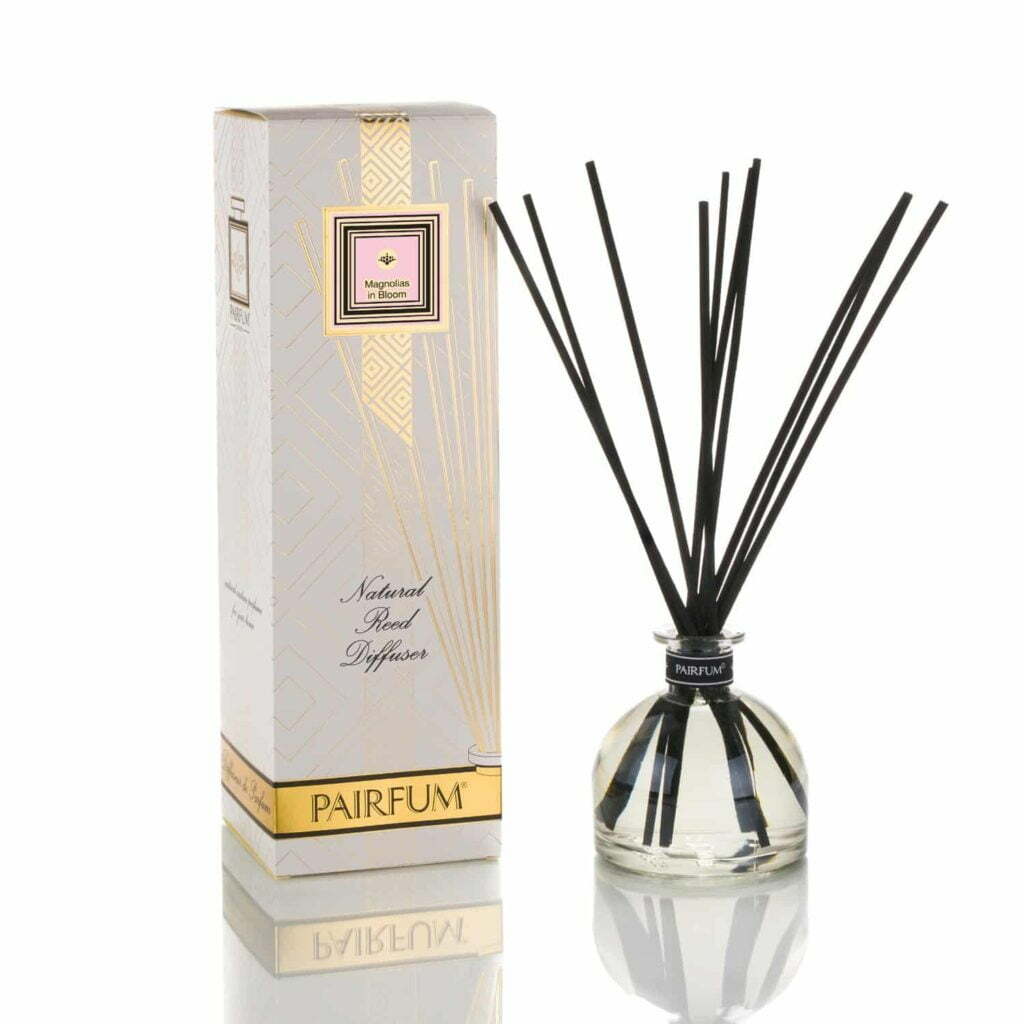
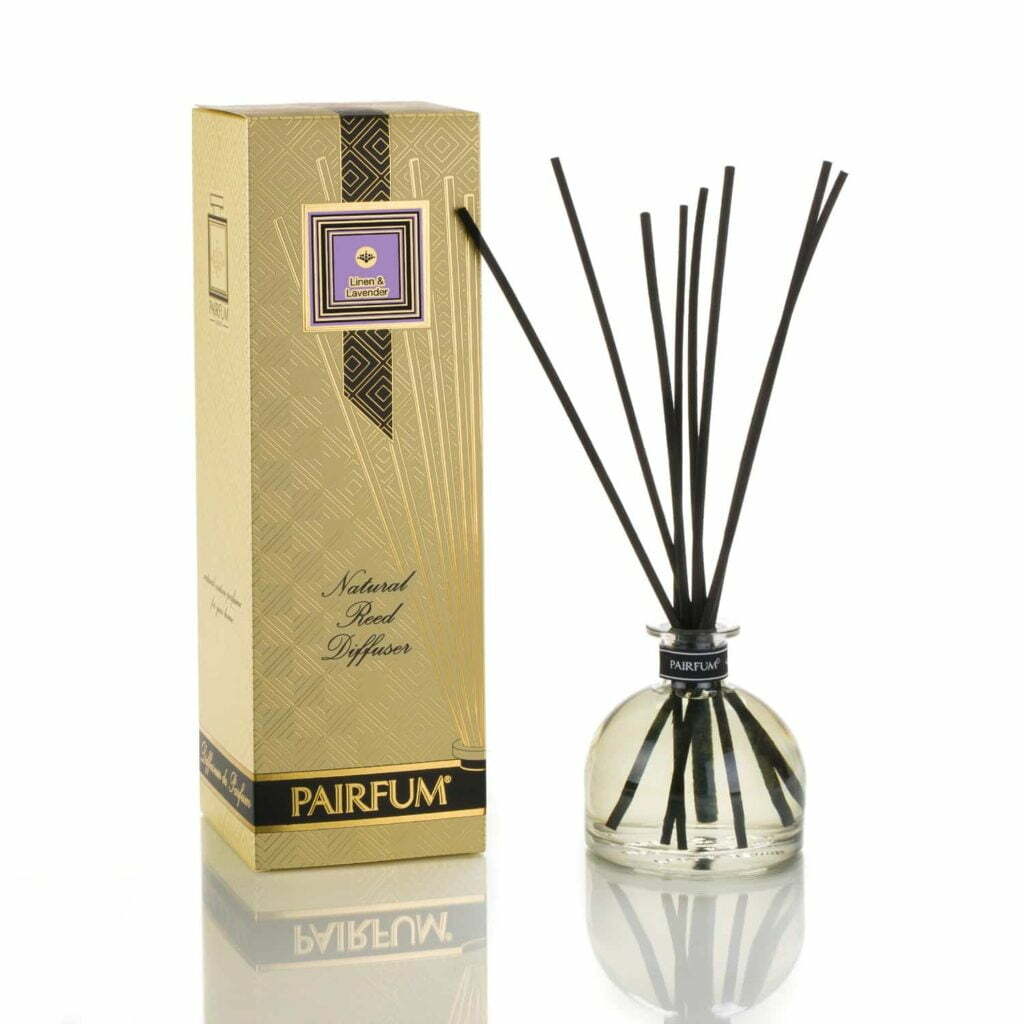
We would suggest that you might find our large bell reed diffuser to be effective in bringing the outdoors indoors.
Our natural product is perfect for your home and provides your living space with a continuous fragrance. This will allow you to take full advantage of the perks that Sensehacking has to offer.
We understand that you may prefer some fragrances over, so we invite you to have a look at our full range here to find a diffuser that suits your tastes.
If you are unsure as to which fragrance suits your style, many of our customers have found the perfume experience box to be very useful.
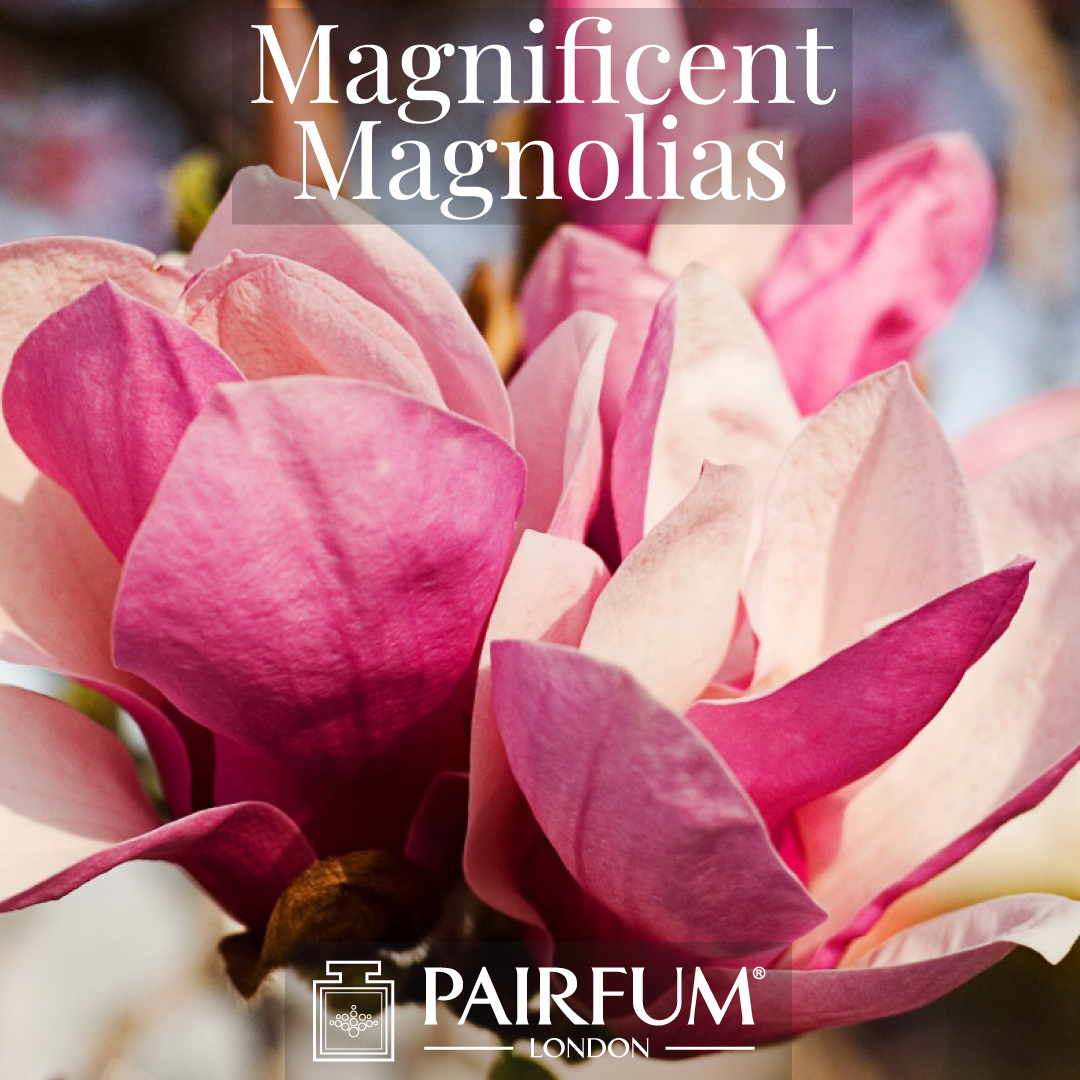
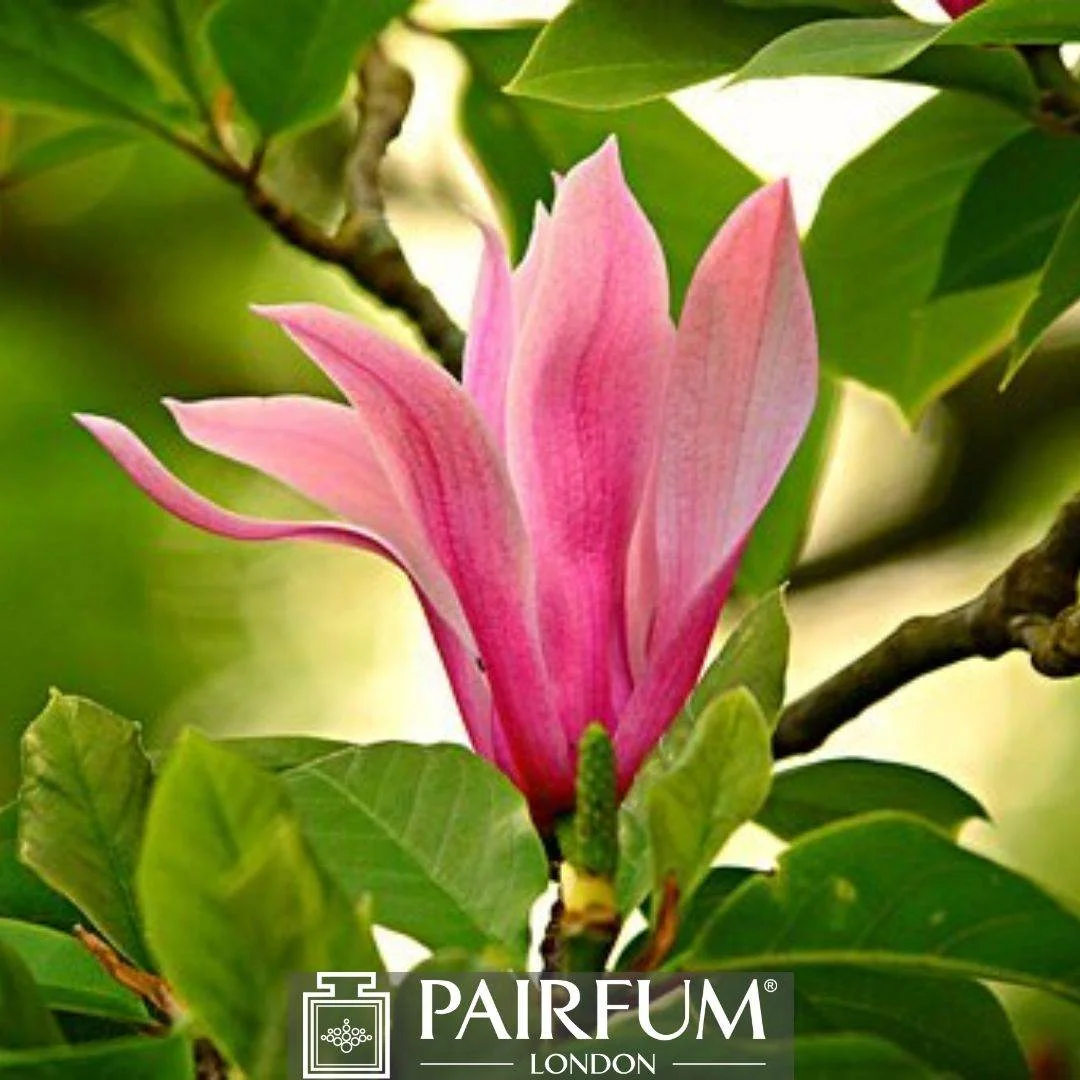
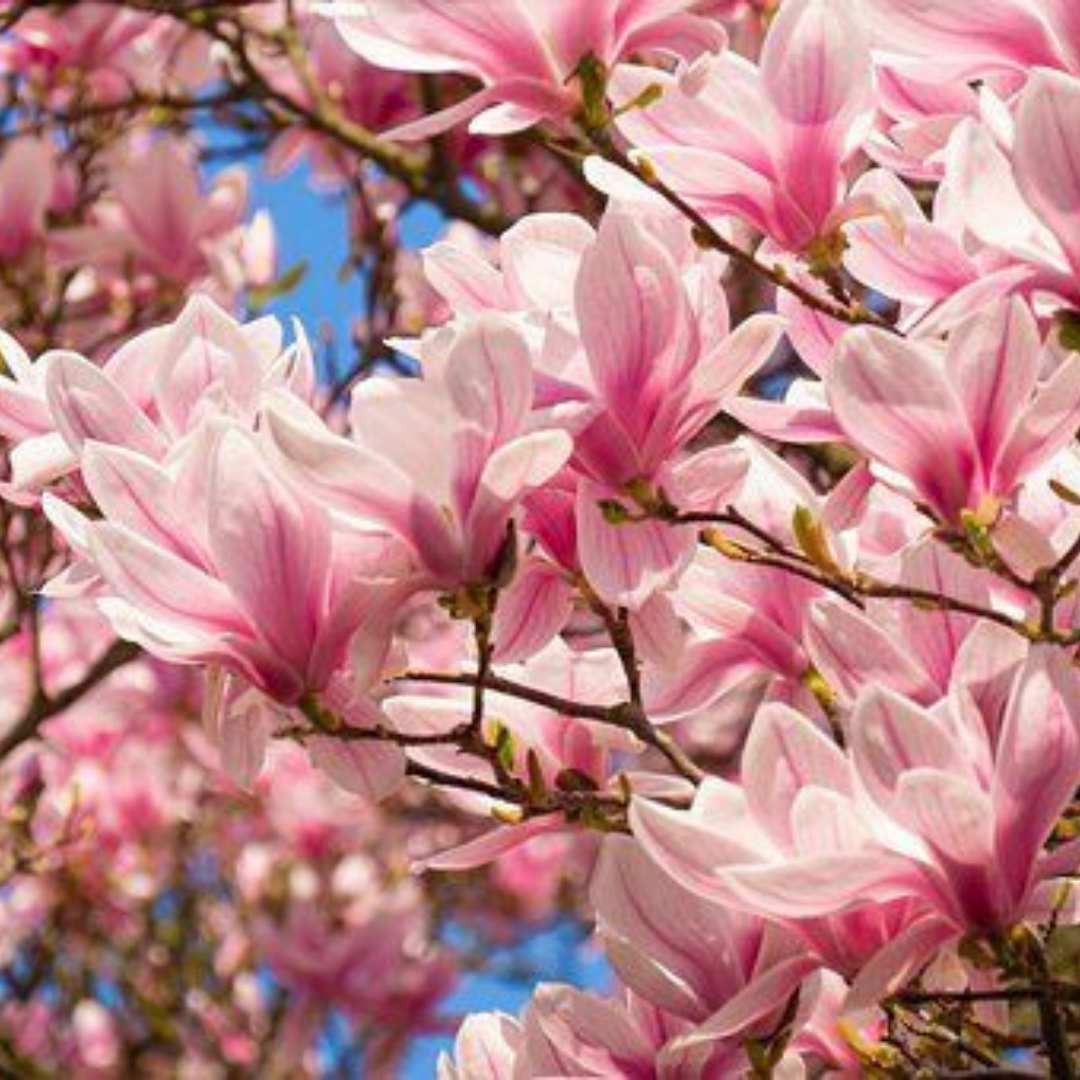
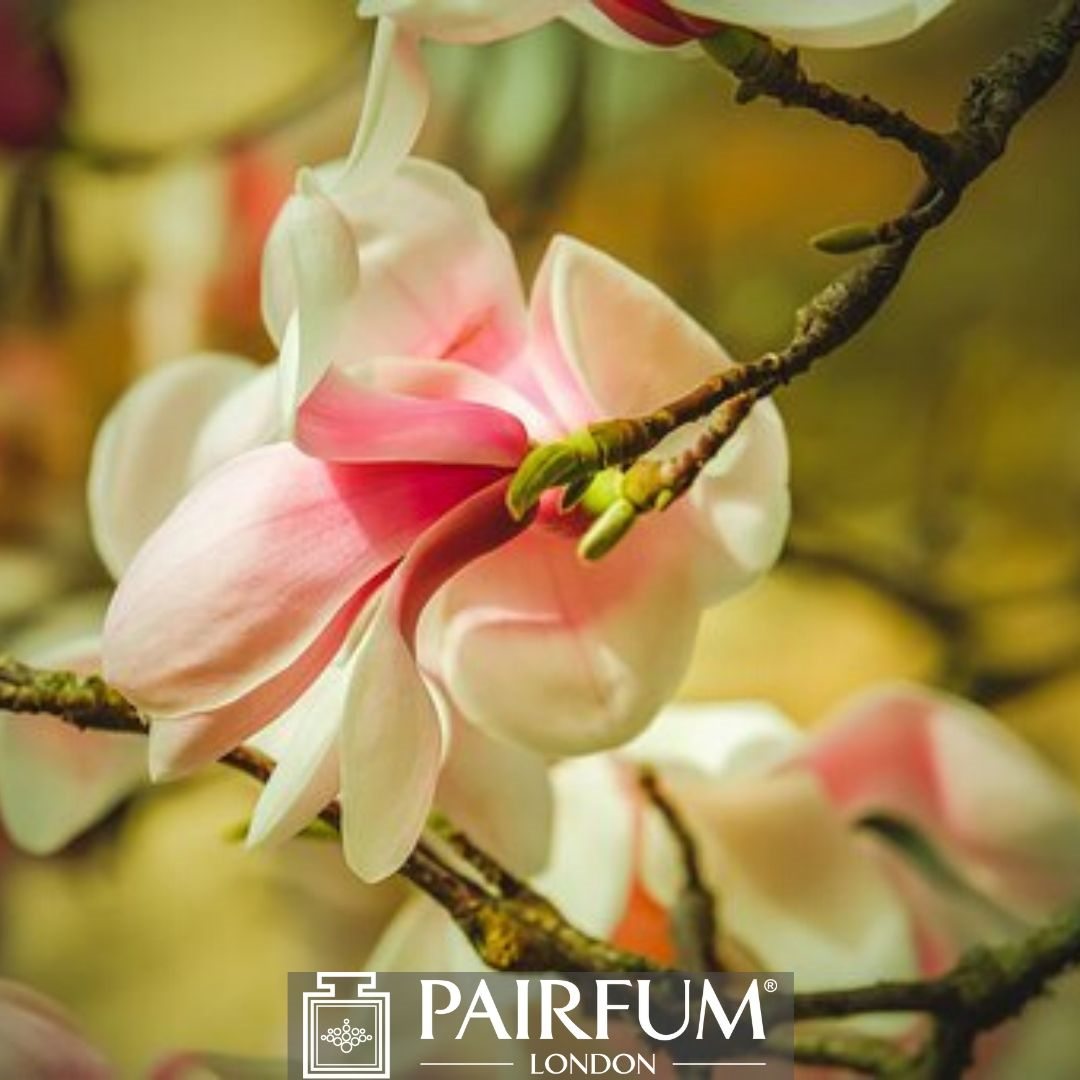
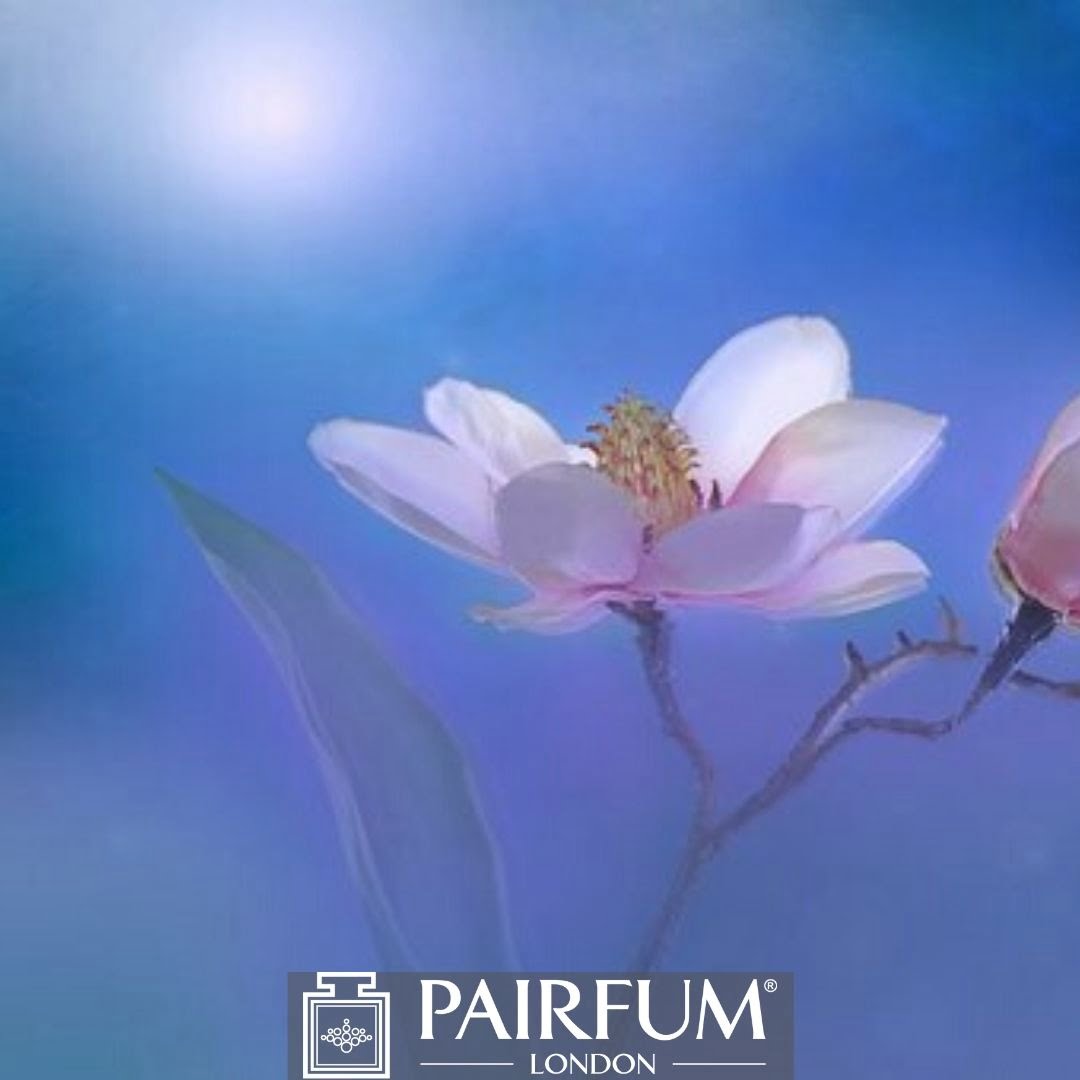
Magnolias are some of the most primitive of our flowering trees, known for their graceful, fragrant flowers they hail from a diverse genus of trees and shrubs.
They have been around for millennia with fossils dating back to the Tertiary period (they were around before our Friends the Bees arrived). They are just as at home in our Gardens and Parks, as they are in their natural forest habitat, and most of them are perfectly happy to adapt to city living.
In warmer parts of the country some magnolias have been in bloom since February others bloom in March and appear to usher in the spring, while others are Happy to wait until as late as June to flower. Regardless of when they grace us with their stunning Flowers and fragrance, the Magnolia has become one of the most loved plants Worldwide.
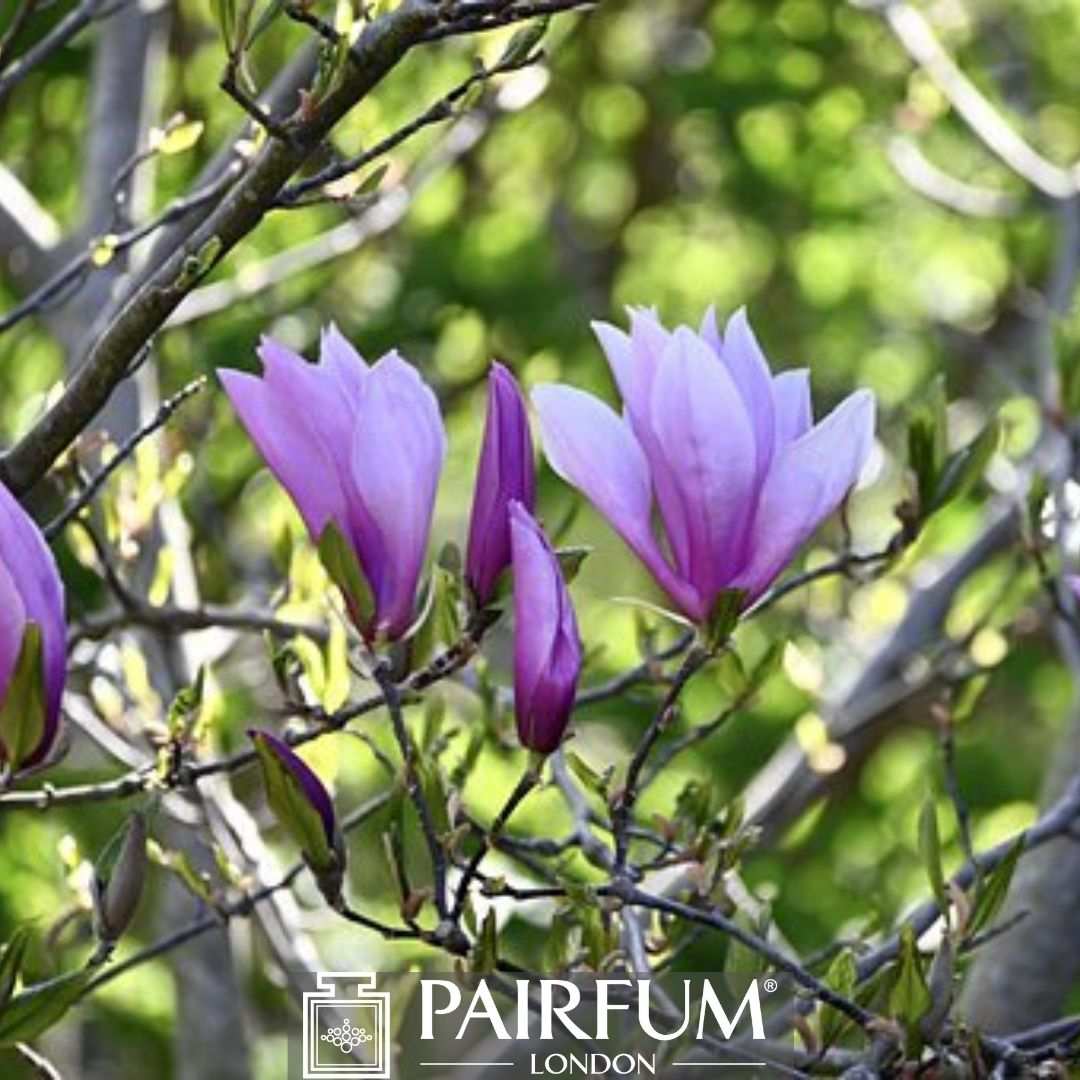
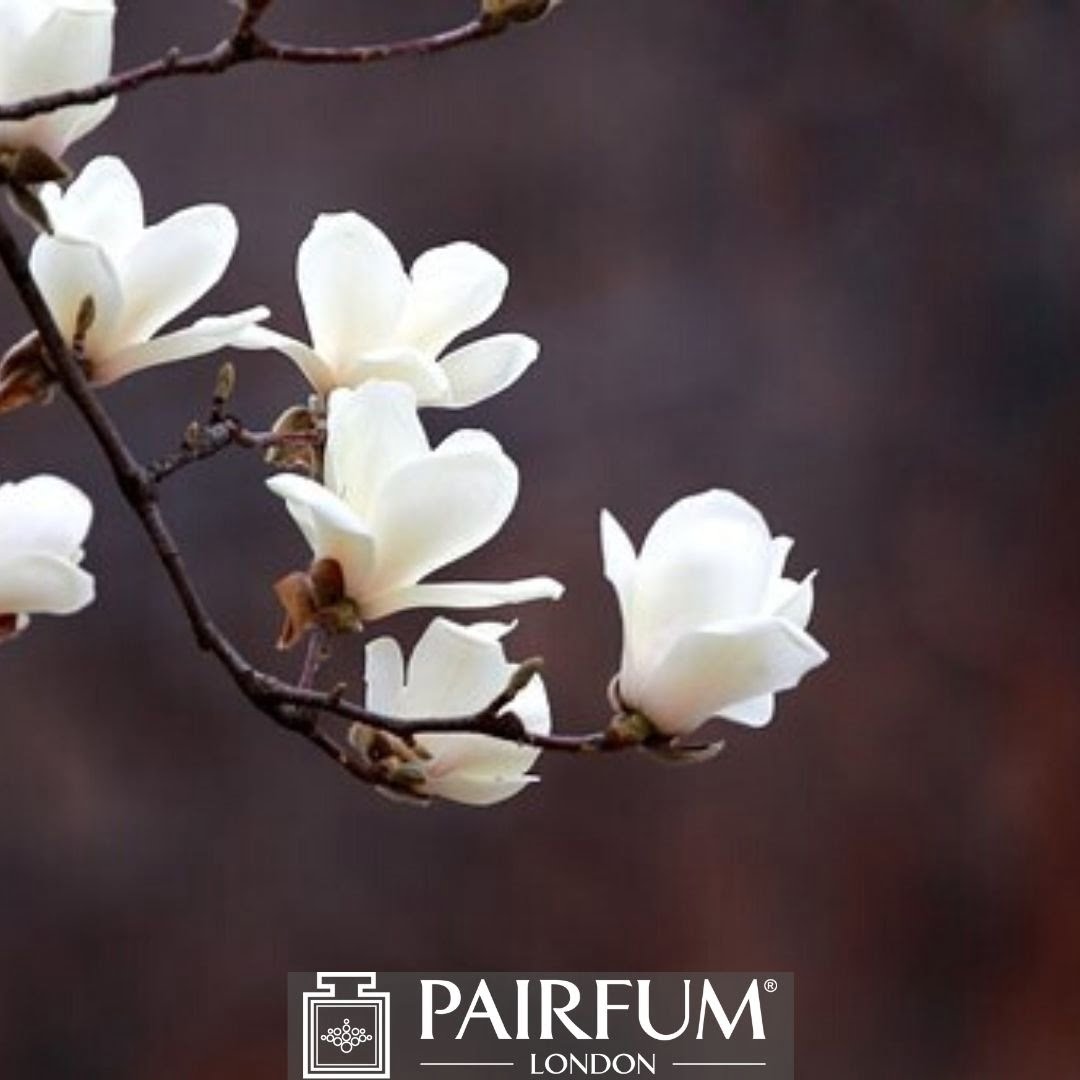
Their colours range from pure white to deepest purple and they fill the spring air with an enchanting scent that makes you want to stop and stay a while.
In 1900, Louisiana declared the Magnolia as its state flower due to its abundance throughout the state, and also in 1900 school children in Mississippi held a state-wide election and voted the Magnolia to be their state flower.
So, … from the Rain Forests of Asia, Central Europe and from the East to the West coast of the USA, these exceptional plants are loved the world over.
Historically there has, however, been some confusion and debate as to what can actually be classed as a ‘Magnolia’.
Description of Magnolia
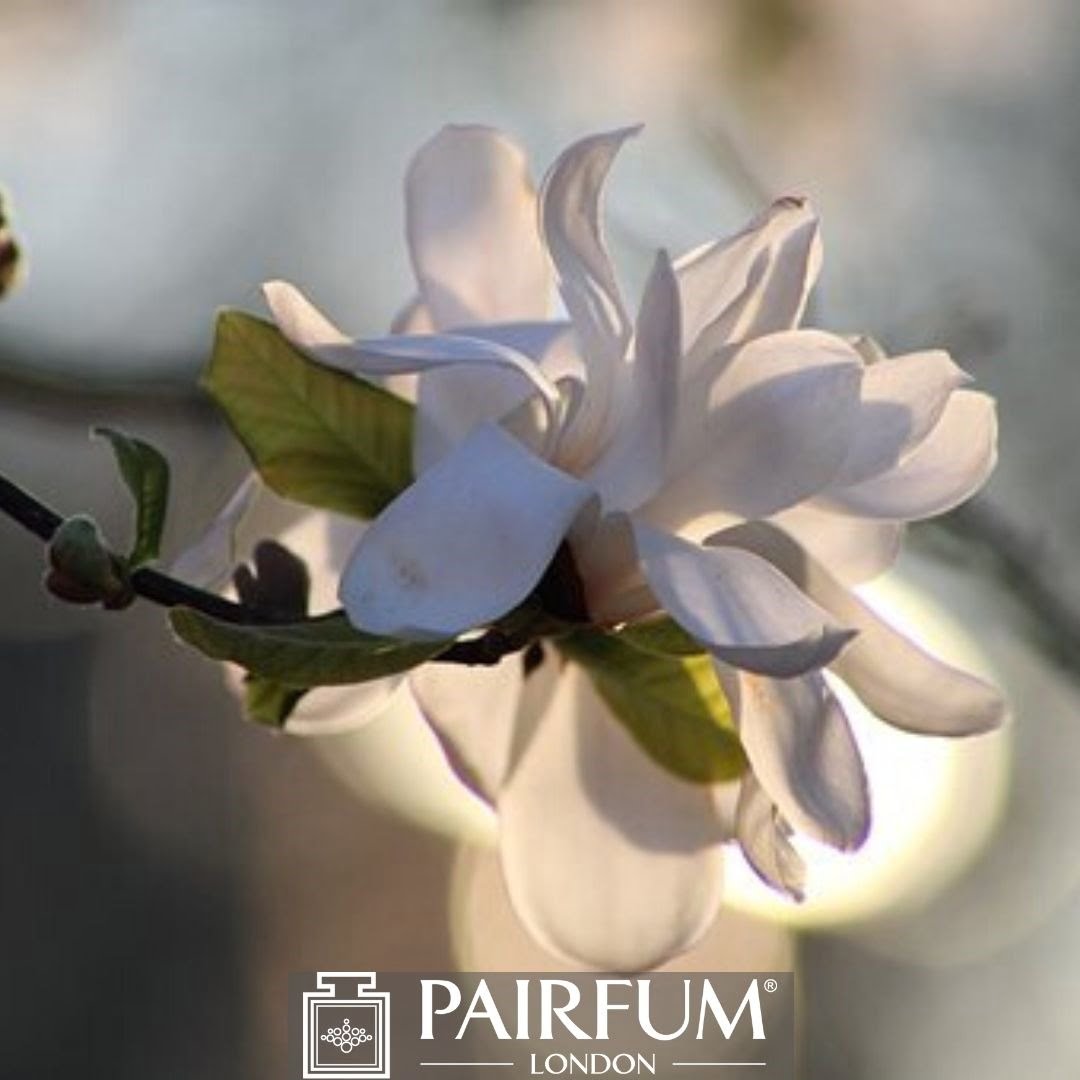
Typically, Magnolias are characterised as large bowl or star shaped fragrant flowers that spread in shrubs or evergreen and deciduous trees.
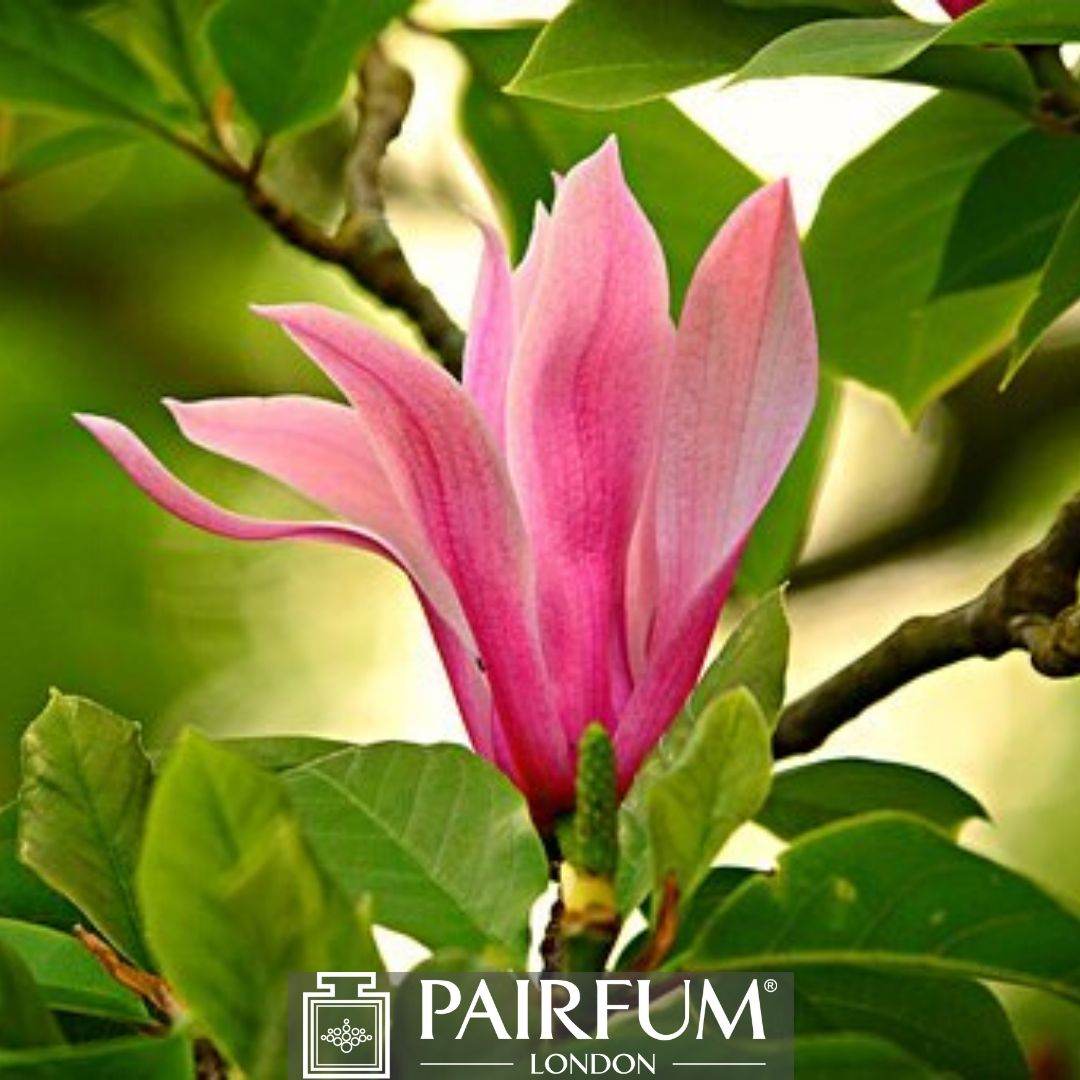
They usually bloom in to either yellow, purple, green, pink or white flowers and their leaves usually appear afterwards in spring. In autumn, cone-shaped fruits are also produced.
Just like other Magnoliaceae, the perianth has at least 3 whorls each with 9-15 tepals.
The bisexual flowers have several adnate carpels and on the elongated receptacle, the stamens are arranged in a spiral pattern. Along carpel’s dorsal sutures the fruit dehisces, and the pollen is monocolpate. Magnolias also have a Polygonum type of embryo development.
History of Magnolias
Early History
The first recorded use of the word ‘Magnolia’ was by General Charles Plumier in 1703 to describe a flowering tree found in Martinique. After Plumer, William Sherard, an English botanist who studied under Magnol, was next to use the term ‘Magnolia’.
The first botanical literature since Plumier’s ‘Genera’ included ‘Hortus Elthamensis’ (written by Hohann Jacon Dillenius) and ‘Natural History of Carolina, Florida and the Bahama Islands’ (written by Mark Catesby), both of which Sherard were responsible for.
In these botanical literatures, the term ‘Magnolia’ was also used to describe some types of flowering trees that were found the North America where the climate was more temperate. In fact, a botanist called Lamarck later used the term ‘Annona dodecapetala’ to describe what Plumier first referred to as ‘Magnolia’ which is now recognised as ‘Magnolia dodecapetala’.
Carl Linnaeus, also used the genus name Mangnolia in ‘Systema Naturae’ (the first edition), written in 1735. Whilst there was no description references to Plumier’s work were made. Linnaeus again used Plumier’s ‘Magnolia’ where he describes a monotypic genus in 1753 in ‘Species Plantarum’ (first edtion) with ‘Magnolia virginia being the only species.
If there ever was a herbarium specimen from Plumier’s ‘Magnolia’, Linnaeus never saw it and is likely he assumed it was the same plant that Catesby described in ‘Natural History of Carolina (written in 1730. Linnaeus put it synonymous with ‘Magnolia virginia var’.
Foetida is a type of taxon called ‘Magnolia grandiflora’. Linnaeus described five varieties of ‘Magnolia virginia’ (acuminate, foetida, grisea, glauca and tripetala).
These 5 varieties were reduced to four after Linnaeus combined grisea with glauca in ‘Systema Naturae’ (10th edition, written in 1759) where he also raised the other four varieties to the status of species.
Botanists and plant explorers started to describe ‘Mangnolia’ species from China and Japan by the end of the 18th century whilst exploring Asia. The first species were described by western botanists as ‘Magnolia Lilifllora’ & ‘Magnolia Denudata’ and ‘Magnolia Coco’ & ‘Magnolia Figo’.
Not long after, Carl Peter Thunberg collected and described ‘Magnolia Obovata’ in Japan in 1974 and around the same time ‘Magnolia Kobus’ were collected for the first time.
Recent History
Much later, as there was an increase in the number of species, it was decided that the genus was to be divided in to two subgenera, ‘Yulania’ and ‘Magnolia’.
‘Magnolia’ includes the horticulturally important ‘M. Grandiflora’ found in the USA and in particular the south-eastern states and the species type known as ‘M. Virginiana’.
‘Yulania’ includes many deciduous species from Asia including ‘M. Kobus’ and ‘M. Denudata’ which have their own horticultural importance and are also important as parents in hybrids.
The American deciduous Cucumber Tree (‘M. Acuminata’) is also classified as ‘Yulania’ and is the responsible for many new hybrids having yellow flowers meaning it has been given greater status.
For a long while, taxonomists have been puzzled by the relations throughout the ‘Magnoliaceae’ family.
Since the Magnoliaceae has survived several huge geographical events (including continental drift, the formation of mountains and even ice ages), they have a vast scattered distribution. This has also led to the long-term isolation of some species or even groups of species as well as other species maintaining close contact.
It has proved impossible to solely use morphological characters to create divisions in the ‘Magnoliaceae’ family and even within the genus ‘Magnolia’.
Phylogenetic Era
Research on phylogenetic relationships was able to be conducted on a large scale at the end of the 20th century once DNA sequencing had finally become available. To investigate the relationships between the many species in the Magnoliaceae family, several studies were conducted.
With the support of morphological data, all of the phylogenetic studies concluded that the genus ‘Michelia’ and the Magnolia, subgenus ‘Yulania’, were considerably more related to each other than either one of them was to ‘Magnolia’ or other subgenus of ‘Magnolia’.
Since relationships are usually reflected by nomenclature, it was an undesirable situation to have species names in ‘Michelia’ and ‘Magnolia’, subgenus ‘Yulania’. Taxonomy provided three possible solutions to this problem.
The first was to join ‘Yulania’ and ‘Michelia’ species in a common genus, separate from the ‘Magnolia’ genus where the term ‘Michelia’ would be given the priority.
The second would leave the subgenus ‘Magnolia’ names and the ‘Micheila’ names untouched by raising the subgenus ‘Yulaina’ to generic rank.
The third solution was to create a “big genus” by joining genus ‘Magnolia’ with ‘Michelia into genus ‘Magnolia, sI’. Since it includes ‘M. virginiana’, (the type species of the genus and the of the family), Mangnolia subgenus ‘Magnolia’ cannot be renamed.
Excluding their wood, only a few ‘Michelia’ species’ have any economic or horticultural importance so far.
On the other hand, many species within subgenus ‘Magnolia’ and subgenus ‘Yulania’ very horticulturally important, to the point that many people in the horticultural discipline would consider it to be undesirable to change their name.
Since most of the cultivated species in Europe have at least one of their parents being ‘Mangnolia (Yulania) denudata’, ‘Yulania’ is considered to be synonymous with ‘Magnolia’ on the continent.
The third option to join ‘Michelia’ with ‘Magnolia’ is supported by most taxonomists as they acknowledge the close the close relations between ‘Michelia’ and ‘Yulania’.
The same applies for the ‘Dugandiodendron’ and the (former) genra ‘Taluama’ which were also placed in genus ‘Manglietia’ and subgenus ‘Magnolia’. ‘Manglietia’ could actually be joined with subgenus ‘Magnolia’ but could also be considered for earning the status of an extra subgenus.
‘Elmerrillia’ is more than likely to be handled in the same was a ‘Michelia’ is now because it is closely related to ‘Michelia’ and ‘Yulania’.
The exact nomenclatural status remains uncertain for non-specific or small genera such as ‘Aromadendron’, ‘Alcimandra’, and ‘Parakmeria’. These non-specific or small genera are often merged into ‘Magnolia sI’ by taxonomists who did the same with ‘Mechelia’.
There is a perpetual debate between botanists as whether to recognise the different small genera or simply recognise just a big ‘magnolia’.
An example of this debate can be found between the Chinese and the western co-author of “Flora of China”.
The book presents two points of view:
The first being that there is a large genus ‘Magnolia’, that includes around 300 species which is favoured by the western author.
The second is that there are 16 different genera and each of those contain up to 50 species. The second argument is put forward by the Chinese.
Subdivisions of Magnolias
Following the classification conducted by the Magnolia Society, species of Magnolias are usually listed under 3 subgenera, 12 sections and 13 subsections.
However, this is not the last word in regards to genus ‘Magnolia’ and it’s sub-classification as a clear consensus has not yet been achieved.
Uses
Horticultural Uses
There has been a lot of general horticultural interest for the genus ‘Magnolia’. Many flower early in the spring such as the tree called ‘M. x soulangeana’ also known as the Saucer Magnolia and the shrub called ‘M. stellata’ also known as star magnolia. There are also others that flower as late as early summer such as ‘M. grandiflora’ which is often referred to as ‘Southern Magnolia’, and the ‘M. virginiana’ which is also known as ‘Sweetbay Magnolia’.
There have been efforts made to create plants that have a more impressive flower and that are able flower earlier on than the parent species by attempting to combine the best aspects of different species. Such efforts have been extremely successful thanks to the use of Hybridisation. A popular example of a successful hybrid would be that of ‘M. liliiflora’ and ‘M. denudata’ which created ‘M. x soulangeana’ (one of the most popular garden magnolias).
In the eastern United States, ‘M. grandiflora’, ‘M. macrophylia’, ‘M. acuminate’ (in the form of a Shade Tree), ‘M. tripetala’, and ‘M. virginiana’ are five native species that are cultivated frequently.
However, it is worth noting hat ‘M. tripetala’ and ‘M. macrophylia’ have large leaves which means they must be planted in a location not frequented by high winds.
Culinary Uses of Magnolia
With many species of Magnolias, their flowers are edible and are used in cooking all around the world.
The petals of ‘M. Grandiflora’ can be used as a spicy condiment when they are pickled. This is common in some parts of England.
On the other side of the world in Asia, the buds are used rather than the petals to be pickled and then used to scent tea and flavour rice. The flower buds and young leaves of ‘Magnolia hypoleuca’ are eaten as a vegetable in Japan after they are boiled.
Japan have also found further uses by creating cooking dishes and even wrapping their food in the leaves of ‘M. Obovata’.
Magnolias in Traditional Medicine
In traditional Chinese medicine, they have long been using the flower buds and even the bark of ‘M. officinalis’ which they refer to as ‘hou po’ (厚朴). In Japan, they also do something similar with ‘M. obovata’ which they call kōboku.
Timber
In forests in the north east of the United States, ‘M. acuminata’ (The Cucumber Tree) is harvested as timber since it grows to a very large size. The wood of the Cucumber Tree is sold as “yellow poplar” alongside the Tuliptree (‘Liriodendron tulipifera’).
On occasion, the ‘M. fraseri’ (The Fraser Magnolia) grows to be large enough to be harvested as well.
Other Uses of Magnolias
As well as humans, Magnolias are also consumed by Giant Leopard Moth and other Lepidoptera species as food plants.
Magnolias in Home Fragrance
If you are lucky enough this weekend to spot a blooming Magnolia, then stop to take a look, and inhale their intoxicating fragrance.
To experience Magnolia, you should really try our perfume “Magnolias in Bloom” in our Home Fragrance range. Have a look at its fragrance description and then visit our online boutique to find the product that would enjoy most.
Why Should You Create Your Own Scented Drawer Liner ?
Creating your own scented drawer liner is the perfect remedy when you are tired of your clothes smelling the same as the drawers where they came from. Not only will it give your drawers a whole new look, but your clothes will carry the wonderful fragrance of being freshly laundered for longer.
To see more reasons why you should use drawer liners, we refer you to an excellent article written by JAM Organising which details the many benefits.
Make Your Own Scented Drawer Liner – A Step by Step Guide
Below we have outlined the key steps to make your own scented drawer liners.
Step 1: Ensure You Have All Of The Required Materials
Wall Paper / Wrapping Paper / Decorative Copy Paper
One Small Glass Dish
Cotton Balls / Scent Bottle
Scissors
Ruler
Essential Oil (of your choice)
The fragrance you choose is completely up to you.
We do caveat this by recommending the following:
only buy high quality, pure and concentrated essential oils to ensure you have an enjoyable and long-lasting perfume.
equally, please steer away from oils that may stain your clothes. Examples of such oils are vanilla, cinnamon and other spices, all types of citrus oils (lemon, mandarine, …). Before using any oil, we advise testing whether the oil discolours using an old piece of fabric, e.g. cotton. Simply apply a little oil to the fabric and leave this sitting in the sun. Within a relatively short time you should be able to see any discolouration.
for the same reason, we advise not to buy mixtures of essential oils, e.g. a ‘Christmas Scent’, as these might contain ingredients that will stain without explicitly mentioning them, e.g. cinnamon oil.
Step 2: Choose Your Scented Drawer Liner Paper
Choose the paper you would like to use in your dresser. The key criteria must be that the paper is absorbent or porous. This is to ensure that the fragrance you use is being absorb and then released slowly. Coated, lacquered or painted papers are typically not porous enough.
Wallpaper is normally a good starting point, as it tends to be relatively thick and very absorbent. Alternatively, a nice wrapping paper or decorative copy paper can be ideal.
Step 3: Measure The Dimensions of Your Drawers
Measure both the width and length of the inside of the drawer bottom you would like to be lined and then cut your chosen paper according to these dimensions.
Step 4: Mix Your Essential Oils
Create a mixture of essential oil and water. The ratio you should aim for is 50ml of water to every 1 – 2ml of the essential oils.
We know this can be difficult to measure but an easy solution is to count your drops: for every 50 drops of water you add 1 or 2 drops of essential oil. Alternatively, use kitchens scales.
Step 5: Add Your Mixture To A Clean Spray Bottle
Pour the mixture into a clean spray bottle.
Please note: be sure that the spray bottle is clear of debris or you may spray additional and unwanted particles onto your paper.
If you don’t have a spray bottle to hand, add the mixture to a small dish. Then dip and slightly drain with a cotton ball.
Step 6: Apply The Mixture To The Drawer Lining Paper
Spray a mist of the mixture over the paper until it is completely damp but not yet wet, i.e. not liquid or droplets sitting on the surface.
Alternatively, gently brush the cotton ball over the BACK side of the paper. The more of the paper you cover the stronger your scent will be.
Step 7: Leave your Scented Drawer Liner To Dry
Hang your paper to dry on a clothesline or drying rack. If for any reason neither are available, then place a towel on a flat surface and lay the papers on top.
Drying times vary dependent on the amount of solution that you have applied.
Bonus Tips
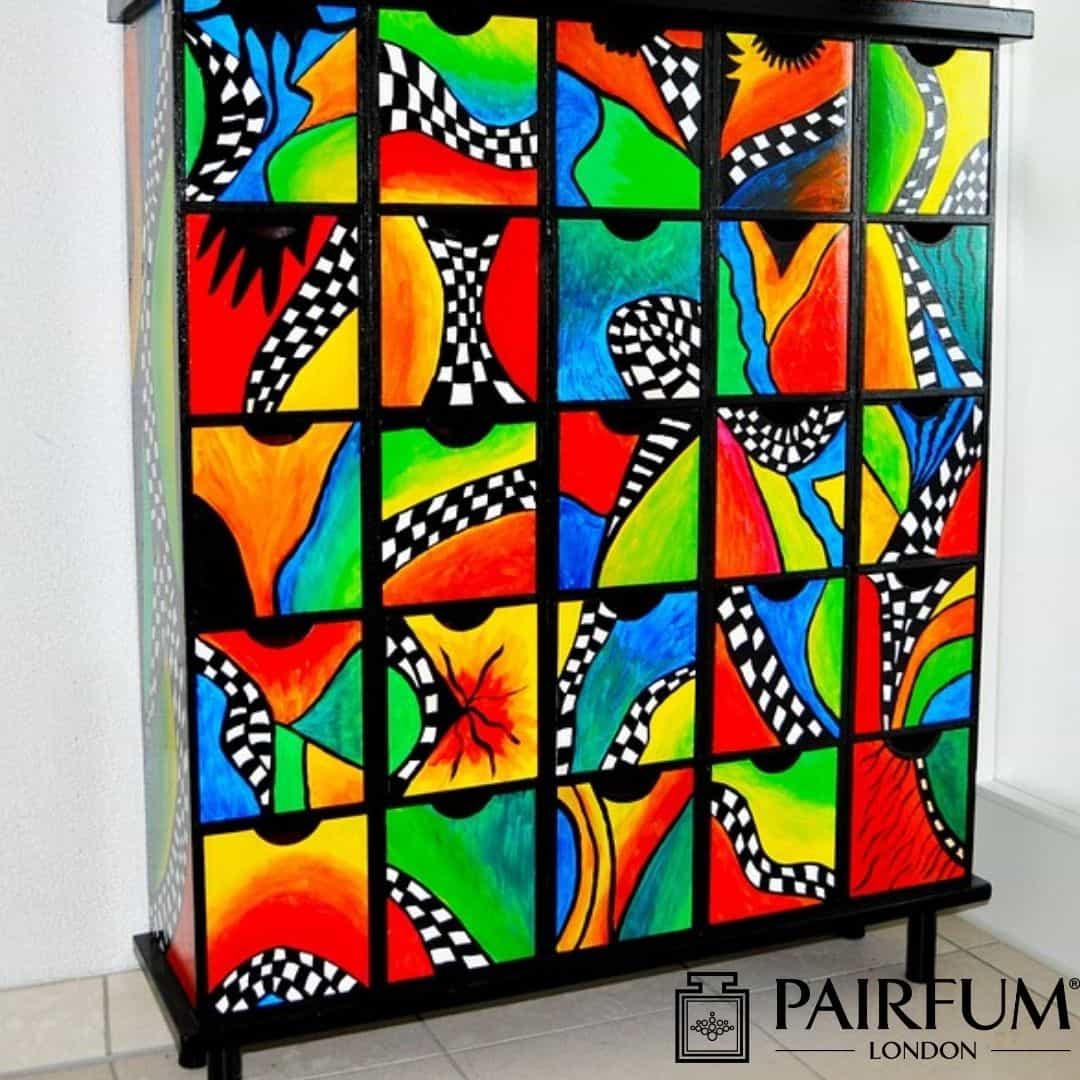
Traditionally drawer liners are used where you store clothes: drawers, wardrobes or shelves in the bedroom. There is, however, no reason why scented drawer liners shouldn’t be added to drawers, cabinets or cupboards in the kitchen, bathroom, living room or any other suitable room.
During your research you may hear about fabric liners being an alternative to paper. The are certainly suitable true but we do caveat this recommendation by saying that is is important that you use a natural, tightly-woven and absorbent fabric, such as cotton or linen.
Other substrates such as cork and leather are also excellent alternative options, as long as they are uncoated, uncoloured and absorbent. Unpainted, unvarnished or uncoated wood is another very good solution.
We advise against the use of plastics or plastic lined fabrics due to the likely interactions between the essential oils and the synthetic plastic.
Bonus Tips:
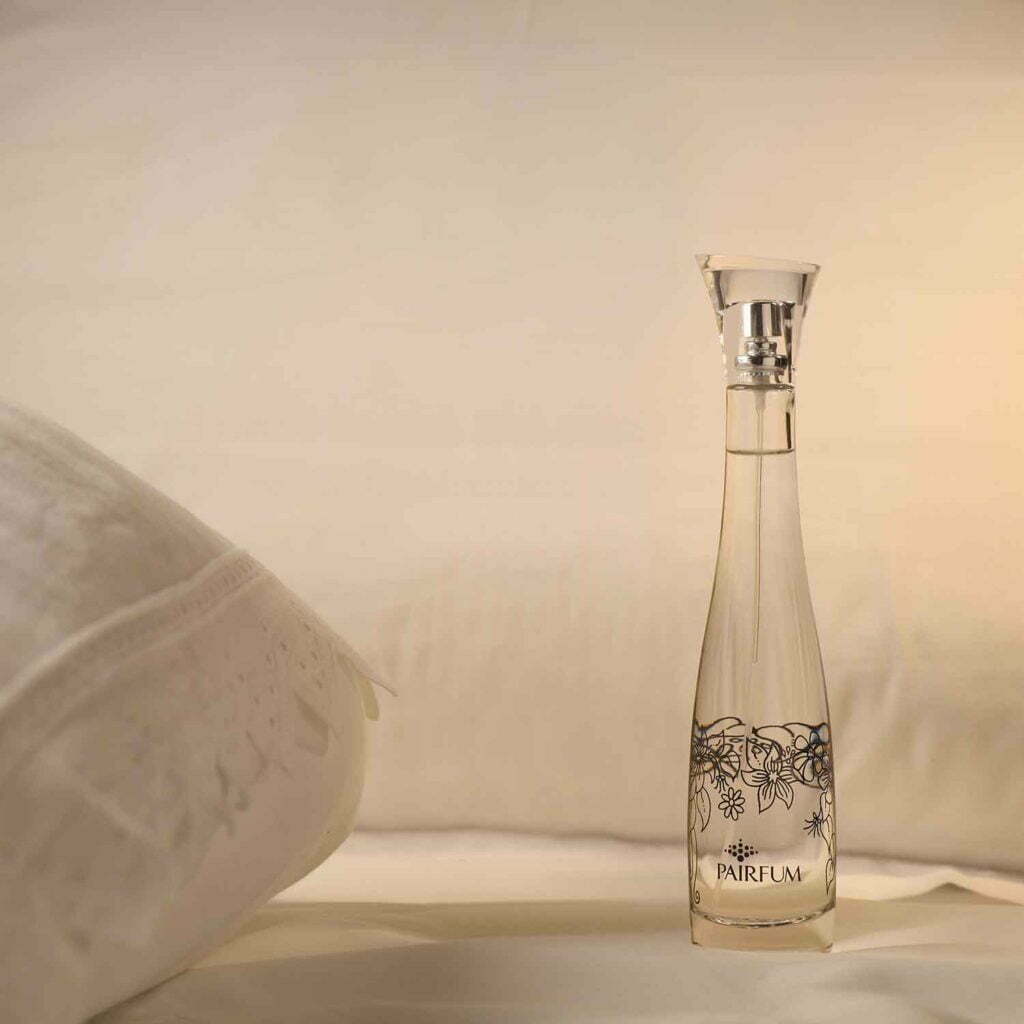
If you want to be without the hassle of making your own mixture, might we recommend spraying your drawer lining paper with our Linen Spray. As well as lavender (featured above), we offer a wide-range of fragrances in our linen sprays such as ‘Blush Rose and Amber’ & ‘Magnolias in Bloom’.
The great advantage of using Pairfum London’s Linen Spray to freshen up your drawer lining paper is that you can refresh them at any time and you are not limited to the choice of perfume or paper that the manufacturer of the drawer liner has selected.
Alternatively, you may wish to spray your favourite perfume on a suitable drawer lining paper. Please be careful, however, as some of the ingredients they contain might stain your clothes, e.g. vanilla, citrus, cinnamon and other spices.
Scented Sachets
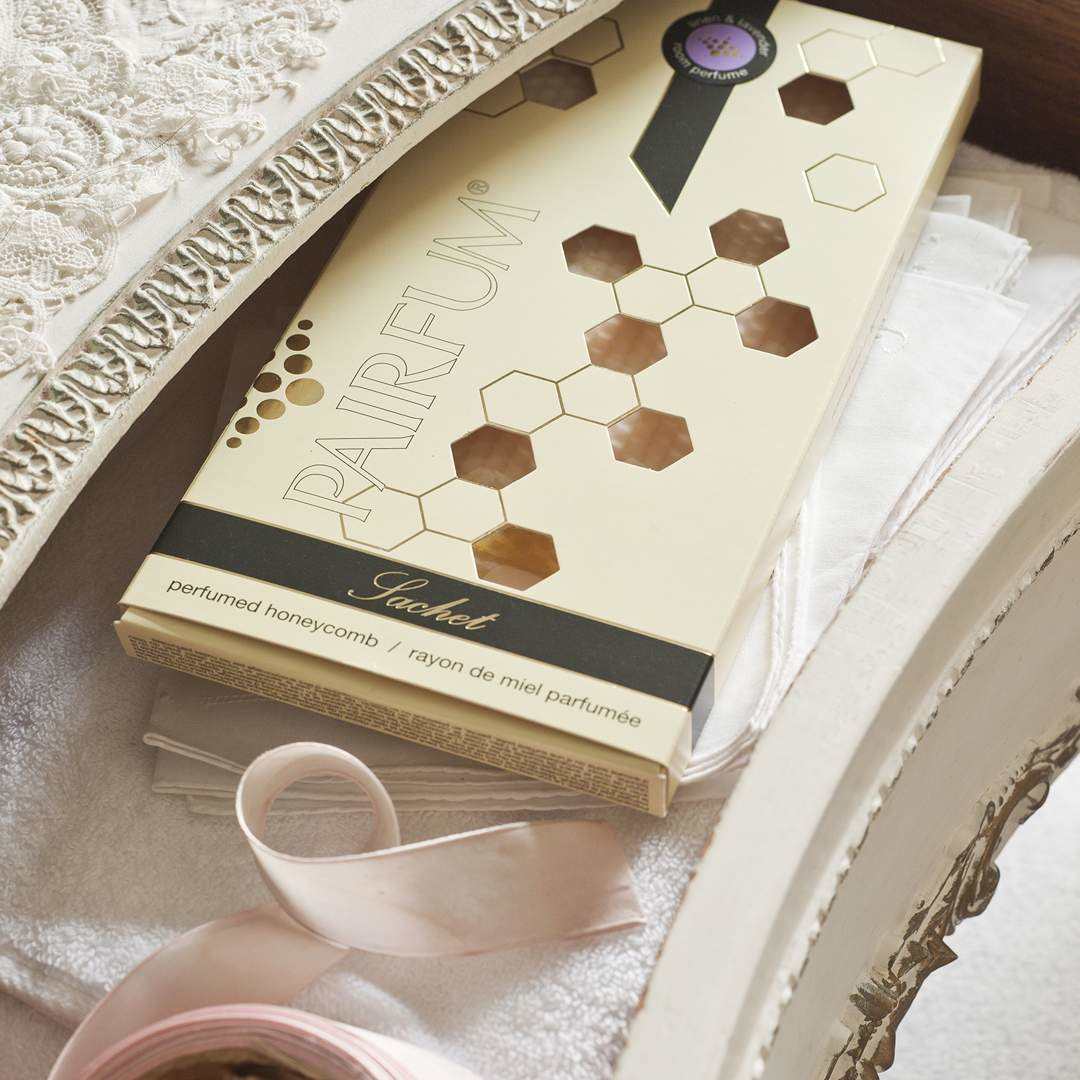
If you are looking for an even more convenient solution, we recommend our Luxury Natural Scented Sachets. Simply hang one in a drawer, wardrobe, cabinet, cupboard or similar location and it will perfume every day for up to 9 months.
Fragrance layering is quite self-explanatory. It is the wearing of more than one fragrance at a time to create something unique and a means to stand out from the crowd. The number of combinations of fragrances one can try are limitless and there are also a number of ways that one can layer their fragrances. For more information, you may want to give this article a read.
Why Should Someone Try Fragrance Layering ?
The art of fragrance layering can help people find their own unique fragrance, and is a perfect opportunity for perfume enthusiasts who like to experiment and push the boundaries. Another way to consider it, would be finding and establishing one’s own sense of style. Just as you might mix and match different clothes and accessories to create new and interesting outfits.
As well as the opportunity for authentic self-expression, your skin is unable to absorb all of the fragrance oils as it otherwise would. Therefore, the fragrance will last a lot longer. A fragrance smells different to each of us, and layering will enhance the true aroma of the fragrance.
How Does One Apply A Layered Fragrance ?
Applying the different fragrances in the correct order is paramount in order to get a high-quality aroma. You should start with the heaviest fragrance and end with the lightest to be sure that the lighter aromas are not ‘weighed down’.
Regarding where you apply your perfume, this is more or less dependent on your own personal preference. You may want to start with the fundamental pulse points such as your neck and wrists. However fragrance layering is about exploration and experimentation. Why not apply your new fragrance to more original areas such as a floral fragrance in your hair or some scented water on your clothing?
Possible Fragrance Layering Combinations
If you are reading this article then may we assume you are just starting to layer fragrances. To assist you we have put together a table to suggest some possible combinations that you can get started with.
Fragrance Family
Recommended To Be Layered With These Fragrance Families
The process of fragrance layering is a great example of trial and error and it is likely to take many attempts before you get it right. Therefore, having lots of different perfumes and fragrances at hand is essential. Although, while perfume can bring such joy, full-sized perfume bottles are a luxury item with the equivalent price.
Therefore might we recommend our Fragrance Experience Box. Not only will you have access to 12 different fragrances, but once you have found a fragrance you love, you can have the cost of the experience box deducted from your ‘full-sized’ purchase.
It is also perfect for sharing or as presenting as a gift to someone who is looking to reinvent themselves.
An essential oil diffuser releases essential oils into the room. They are commonly used in Aromatherapy.
They tend to work in one of two ways. Some essential oil diffusers convert essential oils in to vapours, while others facilitate the natural diffusion of essential oils.
Here are two examples:
Aroma Diffuser: a heated electronic device which either diffuses a mix of water & essential oils or neat essential oils.
Reed Diffuser: a decorative bottle containing an oil scented with essential oils.
Essential oil diffuser are affordable, relaxing, healthy and becoming increasingly popular around the world. Some of their benefits are anti-mosquito, anti-mould, stress relief and other aromatherapeutic effects!
What Are Essential Oils ?
Essential oils are fundamentally plant extracts.
They are produced by pressing, steaming, distilling or extracting different parts of a plant (e.g. fruit, leaves or bark) in order to capture aromatic compounds.
It can often require several kilograms of a plant in order to produce a single bottle of essential oil. As well as being incredibly fragrant, essential oils have other functions in plants as well.
What Are The Risks ?
Essential oils must never be applied directly to the skin and must always be diluted. For example, with water (if this is possible without solvents) or with a harmless carrier oil (e.g. almond oil, olive oil, coconut or sunflower). The typical ratio varies but should generally be only a few percent, e.g. a few drops of essential oil to one ounce of carrier oil.
When performing an allergy test, dilute the essential oil in the carrier oil to twice the planned concentration and apply the mixture to a small area of your body that is not visible. Then wait for on 24-48 hours and check for any reactions along the way.
Never ever consume or swallow essential oils. If ingested orally, these oils can damage the liver or kidneys. Also, keep them away from any sensitive areas of the body, such as eyes, nose or genitalia.
How Should You Use An Essential Oil Diffuser ?
Both an Aroma Diffuser and a Reed Diffuser should be placed in an area of the room from where they can easily fill the room with their scent.
1. Aroma Diffuser:
An aroma diffuser releases a fine mist to spread the essential oil around your room.
The fill them, lift the lid from the top of the diffuser.
In the versions that use water, put water at room temperature into a small measuring cup or glass and add 3 to 10 drops of essential oil. Then pour it directly onto the water storage tank.
For the versions that diffuse pure oils, one literally just places the essential oil bottle into the diffuser.
Replace the top of the diffuser.
2. Reed Diffuser:
These are much easier to use:
Simply open the bottle, insert the reeds and the Reed Diffuser is ready to go.
It is also worth noting that Reed Diffusers do not require a nearby power point and there is no danger of forgetting to switch them off.
3. Essential Oils in Candles and Room Sprays?
Just to avoid any confusion, essential oils can easily be used in candles and room sprays.
Both candles and room sprays are ideal for diffusing essential oils:
perfume candles: the heat of the molten wax is an ideal medium to diffuse and vapourise essential oils.
fragrance room spray: the fine mist of an alcohol based room spray can volatilise even the most difficult essential oils, making it another perfect diffuser of essential oils.
The Benefits of an Essential Oil Diffuser?
Eliminate Odours
Diffusing essential oils can help to eliminate unpalatable odours or smoky and musty smells. Aromatic oils can kill bacteria and fungi, the cause of unpleasant smells, to purify the air.
Tobacco smoke is one of the most difficult odours to eliminate because it penetrates all the objects within the room even when it is ventilated. The best oils against of tobacco malodours are:
Eucalyptus
Guangxiang
Lemon Grass
The musty odour caused by mould and mildew is not only disagreeable, but can also harm your respiratory system or cause a series of health problems. The best natural anti-fungal essential oils are:
Lemon
Grapefruit
Clove
When cooking, the smell in the kitchen can become overwhelming, and the residual smell in the whole house is equally as unwelcome. To eliminate these types of odours in the kitchen, we recommend the following:
Lemongrass
Verbena
Vanilla
Complements Medical Treatments
The National Cancer Institute found that aromatherapy helps to manage the side effects of cancer treatments by sending messages to the brain that affect a patient’s mood via the smell receptors.
It may work for adults suffering from dementia.
Save Money
Using an essential oil diffuser can help to save some money.
When anti-viral, insect repellent or stress relief solutions are integrated into a safe product, an oil diffuser used with the appropriate oil will prevent purchases that may be needed to treat annoying headaches, sleep disorders or anxiety.
Pain-Relief
Although most people will tell you to apply essential oils directly to your body to relieve pain (diluted with carrier oil, of course!), you can also use an essential oil diffuser to extend the effects.
This method is an excellent way to combat persistent pains, such as headaches, joint soreness or muscle fatigue.
Relaxation, Reduce Stress & Improve Sleep
Dispersing oils with relaxing properties can help people of all ages fall asleep faster and sleep more soundly.
Not only can diffusers mix and match different oil blends (try lavender, Bulgarian rose, and Roman chamomile blends to help with insomnia), they can also run with a gentle buzzing sound, helping to relieve restless minds. Many devices also come with an automatic shutdown function, once you fall asleep, to help save oil.
Several laboratory studies have confirmed that the diffusion of essential oils such as lavender can reduce stress and help relieve anxiety in medical patients. Preliminary research also shows that oil dispersions can help relieve symptoms of depression.
Elevate Your Mood
Just as diffusers can help to reduce stress, they can also be used to create vitality and mood in your home.
You can use a diffuser to stimulate cheerful feelings during the holiday season, create a positive atmosphere in the office or social gatherings, help to a ‘spring to your step’ on a slow morning, and even create a romantic atmosphere for that special person in your life
Combat Bacteria & Mould
When essential oils diffuse in the air, they can break down free radicals that cause the growth of harmful bacteria. For this, eucalyptus, thyme and tea tree oil are particularly useful.
The same applies when it comes to fighting against the threat of fungal yeast. Pine and red thyme essential oils are best for fighting yeasts, such as mould.
Cooling Sensation from an Essential Oil Diffuser
During the hot summer season, running the air conditioner all day and all night is a way to ensure that electricity bills are sent through the roof.
Instead, try to spread your favourite refreshing, cool peppermint essential oil in the rooms where you spend most of your time and create a cooling sensation against the heat, perfect for those blistering hot days.
Mosquito & Insect Repellent
No one likes mosquitoes !
However, fighting mosquitos typically includes the use of a repellent full of DEET, a toxic chemical that is particularly harmful to children. This is an unwelcome trade-off.
However, scientists have shown that oil diffusers can be used as a safe and efficient mosquito repellent. Studies have shown that diffusing an oil mixture containing clove essential oil and lemongrass essential oils will repel the Aedes Mosquito, the carrier of the Zika Virus, at a rate of 100%.
Appetite Control
Like chewing gum, essential oil blends can help stimulate the senses by suppressing appetite.
New research shows that dispersing peppermint oil can help suppress appetite by created the feeling or state of being satiated in the body and it has also been shown to increase energy.
Isn’t this a much more pleasant alternative to a diet?
Improve Cognitive Function
Using essential oils in a diffuser is an efficient way to help overloaded brain cells.
This effect works on multiple levels:
First, many essential oils have adaptable properties, which means they will soothe you when you are under stress, but they will also give you a refreshing feeling when you feel depressed or sluggish. By balancing emotions, the oil in the air will help you focus.
Second, there are several essential oils that are known for their powerful ability to balance human hormones. With regular use, these oils can actually help heal the root cause that hinder cognitive function.
The Most Common & Effective Ingredients
Basil Essential Oil is used to increase concentration and relieve certain symptoms of depression. It can relieve headaches and migraines. Avoid taking it during pregnancy.
Bergamot Essential Oil: recent scientific research indicates that bergamot essential oil can reduce inflammation, lower cholesterol and increase positive mood. When mixed with Eucalyptus Oil, it may help to relieve skin problems, including problems caused by stress and chickenpox.
Citronella Essential Oil is a relative of lemongrass and can be used as an insect repellent.
Clove Essential Oil is a topical pain reliever or analgesic, usually used for toothache. It can also be used as an antispasmodic and antiemetic to prevent vomiting and nausea, and it can also be used as a fragrance to prevent gas in the intestines. It has antibacterial, antioxidant and antifungal properties.
Eucalyptus Essential Oil can help relieve respiratory discomfort during a cold or flu. It is often combined with peppermint. Many people are allergic to eucalyptus, so be careful.
Geranium Essential Oil can be used to treat skin problems, reduce stress and act as a mosquito repellent.
Jasmine Essential Oil has been described as an aphrodisiac. Although scientific evidence is lacking, studies have shown that the smell of jasmine will increase beta waves, which is related to alertness. As an irritant, it may increase blood flow to the penis.
Lavender Essential Oil: commonly known to promote calmness, wellness and to reduce stress, nervousness, anxiety, mild pains and the severity of menstrual cramps. It is also said to relieve headache and migraine symptoms. Lavender essential oil is highly recommended as a sleep aid, for people suffering from insomnia or other sleep disorders.
Rosemary Essential Oil can promote hair growth, enhance memory, prevent muscle cramps and support the circulatory system and nervous system. Some people believe that sandalwood oil has aphrodisiac effect.
Thyme Essential Oil is said to help reduce fatigue, nervousness and stress.
Next Steps?
Choose the essential oil from the list above that suits you best and head over to our fragrance descriptions to select a perfume that includes the oil with the therapeutic effects you need.
Then select in our online perfumery boutique a Reed Diffuser, Fragrance Candle, Room or Pillow Spray with the scent you have chosen.
Now, … sit back, relax and enjoy.
Try Natural Niche Perfume
Get a Full Refund when you later buy a full-sized bottle. Special Offer: Free Gift-Wrap (luxury bag & tissue paper) with every Perfume Experience Box.
We value and respect your personal data and privacy. By submitting this form, you agree that we may process your information in accordance with our Privacy Policy.
×
Risk Free Trial
We understand that shopping online for perfume is different, which is why we offer our 100% Happiness Guarantee:
Free Tester: We will include a mini sampler with your Eau de Parfum so you can try the perfume before you open the pack.
Free Returns: Should you not love your perfume, then we will collect it free of charge from your home (unopened product). No quibbles from us.
We are honoured & proud that Pairfum London is available for you to enjoy at CRYSTALLINE in Abu Dhabi.
CRYSTALLINE Unit 13235, Level 3 The Galleria Al Maryah Island, Abu Dhabi Tel: +971 2 6228 824
eMail: at***@**********et.ae / ar****@*****um.com
×
Try Natural Niche Perfume
Special Offer: Get a Full Refund when you later buy a full-sized bottle.
We value and respect your personal data and privacy. By submitting this form, you agree that we may process your information in accordance with our Privacy Policy.
×
CRYSTALLINE in the UAE
We are honoured & proud that Pairfum London is available for you to enjoy at CRYSTALLINE in Dubai & Abu Dhabi.
CRYSTALLINE LG-110- LOWER GROUND THE DUBAI MALL, DUBAI, UAE Tel +971 4 3398 897